Família ABC Arquivos Brasileiros de Cardiologia International Journal of Cardiovascular Sciences ABC Heart Failure & Cardiomyopathy ABC Imagem Cardiovascular
Português English
  • Família ABC
  • Arquivos Brasileiros de Cardiologia
  • International Journal of Cardiovascular Sciences
  • ABC Heart Failure & Cardiomyopathy
  • ABC Imagem Cardiovascular
Português English
  • Sobre
    • Sobre a Família ABC
    • Regimento Interno
    • Conselho Editorial
    • Sociedade Brasileira de Cardiologia (SBC)
  • Edições
  • Diretrizes da SBC
  • Conteúdos
    • Vídeos
    • Podcasts
    • Notícias
  • Sobre
    • Sobre a Família ABC
    • Regimento Interno
    • Conselho Editorial
    • Sociedade Brasileira de Cardiologia (SBC)
  • Edições
  • Diretrizes da SBC
  • Conteúdos
    • Vídeos
    • Podcasts
    • Notícias
Buscar em

Nenhum conteúdo encontrado.

Revistas
Ordenação
Tipos de artigo
Outros

  1. Início
  2. Myocardial Infarction
IJCS
Case Report

Multivessel Coronary and Cerebral Vasospasm in a Post-Acute Myocardial Infarction Patient

Mateus Amorim Aboboreira et al. Julio Paiva Maia Vitória Burin Borges Felipe Hideaki Ueda Marcos Franchetti

Introduction

Coronary vasospasm was initially described by Prinzmetal et al. as angina that occurs at rest, without being provoked by an increase in oxygen demand, unlike classic Heberden’s angina, which is induced by physical or emotional stress. The pathophysiology of coronary vasospasm is multifactorial, and various precipitating factors exist.² The present case demonstrates an intriguing scenario that highlights the complexities of clinical management and etiological determination of vasospasm in a post-acute myocardial infarction patient.

[…]

  • Infarction
  • Intracranial Vasospasm
  • Myocardial Infarction
Ler artigo completo
Creative Commons Attribution (CC BY) Creative Commons license
30/09/2026 DOI: 10.36660/ijcs.20250046 Visualizações 3
IJCS
Original Article

Myocardial Infarction with Non-Obstructive Coronary Arteries: Clinical Profile, Diagnostic Investigation, and Outcomes in a Tertiary Center Cohort

Kelvyn Vital et al. Ricardo Pavanello Barbara Porto Valente Bruno Noshang Blaas … Bianca Fernandes Tavora Arruda Raphael Rossi Maria Isabel Del Monaco Fausto Feres

Abstract

Background:

Myocardial infarction with non-obstructive coronary arteries (MINOCA) represents a heterogeneous clinical syndrome associated with diverse pathophysiological mechanisms and a non-negligible prognosis. Despite conceptual advances, diagnostic uncertainties and significant variations in etiological investigation and clinical management persist in real-world practice, particularly in centers with limited access to advanced imaging modalities.

Objectives:

To describe the clinical profile, diagnostic strategies employed, and clinical outcomes of patients with MINOCA followed at a Brazilian tertiary center.

Methods:

Observational, retrospective study including consecutive patients diagnosed with MINOCA, defined according to the Fourth Universal Definition of Myocardial Infarction and European guidelines. Clinical, angiographic, and complementary diagnostic data, as well as the treatment instituted and clinical outcomes during follow-up, were collected.

Results:

A total of 196 patients were included, with a mean age of 50.6 ± 11.8 years and a slight female predominance (52.6%). Systemic arterial hypertension (60.2%), dyslipidemia (45.9%), and current or former smoking (48.0%) were frequent. Cardiac magnetic resonance imaging was performed in 42.3% of cases, whereas intracoronary imaging methods were rarely used (2.6%). In 40.8% of patients, a definitive etiology could not be established. During follow-up (n = 183), mortality was 3.8%, reinfarction occurred in 6.6%, and new cardiovascular hospitalizations occurred in 16.9%.

Conclusions:

Patients with MINOCA present an intermediate-risk clinical profile and a relevant incidence of cardiovascular events during follow-up. The high proportion of cases without a defined etiological diagnosis reflects limitations in investigation and reinforces the need for more structured diagnostic strategies and individualized clinical management.

  • Coronary Artery Disease
  • MINOCA
  • Myocardial Infarction
Ler artigo completo
Creative Commons Attribution (CC BY) Creative Commons license
11/09/2026 DOI: 10.36660/ijcs.20260035 Visualizações 16
IJCS
Original Article

Reversal of Therapeutic Recommendations in the American College of Cardiology Coronary Artery Disease Guidelines

Alessandra Carvalho Caldas et al. Denise Matias Daniel Medina Luis Claudio Lemos Correia

Abstract

Background:

Medical reversal is defined as the discontinuation of a procedure’s recommendation due to new evidence regarding its efficacy or safety. Cardiology is the specialty with the highest number of documented reversals, yet there is no information available about the probability of reversal.

Objectives:

To describe the frequency of medical reversal in the ischemic heart disease guidelines published by the American College of Cardiology/American Heart Association (ACC/AHA), according to levels of evidence.

Methods:

The most recent guidelines for stable coronary disease, non-ST-elevation acute coronary syndrome, and ST-elevation myocardial infarction were compared with the first version. Medical reversal was defined as a shift from a recommended procedure to a contraindicated one or the removal of the recommendation. The quality of evidence was categorized by the guidelines as high, moderate, or low.

Results:

A total of 224 therapeutic recommendations were identified, with 19% based on high-quality evidence, 42% on moderate-quality evidence, and 39% on low-quality evidence. Forty-nine medical reversals were observed, constituting 22% of all therapeutic recommendations included in the first version of the guidelines. The probability of reversal for procedures based on high-quality evidence was 2%, compared with 25% for procedures with moderate-quality evidence and 30% for procedures with low-quality evidence.

Conclusion:

In the ACC/AHA ischemic heart disease guidelines, medical reversal is common in recommendations based on moderate or low-quality evidence, but rare in those with high-quality evidence.

  • acute coronary syndrome
  • Coronary Artery Disease
  • Myocardial Infarction
Ler artigo completo
Creative Commons Attribution (CC BY) Creative Commons license
07/09/2026 DOI: 10.36660/ijcs.20250148 Visualizações 9
ABCIC
Editorial

A Nova Fronteira na Prevenção Cardiovascular: Além da Proibição, o Manejo Clínico do Usuário de Esteroides

Fabio Roston et al. Alexandre Aby Azar Ribeiro Naiara Caroline Makiniks Luiz Felipe Branco Ribeiro Liliana Ludwing Ziegler

Diagnóstico Subclínico: O Papel do Ecocardiograma Avançado

A avaliação cardíaca convencional muitas vezes falha em detectar danos precoces, pois a Fração de Ejeção do Ventrículo Esquerdo (FEVE) pode permanecer normal mesmo na presença de lesão miocárdica instalada. As fontes destacam que usuários de EAA apresentam alterações na geometria e função cardíaca, incluindo hipertrofia patológica, disfunção diastólica e comprometimento biventricular.,

Nesse cenário, o uso do ecocardiograma com medidas avançadas, como o strain miocárdico, surge como uma ferramenta essencial. Embora a FEVE possa estar preservada em estágios iniciais, a análise da deformação miocárdica (strain) permite identificar a disfunção sistólica incipiente decorrente da fibrose e da destruição de miofibrilas causadas pela toxicidade direta dos andrógenos. Estudos recentes já demonstram que tanto usuários atuais quanto antigos apresentam cardiomiopatia biventricular persistente, reforçando a necessidade de monitoramento contínuo.

[…]

  • Anabolic Androgenic Steroids
  • Cardiomyopathies
  • Myocardial Infarction
Ler artigo completo
Creative Commons Attribution (CC BY) Creative Commons license
31/07/2026 DOI: 10.36660/abcimg.20260076 Visualizações 8
IJCS
Original Article

Right Ventricle Infarction in Current Practice: Insights from a Contemporary Registry at a High-Volume Tertiary Center in Brazil

Giulia Bonatto Reichert et al. Pedro Henrique Torres Tietz Vitoria Silva Marcia Moura Schmidt … Carlos A. M. Gottschall Alexandre Schaan de Quadros

Abstract

Background:

Right ventricular (RV) involvement in acute ST-segment elevation myocardial infarction (STEMI) has scarcely been studied in contemporary cardiology practice.

Objective:

To evaluate the clinical, angiographic, procedural characteristics and outcomes of patients with STEMI and RV involvement undergoing primary percutaneous coronary intervention (pPCI).

Methods:

This prospective cohort included consecutive patients with STEMI presenting within 12 hours of symptom onset and undergoing pPCI between 2009 and 2023 at a high-volume tertiary cardiology center in Brazil. Clinical characteristics and outcomes of patients with RV infarction were compared to those without RV involvement. Continuous and categorical variables were analyzed using appropriate statistical tests, with a significance level of 5% (p < 0.05). Logistic regression models were used to identify independent predictors.

Results:

Among 5,611 patients, 13% had RV involvement. These individuals were more frequently female, had right coronary artery as the culprit vessel, had greater thrombotic burden, and more often presented with total atrioventricular block (TAVB). Acute kidney injury (5.8% versus 4.1%, p = 0.03) and stroke (1.6% versus 0.8%, p = 0.04) were more common in the RV group. Thirty-day (10.5% versus 8.7%, p = 0.16) and 2-year mortality (19.5% versus 18.5%, p = 0.11) were higher among patients with RV infarction, although not statistically significant. In multivariable analysis, TAVB and female sex were independently associated with RV involvement. RV infarction was not an independent predictor of 30-day mortality.

Conclusion:

In current practice, approximately 1 in 7 STEMI patients present with RV involvement. These patients have a higher-risk profile, though RV infarction was not independently associated with short-term mortality.

  • acute coronary syndrome
  • Myocardial Infarction
  • Right Ventricular
  • ST-segment Elevation Myocardial Infarction
Ler artigo completo
Creative Commons Attribution (CC BY) Creative Commons license
13/03/2026 DOI: 10.36660/ijcs.20250098 Visualizações 9
IJCS
Editorial

The "Right" Side of Myocardial Infarction: Sinister Outcomes?

Monica Verdoia

Right ventricular myocardial infarction (RVI) is rarely an isolated event; rather, it generally complicates 10% to 50% of cases of acute inferior ST-segment elevation myocardial infarction (STEMI)., Proximal right coronary artery occlusion, impairing right ventricular (RV) branch flow, is most frequently the culprit vessel, although it depends on coronary tree anatomy.

Previous studies underlined that RVI is often unrecognized, since RV ischemic dysfunction is generally transient, due to the different composition and higher resistance to hypoxia of the RV wall. In addition, the diagnostic criteria for RVI, which are mainly based on electrocardiogram (), can lead to underestimation, unless RV involvement becomes clinically manifest with hemodynamic complications. In fact, acute RV dysfunction can lead to reduced output, insufficient left heart filling, and cardiogenic shock, despite preserved left contractility. Moreover, intrapericardial ventricular interaction can translate into an abrupt RV dilation and further compression of the left chambers.

[…]

  • Heart Ventricles
  • Myocardial Infarction
  • Percutaneous Coronary Intervention
Ler artigo completo
Creative Commons Attribution (CC BY) Creative Commons license
13/03/2026 DOI: 10.36660/ijcs.20250249 Visualizações 9
IJCS
Case Report

Spontaneous Multivessel Coronary Artery Dissection: Case Report

Ana Paula Schonarth et al. Ottávia Zainho Helbok Caroline de Oliveira Fischer Bacca Arieli Carini Michels

Abstract

Spontaneous coronary artery dissection (SCAD) is a rare condition that can cause acute myocardial infarction (AMI), especially in young women without risk factors for coronary artery disease. Diagnosis is made by cardiac catheterization, and treatment varies from conservative to surgical approaches, depending on the severity. We report the case of a woman with a history of AMI who underwent initial catheterization without requiring percutaneous coronary intervention due to the absence of an obstructive lesion. Subsequently, the patient presented episodes of angina, and a new catheterization was performed, which revealed dissection in the left anterior descending and right coronary arteries. Given the lack of spontaneous resolution of the dissection, which was initially unilateral and progressed to bilateral, the patient underwent myocardial revascularization with mammary artery and saphenous vein bypass grafts. The objective of this study is to document a case of SCAD and to describe its characteristics, diagnosis, and therapeutic management.

  • acute coronary syndrome
  • Aortic Dissection
  • Myocardial Infarction
Ler artigo completo
Creative Commons Attribution (CC BY) Creative Commons license
16/06/2025 DOI: 10.36660/ijcs.20240013 Visualizações 7
IJCS
Editorial

Obstructive Sleep Apnea in Acute Myocardial Infarction: A Prognostic Risk Factor beyond Traditional Players?

Carlos Wollmann et al. Luciano F. Drager

The high prevalence of obstructive sleep apnea (OSA) and its worrisome association with various cardiovascular diseases, particularly ischemic heart disease, demand our attention. This common sleep disordered breathing, characterized by partial or complete upper airway obstructions during sleep, profoundly impacts overall health., In the cardiovascular context, intermittent hypoxia, sleep fragmentation, and intrathoracic pressure swings promoted by repeated respiratory events during sleep promote several potentially deleterious phenomena, including increased sympathetic activity, blood pressure fluctuations, chronic systemic inflammation, reactive oxygen species production, and endothelial dysfunction.– These factors create a fertile ground for the development and progression of atherosclerosis,, significantly increasing the likelihood of ischemic events if the condition remains undetected and untreated., However, the relationship between OSA and acute myocardial infarction (AMI) is complex. Patients with OSA often share risk factors that also increase AMI risk, notably age, male sex, and obesity. While some evidence suggests an independent role for OSA in the cardiovascular risk, its contribution remains controversial in high-risk patients with multiple comorbidities. Further research in this area is therefore warranted in order to provide additional insights.

In this issue of the International Journal of Cardiovascular Sciences, Carrijo et al. explore the complex relationship between OSA and traditional risk factors in 145 patients with ST-segment elevation myocardial infarction (STEMI). The authors used employed the widely used STOP-BANG questionnaire to assess OSA risk. The initial results were consistent with previous literature: a high frequency (58.6%) of patients exhibited a high risk for OSA. This highlights the urgent need for increased attention to this comorbidity, particularly in this specific patient population. In the multivariate analysis, the authors found an independent association of OSA with both male sex and hypertension in these patients. The presence of hypertension in OSA patients is not coincidental. Some of the aforementioned mechanisms associated with OSA directly contribute to elevated blood pressure, thereby increasing cardiovascular risk.,

[…]

  • Myocardial Infarction
  • Obstructive Sleep Apnea
  • Prognosis
  • Risk Factors
  • Sleep
Ler artigo completo
Creative Commons Attribution (CC BY) Creative Commons license
08/05/2025 DOI: 10.36660/ijcs.20250032 Visualizações 10
IJCS
Editorial

Recognizing the reality of cardiovascular diseases

Rodrigo Gopar-Nieto

The vast majority of cardiovascular research emphasizes the high burden of heart diseases and the preponderance of these diseases in mortality., Efforts to learn how major cardiovascular diseases are managed have been led by the countries with the greatest economic power. However, a large part of the world’s population has been forgotten, because the realities of life in developing countries make it impossible to apply all the recommendations. As a result, adverse cardiovascular outcomes remain common, reducing quality of life and life expectancy. In the following paragraphs, I will comment on chronic coronary syndromes, specifically on the efforts made by physicians in India to adapt the management of this disease to their resources and situation.

The underlying pathophysiology of chronic coronary syndromes is myocardial ischemia caused by alterations in coronary flow, mostly due to atherosclerosis, and they are part of a continuum in which atheromatous plaques can become complicated and unstable, causing acute coronary syndromes. To speak of chronic coronary syndromes is not only to refer to a phenomenon at the coronary level but also to consider the associated risk factors. The most common risk factors are hypertension, diabetes, dyslipidemia, smoking, and physical inactivity. However, other non-conventional factors such as exposure to pollutants, social deprivation, occupational stress, hormonal changes, environmental noise, and the area of the world in which we live must also be emphasized. All these phenomena can cause alterations in coronary flow, either by atheroma plaque or by alteration of the microcirculation. For the diagnosis of these diseases, many studies are required, such as electrocardiograms, echocardiograms, cardiac scintigraphy, magnetic resonance imaging, coronary artery tomography, or invasive coronary angiography. Initial treatment is medical, but in many cases, a revascularization strategy will be necessary, either by surgery or percutaneous coronary intervention.

[…]

  • Cardiovascular disease
  • Myocardial Infarction
  • Stable Angina
Ler artigo completo
Creative Commons Attribution (CC BY) Creative Commons license
03/03/2025 DOI: 10.36660/ijcs.20240234 Visualizações 7
IJCS
Original Article

Delay Times in Acute Myocardial Infarction Care: Comparison Between Periods Before and During the COVID-19 Pandemic

Layla Pasolini Lott et al. Roberto Ramos Barbosa Rhaaby Rodrigues Muzi Camila Marianelli … Isadora Cardozo Bragatto Valentin Trevizani Neto Glícia Chierici Baptista Eduardo Gomes Vieira Rodolfo Costa Sylvestre Osmar Araújo Calil Renato Giestas Serpa Lucas Crespo de Barros Larissa Novaes Paganini Lucas Martins Frizzera Borges Luiz Fernando Machado Barbosa

Abstract

Background

The success of acute myocardial infarction with ST-segment elevation (STEMI) treatment is time-dependent, requiring prompt access, diagnosis, and immediate medical intervention. The COVID-19 pandemic has significantly impacted the care of patients with STEMI.

Objective

To analyze delay times and clinical outcomes of patients with STEMI undergoing primary percutaneous coronary intervention (PPCI) before and during the COVID-19 pandemic.

Methods

This retrospective observational study included patients with STEMI undergoing PPCI from June 2019 to July 2022. The COVID-19 pandemic period was divided into 3 time groups. Pandemic I referred to the interval from March to August 2020, pandemic II from September 2020 to July 2021, and pandemic III from August 2021 to July 2022. Delay times, clinical characteristics, and in-hospital mortality were analyzed. The chi-square, Fisher’s exact, Student’s t and one-way ANOVA tests were applied, with p values less than 0.05 being considered statistically significant.

Results

Comparing the periods, the total ischemic time to PPCI was 346.3 versus 448.4 versus 398.4 versus 348.4 minutes (p = 0.47); onset-to-door time 253.1 versus 421.1 versus 377.4 versus 370.6 minutes (p = 0.42); first medical contact (FMC)-to-balloon time 243.9 versus 313.0 versus 239.5 versus 279.4 minutes (p = 0.38); and door-to-balloon time 71.8 versus 76.8 versus 58.03 versus 88 minutes (p = 0.9). Mortality significantly increased in pandemic I compared to pre-pandemic (29.4% versus 5.0%, p = 0.01), with a marginal difference compared to pandemic II and III combined (12.2%, p = 0.05).

Conclusion

There was a trend toward increased onset-to-door time and FMC-to-balloon time in STEMI care during the pandemic compared to the pre-pandemic period, although not statistically significant. Higher mortality in STEMI was observed in the first months of the COVID-19 pandemic.

  • COVID-19
  • Mortality
  • Myocardial Infarction
  • Percutaneous Coronary Intervention
Ler artigo completo
Creative Commons Attribution (CC BY) Creative Commons license
03/03/2025 DOI: 10.36660/ijcs.20240022 Visualizações 10
IJCS
Original Article

Study of Right Ventricular Strain Imaging in Patients with Acute Inferior Wall Myocardial Infarction in a Tertiary Care Hospital in Eastern India

Pallab Biswas et al. Subhro Chakraborty Biswajit Majumder

Abstract

Background

Right ventricle (RV) involvement in inferior wall myocardial infarction (IWMI) is considered a strong predictor of in-hospital mortality and complications. However, assessment of RV involvement and function remains challenging due to difficulties in chamber visualization.

Objective

This study aimed to assess RV involvement in patients with IWMI using myocardial wall velocity (tissue Doppler imaging) and strain rate parameters with conventional echocardiographic indices, evaluating RV function and its correlations with in-hospital mortality and morbidity.

Methods

An observational study was conducted from May 2020 to April 2021 in 210 patients with IWMI visiting a tertiary care center. For each participant, demographics and clinical characteristics were obtained, and an electrocardiography (ECG) was recorded. Following this, right ventricular global longitudinal strain (RVGLS) and echocardiographic parameters (Tei index, right ventricular fractional area change [RVFAC], and tricuspid annular plane systolic excursion [TAPSE]) were estimated. Chi-square test was performed for differences in outcomes between patients with and without RV dysfunction. Correlation analysis was conducted between RVGLS, ECG, and other echocardiographic parameters. P < 0.05 was considered statistically significant.

Results

Pearson’s correlation analysis between RVGLS and Tei index among patients with IWMI indicated a moderate negative correlation (R = 0.610). Furthermore, RVGLS exhibited a moderate positive correlation with RVFAC (R = 0.635) and TAPSE (R = 0.718). At the cutoff of −16.75, RVGLS predicted RV involvement in patients with 97.0% sensitivity and 68.7% specificity. RVGLS predicted RV dysfunction in 44.8% of the patients in the mortality group.

Conclusion

RVGLS can be used as an alternative measure for predicting RV involvement in patients with IWMI.

  • Inferior Wall Myocardial Infarction
  • Myocardial Infarction
  • Right Ventricular Dysfunction
Ler artigo completo
Creative Commons Attribution (CC BY) Creative Commons license
28/02/2025 DOI: 10.36660/ijcs.20230137 Visualizações 6
IJCS
ORIGINAL ARTICLE

Associated Factors to the Risk of Obstructive Sleep Apnea in the Acute Phase of Myocardial Infarction

Ludmylla da Silva Soares Carrijo et al. Patricia Magnabosco Maria Beatriz Guimarães Raponi Maria Angélica Melo e Oliveira … Suely Amorim de Araújo Luiz Claudio Martins Valéria Nasser Figueiredo

Abstract

Background

Obstructive sleep apnea (OSA) promotes endothelial dysfunction and systemic inflammation, and it is associated with shorter long-term survival and unfavorable clinical outcomes in patients with ST-segment elevation myocardial infarction (STEMI).

Objectives

To investigate the factors associated with the risk of OSA in the aftermath of STEMI.

Methods

A cross-sectional, quantitative study conducted with 145 individuals with STEMI in a large Brazilian teaching hospital. Anthropometric measurements were performed in addition to collecting sociodemographic/clinical data and lifestyle habits. The STOP-BANG questionnaire was used to determine the risk of OSA. The results were analyzed using descriptive statistics, association tests, and logistic regression. A significance level of 5% was adopted for the statistical analysis.

Results

The mean age of the participants was 62 ± 12 years, with a predominance of males (71%), white individuals (57.2%), and those at high risk of OSA (58.6%). Moderate to high risk of OSA was associated with male gender, hypertension, and dyslipidemia. Gender (HR = 6.13, 95% CI [1.88, 20.03], p = 0.003) and hypertension (HR = 4.31, 95% CI [1.27, 14.63], p = 0.019) were factors influencing the risk of OSA after acute myocardial infarction.

Conclusions

Hypertension and male gender were significant factors for a moderate/high risk of OSA in infarcted patients.

  • Myocardial Infarction
  • Obstructive Sleep Apnea
  • Risk Factors
Ler artigo completo
Creative Commons Attribution (CC BY) Creative Commons license
10/02/2025 DOI: 10.36660/ijcs.20240008 Visualizações 10
IJCS
Original Article

Determination of Shock Index and Age Shock Index Cut-Off Points in Patients with ST-Segment Elevation Myocardial Infarction: SEMI-CI Study

Masoumeh Sadeghi et al. Afsaneh Rahimizad Mehrbod Vakhshoori Niloofar Bondariyan … Shima Nasirian Davood Shafie

Abstract

Background

Shock index (SI) and age shock index (ASI) are less frequently used for assessment of major adverse cardiovascular events (MACE) among patients with ST-segment elevation myocardial infarction (STEMI), and their reported cut-off points are controversial.

Objectives

We aimed to define proper cut-off value of these indices for MACE prediction among Iranian patients with STEMI.

Methods

This study was in the context of the ST-Elevation Myocardial Infarction Cohort in Isfahan (SEMI-CI) study. SI and ASI were calculated by division of heart rate (HR) over systolic blood pressure (SBP) and age multiplied by SI, respectively, in 818 subjects with STEMI. Receiver operating characteristic (ROC) curve analysis was used to determine optimal SI and ASI cut-off values. Chi-square test, independent t test, and analysis of variance were employed for nominal and numerical variables, as appropriate, with consideration of p values < 0.05. MACE was defined as a composite of non-fatal reinfarction, heart failure (HF), recurrent percutaneous intervention (PCI), rehospitalization for cardiovascular diseases, and all-cause mortality.

Results

Mean age was 60.70 ± 12.79 years (males: 81.7%). Area under curve (AUC) values from ROC curve analysis for SI and ASI were 0.613 (95% confidence interval [CI]: 0.569 to 0.657, p < 0.001) and 0.672 (95% CI: 0.629 to 0.715, p < 0.001), respectively. Optimal SI and ASI cut-offs were 0.61 (sensitivity: 61%, specificity: 56%) and 39.5 (sensitivity: 65%, specificity: 66%), respectively. Individuals with SI ≥ 0.61 or within the highest quartile (SI ≥ 0.75) had significantly higher frequency of one-year MACE compared to the reference group (34.7% versus 22.2%, p < 0.001 and 42.4% versus 20.6%, p < 0.05, respectively). Similar relations were observed in terms of ASI values (ASI ≥ 39.5 versus ASI < 39.5: 43.6% versus 17.3%, p < 0.001, ASI Q4 ≥ 47.5 versus ASI Q1 ≤ 28.8: 49% versus 16.6%, p < 0.05).

Conclusions

SI and ASI cut-off values of 0.61 and 39.5 could reliably predict MACE occurrence among Iranian patients with STEMI.
  • Area Under Curve
  • Myocardial Infarction
  • ROC Curve
  • Sensitivity and Specificity
Ler artigo completo
Creative Commons Attribution (CC BY) Creative Commons license
15/07/2024 DOI: 10.36660/ijcs.20220137 Visualizações 6
IJCS
Original Article

Characteristics of ST-Elevation Myocardial Infarction during the SARS-CoV-2 Outbreak

Guilherme Pinheiro Machado et al. Gustavo Neves de Araujo Rafael Beltrame André Luiz Theobald … Matheus de Souza Niches Julia Fagundes Fracasso Victoria Milan Julia Luchese Custodio Camila Porto Cardoso Pedro Henrique Torres Tietz Giulia Bonatto Reichert Marcia Moura Schmidt Alexandre Schaan de Quadros Marco Vugman Wainstein

Abstract

Background

The SARS-CoV-2 outbreak has led to radical transformation in social, economic, and healthcare systems. This may lead to profound indirect consequences on clinical presentation and management of patients with ST-segment–elevation myocardial infarction.

Objectives

The objective of this study was to describe the characteristics, management, and outcomes of patients admitted with acute myocardial infarction with ST-segment elevation (STEMI), in two tertiary reference hospitals during the SARS-CoV-2 outbreak and compare them with patients admitted in the previous year.

Methods

We analyzed data from a multicenter STEMI registry from reference centers in the South Region of Brazil from March 2019 to May 2021. The beginning of the COVID-19 outbreak was considered to be March 2020 and compared to the same period in 2019. Only patients with STEMI submitted to primary percutaneous coronary intervention (PCI) were included in the analysis. Mortality rates were compared with chi-square test. All hypothesis tests had a two-sided significance level of 5%.

Results

A total of 1169 patients admitted with STEMI were enrolled in our registry, 635 of whom were admitted during the pandemic period. The mean age of our sample was 61.6 (± 12.4) years, and 66.7% of patients were male. Pain-to-door time and door-to-balloon time were longer during the pandemic period. However, there was no difference in mortality rates or major adverse cardiovascular outcomes (MACE).

Conclusions

We observed a stable incidence of STEMI cases in our registry during the SARS-CoV-2 outbreak with higher pain-to-door time and door-to-balloon time, without any influence on mortality rates however.

  • COVID-19
  • Mortality
  • Myocardial Infarction
  • Pandemics
  • Percutaneous Coronary Intervention
Ler artigo completo
Creative Commons Attribution (CC BY) Creative Commons license
09/02/2024 DOI: 10.36660/ijcs.20220203 Visualizações 13
IJCS
Original Article

Risk Factors for In-Hospital Mortality from Cardiac Causes After Acute Myocardial Infarction

Gabriel Vasconcelos Oliveira et al. Maria Beatriz Guimarães Raponi Patricia Magnabosco Maria Angélica Melo e Oliveira … Suely Amorim de Araújo Vanderlei José Haas Valéria Nasser Figueiredo

Abstract

Background:

Risk stratification on admission of patients with acute ST-elevation myocardial infarction (STEMI) is considered a clear strategy for effective treatment, early intervention, and survival.

Objective:

The purpose of this study was to determine the risk factors for in-hospital mortality from cardiac causes after STEMI.

Methods:

Observational, retrospective, longitudinal study, with a quantitative approach, based on data from the medical records of individuals diagnosed with STEMI treated at the Emergency Room of a large hospital in the state of Minas Gerais, Brazil, from January 2011 to July 2016. The outcome of interest was 30-day in-hospital mortality from after STEMI. For statistical analysis, the Pearson’s chi-square test, Spearman’s correlation and multivariable Cox-regression analysis were used, with a significance level of α = 0.05.

Results:

Of the 459 patients, 55 (12%) died from cardiac causes within 30 days after STEMI. Mean admission SBP of these patients was 109.08mmHg. The incidence of death was higher in women (23.7%), patients with systemic arterial hypertension (SAH) (13.8%) and elderly patients (16.5%). The elderly — heart rate (HR) = 3.54 — and women — HR = 2.55 — had a statistically significant higher risk of progressing to death when compared to younger adults and men. The highest admission SBP had a protective effect (HR = 0.97), reducing the chance of death by 3%.

Conclusion:

SBP on admission, female gender and advanced age were significant risk factors for death within 30 days after STEMI.

  • Blood pressure
  • Mortality
  • Myocardial Infarction
  • Risk Factors
Ler artigo completo
Creative Commons Attribution (CC BY) Creative Commons license
27/11/2023 DOI: 10.36660/ijcs.20220034 Visualizações 6
IJCS
Editorial

Quality of Life Assessment in Patients With ST-Elevation Myocardial Infarction (STEMI): An Opportunity to Improve the Quality of Care That Should Not Be Missed

Ana Teresa Timóteo

In chronic diseases, the Quality of Life (QoL) is one of the most important patient-reported outcomes. Cardiovascular diseases are the main cause of death worldwide and ischemic heart disease represents an important health burden. In a large population-based cohort, individuals with self-reported previous myocardial infarction (MI) presented worse self-perceived health statuses in all domains, particularly in mobility and anxiety / depression. However, QoL was not independently associated with MI but instead was associated with age, sex and number of comorbidities, which were significantly higher in patients with prior MI. In this study, long-term QoL was more impaired in men, as compared to women. Nevertheless, in population-based cohorts, we have many possible pitfalls, considering that a diagnosis of MI and other chronic diseases is self-reported; therefore, it is impossible to confirm this diagnosis. It is also impossible to differentiate between ST-elevation MI (STEMI) and non-STEMI, and it is rarely possible to assess the QoL at the same point in time after MI. In fact, we can expect QoL to be much different in the first few months after MI when compared with the QoL several years later.

A more structured study was performed in Australia, in which the QoL was assessed at earlier time points (4 weeks and 6 months). The study sample consisted primarily of males (representing more than 75%), but with a mean age similar to previous studies in MI populations. Health-related QoL improved at 6 months following primary percutaneous coronary intervention for physical and mental health. All aspects of cardiac-specific health status had improved (physical limitation, anginal frequency, treatment satisfaction, and QoL), except for angina stability. Patients aged ≥ 70 years had poorer physical QoL and physical limitations, but better mental QoL at both time points. However, patients were from a specific remote geographic region and were included in 2010 and 2011. Therefore, this did not represent a contemporary sample of patients, and it does not reflect current treatment standards. All in all, those results are not comparable with current populations of STEMI patients from different regions around the world.

[…]

  • Myocardial Infarction
  • Quality of life
  • ST Elevation Myocardial Infarction
  • STEMI
Ler artigo completo
Creative Commons Attribution (CC BY) Creative Commons license
13/11/2023 DOI: 10.36660/ijcs.20230136 Visualizações 7
IJCS
Original Article

Ischemic Stroke and Acute Myocardial Infarction: Trends in in-Hospital Mortality in Brazil from 1998 to 2018

Júlio Martinez Santos et al. Alessandra Barboza Resende Martinez Emerson de Jesus Silva Gustavo Roberto Santana … Romero Henrique de Almeida Barbosa David Fernandes Lima Matheus Rodrigues Lopes Johnnatas Mikael Lopes

Abstract

Background

Ischemic stroke and acute myocardial infarction (AMI) are cardiovascular diseases with high morbidity and mortality rates in Brazil and worldwide. Their outcomes are influenced by public policies aimed at mitigating risk factors and by investments in infrastructure of emergency support and quality of hospital care.

Objective

To analyze the trend in the proportion of in-hospital deaths from ischemic stroke and AMI in Brazil as a way of evaluating the effectiveness of urgency and emergency services.

Methods

Ecological time series study using data from the Hospital Information System. The outcome was the proportion of in-hospital deaths from ischemic stroke and AMI with stratification by sex and state. Prais-Winsten regression was used to analyze the trend between 1998-2018 with α≤0,05.

Results

The proportion of deaths from AMI and ischemic stroke declined in the time series (p<0.001), decreasing annually by 0.17% and 0.25%, respectively. In 20 years, it reduced 43.76% (ischemic stroke) and 32.39% (AMI) in both sexes. However, the decline was more evident in the South and Southeast regions.

Conclusion

The reduction in hospital deaths from AMI and ischemic stroke was heterogeneous among Brazilian regions, which may be related to inequality in emergency services and hospital support.

  • Hospital Mortality
  • Myocardial Infarction
  • Stroke
  • Time Series Studies
Ler artigo completo
Creative Commons Attribution (CC BY) Creative Commons license
20/10/2023 DOI: 10.36660/ijcs.20220217 Visualizações 8
Figura 1
ABC
Artigo Original

Registro Brasileiro de Cardiologia Intervencionista durante a Pandemia de COVID-19 (RBCI-COVID19)

Viviana Guzzo Lemke et al. Maria Sanali Souza Paiva Giordana Zeferino Mariano Thales Siqueira Alves … Esmeralci Ferreira Leonardo Avany Nunes Flavio Roberto Azevedo Oliveira Rodrigo Cantarelli Emilia Matos do Nascimento Gláucia Maria Moraes de Oliveira

Resumo

Fundamento

No início da pandemia de COVID-19, os pacientes com infarto do miocárdio (IM) demoraram para procurar um hospital por medo de contágio ou dificuldades no acesso aos serviços de saúde.

Objetivos

Avaliar procedimentos de cardiologia intervencionista realizados durante a pandemia de COVID-19 e implicações na abordagem do IM.

Métodos

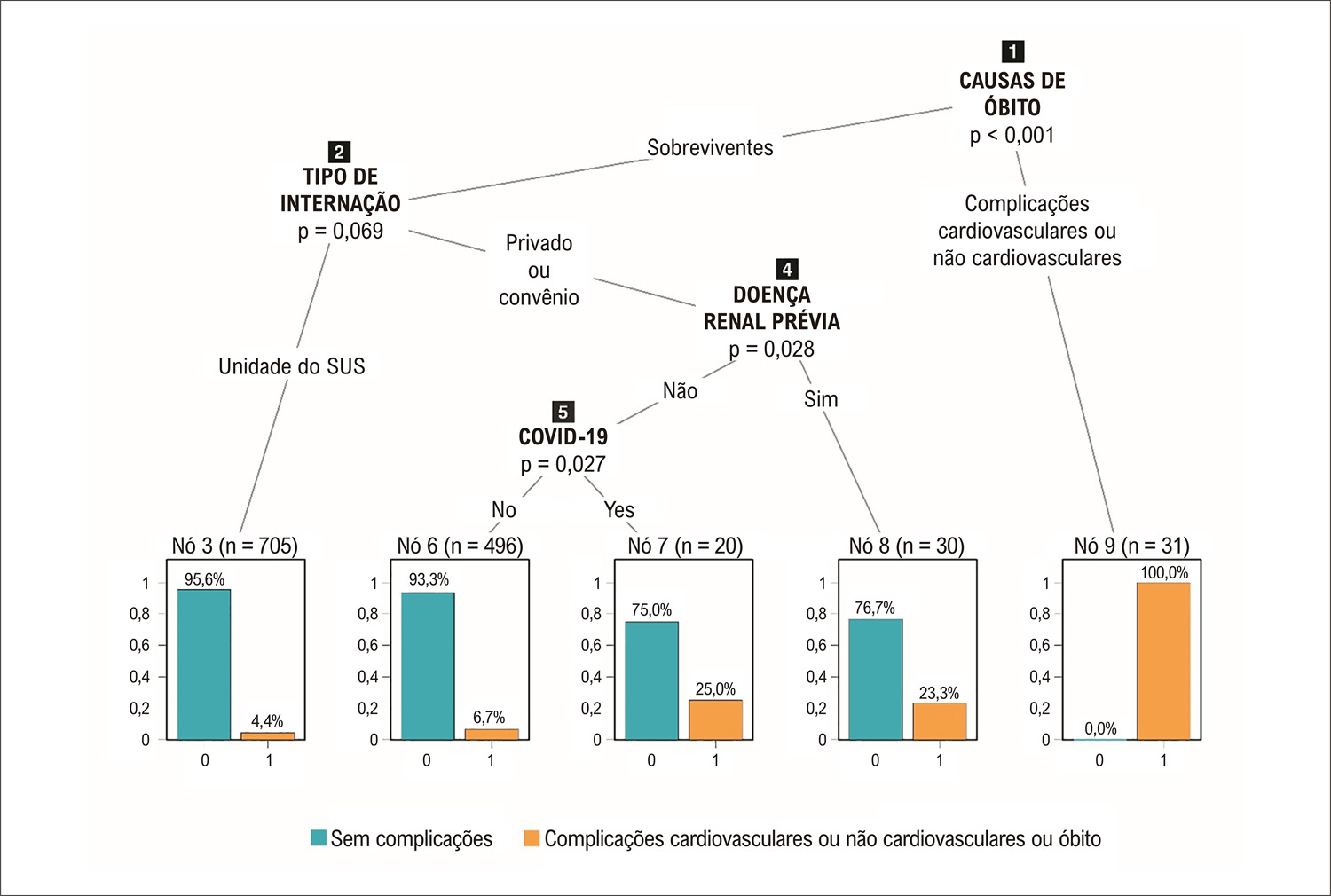
Registro prospectivo de 24 centros de hemodinâmica no Brasil, com pacientes adultos submetidos a procedimentos de cardiologia intervencionista entre 26 de maio e 30 de novembro de 2020. Os desfechos foram complicações cardiovasculares (CV) e não CV, morte e IM. A concomitância de COVID-19 foi confirmada com RT-PCR. Técnicas de machine learning foram usadas com modelos não paramétricos de árvores de classificação. Usou-se análise de correspondência simples com o software R. Adotou-se nível de significância de 5%.

Resultados

Este estudo incluiu 1.282 pacientes, 435 dos quais (33,9%) apresentaram IM: IM com supra de ST (IMCSST), 239 (54,9%); e IM sem supra de ST(IMSSST), 196 (45.1%). Dos 1.282 pacientes, 29 tiveram complicações CV, 47 tiveram complicações não CV e 31 morreram. O diagnóstico de COVID-19 foi confirmado em 77 pacientes (6%), com 15,58% de mortalidade e 6,49% de complicações não CV. A maioria dos pacientes apresentou significativa doença arterial coronariana (63%). Trombo intracoronariano foi mais frequente na presença de IMCSST (3,4%) e COVID-19 (4%). Tempo porta-mesa superior a 12 horas no IMSSST associou-se a 30,8% de complicações, 25% em pacientes com COVID-19.

Conclusões

Todos os óbitos foram precedidos por complicações CV ou não CV. A presença de COVID-19 foi associada a óbito e complicações não fatais dos pacientes submetidos a procedimentos de cardiologia intervencionista durante a pandemia.

  • Coronary Angiography
  • Coronary Artery Disease
  • COVID-19
  • Myocardial Infarction
  • Percutaneous Coronary Intervention
Ler artigo completo
Creative Commons Attribution (CC BY) Creative Commons license
01/09/2023 DOI: 10.36660/abc.20220840 Visualizações 9
IJCS
Editorial

Sociodemographic Disparities in Acute Myocardial Infarction in Rio de Janeiro State

Brivaldo Markman-Filho et al. Liana Gonçalves-Macedo

Cardiovascular diseases, particularly coronary artery disease (CAD), continue to occupy a prominent position with regard to morbidity and mortality in the modern world. Acute myocardial infarction (AMI), the main pathology resulting from acute myocardial ischemia, persists with significant mortality rates in both developed and developing countries, despite significant advances in established protocols aimed at myocardial reperfusion. Diagnosis of AMI, as well as its subtypes, has been consistently updated through consensus. These updates have aimed to provide uniformity in the diagnosis and treatment of the pathology, in an attempt to reduce the disastrous impact of this disease on the population.

The concept of cardiovascular risk factors is linked to the development of coronary atherosclerosis and was developed from the Framingham Heart Studies in the United States, which began during the 1940s. Questions remained, however, as to whether these risk factors were common across all continents. Subsequently, a case-control study demonstrated that such risk factors were associated with the appearance of a first AMI, in all countries, irrespective of the country’s level of development. The study also concluded that a healthy diet with fruits and vegetables, moderate consumption of alcohol, regular physical activity, and a reduction of stress and depression all proved to be protective factors against AMI. Furthermore, understanding the sociodemographic factors that are possibly involved in the occurrence of AMI as a cause of hospitalization and in-hospital death may be of assistance in planning public health policies, directing attention toward segments of the population of interest.

[…]

  • Myocardial Infarction
  • Social Conditions
  • Sociodemographic
Ler artigo completo
Creative Commons Attribution (CC BY) Creative Commons license
17/07/2023 DOI: 10.36660/ijcs.20230043 Visualizações 6
IJCS
Original Article

General Approach to Acute Myocardial Infarction with Nonobstructive Coronary Arteries (MINOCA): A Systematic Review

Marcos Aurélio Barboza de Oliveira et al. Alan Vinicius Gamero Ósti Bruno Vargas Teixeira Cavalheiro Déborah Barbosa Naves … Emanuelle Ribeiro de Oliveira Gabriel Freitas de Campos Gabriel Mael Sussuarana Silva Lobo Gabriely de Oliveira Marcela Paula Mainardi Marília Cardoso Guimarães Robert Filipe Barbosa Vilian Veloso de Moura Fé

Abstract

Background

Acute myocardial infarction (AMI) without obstructive coronary arteries (MINOCA) is a medical condition of great relevance, with clinical characteristics of AMI, but without evidence of coronary artery obstruction. The mechanism involved in the pathophysiology of the disease and its possible etiologies are important objects of study due to their impact on the morbidity and mortality of affected patients.

Objectives

The aim of this study was to systematically review MINOCA and its characteristics, with emphasis on the clinical profile of patients, etiology, pathophysiology, diagnosis, and treatment of the syndrome.

Methods

Relevant articles related to MINOCA were analyzed in the PubMed and LILACS databases. In the initial search stage, 619 eligible articles were obtained, with final inclusion criteria being: original systematic reviews with clinical, epidemiological, diagnostic, or treatment data on MINOCA, published in Portuguese or English, with an abstract, and a publication date limit of September 2020.

Results

A total of 10 articles classified as systematic reviews that considered clinical data on MINOCA were included in this review.

Conclusion

After analyzing various literature, the present study provided a tool to better understand MINOCA, not only regarding its casuistry but also in grouping parameters and information that contribute to a healthy approach to this clinical situation. It was possible to identify and better outline the clinical profile of patients who presented this condition and the use of appropriate tools for correct diagnosis and ideal treatment.

  • angiography
  • Myocardial Infarction
  • Myocardial Ischemia
  • systematic review
Ler artigo completo
Creative Commons Attribution (CC BY) Creative Commons license
15/05/2023 DOI: 10.36660/ijcs.20220046 Visualizações 9
IJCS
Original Article

Biomarker-associated Monocyte Inflammatory Signaling in Myocardial Infarction

Raphael Boesche Guimarães et al. Julio Marchini Luz Marina Gomez Rogério Sarmento Leite … Oscar Dutra Iran Castro André Luiz Manica

Abstract

Background:

Monocytes are essential components in inflammatory signaling, and their recruitment is crucial in the signaling pathway, which directs and determines cell adhesion to the activated endothelium. A better understanding of the correlation between monocyte subsets and inflammatory signaling in patients with atherosclerotic disease in acute coronary syndrome (ACS) is essential for the development of more effective therapies for the prevention and treatment of cardiovascular diseases.

Objective:

To analyze differences between biomarkers and monocyte activation in the setting of ischemic heart disease.

Methods:

This was a case-control study comparing biomarkers and monocyte subsets between patients with ACS with and without ST-segment elevation and individuals without coronary stenosis. The nonparametric Kruskal-Wallis test was used to assess differences between groups, and Dunn’s post hoc test was used to identify which groups were different. Cuzick’s test for ordered group trends was used to assess falling or rising trends. Participants were classified into 3 groups: control (0); non-ST-elevation myocardial infarction (NSTEMI) (1); ST-elevation myocardial infarction (STEMI) D1 (2).

Results:

Forty-seven patients with ACS and 19 controls with no obstructive lesions on coronary angiography were recruited. Monocyte profile assessment was statistically different regarding time of symptom onset and the presence or absence of atherosclerotic disease (Kruskal-Wallis, p = 0.0009). Dunn’s post hoc test showed a significant difference between the control group and the STEMI D1 (p = 0.0014), STEMI D3 (p = 0.0036), and STEMI D7 (p = 0.0195) groups, corresponding to a 2-fold increase in classical (p = 0.0022) and nonclassical (p = 0.0031) monocytes compared with controls. For classical monocytes, there was a difference between the control group and all STEMI groups and between the NSTEMI group and the STEMI D1, D3, and D7 groups. For nonclassical monocytes, there was a difference between the control group and the STEMI D7 group (p = 0.0056) and between the NSTEMI group and the STEMI D7 group (p = 0.0166).

Conclusion:

This study found that there was an increase in total and classical monocyte mobilization at the time of acute myocardial infarction in patients with ACS.

  • Atherosclerosis
  • Monocytes
  • Myocardial Infarction
Ler artigo completo
Creative Commons Attribution (CC BY) Creative Commons license
21/04/2023 DOI: 10.36660/ijcs.20220007 Visualizações 11
IJCS
Editorial

The Influence of Primary Atherosclerotic Diseases on the Occurrence of Secondary Disease

Marcelo Chiara Bertolami

Atherosclerosis is a chronic inflammatory process in which the accumulation of cholesterol-laden plaque restricts blood flowin the arterial vasculature. The occlusion of arteries by expanding plaque or emboli from plaque rupture or erosion underlies a variety of cardiovascular diseases including myocardial infarction, ischemic cardiomyopathy, stroke, and peripheral vascular disease. Although cardiovascular disease remains a leading cause of morbidity and mortality in high-income countries, an epidemiological shift has occurred in recent decades., Improvements in vaccination and treatment of infectious diseases have led to a notable increase in the prevalence of cardiovascular diseases in low- and middle-income nations.

The prominent and increasing burden of atherosclerotic cardiovascular disease has stimulated growing interest in the elucidation of its pathogenesis, risk factors, prevention, and treatments. There has been remarkable progress in the understanding of atherosclerosis pathophysiology, and new risk factors, in addition to traditional ones, have been described to be implicated, including disturbed sleep, physical inactivity, the microbiome, the microbiota and gender-related factors. Also, knowledge about the importance and possibility of its early prevention, preferably during childhood or even earlier in pregnancy, and about optimized treatment by non-pharmacological therapies, pharmacotherapy, and/or interventional procedures, has expanded, tremendously; but even so, atherosclerotic cardiovascular disease remains the number one killer in the world.

[…]

  • Atherosclerosis
  • cardiovascular diseases
  • Myocardial Infarction
  • Peripheral Vascular Disease
  • Stroke
Ler artigo completo
Creative Commons Attribution (CC BY) Creative Commons license
27/01/2023 DOI: 10.36660/ijcs.20220193 Visualizações 5
IJCS
Case Report

Cardiocerebral Infarction: A Combination to Prevent

Margarida Cabral et al. Ana Ponciano Beatriz Santos João Morais

Background

The acute complications of myocardial infarction (MI), such as mechanical, arrhythmic, ischemic, and inflammatory sequelae, may be responsible for significant cardiovascular morbimortality.

Life-threatening arrhythmias, namely ventricular fibrillation or tachycardia, may be a challenging complication requiring a prompt approach. In some cases, acute ischemia leads to polymorphic ventricular tachycardia (PVT), and, rarely, to potentially lethal torsades de pointes ventricular tachycardia. –

[…]

  • Arrhythmias Cardiacs
  • Cerebral Infarction/complications
  • Myocardial Infarction
  • Stroke
  • Ventricular Fibrillation
Ler artigo completo
Creative Commons Attribution (CC BY) Creative Commons license
01/08/2022 DOI: 10.36660/ijcs.20210276 Visualizações 8
IJCS
Original Article

9p21 Locus Polymorphisms: Risk and Severity Factors of Coronary Artery Disease in Venezuelan Patients

Susana Blanco Sobrino et al. Eva Salazar Alcalá Asdrúbal Alfonzo Reyes Jesus Flores-Soler … Romina Leras Mirabal Yettana Luti Ingrid Márquez Mercedes Teresita Fernandez Mestre

Abstract

Background:

The 9p21 region is the most relevant locus associated with coronary heart disease in different populations. However, there are no studies that prove that this region is a risk factor in the Venezuelan population.

Objectives:

To analyze whether or not the 9p21 rs1333049 polymorphism is a risk factor for acute myocardial infarction (AMI) in Venezuelan patients, as well as to investigate its correlation with cardiovascular risk factors (CVRF), age of occurrence, type and severity of infarction, and the correlation of the rs10757274 polymorphism with severity of coronary artery disease.

Methods:

This was an association study, including 487 unrelated Venezuelan individuals, grouped in 354 patients with AMI and 133 controls. The rs1333049 and rs10757274 polymorphisms were determined using the polymerase chain reaction (PCR) technique with sequence-specific primers. The analysis of association was determined using the SNPStats tool. The continuous variable description and the correlations were performed using the SPSS statistical software. Significance was established at p<0.05.

Results:

A positive correlation was observed between the rs1333049 polymorphism and the presence of hypertension ( r: 0.145, p: 0.006), and between hypertension and heart infarction ( r: 0.318, p: <0.0001). A positive correlation was found between the rs10757274 polymorphism and the number of coronary vessels that presented obstructive lesions in patients aged ≤ 55 years ( r: 0.276, p: 0.0078).

Conclusion:

The rs1333049 polymorphism at the 9p21 locus is correlated with hypertension in Venezuelan patients, while the rs10757274 polymorphism is associated with the progression of coronary atherosclerosis, suggested by the correlation with the number of coronary vessels that presented significant obstructive lesions.

  • Atherosclerosis
  • Cardiovascular Diseases/complications
  • Chromosomes (9p21)/ genetics
  • Coronary Artery Disease
  • Epidemiology
  • Myocardial Infarction
  • Polymorphism/ genetics
Ler artigo completo
Creative Commons Attribution (CC BY) Creative Commons license
25/02/2022 DOI: 10.36660/ijcs.20200404 Visualizações 11

Não foi possível carregar mais artigos. Tente novamente.

Como citar este artigo

EndNote RIS

Formato de Documento Eletrônico (Vancouver)

Aboboreira MA, Maia JP, Borges VB, Ueda FH, Franchetti M. Multivessel Coronary and Cerebral Vasospasm in a Post-Acute Myocardial Infarction Patient. International Journal of Cardiovascular Sciences 2026;39:e20250046.

Formato de Documento Eletrônico (ABNT)

Aboboreira, Mateus Amorim; Maia, Julio Paiva; Borges, Vitória Burin; Ueda, Felipe Hideaki; Franchetti, Marcos. Multivessel Coronary and Cerebral Vasospasm in a Post-Acute Myocardial Infarction Patient. International Journal of Cardiovascular Sciences, v. 39, e20250046, set. 2026.

Formato de Documento Eletrônico (APA)

Aboboreira, M. A., Maia, J. P., Borges, V. B., Ueda, F. H., & Franchetti, M. (2026). Multivessel Coronary and Cerebral Vasospasm in a Post-Acute Myocardial Infarction Patient. International Journal of Cardiovascular Sciences, 39, e20250046.

Formato de Documento Eletrônico (ISO)

Aboboreira, Mateus Amorim and Maia, Julio Paiva and Borges, Vitória Burin and Ueda, Felipe Hideaki and Franchetti, Marcos. Multivessel Coronary and Cerebral Vasospasm in a Post-Acute Myocardial Infarction Patient. International Journal of Cardiovascular Sciences [online]. 2026, vol. 39, [citado 2026-11-15], e20250046. Disponível em: <https://journals.cardiol.br/article/multivessel-coronary-and-cerebral-vasospasm-in-a-post-acute-myocardial-infarction-patient-2/>. ISSN 2359-4802

EndNote RIS

Formato de Documento Eletrônico (Vancouver)

Vital K, Pavanello R, Valente BP, Blaas BN, Arruda BFT, Rossi R, Monaco MID, et al. Myocardial Infarction with Non-Obstructive Coronary Arteries: Clinical Profile, Diagnostic Investigation, and Outcomes in a Tertiary Center Cohort. International Journal of Cardiovascular Sciences 2026;39:e20260035.

Formato de Documento Eletrônico (ABNT)

Vital, Kelvyn; Pavanello, Ricardo; Valente, Barbara Porto; Blaas, Bruno Noshang; Arruda, Bianca Fernandes Tavora; Rossi, Raphael; Monaco, Maria Isabel Del; Feres, Fausto. Myocardial Infarction with Non-Obstructive Coronary Arteries: Clinical Profile, Diagnostic Investigation, and Outcomes in a Tertiary Center Cohort. International Journal of Cardiovascular Sciences, v. 39, e20260035, set. 2026.

Formato de Documento Eletrônico (APA)

Vital, K., Pavanello, R., Valente, B. P., Blaas, B. N., Arruda, B. F. T., Rossi, R., Monaco, M. I. D., & Feres, F. (2026). Myocardial Infarction with Non-Obstructive Coronary Arteries: Clinical Profile, Diagnostic Investigation, and Outcomes in a Tertiary Center Cohort. International Journal of Cardiovascular Sciences, 39, e20260035.

Formato de Documento Eletrônico (ISO)

Vital, Kelvyn and Pavanello, Ricardo and Valente, Barbara Porto and Blaas, Bruno Noshang and Arruda, Bianca Fernandes Tavora and Rossi, Raphael and Monaco, Maria Isabel Del and Feres, Fausto. Myocardial Infarction with Non-Obstructive Coronary Arteries: Clinical Profile, Diagnostic Investigation, and Outcomes in a Tertiary Center Cohort. International Journal of Cardiovascular Sciences [online]. 2026, vol. 39, [citado 2026-11-15], e20260035. Disponível em: <https://journals.cardiol.br/article/myocardial-infarction-with-non-obstructive-coronary-arteries-clinical-profile-diagnostic-investigation-and-outcomes-in-a-tertiary-center-cohort-2/>. ISSN 2359-4802

EndNote RIS

Formato de Documento Eletrônico (Vancouver)

Caldas AC, Matias D, Medina D, Correia LCL. Reversal of Therapeutic Recommendations in the American College of Cardiology Coronary Artery Disease Guidelines. International Journal of Cardiovascular Sciences 2026;39:e20250148.

Formato de Documento Eletrônico (ABNT)

Caldas, Alessandra Carvalho; Matias, Denise; Medina, Daniel; Correia, Luis Claudio Lemos. Reversal of Therapeutic Recommendations in the American College of Cardiology Coronary Artery Disease Guidelines. International Journal of Cardiovascular Sciences, v. 39, e20250148, set. 2026.

Formato de Documento Eletrônico (APA)

Caldas, A. C., Matias, D., Medina, D., & Correia, L. C. L. (2026). Reversal of Therapeutic Recommendations in the American College of Cardiology Coronary Artery Disease Guidelines. International Journal of Cardiovascular Sciences, 39, e20250148.

Formato de Documento Eletrônico (ISO)

Caldas, Alessandra Carvalho and Matias, Denise and Medina, Daniel and Correia, Luis Claudio Lemos. Reversal of Therapeutic Recommendations in the American College of Cardiology Coronary Artery Disease Guidelines. International Journal of Cardiovascular Sciences [online]. 2026, vol. 39, [citado 2026-11-15], e20250148. Disponível em: <https://journals.cardiol.br/article/reversal-of-therapeutic-recommendations-in-the-american-college-of-cardiology-coronary-artery-disease-guidelines-2/>. ISSN 2359-4802

EndNote RIS

Formato de Documento Eletrônico (Vancouver)

Roston F, Ribeiro AAA, Makiniks NC, Ribeiro LFB, Ziegler LL. A Nova Fronteira na Prevenção Cardiovascular: Além da Proibição, o Manejo Clínico do Usuário de Esteroides. ABC Imagem Cardiovascular 2026;39(2):e20260076.

Formato de Documento Eletrônico (ABNT)

Roston, Fabio; Ribeiro, Alexandre Aby Azar; Makiniks, Naiara Caroline; Ribeiro, Luiz Felipe Branco; Ziegler, Liliana Ludwing. A Nova Fronteira na Prevenção Cardiovascular: Além da Proibição, o Manejo Clínico do Usuário de Esteroides. ABC Imagem Cardiovascular, v. 39, n. 2, e20260076, jul. 2026.

Formato de Documento Eletrônico (APA)

Roston, F., Ribeiro, A. A. A., Makiniks, N. C., Ribeiro, L. F. B., & Ziegler, L. L. (2026). A Nova Fronteira na Prevenção Cardiovascular: Além da Proibição, o Manejo Clínico do Usuário de Esteroides. ABC Imagem Cardiovascular, 39(2), e20260076.

Formato de Documento Eletrônico (ISO)

Roston, Fabio and Ribeiro, Alexandre Aby Azar and Makiniks, Naiara Caroline and Ribeiro, Luiz Felipe Branco and Ziegler, Liliana Ludwing. A Nova Fronteira na Prevenção Cardiovascular: Além da Proibição, o Manejo Clínico do Usuário de Esteroides. ABC Imagem Cardiovascular [online]. 2026, vol. 39, n. 2, [citado 2026-11-15], e20260076. Disponível em: <https://journals.cardiol.br/article/a-nova-fronteira-na-prevencao-cardiovascular-alem-da-proibicao-o-manejo-clinico-do-usuario-de-esteroides/>. ISSN 2318-8219

EndNote RIS

Formato de Documento Eletrônico (Vancouver)

Reichert GB, Tietz PHT, Silva V, Schmidt MM, Gottschall CAM, Quadros AS. Right Ventricle Infarction in Current Practice: Insights from a Contemporary Registry at a High-Volume Tertiary Center in Brazil. International Journal of Cardiovascular Sciences 2026;39:e20250098.

Formato de Documento Eletrônico (ABNT)

Reichert, Giulia Bonatto; Tietz, Pedro Henrique Torres; Silva, Vitoria; Schmidt, Marcia Moura; Gottschall, Carlos A. M.; Quadros, Alexandre Schaan de. Right Ventricle Infarction in Current Practice: Insights from a Contemporary Registry at a High-Volume Tertiary Center in Brazil. International Journal of Cardiovascular Sciences, v. 39, e20250098, mar. 2026.

Formato de Documento Eletrônico (APA)

Reichert, G. B., Tietz, P. H. T., Silva, V., Schmidt, M. M., Gottschall, C. A. M., & Quadros, A. S. (2026). Right Ventricle Infarction in Current Practice: Insights from a Contemporary Registry at a High-Volume Tertiary Center in Brazil. International Journal of Cardiovascular Sciences, 39, e20250098.

Formato de Documento Eletrônico (ISO)

Reichert, Giulia Bonatto and Tietz, Pedro Henrique Torres and Silva, Vitoria and Schmidt, Marcia Moura and Gottschall, Carlos A. M. and Quadros, Alexandre Schaan de. Right Ventricle Infarction in Current Practice: Insights from a Contemporary Registry at a High-Volume Tertiary Center in Brazil. International Journal of Cardiovascular Sciences [online]. 2026, vol. 39, [citado 2026-11-15], e20250098. Disponível em: <https://journals.cardiol.br/article/right-ventricle-infarction-in-current-practice-insights-from-a-contemporary-registry-at-a-high-volume-tertiary-center-in-brazil-2/>. ISSN 2359-4802

EndNote RIS

Formato de Documento Eletrônico (Vancouver)

Verdoia M. The “Right” Side of Myocardial Infarction: Sinister Outcomes?. International Journal of Cardiovascular Sciences 2026;39:e20250249.

Formato de Documento Eletrônico (ABNT)

Verdoia, Monica. The “Right” Side of Myocardial Infarction: Sinister Outcomes?. International Journal of Cardiovascular Sciences, v. 39, e20250249, mar. 2026.

Formato de Documento Eletrônico (APA)

Verdoia, M. (2026). The “Right” Side of Myocardial Infarction: Sinister Outcomes?. International Journal of Cardiovascular Sciences, 39, e20250249.

Formato de Documento Eletrônico (ISO)

Verdoia, Monica. The “Right” Side of Myocardial Infarction: Sinister Outcomes?. International Journal of Cardiovascular Sciences [online]. 2026, vol. 39, [citado 2026-11-15], e20250249. Disponível em: <https://journals.cardiol.br/article/the-right-side-of-myocardial-infarction-sinister-outcomes-2/>. ISSN 2359-4802

EndNote RIS

Formato de Documento Eletrônico (Vancouver)

Schonarth AP, Helbok OZ, Bacca COF, Michels AC. Spontaneous Multivessel Coronary Artery Dissection: Case Report. International Journal of Cardiovascular Sciences 2025;38:e20240013.

Formato de Documento Eletrônico (ABNT)

Schonarth, Ana Paula; Helbok, Ottávia Zainho; Bacca, Caroline de Oliveira Fischer; Michels, Arieli Carini. Spontaneous Multivessel Coronary Artery Dissection: Case Report. International Journal of Cardiovascular Sciences, v. 38, e20240013, jun. 2025.

Formato de Documento Eletrônico (APA)

Schonarth, A. P., Helbok, O. Z., Bacca, C. O. F., & Michels, A. C. (2025). Spontaneous Multivessel Coronary Artery Dissection: Case Report. International Journal of Cardiovascular Sciences, 38, e20240013.

Formato de Documento Eletrônico (ISO)

Schonarth, Ana Paula and Helbok, Ottávia Zainho and Bacca, Caroline de Oliveira Fischer and Michels, Arieli Carini. Spontaneous Multivessel Coronary Artery Dissection: Case Report. International Journal of Cardiovascular Sciences [online]. 2025, vol. 38, [citado 2026-11-15], e20240013. Disponível em: <https://journals.cardiol.br/article/spontaneous-multivessel-coronary-artery-dissection-case-report-2/>. ISSN 2359-4802

EndNote RIS

Formato de Documento Eletrônico (Vancouver)

Wollmann C, Drager LF. Obstructive Sleep Apnea in Acute Myocardial Infarction: A Prognostic Risk Factor beyond Traditional Players?. International Journal of Cardiovascular Sciences 2025;38:e20250032.

Formato de Documento Eletrônico (ABNT)

Wollmann, Carlos; Drager, Luciano F.. Obstructive Sleep Apnea in Acute Myocardial Infarction: A Prognostic Risk Factor beyond Traditional Players?. International Journal of Cardiovascular Sciences, v. 38, e20250032, maio. 2025.

Formato de Documento Eletrônico (APA)

Wollmann, C., & Drager, L. F. (2025). Obstructive Sleep Apnea in Acute Myocardial Infarction: A Prognostic Risk Factor beyond Traditional Players?. International Journal of Cardiovascular Sciences, 38, e20250032.

Formato de Documento Eletrônico (ISO)

Wollmann, Carlos and Drager, Luciano F.. Obstructive Sleep Apnea in Acute Myocardial Infarction: A Prognostic Risk Factor beyond Traditional Players?. International Journal of Cardiovascular Sciences [online]. 2025, vol. 38, [citado 2026-11-15], e20250032. Disponível em: <https://journals.cardiol.br/article/obstructive-sleep-apnea-in-acute-myocardial-infarction-a-prognostic-risk-factor-beyond-traditional-players-2/>. ISSN 2359-4802

EndNote RIS

Formato de Documento Eletrônico (Vancouver)

Gopar-Nieto R. Recognizing the reality of cardiovascular diseases. International Journal of Cardiovascular Sciences 2025;38:e20240234.

Formato de Documento Eletrônico (ABNT)

Gopar-Nieto, Rodrigo. Recognizing the reality of cardiovascular diseases. International Journal of Cardiovascular Sciences, v. 38, e20240234, mar. 2025.

Formato de Documento Eletrônico (APA)

Gopar-Nieto, R. (2025). Recognizing the reality of cardiovascular diseases. International Journal of Cardiovascular Sciences, 38, e20240234.

Formato de Documento Eletrônico (ISO)

Gopar-Nieto, Rodrigo. Recognizing the reality of cardiovascular diseases. International Journal of Cardiovascular Sciences [online]. 2025, vol. 38, [citado 2026-11-15], e20240234. Disponível em: <https://journals.cardiol.br/article/recognizing-the-reality-of-cardiovascular-diseases-2/>. ISSN 2359-4802

EndNote RIS

Formato de Documento Eletrônico (Vancouver)

Lott LP, Barbosa RR, Muzi RR, Marianelli C, Bragatto IC, Trevizani Neto V, Baptista GC, et al. Delay Times in Acute Myocardial Infarction Care: Comparison Between Periods Before and During the COVID-19 Pandemic. International Journal of Cardiovascular Sciences 2025;38:e20240022.

Formato de Documento Eletrônico (ABNT)

Lott, Layla Pasolini; Barbosa, Roberto Ramos; Muzi, Rhaaby Rodrigues; Marianelli, Camila; Bragatto, Isadora Cardozo; Trevizani Neto, Valentin; Baptista, Glícia Chierici; Vieira, Eduardo Gomes; Sylvestre, Rodolfo Costa; Calil, Osmar Araújo; Serpa, Renato Giestas; Barros, Lucas Crespo de; Paganini, Larissa Novaes; Borges, Lucas Martins Frizzera; Barbosa, Luiz Fernando Machado. Delay Times in Acute Myocardial Infarction Care: Comparison Between Periods Before and During the COVID-19 Pandemic. International Journal of Cardiovascular Sciences, v. 38, e20240022, mar. 2025.

Formato de Documento Eletrônico (APA)

Lott, L. P., Barbosa, R. R., Muzi, R. R., Marianelli, C., Bragatto, I. C., Trevizani Neto, V., Baptista, G. C., Vieira, E. G., Sylvestre, R. C., Calil, O. A., Serpa, R. G., Barros, L. C. , Paganini, L. N., Borges, L. M. F., & Barbosa, L. F. M. (2025). Delay Times in Acute Myocardial Infarction Care: Comparison Between Periods Before and During the COVID-19 Pandemic. International Journal of Cardiovascular Sciences, 38, e20240022.

Formato de Documento Eletrônico (ISO)

Lott, Layla Pasolini and Barbosa, Roberto Ramos and Muzi, Rhaaby Rodrigues and Marianelli, Camila and Bragatto, Isadora Cardozo and Trevizani Neto, Valentin and Baptista, Glícia Chierici and Vieira, Eduardo Gomes and Sylvestre, Rodolfo Costa and Calil, Osmar Araújo and Serpa, Renato Giestas and Barros, Lucas Crespo de and Paganini, Larissa Novaes and Borges, Lucas Martins Frizzera and Barbosa, Luiz Fernando Machado. Delay Times in Acute Myocardial Infarction Care: Comparison Between Periods Before and During the COVID-19 Pandemic. International Journal of Cardiovascular Sciences [online]. 2025, vol. 38, [citado 2026-11-15], e20240022. Disponível em: <https://journals.cardiol.br/article/delay-times-in-acute-myocardial-infarction-care-comparison-between-periods-before-and-during-the-covid-19-pandemic-2/>. ISSN 2359-4802

EndNote RIS

Formato de Documento Eletrônico (Vancouver)

Biswas P, Chakraborty S, Majumder B. Study of Right Ventricular Strain Imaging in Patients with Acute Inferior Wall Myocardial Infarction in a Tertiary Care Hospital in Eastern India. International Journal of Cardiovascular Sciences 2025;38:e20230137.

Formato de Documento Eletrônico (ABNT)

Biswas, Pallab; Chakraborty, Subhro; Majumder, Biswajit. Study of Right Ventricular Strain Imaging in Patients with Acute Inferior Wall Myocardial Infarction in a Tertiary Care Hospital in Eastern India. International Journal of Cardiovascular Sciences, v. 38, e20230137, fev. 2025.

Formato de Documento Eletrônico (APA)

Biswas, P., Chakraborty, S., & Majumder, B. (2025). Study of Right Ventricular Strain Imaging in Patients with Acute Inferior Wall Myocardial Infarction in a Tertiary Care Hospital in Eastern India. International Journal of Cardiovascular Sciences, 38, e20230137.

Formato de Documento Eletrônico (ISO)

Biswas, Pallab and Chakraborty, Subhro and Majumder, Biswajit. Study of Right Ventricular Strain Imaging in Patients with Acute Inferior Wall Myocardial Infarction in a Tertiary Care Hospital in Eastern India. International Journal of Cardiovascular Sciences [online]. 2025, vol. 38, [citado 2026-11-15], e20230137. Disponível em: <https://journals.cardiol.br/article/study-of-right-ventricular-strain-imaging-in-patients-with-acute-inferior-wall-myocardial-infarction-in-a-tertiary-care-hospital-in-eastern-india-2/>. ISSN 2359-4802

EndNote RIS

Formato de Documento Eletrônico (Vancouver)

Carrijo LSS, Magnabosco P, Raponi MBG, Oliveira MAM, Araújo SA, Martins LC, Figueiredo VN, et al. Associated Factors to the Risk of Obstructive Sleep Apnea in the Acute Phase of Myocardial Infarction. International Journal of Cardiovascular Sciences 2025;38:e20240008.

Formato de Documento Eletrônico (ABNT)

Carrijo, Ludmylla da Silva Soares; Magnabosco, Patricia; Raponi, Maria Beatriz Guimarães; Oliveira, Maria Angélica Melo e; Araújo, Suely Amorim de; Martins, Luiz Claudio; Figueiredo, Valéria Nasser. Associated Factors to the Risk of Obstructive Sleep Apnea in the Acute Phase of Myocardial Infarction. International Journal of Cardiovascular Sciences, v. 38, e20240008, fev. 2025.

Formato de Documento Eletrônico (APA)

Carrijo, L. S. S., Magnabosco, P., Raponi, M. B. G., Oliveira, M. A. M. , Araújo, S. A. , Martins, L. C., & Figueiredo, V. N. (2025). Associated Factors to the Risk of Obstructive Sleep Apnea in the Acute Phase of Myocardial Infarction. International Journal of Cardiovascular Sciences, 38, e20240008.

Formato de Documento Eletrônico (ISO)

Carrijo, Ludmylla da Silva Soares and Magnabosco, Patricia and Raponi, Maria Beatriz Guimarães and Oliveira, Maria Angélica Melo e and Araújo, Suely Amorim de and Martins, Luiz Claudio and Figueiredo, Valéria Nasser. Associated Factors to the Risk of Obstructive Sleep Apnea in the Acute Phase of Myocardial Infarction. International Journal of Cardiovascular Sciences [online]. 2025, vol. 38, [citado 2026-11-15], e20240008. Disponível em: <https://journals.cardiol.br/article/associated-factors-to-the-risk-of-obstructive-sleep-apnea-in-the-acute-phase-of-myocardial-infarction-2/>. ISSN 2359-4802

EndNote RIS

Formato de Documento Eletrônico (Vancouver)

Sadeghi M, Rahimizad A, Vakhshoori M, Bondariyan N, Nasirian S, Shafie D. Determination of Shock Index and Age Shock Index Cut-Off Points in Patients with ST-Segment Elevation Myocardial Infarction: SEMI-CI Study. International Journal of Cardiovascular Sciences 2024;37:e20220137.

Formato de Documento Eletrônico (ABNT)

Sadeghi, Masoumeh; Rahimizad, Afsaneh; Vakhshoori, Mehrbod; Bondariyan, Niloofar; Nasirian, Shima; Shafie, Davood. Determination of Shock Index and Age Shock Index Cut-Off Points in Patients with ST-Segment Elevation Myocardial Infarction: SEMI-CI Study. International Journal of Cardiovascular Sciences, v. 37, e20220137, jul. 2024.

Formato de Documento Eletrônico (APA)

Sadeghi, M., Rahimizad, A., Vakhshoori, M., Bondariyan, N., Nasirian, S., & Shafie, D. (2024). Determination of Shock Index and Age Shock Index Cut-Off Points in Patients with ST-Segment Elevation Myocardial Infarction: SEMI-CI Study. International Journal of Cardiovascular Sciences, 37, e20220137.

Formato de Documento Eletrônico (ISO)

Sadeghi, Masoumeh and Rahimizad, Afsaneh and Vakhshoori, Mehrbod and Bondariyan, Niloofar and Nasirian, Shima and Shafie, Davood. Determination of Shock Index and Age Shock Index Cut-Off Points in Patients with ST-Segment Elevation Myocardial Infarction: SEMI-CI Study. International Journal of Cardiovascular Sciences [online]. 2024, vol. 37, [citado 2026-11-15], e20220137. Disponível em: <https://journals.cardiol.br/article/determination-of-shock-index-and-age-shock-index-cut-off-points-in-patients-with-st-segment-elevation-myocardial-infarction-semi-ci-study-2/>. ISSN 2359-4802

EndNote RIS

Formato de Documento Eletrônico (Vancouver)

Machado GP, Araujo GN, Beltrame R, Theobald AL, Niches MS, Fracasso JF, Milan V, et al. Characteristics of ST-Elevation Myocardial Infarction during the SARS-CoV-2 Outbreak. International Journal of Cardiovascular Sciences 2024;37:e20220203.

Formato de Documento Eletrônico (ABNT)

Machado, Guilherme Pinheiro; Araujo, Gustavo Neves de; Beltrame, Rafael; Theobald, André Luiz; Niches, Matheus de Souza; Fracasso, Julia Fagundes; Milan, Victoria; Custodio, Julia Luchese; Cardoso, Camila Porto; Tietz, Pedro Henrique Torres; Reichert, Giulia Bonatto; Schmidt, Marcia Moura; Quadros, Alexandre Schaan de; Wainstein, Marco Vugman. Characteristics of ST-Elevation Myocardial Infarction during the SARS-CoV-2 Outbreak. International Journal of Cardiovascular Sciences, v. 37, e20220203, fev. 2024.

Formato de Documento Eletrônico (APA)

Machado, G. P., Araujo, G. N. , Beltrame, R., Theobald, A. L., Niches, M. S., Fracasso, J. F., Milan, V., Custodio, J. L., Cardoso, C. P., Tietz, P. H. T., Reichert, G. B., Schmidt, M. M., Quadros, A. S. , & Wainstein, M. V. (2024). Characteristics of ST-Elevation Myocardial Infarction during the SARS-CoV-2 Outbreak. International Journal of Cardiovascular Sciences, 37, e20220203.

Formato de Documento Eletrônico (ISO)

Machado, Guilherme Pinheiro and Araujo, Gustavo Neves de and Beltrame, Rafael and Theobald, André Luiz and Niches, Matheus de Souza and Fracasso, Julia Fagundes and Milan, Victoria and Custodio, Julia Luchese and Cardoso, Camila Porto and Tietz, Pedro Henrique Torres and Reichert, Giulia Bonatto and Schmidt, Marcia Moura and Quadros, Alexandre Schaan de and Wainstein, Marco Vugman. Characteristics of ST-Elevation Myocardial Infarction during the SARS-CoV-2 Outbreak. International Journal of Cardiovascular Sciences [online]. 2024, vol. 37, [citado 2026-11-15], e20220203. Disponível em: <https://journals.cardiol.br/article/characteristics-of-st-elevation-myocardial-infarction-during-the-sars-cov-2-outbreak-2/>. ISSN 2359-4802

EndNote RIS

Formato de Documento Eletrônico (Vancouver)

Oliveira GV, Raponi MBG, Magnabosco P, Oliveira MAM, Araújo SA, Haas VJ, Figueiredo VN, et al. Risk Factors for In-Hospital Mortality from Cardiac Causes After Acute Myocardial Infarction. International Journal of Cardiovascular Sciences 2023;36:e20220034.

Formato de Documento Eletrônico (ABNT)

Oliveira, Gabriel Vasconcelos; Raponi, Maria Beatriz Guimarães; Magnabosco, Patricia; Oliveira, Maria Angélica Melo e; Araújo, Suely Amorim de; Haas, Vanderlei José; Figueiredo, Valéria Nasser. Risk Factors for In-Hospital Mortality from Cardiac Causes After Acute Myocardial Infarction. International Journal of Cardiovascular Sciences, v. 36, e20220034, nov. 2023.

Formato de Documento Eletrônico (APA)

Oliveira, G. V., Raponi, M. B. G., Magnabosco, P., Oliveira, M. A. M. , Araújo, S. A. , Haas, V. J., & Figueiredo, V. N. (2023). Risk Factors for In-Hospital Mortality from Cardiac Causes After Acute Myocardial Infarction. International Journal of Cardiovascular Sciences, 36, e20220034.

Formato de Documento Eletrônico (ISO)

Oliveira, Gabriel Vasconcelos and Raponi, Maria Beatriz Guimarães and Magnabosco, Patricia and Oliveira, Maria Angélica Melo e and Araújo, Suely Amorim de and Haas, Vanderlei José and Figueiredo, Valéria Nasser. Risk Factors for In-Hospital Mortality from Cardiac Causes After Acute Myocardial Infarction. International Journal of Cardiovascular Sciences [online]. 2023, vol. 36, [citado 2026-11-15], e20220034. Disponível em: <https://journals.cardiol.br/article/risk-factors-for-in-hospital-mortality-from-cardiac-causes-after-acute-myocardial-infarction-2/>. ISSN 2359-4802

EndNote RIS

Formato de Documento Eletrônico (Vancouver)

Timóteo AT. Quality of Life Assessment in Patients With ST-Elevation Myocardial Infarction (STEMI): An Opportunity to Improve the Quality of Care That Should Not Be Missed. International Journal of Cardiovascular Sciences 2023;36:e20230136.

Formato de Documento Eletrônico (ABNT)

Timóteo, Ana Teresa. Quality of Life Assessment in Patients With ST-Elevation Myocardial Infarction (STEMI): An Opportunity to Improve the Quality of Care That Should Not Be Missed. International Journal of Cardiovascular Sciences, v. 36, e20230136, nov. 2023.

Formato de Documento Eletrônico (APA)

Timóteo, A. T. (2023). Quality of Life Assessment in Patients With ST-Elevation Myocardial Infarction (STEMI): An Opportunity to Improve the Quality of Care That Should Not Be Missed. International Journal of Cardiovascular Sciences, 36, e20230136.

Formato de Documento Eletrônico (ISO)

Timóteo, Ana Teresa. Quality of Life Assessment in Patients With ST-Elevation Myocardial Infarction (STEMI): An Opportunity to Improve the Quality of Care That Should Not Be Missed. International Journal of Cardiovascular Sciences [online]. 2023, vol. 36, [citado 2026-11-15], e20230136. Disponível em: <https://journals.cardiol.br/article/quality-of-life-assessment-in-patients-with-st-elevation-myocardial-infarction-stemi-an-opportunity-to-improve-the-quality-of-care-that-should-not-be-missed-2/>. ISSN 2359-4802

EndNote RIS

Formato de Documento Eletrônico (Vancouver)

Santos JM, Martinez ABR, Silva EJ, Santana GR, Barbosa RHA, Lima DF, Lopes MR, et al. Ischemic Stroke and Acute Myocardial Infarction: Trends in in-Hospital Mortality in Brazil from 1998 to 2018. International Journal of Cardiovascular Sciences 2023;36:e20220217.

Formato de Documento Eletrônico (ABNT)

Santos, Júlio Martinez; Martinez, Alessandra Barboza Resende; Silva, Emerson de Jesus; Santana, Gustavo Roberto; Barbosa, Romero Henrique de Almeida; Lima, David Fernandes; Lopes, Matheus Rodrigues; Lopes, Johnnatas Mikael. Ischemic Stroke and Acute Myocardial Infarction: Trends in in-Hospital Mortality in Brazil from 1998 to 2018. International Journal of Cardiovascular Sciences, v. 36, e20220217, out. 2023.

Formato de Documento Eletrônico (APA)

Santos, J. M., Martinez, A. B. R., Silva, E. J., Santana, G. R., Barbosa, R. H. A., Lima, D. F., Lopes, M. R., & Lopes, J. M. (2023). Ischemic Stroke and Acute Myocardial Infarction: Trends in in-Hospital Mortality in Brazil from 1998 to 2018. International Journal of Cardiovascular Sciences, 36, e20220217.

Formato de Documento Eletrônico (ISO)

Santos, Júlio Martinez and Martinez, Alessandra Barboza Resende and Silva, Emerson de Jesus and Santana, Gustavo Roberto and Barbosa, Romero Henrique de Almeida and Lima, David Fernandes and Lopes, Matheus Rodrigues and Lopes, Johnnatas Mikael. Ischemic Stroke and Acute Myocardial Infarction: Trends in in-Hospital Mortality in Brazil from 1998 to 2018. International Journal of Cardiovascular Sciences [online]. 2023, vol. 36, [citado 2026-11-15], e20220217. Disponível em: <https://journals.cardiol.br/article/ischemic-stroke-and-acute-myocardial-infarction-trends-in-in-hospital-mortality-in-brazil-from-1998-to-2018-2/>. ISSN 2359-4802

EndNote RIS

Formato de Documento Eletrônico (Vancouver)

Lemke VG, Paiva MSS, Mariano GZ, Alves TS, Ferreira E, Nunes LA, Oliveira FRA, et al. Registro Brasileiro de Cardiologia Intervencionista durante a Pandemia de COVID-19 (RBCI-COVID19). Arquivos Brasileiros de Cardiologia 2023;120(8):e20220840.

Formato de Documento Eletrônico (ABNT)

Lemke, Viviana Guzzo; Paiva, Maria Sanali Souza; Mariano, Giordana Zeferino; Alves, Thales Siqueira; Ferreira, Esmeralci; Nunes, Leonardo Avany; Oliveira, Flavio Roberto Azevedo; Cantarelli, Rodrigo; Nascimento, Emilia Matos do; Oliveira, Gláucia Maria Moraes de. Registro Brasileiro de Cardiologia Intervencionista durante a Pandemia de COVID-19 (RBCI-COVID19). Arquivos Brasileiros de Cardiologia, v. 120, n. 8, e20220840, ago. 2023.

Formato de Documento Eletrônico (APA)

Lemke, V. G., Paiva, M. S. S., Mariano, G. Z., Alves, T. S., Ferreira, E., Nunes, L. A., Oliveira, F. R. A., Cantarelli, R., Nascimento, E. M. , & Oliveira, G. M. M. (2023). Registro Brasileiro de Cardiologia Intervencionista durante a Pandemia de COVID-19 (RBCI-COVID19). Arquivos Brasileiros de Cardiologia, 120(8), e20220840.

Formato de Documento Eletrônico (ISO)

Lemke, Viviana Guzzo and Paiva, Maria Sanali Souza and Mariano, Giordana Zeferino and Alves, Thales Siqueira and Ferreira, Esmeralci and Nunes, Leonardo Avany and Oliveira, Flavio Roberto Azevedo and Cantarelli, Rodrigo and Nascimento, Emilia Matos do and Oliveira, Gláucia Maria Moraes de. Registro Brasileiro de Cardiologia Intervencionista durante a Pandemia de COVID-19 (RBCI-COVID19). Arquivos Brasileiros de Cardiologia [online]. 2023, vol. 120, n. 8, [citado 2026-11-15], e20220840. Disponível em: <https://journals.cardiol.br/article/registro-brasileiro-de-cardiologia-intervencionista-durante-a-pandemia-de-covid-19-rbci-covid19/>. ISSN 0066-782X

EndNote RIS

Formato de Documento Eletrônico (Vancouver)

Markman-Filho B, Gonçalves-Macedo L. Sociodemographic Disparities in Acute Myocardial Infarction in Rio de Janeiro State. International Journal of Cardiovascular Sciences 2023;36:e20230043.

Formato de Documento Eletrônico (ABNT)

Markman-Filho, Brivaldo; Gonçalves-Macedo, Liana. Sociodemographic Disparities in Acute Myocardial Infarction in Rio de Janeiro State. International Journal of Cardiovascular Sciences, v. 36, e20230043, jul. 2023.

Formato de Documento Eletrônico (APA)

Markman-Filho, B., & Gonçalves-Macedo, L. (2023). Sociodemographic Disparities in Acute Myocardial Infarction in Rio de Janeiro State. International Journal of Cardiovascular Sciences, 36, e20230043.

Formato de Documento Eletrônico (ISO)

Markman-Filho, Brivaldo and Gonçalves-Macedo, Liana. Sociodemographic Disparities in Acute Myocardial Infarction in Rio de Janeiro State. International Journal of Cardiovascular Sciences [online]. 2023, vol. 36, [citado 2026-11-15], e20230043. Disponível em: <https://journals.cardiol.br/article/sociodemographic-disparities-in-acute-myocardial-infarction-in-rio-de-janeiro-state-2/>. ISSN 2359-4802

EndNote RIS

Formato de Documento Eletrônico (Vancouver)

Oliveira MAB, Ósti AVG, Cavalheiro BVT, Naves DB, Oliveira ER, Campos GF, Lobo GMSS, et al. General Approach to Acute Myocardial Infarction with Nonobstructive Coronary Arteries (MINOCA): A Systematic Review. International Journal of Cardiovascular Sciences 2023;36:e20220046.

Formato de Documento Eletrônico (ABNT)

Oliveira, Marcos Aurélio Barboza de; Ósti, Alan Vinicius Gamero; Cavalheiro, Bruno Vargas Teixeira; Naves, Déborah Barbosa; Oliveira, Emanuelle Ribeiro de; Campos, Gabriel Freitas de; Lobo, Gabriel Mael Sussuarana Silva; Oliveira, Gabriely de; Mainardi, Marcela Paula; Guimarães, Marília Cardoso; Barbosa, Robert Filipe; Fé, Vilian Veloso de Moura. General Approach to Acute Myocardial Infarction with Nonobstructive Coronary Arteries (MINOCA): A Systematic Review. International Journal of Cardiovascular Sciences, v. 36, e20220046, maio. 2023.

Formato de Documento Eletrônico (APA)

Oliveira, M. A. B. , Ósti, A. V. G., Cavalheiro, B. V. T., Naves, D. B., Oliveira, E. R. , Campos, G. F. , Lobo, G. M. S. S., Oliveira, G. , Mainardi, M. P., Guimarães, M. C., Barbosa, R. F., & Fé, V. V. M. (2023). General Approach to Acute Myocardial Infarction with Nonobstructive Coronary Arteries (MINOCA): A Systematic Review. International Journal of Cardiovascular Sciences, 36, e20220046.

Formato de Documento Eletrônico (ISO)

Oliveira, Marcos Aurélio Barboza de and Ósti, Alan Vinicius Gamero and Cavalheiro, Bruno Vargas Teixeira and Naves, Déborah Barbosa and Oliveira, Emanuelle Ribeiro de and Campos, Gabriel Freitas de and Lobo, Gabriel Mael Sussuarana Silva and Oliveira, Gabriely de and Mainardi, Marcela Paula and Guimarães, Marília Cardoso and Barbosa, Robert Filipe and Fé, Vilian Veloso de Moura. General Approach to Acute Myocardial Infarction with Nonobstructive Coronary Arteries (MINOCA): A Systematic Review. International Journal of Cardiovascular Sciences [online]. 2023, vol. 36, [citado 2026-11-15], e20220046. Disponível em: <https://journals.cardiol.br/article/general-approach-to-acute-myocardial-infarction-with-nonobstructive-coronary-arteries-minoca-a-systematic-review-2/>. ISSN 2359-4802

EndNote RIS

Formato de Documento Eletrônico (Vancouver)

Guimarães RB, Marchini J, Gomez LM, Leite RS, Dutra O, Castro I, Manica AL, et al. Biomarker-associated Monocyte Inflammatory Signaling in Myocardial Infarction. International Journal of Cardiovascular Sciences 2023;36:e20220007.

Formato de Documento Eletrônico (ABNT)

Guimarães, Raphael Boesche; Marchini, Julio; Gomez, Luz Marina; Leite, Rogério Sarmento; Dutra, Oscar; Castro, Iran; Manica, André Luiz. Biomarker-associated Monocyte Inflammatory Signaling in Myocardial Infarction. International Journal of Cardiovascular Sciences, v. 36, e20220007, abr. 2023.

Formato de Documento Eletrônico (APA)

Guimarães, R. B., Marchini, J., Gomez, L. M., Leite, R. S., Dutra, O., Castro, I., & Manica, A. L. (2023). Biomarker-associated Monocyte Inflammatory Signaling in Myocardial Infarction. International Journal of Cardiovascular Sciences, 36, e20220007.

Formato de Documento Eletrônico (ISO)

Guimarães, Raphael Boesche and Marchini, Julio and Gomez, Luz Marina and Leite, Rogério Sarmento and Dutra, Oscar and Castro, Iran and Manica, André Luiz. Biomarker-associated Monocyte Inflammatory Signaling in Myocardial Infarction. International Journal of Cardiovascular Sciences [online]. 2023, vol. 36, [citado 2026-11-15], e20220007. Disponível em: <https://journals.cardiol.br/article/biomarker-associated-monocyte-inflammatory-signaling-in-myocardial-infarction-2/>. ISSN 2359-4802

EndNote RIS

Formato de Documento Eletrônico (Vancouver)

Bertolami MC. The Influence of Primary Atherosclerotic Diseases on the Occurrence of Secondary Disease. International Journal of Cardiovascular Sciences 2023;36:e20220193.

Formato de Documento Eletrônico (ABNT)

Bertolami, Marcelo Chiara. The Influence of Primary Atherosclerotic Diseases on the Occurrence of Secondary Disease. International Journal of Cardiovascular Sciences, v. 36, e20220193, jan. 2023.

Formato de Documento Eletrônico (APA)

Bertolami, M. C. (2023). The Influence of Primary Atherosclerotic Diseases on the Occurrence of Secondary Disease. International Journal of Cardiovascular Sciences, 36, e20220193.

Formato de Documento Eletrônico (ISO)

Bertolami, Marcelo Chiara. The Influence of Primary Atherosclerotic Diseases on the Occurrence of Secondary Disease. International Journal of Cardiovascular Sciences [online]. 2023, vol. 36, [citado 2026-11-15], e20220193. Disponível em: <https://journals.cardiol.br/article/the-influence-of-primary-atherosclerotic-diseases-on-the-occurrence-of-secondary-disease-2/>. ISSN 2359-4802

EndNote RIS

Formato de Documento Eletrônico (Vancouver)

Cabral M, Ponciano A, Santos B, Morais J. Cardiocerebral Infarction: A Combination to Prevent. International Journal of Cardiovascular Sciences 2022;36:e20210276.

Formato de Documento Eletrônico (ABNT)

Cabral, Margarida; Ponciano, Ana; Santos, Beatriz; Morais, João. Cardiocerebral Infarction: A Combination to Prevent. International Journal of Cardiovascular Sciences, v. 36, e20210276, jul. 2022.

Formato de Documento Eletrônico (APA)

Cabral, M., Ponciano, A., Santos, B., & Morais, J. (2022). Cardiocerebral Infarction: A Combination to Prevent. International Journal of Cardiovascular Sciences, 36, e20210276.

Formato de Documento Eletrônico (ISO)

Cabral, Margarida and Ponciano, Ana and Santos, Beatriz and Morais, João. Cardiocerebral Infarction: A Combination to Prevent. International Journal of Cardiovascular Sciences [online]. 2022, vol. 36, [citado 2026-11-15], e20210276. Disponível em: <https://journals.cardiol.br/article/cardiocerebral-infarction-a-combination-to-prevent-2/>. ISSN 2359-4802

EndNote RIS

Formato de Documento Eletrônico (Vancouver)

Sobrino SB, Alcalá ES, Reyes AA, Flores-Soler J, Mirabal RL, Luti Y, Márquez I, et al. 9p21 Locus Polymorphisms: Risk and Severity Factors of Coronary Artery Disease in Venezuelan Patients. International Journal of Cardiovascular Sciences 2022;35(4):434-43.

Formato de Documento Eletrônico (ABNT)

Sobrino, Susana Blanco; Alcalá, Eva Salazar; Reyes, Asdrúbal Alfonzo; Flores-Soler, Jesus; Mirabal, Romina Leras; Luti, Yettana; Márquez, Ingrid; Mestre, Mercedes Teresita Fernandez. 9p21 Locus Polymorphisms: Risk and Severity Factors of Coronary Artery Disease in Venezuelan Patients. International Journal of Cardiovascular Sciences, v. 35, n. 4, p. 434-443, fev. 2022.

Formato de Documento Eletrônico (APA)

Sobrino, S. B., Alcalá, E. S., Reyes, A. A., Flores-Soler, J., Mirabal, R. L., Luti, Y., Márquez, I., & Mestre, M. T. F. (2022). 9p21 Locus Polymorphisms: Risk and Severity Factors of Coronary Artery Disease in Venezuelan Patients. International Journal of Cardiovascular Sciences, 35(4), 434-443.

Formato de Documento Eletrônico (ISO)

Sobrino, Susana Blanco and Alcalá, Eva Salazar and Reyes, Asdrúbal Alfonzo and Flores-Soler, Jesus and Mirabal, Romina Leras and Luti, Yettana and Márquez, Ingrid and Mestre, Mercedes Teresita Fernandez. 9p21 Locus Polymorphisms: Risk and Severity Factors of Coronary Artery Disease in Venezuelan Patients. International Journal of Cardiovascular Sciences [online]. 2022, vol. 35, n. 4, [citado 2026-11-15], pp. 434-443. Disponível em: <https://journals.cardiol.br/article/9p21-locus-polymorphisms-risk-and-severity-factors-of-coronary-artery-disease-in-venezuelan-patients-2/>. ISSN 2359-4802

  • Sobre a Família ABC
  • Regimento Interno
  • Conselho Editorial
  • Sociedade Brasileira de Cardiologia (SBC)

Edições

Diretrizes da SBC

  • Vídeos
  • Podcasts
  • Notícias
Accessibility Adjustments

Powered by OneTap

How long do you want to hide the toolbar?
Hide Toolbar Duration
Select your accessibility profile
Vision Impaired Mode
Enhances website's visuals
Seizure Safe Profile
Clear flashes & reduces color
ADHD Friendly Mode
Focused browsing, distraction-free
Blindness Mode
Reduces distractions, improves focus
Epilepsy Safe Mode
Dims colors and stops blinking
Content Modules
Font Size

Default

Line Height

Default

Color Modules
Orientation Modules