ABC Family Arquivos Brasileiros de Cardiologia International Journal of Cardiovascular Sciences ABC Heart Failure & Cardiomyopathy ABC Imagem Cardiovascular
Português English
ABC Family
Português English
  • About
    • About ABC Family
    • Internal Regulation
    • Editorial Board
    • Brazilian Society of Cardiology (SBC)
  • Issues
  • SBC Guidelines
  • Content
    • Videos
    • Podcasts
    • News
  • About
    • About ABC Family
    • Internal Regulation
    • Editorial Board
    • Brazilian Society of Cardiology (SBC)
  • Issues
  • SBC Guidelines
  • Content
    • Videos
    • Podcasts
    • News

ABC Family

  • ABC Family
  • Arquivos Brasileiros de Cardiologia
  • International Journal of Cardiovascular Sciences
  • ABC Heart Failure & Cardiomyopathy
  • ABC Imagem Cardiovascular
Search in

No content found.

Journals
Ordering
Article types
Others

  1. Home
  2. Keyword: Social Conditions
IJCS
Editorial

Sociodemographic Disparities in Acute Myocardial Infarction in Rio de Janeiro State

Brivaldo Markman-Filho et al. Liana Gonçalves-Macedo

Cardiovascular diseases, particularly coronary artery disease (CAD), continue to occupy a prominent position with regard to morbidity and mortality in the modern world. Acute myocardial infarction (AMI), the main pathology resulting from acute myocardial ischemia, persists with significant mortality rates in both developed and developing countries, despite significant advances in established protocols aimed at myocardial reperfusion. Diagnosis of AMI, as well as its subtypes, has been consistently updated through consensus. These updates have aimed to provide uniformity in the diagnosis and treatment of the pathology, in an attempt to reduce the disastrous impact of this disease on the population.

The concept of cardiovascular risk factors is linked to the development of coronary atherosclerosis and was developed from the Framingham Heart Studies in the United States, which began during the 1940s. Questions remained, however, as to whether these risk factors were common across all continents. Subsequently, a case-control study demonstrated that such risk factors were associated with the appearance of a first AMI, in all countries, irrespective of the country’s level of development. The study also concluded that a healthy diet with fruits and vegetables, moderate consumption of alcohol, regular physical activity, and a reduction of stress and depression all proved to be protective factors against AMI. Furthermore, understanding the sociodemographic factors that are possibly involved in the occurrence of AMI as a cause of hospitalization and in-hospital death may be of assistance in planning public health policies, directing attention toward segments of the population of interest.

[…]

  • Myocardial Infarction
  • Social Conditions
  • Sociodemographic
Read Full Article
Creative Commons Attribution (CC BY) Creative Commons license
17/07/2023 DOI: 10.36660/ijcs.20230043 Views 1
Figure 1
IJCS
Original Article

Validation of the Brazilian Version of the Screening Tool for Psychosocial Distress (Stop-D) for Cardiac Patients

Isabella Barros Rabelo Gontijo et al. Juciléia Rezende Souza Daniel Fernandes Barbosa Salvador Rassi

Abstract

Background:

Distress has a potentiating effect on complications of heart disease. Early identification of distress and psychosocial management could help patients to deal with the disease and improve their quality of life. However, in Brazil, there is no specific instrument for evaluation of distress in cardiac patients.

Objectives:

To describe the validation process of the Screening Tool for Psychosocial Distress (STOP-D) for the Brazilian population.

Methods:

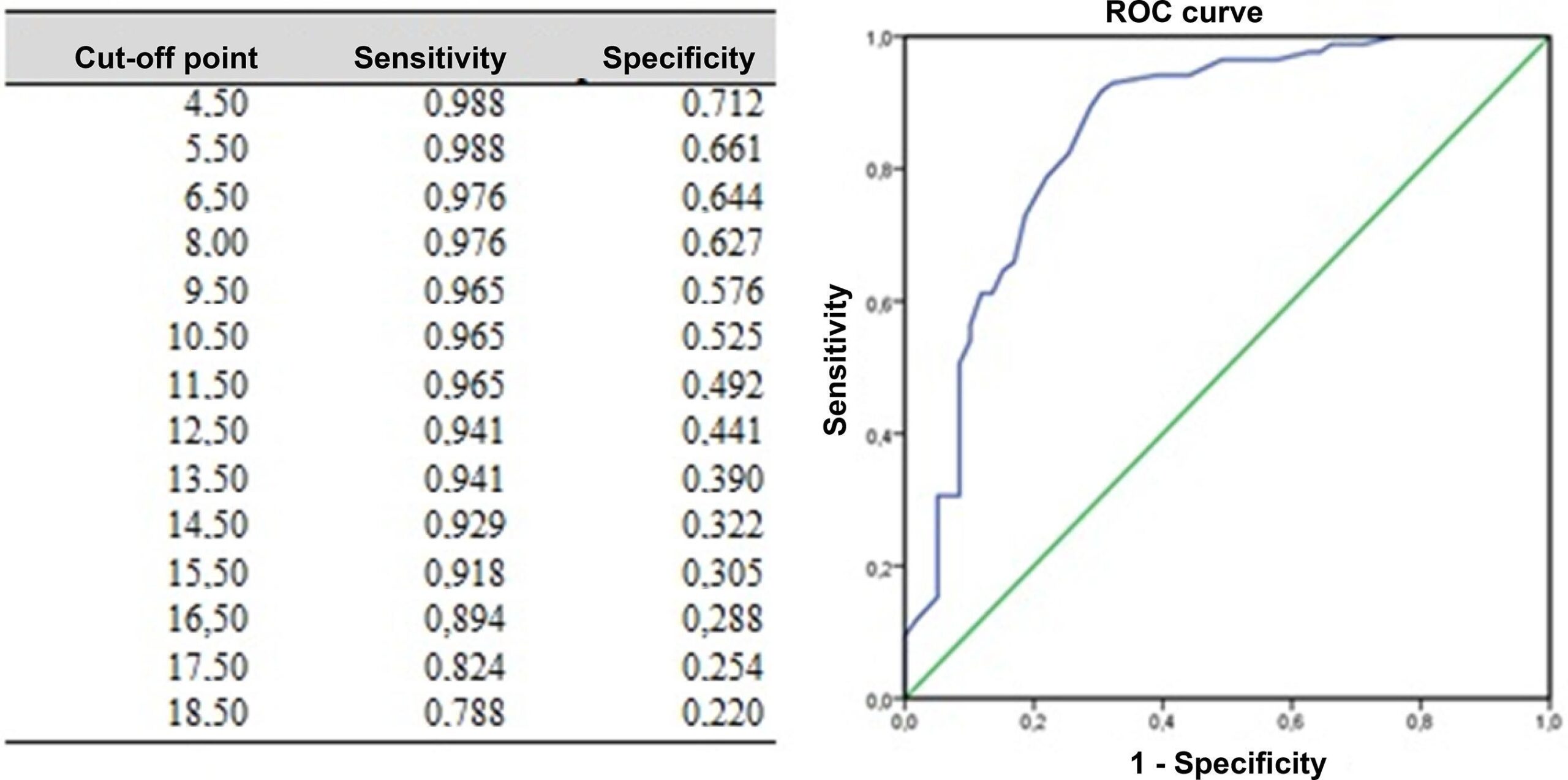
Cross-sectional, observational study with a quantitative approach. A total of 144 patients (including outpatients and inpatients) were interviewed at the waiting room of the outpatient cardiology clinic or in cardiology wards. Sociodemographic and clinical data were collected, and distress was assessed using two instruments – the Brazilian version of the STOP-D and the Hospital Anxiety and Depression Scale (HADS). First, we performed an exploratory factor analysis and analysis of the accuracy of the STOP-D score by the receiver operating characteristic (ROC) curvet.

Results:

The factorability analysis of the correlation matrix did not detect any factor that made the factorial solution unfeasible. The instrument showed a single-factor nature, confirmed by the criterion of eigenvalues, with an 85% accuracy in predicting distress. A cut-off point of 15.5 was chosen for distress using the ROC curve.

Conclusions:

The Brazilian version of the STOP-D is an adequate instrument for the screening of heart disease patient for distress. It can be easily used by any health professional and would contribute to the promotion of a comprehensive support to cardiac patients.

  • Anxiety
  • Cardiovascular Diseases
  • Depression
  • Health Delivery
  • Quality of life
  • Social Conditions
  • Stress,Psychological
Read Full Article
Creative Commons Attribution (CC BY) Creative Commons license
15/04/2019 DOI: 10.5935/2359-4802.20190030 Views 1
Figure 1
ABC
Original Article

Progression of Mortality due to Diseases of the Circulatory System and Human Development Index in Rio de Janeiro Municipalities

Gabriel Porto Soares et al. Carlos Henrique Klein Nelson Albuquerque de Souza e Silva Glaucia Maria Moraes de Oliveira

Abstract

Background:

Diseases of the circulatory system (DCS) are the major cause of death in Brazil and worldwide.

Objective:

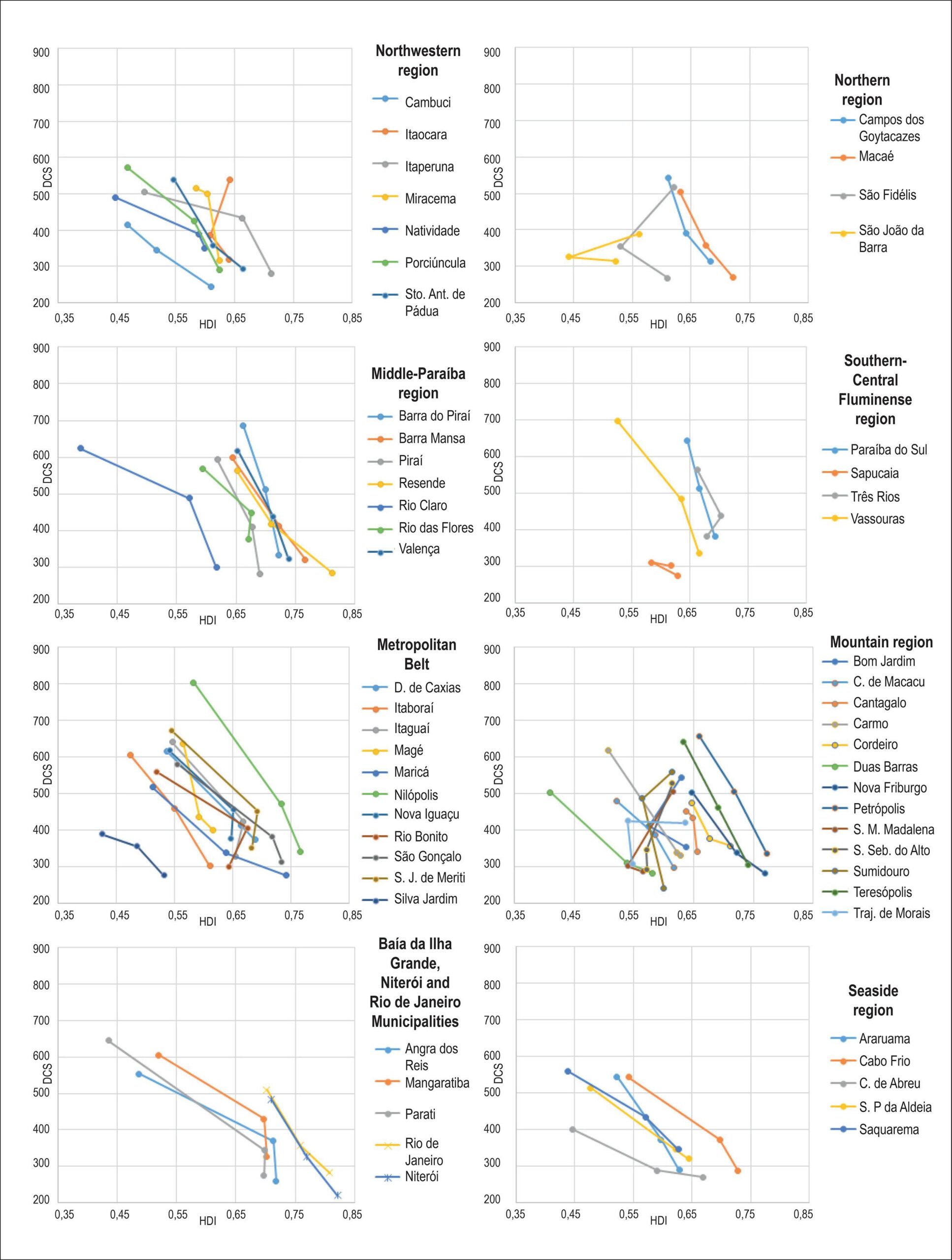
To correlate the compensated and adjusted mortality rates due to DCS in the Rio de Janeiro State municipalities between 1979 and 2010 with the Human Development Index (HDI) from 1970 onwards.

Methods:

Population and death data were obtained in DATASUS/MS database. Mortality rates due to ischemic heart diseases (IHD), cerebrovascular diseases (CBVD) and DCS adjusted by using the direct method and compensated for ill-defined causes. The HDI data were obtained at the Brazilian Institute of Applied Research in Economics. The mortality rates and HDI values were correlated by estimating Pearson linear coefficients. The correlation coefficients between the mortality rates of census years 1991, 2000 and 2010 and HDI data of census years 1970, 1980 and 1991 were calculated with discrepancy of two demographic censuses. The linear regression coefficients were estimated with disease as the dependent variable and HDI as the independent variable.

Results:

In recent decades, there was a reduction in mortality due to DCS in all Rio de Janeiro State municipalities, mainly because of the decline in mortality due to CBVD, which was preceded by an elevation in HDI. There was a strong correlation between the socioeconomic indicator and mortality rates.

Conclusion:

The HDI progression showed a strong correlation with the decline in mortality due to DCS, signaling to the relevance of improvements in life conditions.

  • Brain Diseases/mortality
  • Cardiovascular Diseases, mortality
  • Censuses
  • Economic Indexes
  • Epidemiology
  • Social Conditions
  • Social Indicators
Read Full Article
Creative Commons Attribution (CC BY) Creative Commons license
01/10/2016 DOI: 10.5935/abc.20160141

How to cite this article

EndNote RIS

Electronic Document Format (Vancouver)

Markman-Filho B, Gonçalves-Macedo L. Sociodemographic Disparities in Acute Myocardial Infarction in Rio de Janeiro State. International Journal of Cardiovascular Sciences 2023;36:e20230043.

Electronic Document Format (ABNT)

Markman-Filho, Brivaldo; Gonçalves-Macedo, Liana. Sociodemographic Disparities in Acute Myocardial Infarction in Rio de Janeiro State. International Journal of Cardiovascular Sciences, v. 36, e20230043, Jul. 2023.

Electronic Document Format (APA)

Markman-Filho, B., & Gonçalves-Macedo, L. (2023). Sociodemographic Disparities in Acute Myocardial Infarction in Rio de Janeiro State. International Journal of Cardiovascular Sciences, 36, e20230043.

Electronic Document Format (ISO)

Markman-Filho, Brivaldo and Gonçalves-Macedo, Liana. Sociodemographic Disparities in Acute Myocardial Infarction in Rio de Janeiro State. International Journal of Cardiovascular Sciences [online]. 2023, vol. 36, [cited 2026-10-14], e20230043. Available from: <https://journals.cardiol.br/en/article/sociodemographic-disparities-in-acute-myocardial-infarction-in-rio-de-janeiro-state/>. ISSN 2359-4802

EndNote RIS

Electronic Document Format (Vancouver)

Gontijo IBR, Souza JR, Barbosa DF, Rassi S. Validation of the Brazilian Version of the Screening Tool for Psychosocial Distress (Stop-D) for Cardiac Patients. International Journal of Cardiovascular Sciences 2019;32(5):438-46.

Electronic Document Format (ABNT)

Gontijo, Isabella Barros Rabelo; Souza, Juciléia Rezende; Barbosa, Daniel Fernandes; Rassi, Salvador. Validation of the Brazilian Version of the Screening Tool for Psychosocial Distress (Stop-D) for Cardiac Patients. International Journal of Cardiovascular Sciences, v. 32, n. 5, p. 438-446, Apr. 2019.

Electronic Document Format (APA)

Gontijo, I. B. R., Souza, J. R., Barbosa, D. F., & Rassi, S. (2019). Validation of the Brazilian Version of the Screening Tool for Psychosocial Distress (Stop-D) for Cardiac Patients. International Journal of Cardiovascular Sciences, 32(5), 438-446.

Electronic Document Format (ISO)

Gontijo, Isabella Barros Rabelo and Souza, Juciléia Rezende and Barbosa, Daniel Fernandes and Rassi, Salvador. Validation of the Brazilian Version of the Screening Tool for Psychosocial Distress (Stop-D) for Cardiac Patients. International Journal of Cardiovascular Sciences [online]. 2019, vol. 32, n. 5, [cited 2026-10-14], pp. 438-446. Available from: <https://journals.cardiol.br/en/article/validation-of-the-brazilian-version-of-the-screening-tool-for-psychosocial-distress-stop-d-for-cardiac-patients/>. ISSN 2359-4802

EndNote RIS

Electronic Document Format (Vancouver)

Soares GP, Klein CH, Silva NAS, Oliveira GMM. Progression of Mortality due to Diseases of the Circulatory System and Human Development Index in Rio de Janeiro Municipalities. Arquivos Brasileiros de Cardiologia 2016;107(4):314-22.

Electronic Document Format (ABNT)

Soares, Gabriel Porto; Klein, Carlos Henrique; Silva, Nelson Albuquerque de Souza e; Oliveira, Glaucia Maria Moraes de. Progression of Mortality due to Diseases of the Circulatory System and Human Development Index in Rio de Janeiro Municipalities. Arquivos Brasileiros de Cardiologia, v. 107, n. 4, p. 314-322, Sep. 2016.

Electronic Document Format (APA)

Soares, G. P., Klein, C. H., Silva, N. A. S. , & Oliveira, G. M. M. (2016). Progression of Mortality due to Diseases of the Circulatory System and Human Development Index in Rio de Janeiro Municipalities. Arquivos Brasileiros de Cardiologia, 107(4), 314-322.

Electronic Document Format (ISO)

Soares, Gabriel Porto and Klein, Carlos Henrique and Silva, Nelson Albuquerque de Souza e and Oliveira, Glaucia Maria Moraes de. Progression of Mortality due to Diseases of the Circulatory System and Human Development Index in Rio de Janeiro Municipalities. Arquivos Brasileiros de Cardiologia [online]. 2016, vol. 107, n. 4, [cited 2026-10-14], pp. 314-322. Available from: <https://journals.cardiol.br/en/article/progression-of-mortality-due-to-diseases-of-the-circulatory-system-and-human-development-index-in-rio-de-janeiro-municipalities/>. ISSN 0066-782X

  • About ABC Family
  • Internal Regulation
  • Editorial Board
  • Brazilian Society of Cardiology (SBC)

Issues

SBC Guidelines

  • Videos
  • Podcasts
  • News