| ABC
ABC Family Arquivos Brasileiros de Cardiologia International Journal of Cardiovascular Sciences ABC Heart Failure & Cardiomyopathy ABC Imagem Cardiovascular
Português English
ABC Family | ABC
Português English
  • About
    • About the Journal
    • Internal Regulation
    • Editors Section
    • Editorial Board
    • History
    • SBC Award
  • Instructions to Authors
    • Guidelines for Publication
    • Editorial Policy
    • Ethics Policy
    • Policy on the Use of Artificial Intelligence
    • Mandatory Publication Form
    • Publication Fee
  • Issues
  • SBC Guidelines
  • Abstracts
    • How to Publish an Abstract Supplement?
    • Supplements from the Brazilian Congress of Cardiology
  • About
    • About the Journal
    • Internal Regulation
    • Editors Section
    • Editorial Board
    • History
    • SBC Award
  • Instructions to Authors
    • Guidelines for Publication
    • Editorial Policy
    • Ethics Policy
    • Policy on the Use of Artificial Intelligence
    • Mandatory Publication Form
    • Publication Fee
  • Issues
  • SBC Guidelines
  • Abstracts
    • How to Publish an Abstract Supplement?
    • Supplements from the Brazilian Congress of Cardiology

ABC Family

  • ABC Family
  • Arquivos Brasileiros de Cardiologia
  • International Journal of Cardiovascular Sciences
  • ABC Heart Failure & Cardiomyopathy
  • ABC Imagem Cardiovascular
Search in

No content found.

Journals
Ordering
Article types
Others

  1. Home
  2. ABC
  3. Issues
  4. 2002, Volume 78, Number 4
Original Article

Acute Myocardial Infarction: The First Manifestation of Ischemic Heart Disease and Relation to Risk Factors

Waldomiro Carlos Manfroi et al. Carolina Peukert Clarissa Bacha Berti Clarissa Noer … Danielle de Ávila Gutierres Felipe Theodoro Bezerra Gaspar Carvalho da Silva

OBJECTIVE: To assess the association between cardiovascular risk factors and acute myocardial infarction as the first manifestation of ischemic heart disease, correlating them with coronary angiographic findings. METHODS: We carried out a cross-sectional study of 104 patients with previous acute myocardial infarction, who were divided into 2 groups according to the presence or absence of angina prior to acute myocardial infarction. We assessed the presence of angina preceding acute myocardial infarction and risk factors, such as age >55 years, male sex, smoking, systemic arterial hypertension, lipid profile, diabetes mellitus, obesity, sedentary lifestyle, and familial history of ischemic heart disease. On coronary angiography, the severity of coronary heart disease and presence of left ventricular hypertrophy were assessed. RESULTS: Of the 104 patients studied, 72.1% were males, 90.4% were white, 73.1% were older than 55 years, and 53.8% were hypertensive. Acute myocardial infarction was the first manifestation of ischemic heart disease in 49% of the patients. The associated risk factors were systemic arterial hypertension (RR=0.19; 95% CI=0.06-0.59; P=0.04) and left ventricular hypertrophy (RR=0.27; 95% CI=0,.8-0.88; P=0.03). The remaining risk factors were not statistically significant. CONCLUSION: Prevalence of acute myocardial infarction as the first manifestation of ischemic heart disease is high, approximately 50%. Hypertensive individuals more frequently have symptoms preceding acute myocardial infarction, probably due to ventricular hypertrophy associated with high blood pressure levels.
  • Acute Myocardial Infarction
  • Risk Factors
Read Full Article
Creative Commons Attribution (CC BY) Creative Commons license
31/01/2007 DOI: 10.1590/S0066-782X2002000400006
Original Article

Pharmacological Therapy for Myocardial Infarction in the Elderly: An 8-year Analysis

Márcia Regina Pinho Makdisse et al. Andrea de M. Matsushita Iran Gonçalves Júnior Odete Miranda … Ana Cristina Gomes Monica M. Cartocci Silvia Covre Antonio Carlos de Camargo Carvalho

OBJECTIVE:To assess the changes in the medicamentous treatment of elderly patients hospitalized with acute myocardial infarction occurring over an 8-year period. METHODS:We retrospectively analyzed 379 patients above the age of 65 years with acute myocardial infarction who were admitted to the coronary unit of a university-affiliated hospital from 1990 to 1997. The patients were divided into 2 groups, according to the period of time of hospital admission as follows: group 1 – from 1990 to 1993; and group 2 – from 1994 to 1997. RESULTS:The use of beta-blockers (40.8%chi 75.2%, p<0.0001) and angiotensin-converting enzyme inhibitors (42% chi59.5%, p=0.001) was significantly greater in group 2, while the use of calcium antagonists (42% chi 18.5%, p<0.0001) and general antiarrhythmic drugs (19.1% chi 10.8%, p=0.03) was significantly lower. No significant difference was observed in regard to the use of acetylsalicylic acid, thrombolytic agents, nitrate, and digitalis in the period studied. The length of hospitalization was shorter in group 2 (13.4±8.9 days chi 10.5±7.5 days, p<0.001). The in-hospital mortality was 35.7% in group 1 and 26.6% in group 2 (p=0.07). CONCLUSION: Significant changes were observed in the treatment of elderly patients with acute myocardial infarction, with a greater use of beta-blockers and angiotensin-converting enzyme inhibitors and a lower use of calcium antagonists and antiarrhythmic drugs in group 2. The length of hospitalization and the mortality rate were also lower in group 2, even though the reduction in mortality was not statistically significant.

  • Elderly
  • Myocardial Infarction
  • Treatment
Read Full Article
Creative Commons Attribution (CC BY) Creative Commons license
31/01/2007 DOI: 10.1590/S0066-782X2002000400003
Clinical Profile, Predictors of Mortality, and Treatment of Patients after Myocardial Infarction, in an Academic Medical Center Hospital
Original Article

Clinical Profile, Predictors of Mortality, and Treatment of Patients after Myocardial Infarction, in an Academic Medical Center Hospital

Leonardo A. M. Zornoff et al. Sérgio A. R. Paiva Vanessa M. Assalin Patrícia M. S. Pola … Luís E. Becker Marina P. Okoshi Luiz S. Matsubara Roberto M. T. Inoue Joel Spadaro

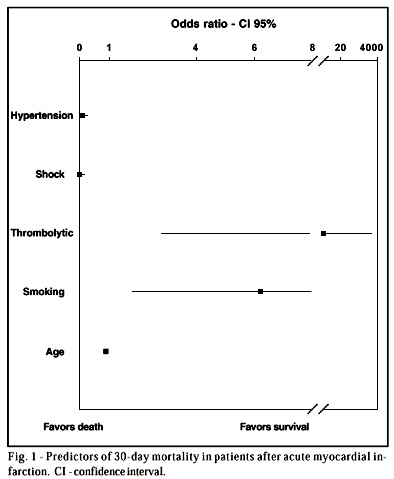
OBJECTIVE: To evaluate clinical profiles, predictors of 30-day mortality, and the adherence to international recommendations for the treatment of myocardial infarction in an academic medical center hospital. METHODS: We retrospectively studied 172 patients with acute myocardial infarction, admitted in the intensive care unit from January 1992 to December 1997. RESULTS: Most patients were male (68%), white (97%), and over 60 years old (59%). The main risk factor for coronary atherosclerotic disease was systemic blood hypertension (63%). Among all the variables studied, reperfusion therapy, smoking, hypertension, cardiogenic shock, and age were the predictors of 30-day mortality. Most commonly used medications were: acetylsalicylic acid (71%), nitrates (61%), diuretics (51%), angiotensin-converting enzyme inhibitors (46%), thrombolytic therapy (39%), and beta-blockers (35%). CONCLUSION: The absence of reperfusion therapy, smoking status, hypertension, cardiogenic shock, and advanced age are predictors of 30-day mortality in patients with acute myocardial infarction. In addition, some medications that are undoubtedly beneficial have been under-used after acute myocardial infarction.

  • Mortality
  • Myocardial Infarction
  • Treatment
Read Full Article
Creative Commons Attribution (CC BY) Creative Commons license
31/01/2007 DOI: 10.1590/S0066-782X2002000400007
Concomitant Use of Glycoprotein IIb/IIIa Inhibitor and Streptokinase after Unsuccessful Rescue Angioplasty
Case Report

Concomitant Use of Glycoprotein IIb/IIIa Inhibitor and Streptokinase after Unsuccessful Rescue Angioplasty

José Marconi Almeida de Sousa et al. Leonardo Severino Ederlon de Carvalho Rezende Jairon Nascimento Alencar … Valter Correia de Lima João Lourenço V. Hermann

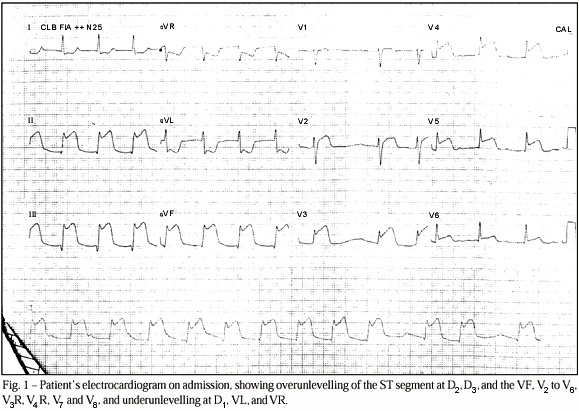
A 38-year-old man with acute myocardial infarction in the lower wall affecting the right ventricle underwent thrombolytic treatment with streptokinase. Approximately 2 hours after the thrombolytic treatment started, he presented with signs of coronary reocclusion. He underwent emergency cineangiocoronariography that revealed that his right coronary artery was completely occluded by a clot. He unsuccessfully underwent angioplasty and stent implantation. After the concomitant use of glycoprotein IIb/IIIa inhibitor, coronary TIMI III flow was achieved without additional dilations, and he was discharged from the hospital 5 days later with no further complications.

Read Full Article
Creative Commons Attribution (CC BY) Creative Commons license
31/01/2007 DOI: 10.1590/S0066-782X2002000400009
Letter to the Editor

Letter to the Editor

Hurkan Kursaklioglu et al. Atila Iyisoy Ertan Demirtas

Letters

Letter to the Editor,

[…]

Read Full Article
Creative Commons Attribution (CC BY) Creative Commons license
31/01/2007 DOI: 10.1590/S0066-782X2002000400013
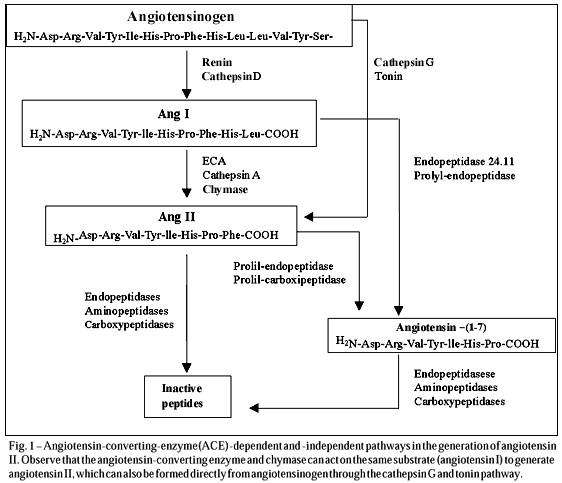
Alternate Angiotensin II-Forming Pathways and Their Importance in Physiological or Physiopathological Conditions
Updated

Alternate Angiotensin II-Forming Pathways and Their Importance in Physiological or Physiopathological Conditions

Micheline Monteiro de Resende et al. José Geraldo Mill

Update

Alternate Angiotensin II-Forming Pathways and Their Importance in Physiological or Physiopathological Conditions

[…]

Read Full Article
Creative Commons Attribution (CC BY) Creative Commons license
31/01/2007 DOI: 10.1590/S0066-782X2002000400012
Original Article

Analysis of the Prevalence of Ventricular Late Potentials in the Late Phase of Myocardial Infarction Based on the Site of Infarction

P. R. Benchimol-Barbosa et al. Marcos Oliveira de Sousa Eduardo Correa Barbosa Alfredo de Souza Bomfim … Paulo Ginefra Jurandir Nadal

OBJECTIVE: The initial site of myocardial infarction (MI) may influence the prevalence of ventricular late potentials (VLP), high-frequency signals, due to the time course of ventricular activation. The prevalence of VLP in a period of more than 2 years after acute MI was assessed focusing on the initially injured wall . METHODS: The prevalence of VLP in a late phase after MI (median of 924 days) in anterior/antero-septal and inferior/infero-dorsal wall lesion was analyzed using signal-averaged electrocardiogram in time domain. The diagnostic performance of the filters employed for analysis on was tested at high-pass cut-off frequencies of 25 Hz, 40 Hz and 80 Hz. RESULTS: The duration of the ventricular activation and its terminal portion were larger in inferior than anterior infarction, at high-pass cut-off frequencies of 40 Hz and 80 Hz. In patients with ventricular tachycardia, these differences were more remarked. The prevalence of ventricular late potentials was three times greater in inferior than anterior infarction. CONCLUSION: Late after myocardial infarction, the prevalence and the duration of ventricular late potentials are greater in lesions of inferior/infero-dorsal than anterior/antero-septal wall confirming their temporal process, reflecting their high-frequency content.

  • Myocardial Infarction
  • signal-averaged electrocardiogram
  • ventricular arrhythmia
Read Full Article
Creative Commons Attribution (CC BY) Creative Commons license
31/01/2007 DOI: 10.1590/S0066-782X2002000400002
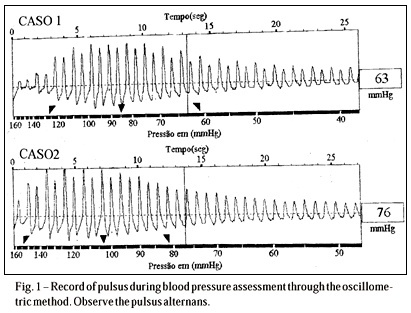
Nonrespiratory Sinus Arrhythmia
Case Report

Nonrespiratory Sinus Arrhythmia

José Barbosa Filho et al. P. R. Benchimol-Barbosa Ivan Cordovil

We report here 2 cases of sinus arrhythmia considered to be a form of nonrespiratory sinus arrhythmia because they did not have variances in the RR interval sequence within the oscillations modulated by respiration. Because the patients had pulsus alternans similar that observed in bigeminy, and because they did not have signs or symptoms of heart failure, we believe the arrhythmias represent intrinsic alterations of the electric activity of the sinus node

Read Full Article
Creative Commons Attribution (CC BY) Creative Commons license
31/01/2007 DOI: 10.1590/S0066-782X2002000400008
Left Ventricular Hypertrophy Evaluation in Obese Hypertensive Patients: Effect of Left Ventricular Mass Index Criteria
Original Article

Left Ventricular Hypertrophy Evaluation in Obese Hypertensive Patients: Effect of Left Ventricular Mass Index Criteria

Eduardo Cantoni Rosa et al. Valdir Ambrósio Moysés Ricardo Cintra Sesso Frida Liane Plavnik … Fernando Flexa Ribeiro Nárcia E. B. Kohlmann Artur Beltrame Ribeiro Maria Tereza Zanella Osvaldo Kohlmann Jr.

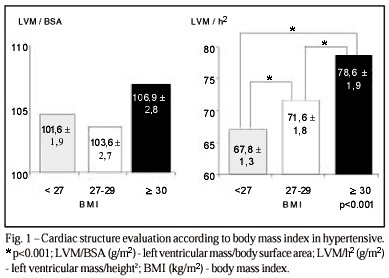
PURPOSE: To evaluate left ventricular mass (LVM) index in hypertensive and normotensive obese individuals. METHODS: Using M mode echocardiography, 544 essential hypertensive and 106 normotensive patients were evaluated, and LVM was indexed for body surface area (LVM/BSA) and for height² (LVM/h²). The 2 indexes were then compared in both populations, in subgroups stratified according to body mass index (BMI): or = 30kg/m². RESULTS: The BSA index does not allow identification of significant differences between BMI subgroups. Indexing by height² provides significantly increased values for high BMI subgroups in normotensive and hypertensive populations. CONCLUSION: Left ventricular hypertrophy (LVH) has been underestimated in the obese with the use of LVM/BSA because this index considers obesity as a physiological variable. Indexing by height² allows differences between BMI subgroups to become apparent and seems to be more appropriate for detecting LVH in obese populations.

  • Essential Hypertension
  • Left Ventricular Hypertrophy
  • left ventricular mass index
  • Obesity
Read Full Article
Creative Commons Attribution (CC BY) Creative Commons license
31/01/2007 DOI: 10.1590/S0066-782X2002000400001 Views 1
Assessment of Thromboembolism After the Cox-Maze Procedure for Chronic Atrial Fibrillation Secondary to Mitral Valve Lesion
Original Article

Assessment of Thromboembolism After the Cox-Maze Procedure for Chronic Atrial Fibrillation Secondary to Mitral Valve Lesion

Renato A. K. Kalil et al. Paula L. M. Nesralla Gustavo G. Lima Tiago L. Leiria … Rogério Abrahão Paulo Moreno Paulo R. Prates João R. M. Sant'Anna Ivo A. Nesralla

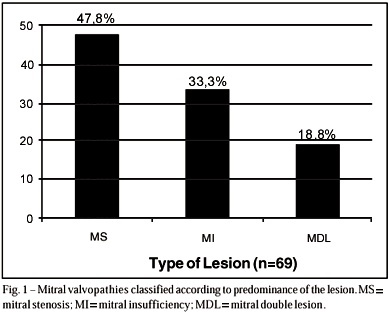
OBJECTIVE: To assess the occurrence of late thromboembolism after surgical repair of chronic atrial fibrillation (AF) simultaneously with repair of mitral valve using the Cox-Maze procedure. METHODS: 69 patients underwent Cox 3 procedure, with no cryoablation simultaneously with mitral valvuloplasty or prosthesis. Mean age was 49.9±13.2 years. Mean follow-up was of 31.7±19 months. Types of lesion were as follows: 33 (48%) stenoses, 23 (33%) insufficiencies, and 13 (19%) double lesions. Procedures were: 64 (93%) valvuloplasties, 3 (4%) biological and 2 (3%) mechanical prosthesis placement. There were 9 (13%) patients with previous systemic embolism and 2 (3%) had left atrial thrombi. RESULTS: Early mortality was 7% and late 1%. 2 patients (3%) were reoperated for mitral placement. At last evaluation, 10 patients (15%), were in AF. The remaining 59 (85%) were either in sinus / atrial rythm (74%) or under pacing (12%). There were no occurrence of early or late, systemic or pulmonary embolism. Permanent anticoagulation was employed in 16 cases, 10 in regular rythm and 6 in AF. The remaining 47 (75%), 2 in AF and 45 in regular rythm, did not receive anticoagulants. CONCLUSIONS: These results are in accordance with others series, where the occurrence of embolism was rare after maze procedure. Permanent systemic anticoagulation seems to be unnecessary in those cases.

  • Atrial Fibrillation
  • Mitral Valve/surgery
  • Thromboembolism
Read Full Article
Creative Commons Attribution (CC BY) Creative Commons license
31/01/2007 DOI: 10.1590/S0066-782X2002000400004 Views 1
Heart Weight and Heart Weight/Body Weight Coefficient in Malnourished Adults
Original Article

Heart Weight and Heart Weight/Body Weight Coefficient in Malnourished Adults

Daniel Ferreira da Cunha et al. Selma Freire de Carvalho da Cunha Marlene Antônia dos Reis Vicente de Paula Antunes Teixeira

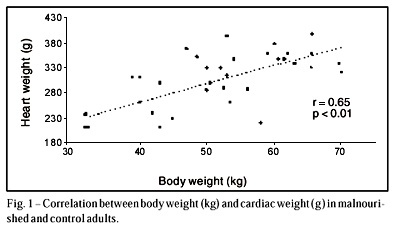
OBJECTIVE: To compare the heart weight and the heart weight/body weight coefficient of adults with and without chronic malnutrition. METHODS: In an initial case series of 210 autopsies performed in adults, we recorded body and heart weights and calculated the heart weight/body weight coefficients (HW/BW x 100). The exclusion criteria were as follows: positive serology for Chagas’ disease, edema, obesity, heart diseases, hepatopathies, nephropathies, and systemic arterial hypertension. Malnutrition was characterized as a body mass index <18.5kg/m². Differences with p<0.05 were considered significant. RESULTS: Individuals in the malnourished (n=15) and control (n=21) groups were statistically different, respectively, in regard to body mass index (15.9±1.7 versus 21.3±2.5kg/m²), heart weight (267.3±59.8 versus 329.1±50.4g), and the HW/BW coefficient (0.64±0.12 versus 0.57±0.09%). A positive and significant correlation was observed between heart weight and body mass index (r=0.52), and between heart weight and body weight (r=0.65). CONCLUSION: Malnourished individuals have lighter hearts and a greater HW/BW coefficient than non-malnourished individuals do. These findings indicate a possible preservation of the myocardium in relation to the intensity of weight loss associated with the probable relative increase in cardiac connective tissue and heart blood vessels.

  • cardiac hypotrophy
  • Heart
  • Nutrition
  • protein-calorie malnutrition
Read Full Article
Creative Commons Attribution (CC BY) Creative Commons license
31/01/2007 DOI: 10.1590/S0066-782X2002000400005 Views 1
Letter to the Editor

Dear Dr. Kursaklioglu and colleagues

Luiz A. Mattos

Letters

Dear Dr. Kursaklioglu and colleagues,

[…]

Read Full Article
Creative Commons Attribution (CC BY) Creative Commons license
31/01/2007 DOI: 10.1590/S0066-782X2002000400014

How to cite this article

EndNote RIS

Electronic Document Format (Vancouver)

Manfroi WC, Peukert C, Berti CB, Noer C, Gutierres D, Silva FTBGC. Acute Myocardial Infarction: The First Manifestation of Ischemic Heart Disease and Relation to Risk Factors. Arquivos Brasileiros de Cardiologia 2007;78(4):392-5.

Electronic Document Format (ABNT)

Manfroi, Waldomiro Carlos; Peukert, Carolina; Berti, Clarissa Bacha; Noer, Clarissa; Gutierres, Danielle de Ávila; Silva, Felipe Theodoro Bezerra Gaspar Carvalho da. Acute Myocardial Infarction: The First Manifestation of Ischemic Heart Disease and Relation to Risk Factors. Arquivos Brasileiros de Cardiologia, v. 78, n. 4, p. 392-395, Jan. 2007.

Electronic Document Format (APA)

Manfroi, W. C., Peukert, C., Berti, C. B., Noer, C., Gutierres, D. , & Silva, F. T. B. G. C. (2007). Acute Myocardial Infarction: The First Manifestation of Ischemic Heart Disease and Relation to Risk Factors. Arquivos Brasileiros de Cardiologia, 78(4), 392-395.

Electronic Document Format (ISO)

Manfroi, Waldomiro Carlos and Peukert, Carolina and Berti, Clarissa Bacha and Noer, Clarissa and Gutierres, Danielle de Ávila and Silva, Felipe Theodoro Bezerra Gaspar Carvalho da. Acute Myocardial Infarction: The First Manifestation of Ischemic Heart Disease and Relation to Risk Factors. Arquivos Brasileiros de Cardiologia [online]. 2007, vol. 78, n. 4, [cited 2026-10-14], pp. 392-395. Available from: <https://journals.cardiol.br/en/article/acute-myocardial-infarction-the-first-manifestation-of-ischemic-heart-disease-and-relation-to-risk-factors/>. ISSN 0066-782X

EndNote RIS

Electronic Document Format (Vancouver)

Makdisse MRP, Matsushita AM, Gonçalves Júnior I, Miranda O, Gomes AC, Cartocci MM, Covre S, et al. Pharmacological Therapy for Myocardial Infarction in the Elderly: An 8-year Analysis. Arquivos Brasileiros de Cardiologia 2007;78(4):369-73.

Electronic Document Format (ABNT)

Makdisse, Márcia Regina Pinho; Matsushita, Andrea de M.; Gonçalves Júnior, Iran; Miranda, Odete; Gomes, Ana Cristina; Cartocci, Monica M.; Covre, Silvia; Carvalho, Antonio Carlos de Camargo. Pharmacological Therapy for Myocardial Infarction in the Elderly: An 8-year Analysis. Arquivos Brasileiros de Cardiologia, v. 78, n. 4, p. 369-373, Jan. 2007.

Electronic Document Format (APA)

Makdisse, M. R. P., Matsushita, A. M., Gonçalves Júnior, I., Miranda, O., Gomes, A. C., Cartocci, M. M., Covre, S., & Carvalho, A. C. C. (2007). Pharmacological Therapy for Myocardial Infarction in the Elderly: An 8-year Analysis. Arquivos Brasileiros de Cardiologia, 78(4), 369-373.

Electronic Document Format (ISO)

Makdisse, Márcia Regina Pinho and Matsushita, Andrea de M. and Gonçalves Júnior, Iran and Miranda, Odete and Gomes, Ana Cristina and Cartocci, Monica M. and Covre, Silvia and Carvalho, Antonio Carlos de Camargo. Pharmacological Therapy for Myocardial Infarction in the Elderly: An 8-year Analysis. Arquivos Brasileiros de Cardiologia [online]. 2007, vol. 78, n. 4, [cited 2026-10-14], pp. 369-373. Available from: <https://journals.cardiol.br/en/article/pharmacological-therapy-for-myocardial-infarction-in-the-elderly-an-8-year-analysis/>. ISSN 0066-782X

EndNote RIS

Electronic Document Format (Vancouver)

Zornoff LAM, Paiva SAR, Assalin VM, Pola PMS, Becker LE, Okoshi MP, Matsubara LS, et al. Clinical Profile, Predictors of Mortality, and Treatment of Patients after Myocardial Infarction, in an Academic Medical Center Hospital. Arquivos Brasileiros de Cardiologia 2007;78(4):401-5.

Electronic Document Format (ABNT)

Zornoff, Leonardo A. M.; Paiva, Sérgio A. R.; Assalin, Vanessa M.; Pola, Patrícia M. S.; Becker, Luís E.; Okoshi, Marina P.; Matsubara, Luiz S.; Inoue, Roberto M. T.; Spadaro, Joel. Clinical Profile, Predictors of Mortality, and Treatment of Patients after Myocardial Infarction, in an Academic Medical Center Hospital. Arquivos Brasileiros de Cardiologia, v. 78, n. 4, p. 401-405, Jan. 2007.

Electronic Document Format (APA)

Zornoff, L. A. M., Paiva, S. A. R., Assalin, V. M., Pola, P. M. S., Becker, L. E., Okoshi, M. P., Matsubara, L. S., Inoue, R. M. T., & Spadaro, J. (2007). Clinical Profile, Predictors of Mortality, and Treatment of Patients after Myocardial Infarction, in an Academic Medical Center Hospital. Arquivos Brasileiros de Cardiologia, 78(4), 401-405.

Electronic Document Format (ISO)

Zornoff, Leonardo A. M. and Paiva, Sérgio A. R. and Assalin, Vanessa M. and Pola, Patrícia M. S. and Becker, Luís E. and Okoshi, Marina P. and Matsubara, Luiz S. and Inoue, Roberto M. T. and Spadaro, Joel. Clinical Profile, Predictors of Mortality, and Treatment of Patients after Myocardial Infarction, in an Academic Medical Center Hospital. Arquivos Brasileiros de Cardiologia [online]. 2007, vol. 78, n. 4, [cited 2026-10-14], pp. 401-405. Available from: <https://journals.cardiol.br/en/article/clinical-profile-predictors-of-mortality-and-treatment-of-patients-after-myocardial-infarction-in-an-academic-medical-center-hospital/>. ISSN 0066-782X

EndNote RIS

Electronic Document Format (Vancouver)

Sousa JMA, Severino L, Rezende EC, Alencar JN, Lima VC, Hermann JLV. Concomitant Use of Glycoprotein IIb/IIIa Inhibitor and Streptokinase after Unsuccessful Rescue Angioplasty. Arquivos Brasileiros de Cardiologia 2007;78(4):416-9.

Electronic Document Format (ABNT)

Sousa, José Marconi Almeida de; Severino, Leonardo; Rezende, Ederlon de Carvalho; Alencar, Jairon Nascimento; Lima, Valter Correia de; Hermann, João Lourenço V.. Concomitant Use of Glycoprotein IIb/IIIa Inhibitor and Streptokinase after Unsuccessful Rescue Angioplasty. Arquivos Brasileiros de Cardiologia, v. 78, n. 4, p. 416-419, Jan. 2007.

Electronic Document Format (APA)

Sousa, J. M. A. , Severino, L., Rezende, E. C., Alencar, J. N., Lima, V. C. , & Hermann, J. L. V. (2007). Concomitant Use of Glycoprotein IIb/IIIa Inhibitor and Streptokinase after Unsuccessful Rescue Angioplasty. Arquivos Brasileiros de Cardiologia, 78(4), 416-419.

Electronic Document Format (ISO)

Sousa, José Marconi Almeida de and Severino, Leonardo and Rezende, Ederlon de Carvalho and Alencar, Jairon Nascimento and Lima, Valter Correia de and Hermann, João Lourenço V.. Concomitant Use of Glycoprotein IIb/IIIa Inhibitor and Streptokinase after Unsuccessful Rescue Angioplasty. Arquivos Brasileiros de Cardiologia [online]. 2007, vol. 78, n. 4, [cited 2026-10-14], pp. 416-419. Available from: <https://journals.cardiol.br/en/article/concomitant-use-of-glycoprotein-iib-iiia-inhibitor-and-streptokinase-after-unsuccessful-rescue-angioplasty/>. ISSN 0066-782X

EndNote RIS

Electronic Document Format (Vancouver)

Kursaklioglu H, Iyisoy A, Demirtas E. Letter to the Editor. Arquivos Brasileiros de Cardiologia 2007;78(4):439.

Electronic Document Format (ABNT)

Kursaklioglu, Hurkan; Iyisoy, Atila; Demirtas, Ertan. Letter to the Editor. Arquivos Brasileiros de Cardiologia, v. 78, n. 4, p. 439-439, Jan. 2007.

Electronic Document Format (APA)

Kursaklioglu, H., Iyisoy, A., & Demirtas, E. (2007). Letter to the Editor. Arquivos Brasileiros de Cardiologia, 78(4), 439-439.

Electronic Document Format (ISO)

Kursaklioglu, Hurkan and Iyisoy, Atila and Demirtas, Ertan. Letter to the Editor. Arquivos Brasileiros de Cardiologia [online]. 2007, vol. 78, n. 4, [cited 2026-10-14], pp. 439-439. Available from: <https://journals.cardiol.br/en/article/letter-to-the-editor/>. ISSN 0066-782X

EndNote RIS

Electronic Document Format (Vancouver)

Resende MM, Mill JG. Alternate Angiotensin II-Forming Pathways and Their Importance in Physiological or Physiopathological Conditions. Arquivos Brasileiros de Cardiologia 2007;78(4):432-8.

Electronic Document Format (ABNT)

Resende, Micheline Monteiro de; Mill, José Geraldo. Alternate Angiotensin II-Forming Pathways and Their Importance in Physiological or Physiopathological Conditions. Arquivos Brasileiros de Cardiologia, v. 78, n. 4, p. 432-438, Jan. 2007.

Electronic Document Format (APA)

Resende, M. M. , & Mill, J. G. (2007). Alternate Angiotensin II-Forming Pathways and Their Importance in Physiological or Physiopathological Conditions. Arquivos Brasileiros de Cardiologia, 78(4), 432-438.

Electronic Document Format (ISO)

Resende, Micheline Monteiro de and Mill, José Geraldo. Alternate Angiotensin II-Forming Pathways and Their Importance in Physiological or Physiopathological Conditions. Arquivos Brasileiros de Cardiologia [online]. 2007, vol. 78, n. 4, [cited 2026-10-14], pp. 432-438. Available from: <https://journals.cardiol.br/en/article/alternate-angiotensin-ii-forming-pathways-and-their-importance-in-physiological-or-physiopathological-conditions/>. ISSN 0066-782X

EndNote RIS

Electronic Document Format (Vancouver)

Benchimol-Barbosa PR, Sousa MO, Barbosa EC, Bomfim AS, Ginefra P, Nadal J. Analysis of the Prevalence of Ventricular Late Potentials in the Late Phase of Myocardial Infarction Based on the Site of Infarction. Arquivos Brasileiros de Cardiologia 2007;78(4):358-63.

Electronic Document Format (ABNT)

Benchimol-Barbosa, P. R.; Sousa, Marcos Oliveira de; Barbosa, Eduardo Correa; Bomfim, Alfredo de Souza; Ginefra, Paulo; Nadal, Jurandir. Analysis of the Prevalence of Ventricular Late Potentials in the Late Phase of Myocardial Infarction Based on the Site of Infarction. Arquivos Brasileiros de Cardiologia, v. 78, n. 4, p. 358-363, Jan. 2007.

Electronic Document Format (APA)

Benchimol-Barbosa, P. R., Sousa, M. O. , Barbosa, E. C., Bomfim, A. S., Ginefra, P., & Nadal, J. (2007). Analysis of the Prevalence of Ventricular Late Potentials in the Late Phase of Myocardial Infarction Based on the Site of Infarction. Arquivos Brasileiros de Cardiologia, 78(4), 358-363.

Electronic Document Format (ISO)

Benchimol-Barbosa, P. R. and Sousa, Marcos Oliveira de and Barbosa, Eduardo Correa and Bomfim, Alfredo de Souza and Ginefra, Paulo and Nadal, Jurandir. Analysis of the Prevalence of Ventricular Late Potentials in the Late Phase of Myocardial Infarction Based on the Site of Infarction. Arquivos Brasileiros de Cardiologia [online]. 2007, vol. 78, n. 4, [cited 2026-10-14], pp. 358-363. Available from: <https://journals.cardiol.br/en/article/analysis-of-the-prevalence-of-ventricular-late-potentials-in-the-late-phase-of-myocardial-infarction-based-on-the-site-of-infarction/>. ISSN 0066-782X

EndNote RIS

Electronic Document Format (Vancouver)

Barbosa Filho J, Benchimol-Barbosa PR, Cordovil I. Nonrespiratory Sinus Arrhythmia. Arquivos Brasileiros de Cardiologia 2007;78(4):409-11.

Electronic Document Format (ABNT)

Barbosa Filho, José; Benchimol-Barbosa, P. R.; Cordovil, Ivan. Nonrespiratory Sinus Arrhythmia. Arquivos Brasileiros de Cardiologia, v. 78, n. 4, p. 409-411, Jan. 2007.

Electronic Document Format (APA)

Barbosa Filho, J., Benchimol-Barbosa, P. R., & Cordovil, I. (2007). Nonrespiratory Sinus Arrhythmia. Arquivos Brasileiros de Cardiologia, 78(4), 409-411.

Electronic Document Format (ISO)

Barbosa Filho, José and Benchimol-Barbosa, P. R. and Cordovil, Ivan. Nonrespiratory Sinus Arrhythmia. Arquivos Brasileiros de Cardiologia [online]. 2007, vol. 78, n. 4, [cited 2026-10-14], pp. 409-411. Available from: <https://journals.cardiol.br/en/article/nonrespiratory-sinus-arrhythmia/>. ISSN 0066-782X

EndNote RIS

Electronic Document Format (Vancouver)

Rosa EC, Moysés VA, Sesso RC, Plavnik FL, Ribeiro FF, Kohlmann NEB, Ribeiro AB, et al. Left Ventricular Hypertrophy Evaluation in Obese Hypertensive Patients: Effect of Left Ventricular Mass Index Criteria. Arquivos Brasileiros de Cardiologia 2007;78(4):347-51.

Electronic Document Format (ABNT)

Rosa, Eduardo Cantoni; Moysés, Valdir Ambrósio; Sesso, Ricardo Cintra; Plavnik, Frida Liane; Ribeiro, Fernando Flexa; Kohlmann, Nárcia E. B.; Ribeiro, Artur Beltrame; Zanella, Maria Tereza; Kohlmann Jr., Osvaldo. Left Ventricular Hypertrophy Evaluation in Obese Hypertensive Patients: Effect of Left Ventricular Mass Index Criteria. Arquivos Brasileiros de Cardiologia, v. 78, n. 4, p. 347-351, Jan. 2007.

Electronic Document Format (APA)

Rosa, E. C., Moysés, V. A., Sesso, R. C., Plavnik, F. L., Ribeiro, F. F., Kohlmann, N. E. B., Ribeiro, A. B., Zanella, M. T., & Kohlmann Jr., O. (2007). Left Ventricular Hypertrophy Evaluation in Obese Hypertensive Patients: Effect of Left Ventricular Mass Index Criteria. Arquivos Brasileiros de Cardiologia, 78(4), 347-351.

Electronic Document Format (ISO)

Rosa, Eduardo Cantoni and Moysés, Valdir Ambrósio and Sesso, Ricardo Cintra and Plavnik, Frida Liane and Ribeiro, Fernando Flexa and Kohlmann, Nárcia E. B. and Ribeiro, Artur Beltrame and Zanella, Maria Tereza and Kohlmann Jr., Osvaldo. Left Ventricular Hypertrophy Evaluation in Obese Hypertensive Patients: Effect of Left Ventricular Mass Index Criteria. Arquivos Brasileiros de Cardiologia [online]. 2007, vol. 78, n. 4, [cited 2026-10-14], pp. 347-351. Available from: <https://journals.cardiol.br/en/article/left-ventricular-hypertrophy-evaluation-in-obese-hypertensive-patients-effect-of-left-ventricular-mass-index-criteria/>. ISSN 0066-782X

EndNote RIS

Electronic Document Format (Vancouver)

Kalil RAK, Nesralla PLM, Lima GG, Leiria TL, Abrahão R, Moreno P, Prates PR, et al. Assessment of Thromboembolism After the Cox-Maze Procedure for Chronic Atrial Fibrillation Secondary to Mitral Valve Lesion. Arquivos Brasileiros de Cardiologia 2007;78(4):378-81.

Electronic Document Format (ABNT)

Kalil, Renato A. K.; Nesralla, Paula L. M.; Lima, Gustavo G.; Leiria, Tiago L.; Abrahão, Rogério; Moreno, Paulo; Prates, Paulo R.; Sant’Anna, João R. M.; Nesralla, Ivo A.. Assessment of Thromboembolism After the Cox-Maze Procedure for Chronic Atrial Fibrillation Secondary to Mitral Valve Lesion. Arquivos Brasileiros de Cardiologia, v. 78, n. 4, p. 378-381, Jan. 2007.

Electronic Document Format (APA)

Kalil, R. A. K., Nesralla, P. L. M., Lima, G. G., Leiria, T. L., Abrahão, R., Moreno, P., Prates, P. R., Sant’Anna, J. R. M., & Nesralla, I. A. (2007). Assessment of Thromboembolism After the Cox-Maze Procedure for Chronic Atrial Fibrillation Secondary to Mitral Valve Lesion. Arquivos Brasileiros de Cardiologia, 78(4), 378-381.

Electronic Document Format (ISO)

Kalil, Renato A. K. and Nesralla, Paula L. M. and Lima, Gustavo G. and Leiria, Tiago L. and Abrahão, Rogério and Moreno, Paulo and Prates, Paulo R. and Sant’Anna, João R. M. and Nesralla, Ivo A.. Assessment of Thromboembolism After the Cox-Maze Procedure for Chronic Atrial Fibrillation Secondary to Mitral Valve Lesion. Arquivos Brasileiros de Cardiologia [online]. 2007, vol. 78, n. 4, [cited 2026-10-14], pp. 378-381. Available from: <https://journals.cardiol.br/en/article/assessment-of-thromboembolism-after-the-cox-maze-procedure-for-chronic-atrial-fibrillation-secondary-to-mitral-valve-lesion/>. ISSN 0066-782X

EndNote RIS

Electronic Document Format (Vancouver)

Cunha DF, Cunha SFC, Reis MA, Teixeira VPA. Heart Weight and Heart Weight/Body Weight Coefficient in Malnourished Adults. Arquivos Brasileiros de Cardiologia 2007;78(4):385-7.

Electronic Document Format (ABNT)

Cunha, Daniel Ferreira da; Cunha, Selma Freire de Carvalho da; Reis, Marlene Antônia dos; Teixeira, Vicente de Paula Antunes. Heart Weight and Heart Weight/Body Weight Coefficient in Malnourished Adults. Arquivos Brasileiros de Cardiologia, v. 78, n. 4, p. 385-387, Jan. 2007.

Electronic Document Format (APA)

Cunha, D. F. , Cunha, S. F. C. , Reis, M. A. , & Teixeira, V. P. A. (2007). Heart Weight and Heart Weight/Body Weight Coefficient in Malnourished Adults. Arquivos Brasileiros de Cardiologia, 78(4), 385-387.

Electronic Document Format (ISO)

Cunha, Daniel Ferreira da and Cunha, Selma Freire de Carvalho da and Reis, Marlene Antônia dos and Teixeira, Vicente de Paula Antunes. Heart Weight and Heart Weight/Body Weight Coefficient in Malnourished Adults. Arquivos Brasileiros de Cardiologia [online]. 2007, vol. 78, n. 4, [cited 2026-10-14], pp. 385-387. Available from: <https://journals.cardiol.br/en/article/heart-weight-and-heart-weight-body-weight-coefficient-in-malnourished-adults/>. ISSN 0066-782X

EndNote RIS

Electronic Document Format (Vancouver)

Mattos LA. Dear Dr. Kursaklioglu and colleagues. Arquivos Brasileiros de Cardiologia 2007;78(4):440.

Electronic Document Format (ABNT)

Mattos, Luiz A.. Dear Dr. Kursaklioglu and colleagues. Arquivos Brasileiros de Cardiologia, v. 78, n. 4, p. 440-440, Jan. 2007.

Electronic Document Format (APA)

Mattos, L. A. (2007). Dear Dr. Kursaklioglu and colleagues. Arquivos Brasileiros de Cardiologia, 78(4), 440-440.

Electronic Document Format (ISO)

Mattos, Luiz A.. Dear Dr. Kursaklioglu and colleagues. Arquivos Brasileiros de Cardiologia [online]. 2007, vol. 78, n. 4, [cited 2026-10-14], pp. 440-440. Available from: <https://journals.cardiol.br/en/article/dear-dr-kursaklioglu-and-colleagues/>. ISSN 0066-782X

Sede – Rio de Janeiro
Av. Marechal Câmara, 160
3º andar – Sala: 330 – Centro
Rio de Janeiro – CEP: 20020-907
Tel.: (55 +21) 3478-2700
ou (21) 99386-3961
E-mail: revista@cardiol.br

Sede – São Paulo
Alameda Santos, 705 – 11º andar
Cerqueira César | São Paulo
CEP: 01419-001
Tel.: (55 +11) 3411-5500
E-mail: revista@cardiol.br

  • About the Journal
  • Internal Regulation
  • Editors Section
  • Editorial Board
  • History
  • SBC Award

  • Guidelines for Publication
  • Editorial Policy
  • Ethics Policy
  • Policy on the Use of Artificial Intelligence
  • Mandatory Publication Form
  • Publication Fee

Issues

SBC Guidelines

  • How to Publish an Abstract Supplement?
  • Supplements from the Brazilian Congress of Cardiology