ABC Family Arquivos Brasileiros de Cardiologia International Journal of Cardiovascular Sciences ABC Heart Failure & Cardiomyopathy ABC Imagem Cardiovascular
Português English
ABC Family
Português English
  • About
    • About ABC Family
    • Internal Regulation
    • Editorial Board
    • Brazilian Society of Cardiology (SBC)
  • Issues
  • SBC Guidelines
  • Content
    • Videos
    • Podcasts
    • News
  • About
    • About ABC Family
    • Internal Regulation
    • Editorial Board
    • Brazilian Society of Cardiology (SBC)
  • Issues
  • SBC Guidelines
  • Content
    • Videos
    • Podcasts
    • News

ABC Family

  • ABC Family
  • Arquivos Brasileiros de Cardiologia
  • International Journal of Cardiovascular Sciences
  • ABC Heart Failure & Cardiomyopathy
  • ABC Imagem Cardiovascular
Search in

No content found.

Journals
Ordering
Article types
Others

  1. Home
  2. Keyword: Molecular Biology
ABC
Editorial

Biomarkers in Acute Myocardial Infarction Diagnosis and Prognosis

Paula F. Martinez et al. Silvio A. Oliveira-Junior Bertha F. Polegato Katashi Okoshi Marina P. Okoshi

Biomarkers have become a helpful tool for clinicians to establish acute and chronic diseases diagnosis and prognosis more accurately. The rapid expansion of researches in this field has been stimulated by molecular biology and omics techniques development.

In cardiovascular disease, the release of the intracellular components into the bloodstream in higher concentrations than usual are related to pathological conditions, such as necrosis, inflammation, hemodynamic stress, and thrombosis, and considered potential biomarkers. Although a large number of cardiac biomarkers has been described, only a few of them were incorporated in clinical practice. Their usefulness depends on their specificity and sensitivity for detecting myocardial injury, reproducibility, accuracy, and the discriminatory limits to distinguish between pathologic from physiologic levels.

[…]

  • Biomarkers
  • Cardiovascular Diseases
  • Diagnosis
  • Molecular Biology
  • Mortality
  • Myocardial Infarction
  • Prognosis
  • Sirtuins
Read Full Article
Creative Commons Attribution (CC BY) Creative Commons license
08/08/2019 DOI: 10.5935/abc.20190131 Views 1
Figure 1
ABC
Viewpoint

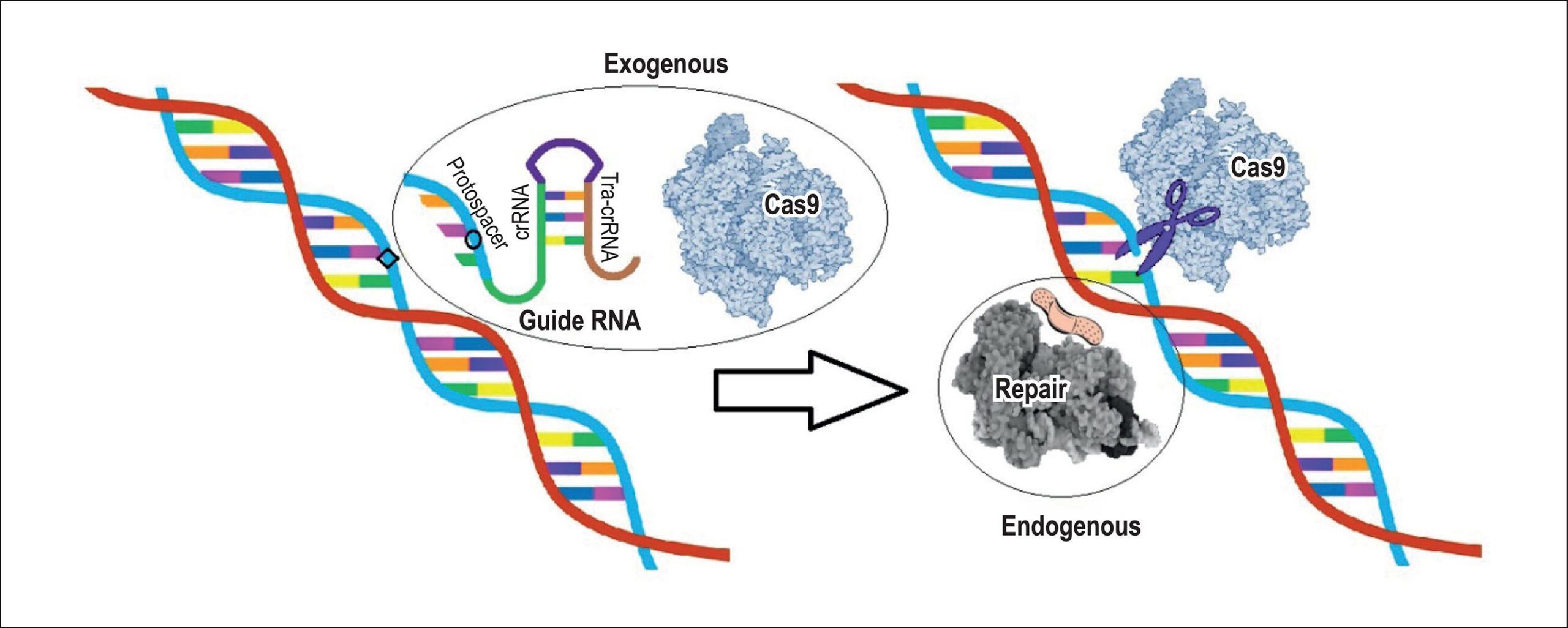
The CRISPR/Cas9 System and the Possibility of Genomic Edition for Cardiology

Marcela Corso Arend et al. Jessica Olivaes Pereira Melissa Medeiros Markoski

Introduction

Cardiovascular diseases (CVD) and their associated pathologies are among the greatest causes of morbidity and mortality, entailing approximately 17.3 deaths a year. This class of pathology as a whole has a multi-factor etiology. Its possible prognoses lead to public health issues, with its incidence being related to behavioral, metabolic and genetic risk factors. In spite of the fact that the treatments established for the CVDs and their possible prognoses decrease the rhythm of progression of the illness, the need to develop therapeutic approaches able to reverse the pathology and its complications is growing.

The progresses in the fields of molecular and cellular biology have allowed the elucidation of molecular pathways and genetic causes involved in the establishment and progression of the CVDs, outlining a new viewpoint with regard to the prevention, treatment and possible outcomes of this pathological class. Recent discoveries, both experimental and those obtained by means of bioinformatics tools, regarding the molecular bases of cardiovascular dysfunctions, have been pointing to considerable therapeutic targets. However, most of these targets cannot be pharmacologically manipulated, which makes them potential candidates for genic therapy, such as the factors involved, for example, in angiogenesis, apoptosis and endothelial dysfunction. Within such context, gene manipulation may help suppress genetic factors connected to the incidence of the CVDs, as well as to mitigate the clinical complications caused by ischemic and occlusive events. Thus, the development and improvement of genome edition tools allow the creation of therapies focused in the genetic risk factors to cardiovascular damage and fundamental morphophysiological issues caused by the CVDs. In such context, the system formed by clustered regularly interspaced short palindromic repeats (CRISPR), and its CRISPR associated protein-9 (Cas9), stands out due to how easy it is to use it, its high specificity, easy in vitro and in vivo manipulation, in addition to the possibility of simultaneously editing multiple targets. Given the genomic complexity that intervenes in the CVDs, we shall indicate herein certain possibilities of applying the CRISPR/Cas9 tool in Cardiology.

[…]
  • Cardiovascular Diseases, mortality
  • Genomics
  • Molecular Biology
  • Morbidity
  • Prevention & Control
  • Risk Factors
Read Full Article
Creative Commons Attribution (CC BY) Creative Commons license
01/01/2017 DOI: 10.5935/abc.20160200 Views 2

How to cite this article

EndNote RIS

Electronic Document Format (Vancouver)

Martinez PF, Oliveira-Junior SA, Polegato BF, Okoshi K, Okoshi MP. Biomarkers in Acute Myocardial Infarction Diagnosis and Prognosis. Arquivos Brasileiros de Cardiologia 2019;113(1):40-1.

Electronic Document Format (ABNT)

Martinez, Paula F.; Oliveira-Junior, Silvio A.; Polegato, Bertha F.; Okoshi, Katashi; Okoshi, Marina P.. Biomarkers in Acute Myocardial Infarction Diagnosis and Prognosis. Arquivos Brasileiros de Cardiologia, v. 113, n. 1, p. 40-41, Aug. 2019.

Electronic Document Format (APA)

Martinez, P. F., Oliveira-Junior, S. A., Polegato, B. F., Okoshi, K., & Okoshi, M. P. (2019). Biomarkers in Acute Myocardial Infarction Diagnosis and Prognosis. Arquivos Brasileiros de Cardiologia, 113(1), 40-41.

Electronic Document Format (ISO)

Martinez, Paula F. and Oliveira-Junior, Silvio A. and Polegato, Bertha F. and Okoshi, Katashi and Okoshi, Marina P.. Biomarkers in Acute Myocardial Infarction Diagnosis and Prognosis. Arquivos Brasileiros de Cardiologia [online]. 2019, vol. 113, n. 1, [cited 2026-10-14], pp. 40-41. Available from: <https://journals.cardiol.br/en/article/biomarkers-in-acute-myocardial-infarction-diagnosis-and-prognosis/>. ISSN 0066-782X

EndNote RIS

Electronic Document Format (Vancouver)

Arend MC, Pereira JO, Markoski MM. The CRISPR/Cas9 System and the Possibility of Genomic Edition for Cardiology. Arquivos Brasileiros de Cardiologia 2017;108(1):81-3.

Electronic Document Format (ABNT)

Arend, Marcela Corso; Pereira, Jessica Olivaes; Markoski, Melissa Medeiros. The CRISPR/Cas9 System and the Possibility of Genomic Edition for Cardiology. Arquivos Brasileiros de Cardiologia, v. 108, n. 1, p. 81-83, Dec. 2016.

Electronic Document Format (APA)

Arend, M. C., Pereira, J. O., & Markoski, M. M. (2017). The CRISPR/Cas9 System and the Possibility of Genomic Edition for Cardiology. Arquivos Brasileiros de Cardiologia, 108(1), 81-83.

Electronic Document Format (ISO)

Arend, Marcela Corso and Pereira, Jessica Olivaes and Markoski, Melissa Medeiros. The CRISPR/Cas9 System and the Possibility of Genomic Edition for Cardiology. Arquivos Brasileiros de Cardiologia [online]. 2017, vol. 108, n. 1, [cited 2026-10-14], pp. 81-83. Available from: <https://journals.cardiol.br/en/article/the-crispr-cas9-system-and-the-possibility-of-genomic-edition-for-cardiology/>. ISSN 0066-782X

  • About ABC Family
  • Internal Regulation
  • Editorial Board
  • Brazilian Society of Cardiology (SBC)

Issues

SBC Guidelines

  • Videos
  • Podcasts
  • News