| ABC
ABC Family Arquivos Brasileiros de Cardiologia International Journal of Cardiovascular Sciences ABC Heart Failure & Cardiomyopathy ABC Imagem Cardiovascular
Português English
ABC Family | ABC
Português English
  • About
    • About the Journal
    • Internal Regulation
    • Editors Section
    • Editorial Board
    • History
    • SBC Award
  • Instructions to Authors
    • Guidelines for Publication
    • Editorial Policy
    • Ethics Policy
    • Policy on the Use of Artificial Intelligence
    • Mandatory Publication Form
    • Publication Fee
  • Issues
  • SBC Guidelines
  • Abstracts
    • How to Publish an Abstract Supplement?
    • Supplements from the Brazilian Congress of Cardiology
  • About
    • About the Journal
    • Internal Regulation
    • Editors Section
    • Editorial Board
    • History
    • SBC Award
  • Instructions to Authors
    • Guidelines for Publication
    • Editorial Policy
    • Ethics Policy
    • Policy on the Use of Artificial Intelligence
    • Mandatory Publication Form
    • Publication Fee
  • Issues
  • SBC Guidelines
  • Abstracts
    • How to Publish an Abstract Supplement?
    • Supplements from the Brazilian Congress of Cardiology

ABC Family

  • ABC Family
  • Arquivos Brasileiros de Cardiologia
  • International Journal of Cardiovascular Sciences
  • ABC Heart Failure & Cardiomyopathy
  • ABC Imagem Cardiovascular
Search in

No content found.

Journals
Ordering
Article types
Others

  1. Home
  2. ABC
  3. Issues
  4. 2003, Volume 81, Number 3
Original Article

Prevalence of dyslipidemia and risk factors in Campos dos Goytacazes, in the Brazilian State of Rio de Janeiro

Luiz José de Souza et al. João Tadeu Damian Souto Filho Thiago Ferreira de Souza Aldo Franklin Ferreira Reis … Carlos Gicovate Neto Diogo Assed Bastos Vitor Azevedo Côrtes Félix Elias Barros Chalita Cláudio Luiz Teixeira

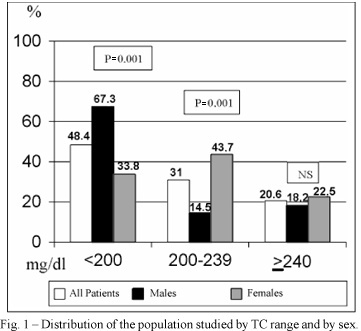
OBJECTIVE: To determine the prevalence of dyslipidemias in adults in the city of Campos dos Goytacazes, in the Brazilian state of Rio de Janeiro, and to identify its relation to risk factors. METHODS: Cross-sectional, population-based, observational study with sampling through conglomerates and stratified according to socioeconomic levels, sex, and age, with 1,039 individuals. Risk factors, familial history, blood pressure, anthropometric measurements, glucose, triglycerides and cholesterol were determined. RESULTS: The following prevalences were observed: of dyslipidemias 24.2%; of hypercholesterolemia, 4.2%; of elevated LDL-C, 3.5%; of low HDL-C, 18.3%; and of hypertriglyceridemia, 17.1%. The following mean levels were observed: cholesterol, 187.6± 33.7 mg/dL; LDL-C, 108.7±26.8 mg/dL; HDL-C, 48.5±7.7 mg/dL; and triglycerides, 150.1±109.8 mg/dL. The following variables showed a positive correlation with dyslipidemia: increased age (P<0.001), male sex (P<0.001), low familial income (P<0.001), familial history (P<0.01), overweight/obesity (P<0.001), waist measure (P<0.001), high blood pressure (P<0.001), and diabetes mellitus (P<0.001). The following variables had no influence on dyslipidemias: ethnicity, educational level, smoking habits, and sedentary lifestyle. CONCLUSION: The frequency of lipid changes in the population studied was high, suggesting that measures for the early diagnosis should be taken, in association with implementation of programs for primary and secondary prevention of atherosclerosis.
  • Dyslipidemias
  • Hypercholesterolemia
  • hyperlipidemia
  • Hypertriglyceridemia
  • Prevalence
Read Full Article
Creative Commons Attribution (CC BY) Creative Commons license
09/10/2003 DOI: 10.1590/S0066-782X2003001100005 Views 2
ProBNP for stratifying patients with heart failure
Original Article

ProBNP for stratifying patients with heart failure

Antonio Carlos Pereira-Barretto et al. Mucio Tavares de Oliveira Jr Fabio Gazellato Franco Célia Cassaro-Strunz

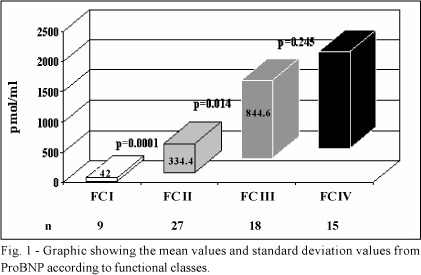
OBJECTIVE: To verify whether the serum levels of N-Terminal ProBNP fraction (ProBNP) allow us to identify with accuracy the clinical functional status of patients with heart failure (HF), because the clinical diagnosis of this syndrome is based basically on clinical data when the complementary tests have lower specificity. METHODS: Sixty-nine patients with a history of HF were studied. Their mean age of was 53.5 years and 78.3% were males. All underwent clinical and echocardiographic evaluations and a test to determine the serum dosage of ProBNP. According to clinical manifestation, patients were in the following functional classes (FC), 14% FC I, 40.6% FC II, 28.1% FC III, and 23.4% FC IV. The mean ejection fraction (EF) was 0.28. RESULTS: ProBNP did not differ according to age, sex, and cause of cardiopathy. No correlation existed between EF and the ProBNP serum level. ProBNP levels were significantly lower in patients in FC I than those in FC II (42 vs 326.7 pmol/L; P=0.0001), and in FC II than those in FC III (P=0.01). ProBNP levels did not differ statically between FC III and IV patients (888.1 vs 1082.8 pmol/L; P=0.25). ProBNP values greater than 100 pmol/L identify patients with decompensated HF with a sensitivity of 98%. CONCLUSION: ProBNP values over 100 pmol/L were indicative of HF, and patients with advanced HF had values over 270 pmol/L. A ProBNP dosage test was an excellent auxiliary in the clinical characterization of patients with HF.

  • decompensation
  • Heart Failure
  • ProBNP
Read Full Article
Creative Commons Attribution (CC BY) Creative Commons license
09/10/2003 DOI: 10.1590/S0066-782X2003001100004
Demographic characteristics of the population undergoing cine coronary angiography at the Instituto do Coração of the Medical School of USP from 1986 to 1995
Original Article

Demographic characteristics of the population undergoing cine coronary angiography at the Instituto do Coração of the Medical School of USP from 1986 to 1995

Bruno Caramelli et al. Luciana Savoy Fornari Maristela Monachini Dália Ballas … Nilson Roberto Fachini Antônio de Pádua Mansur José Antônio Franchini Ramires

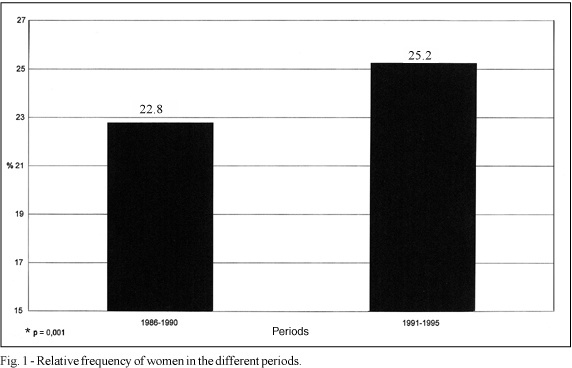
OBJECTIVE: To obtain information about the profile and behavior of a population with ischemic heart disease undergoing cine coronary angiography and to determine disease severity. METHODS: Retrospective study assessing patients hospitalized at InCor from 1986 to 1995, in which the variables age, sex, and number of major coronary arteries with obstruction degree > 40% were analyzed. RESULTS: We studied 18,221 patients and observed a significant increase in the number of females (22.8% to 25.2%, P=0.001) and an increase in age (57.1±29.3 to 60.4±10.7 years, P=0.0001). A significant increase in the incidence of multivessel disease was observed, which was more frequent among males (69.2% and 64.5%) and among the older patients (59.8±9.8 and 56.8±10.7 years, P=0.0001). A reduction in the incidence of single-vessel disease was also observed (66.2% vs 69.2% and 33.8% vs 30.5%, respectively, P<0.0001). CONCLUSION: A change in the profile of the population studied was observed as follows: patients undergoing cine coronary angiography at InCor were older, had a greater number of impaired major coronary arteries, and the number of females affected increased, leading to indices suggestive of a poorer prognosis.

  • Acute Myocardial Infarction
  • cine coronary angiography
  • Coronary Artery Disease
Read Full Article
Creative Commons Attribution (CC BY) Creative Commons license
09/10/2003 DOI: 10.1590/S0066-782X2003001100010 Views 1
Assessment of cardiovascular risk factors in a rural community in the Brazilian state of Bahia
Original Article

Assessment of cardiovascular risk factors in a rural community in the Brazilian state of Bahia

André Costa Matos et al. Ana Marice Ladeia

OBJECTIVE: To assess the frequency of cardiovascular risk factors in the rural community of Cavunge, in the Brazilian state of Bahia. METHODS: A cross-sectional study was carried out with 160 individuals (age > 19 years) randomly drawn from those listed in the population census of the Cavunge Project. The following parameters were studied: arterial hypertension, dyslipidemia, diabetes, obesity, smoking, waist-hip ratio (WHR), physical activity, and overall cardiovascular risk classified according to the Framingham score. The assessing parameters used were those established by the III Brazilian Consensus on Hypertension and the II Brazilian Consensus on Dyslipidemia. RESULTS: Of the randomly drawn individuals, 126 with a mean age of 46.6 + 19.7 years were included in the study, 43.7% of whom were males. The frequency of arterial hypertension was 36.5%; 20.4% of the individuals had cholesterol levels >240 mg/dL; 31.1% of the individuals had LDL-C levels > 130 mg/dL; 4% were diabetic; and 39.7% had a high-risk Framingham score. Abdominal obesity was observed in 41.3% of the population and in 57.7% of the females. High caloric-expenditure (HCE) physical activities were performed by 56.5% of the individuals. The HCE group had a greater frequency of normal triglyceride levels (63% vs 44%; P=0.05), no diabetes, and WHR tending towards normal (46% vs 27%, P=0.08) as compared with those in the low caloric-expenditure group. CONCLUSION: Cardiovascular risk factors, such as hypertension and hypercholesterolemia, are frequently found in rural communities. The greatest frequency of normal triglyceride levels and normal WHR in the HCE group reinforces the association between greater caloric expenditure and a better risk profile.

  • Cardiovascular Risk Factors
  • Epidemiology
  • rural community
Read Full Article
Creative Commons Attribution (CC BY) Creative Commons license
09/10/2003 DOI: 10.1590/S0066-782X2003001100009
Original Article

Behavior of cardiac variables in animals exposed to cigarette smoke

Sergio Alberto Rupp de Paiva et al. Leonardo Antonio Mamede Zornoff Marina Politi Okoshi Katashi Okoshi … Antonio Carlos Cicogna Alvaro Oscar Campana

OBJECTIVE: To assess the behavior of cardiac variables in animals exposed to cigarette smoke. METHODS: Two groups of Wistar rats were studied as follows: control group (C), comprising 28 animals; and smoking group (S), comprising 23 animals exposed to cigarette smoke for 30 days. Left ventricular cardiac function was assessed in vivo with transthoracic echocardiography, and myocardial performance was analyzed in vitro in preparations of isolated left ventricular papillary muscle. The cardiac muscle was assessed in isometric contractions with an extracellular calcium concentration of 2.5 mmol/L. RESULTS: No statistical difference was observed in the values of the body variables of the rats and in the mechanical data obtained from the papillary muscle between the control and smoking groups. The values of left ventricular systolic diameter were significantly greater in the smoking animals than in the control animals (C= 3.39 ± 0.4 mm and S= 3.71 ± 0.51 mm, P=0.02). A significant reduction was observed in systolic shortening fraction (C= 56.7 ± 4.2% and S= 53.5 ± 5.3%, P=0.02) and in ejection fraction (C= 0.92 ± 0.02 and S= 0.89 ± 0.04, P=0.01). CONCLUSION: The rats exposed to cigarette smoke had a reduction in left ventricular systolic function, although their myocardial function was preserved.

  • cigarette
  • Echocardiography
  • left ventricular junction
  • smoking
Read Full Article
Creative Commons Attribution (CC BY) Creative Commons license
09/10/2003 DOI: 10.1590/S0066-782X2003001100002 Views 2
Original Article

Behavior of inflammatory markers of myocardial injury in cardiac surgery: laboratory correlation with the clinical picture of postpericardiotomy syndrome

Ilmar Köhler et al. Paulo J. Saraiva Orlando B. Wender Alcides J. Zago

OBJECTIVE: To verify the association of serum markers of myocardial injury, such as troponin I, creatinine kinase, and creatinine kinase isoenzyme MB, and inflammatory markers, such as tumor necrosis factor alpha (TNF-alpha), C-reactive protein, and the erythrocyte sedimentation rate in the perioperative period of cardiac surgery, with the occurrence of possible postpericardiotomy syndrome. METHODS: This was a cohort study with 96 patients undergoing cardiac surgery assessed at the following 4 different time periods: the day before surgery (D0); the 3rd postoperative day (D3); between the 7th and 10th postoperative days (D7-10); and the 30th postoperative day (D30). During each period, we evaluated demographic variables (sex and age), surgical variables (type and duration , extracorporeal circulation), and serum dosages of the markers of myocardial injury and inflammatory response. RESULTS: Of all patients, 12 (12.5%) met the clinical criteria for a diagnosis of postpericardiotomy syndrome, and their mean age was 10.3 years lower than the age of the others (P=0.02). The results of the serum markers for tissue injury and inflammatory response were not significantly different between the 2 assessed groups. No significant difference existed regarding either surgery duration or extracorporeal circulation. CONCLUSION: The patients who met the clinical criteria for postpericardiotomy syndrome were significantly younger than the others were. Serum markers for tissue injury and inflammatory response were not different in the clinically affected group, and did not correlate with the different types and duration of surgery or with extracorporeal circulation.

  • Cardiac Surgery
  • inflammatory markers
  • injury markers
  • Postpericardiotomy Syndrome
Read Full Article
Creative Commons Attribution (CC BY) Creative Commons license
09/10/2003 DOI: 10.1590/S0066-782X2003001100008
Aneurysmal dilation of the reimplant segment of the visceral vessels after thoracoabdominal aneurysm correction
Original Article

Aneurysmal dilation of the reimplant segment of the visceral vessels after thoracoabdominal aneurysm correction

Ricardo R. Dias et al. Joseph S. Coselli Noedir A. G. Stolf Altamiro R. Dias … Charles Mady Sérgio A. Oliveira

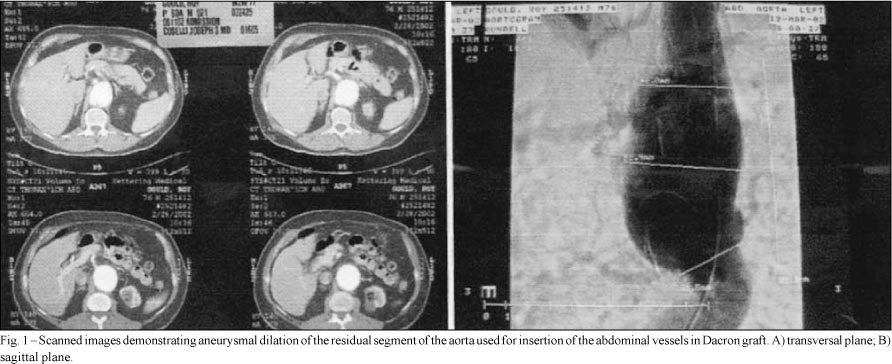
We present a case of aneurysmal dilation of the aortic residual segment, involving abdominal vessels in corrective surgeries for thoracoabdominal aortic aneurysm, through the identification of risk groups for recurrent dilation, aiming at using a specific operative technique with a branched graft, to prevent aneurysm relapse.

Read Full Article
Creative Commons Attribution (CC BY) Creative Commons license
09/10/2003 DOI: 10.1590/S0066-782X2003001100007
Ligation of the thoracic duct for the treatment of chylothorax in heart diseases
Brief Reports

Ligation of the thoracic duct for the treatment of chylothorax in heart diseases

Paulo M. Pêgo-Fernandes et al. Fábio B. Jatene Clayton Cesar Tokunaga Danielle Tiemi Simão … Ricardo Beirutty Eliza Rumiko Iwahashi Sérgio Almeida de Oliveira

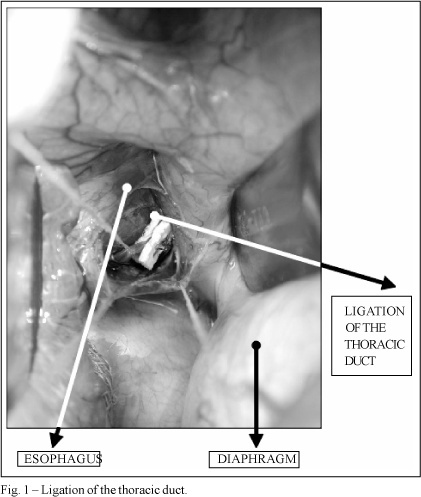
In children, chylothorax occurs mainly after cardiac and thoracic surgeries. One of the recommended postsurgery treatments is ligation of the thoracic tract, when all other conservative treatments have failed. We report 4 cases of chylothorax in patients who were successfully treated with this approach, which resulted in a decrease in pleural drainage without recurrent chylothorax.

Read Full Article
Creative Commons Attribution (CC BY) Creative Commons license
09/10/2003 DOI: 10.1590/S0066-782X2003001100011
Original Article

Edmar Atik et al. Antonio Foronda Luiz Narcio P. Bustamante

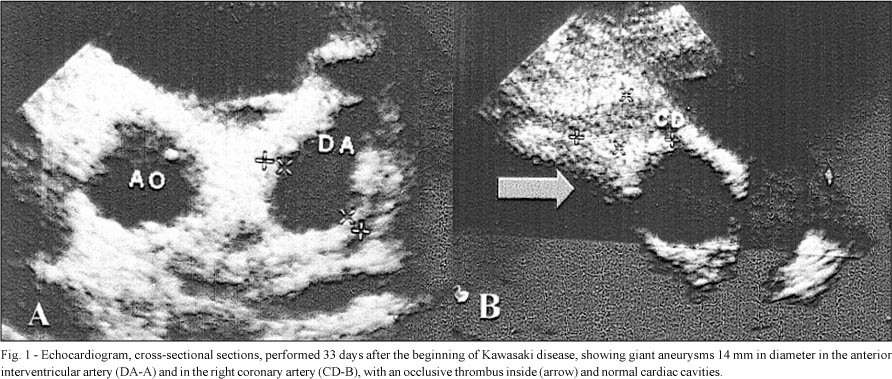
The patient is a 5-year-old male with Kawasaki disease, whose involution of giant aneurysms of the left coronary arteries was surprising after a prolonged period of treatment, which lasted 80 uninterrupted days and comprised anti-inflammatory drugs associated with anticoagulation agents. The distal diameters of the anterior interventricular, the diagonal, and the circumflex arteries normalized by the end of the treatment. A residual giant aneurysm localized at the beginning of the anterior interventricular artery did not cause ischemia. Continuation of the medication for a prolonged period was recommended.

Read Full Article
Creative Commons Attribution (CC BY) Creative Commons license
09/10/2003 DOI: 10.1590/S0066-782X2003001100006

How to cite this article

EndNote RIS

Electronic Document Format (Vancouver)

Souza LJ, Souto Filho JTD, Souza TF, Reis AFF, Gicovate Neto C, Bastos DA, Côrtes VA, et al. Prevalence of dyslipidemia and risk factors in Campos dos Goytacazes, in the Brazilian State of Rio de Janeiro. Arquivos Brasileiros de Cardiologia 2003;81(3):257-64.

Electronic Document Format (ABNT)

Souza, Luiz José de; Souto Filho, João Tadeu Damian; Souza, Thiago Ferreira de; Reis, Aldo Franklin Ferreira; Gicovate Neto, Carlos; Bastos, Diogo Assed; Côrtes, Vitor Azevedo; Chalita, Félix Elias Barros; Teixeira, Cláudio Luiz. Prevalence of dyslipidemia and risk factors in Campos dos Goytacazes, in the Brazilian State of Rio de Janeiro. Arquivos Brasileiros de Cardiologia, v. 81, n. 3, p. 257-264, Oct. 2003.

Electronic Document Format (APA)

Souza, L. J. , Souto Filho, J. T. D., Souza, T. F. , Reis, A. F. F., Gicovate Neto, C., Bastos, D. A., Côrtes, V. A., Chalita, F. E. B., & Teixeira, C. L. (2003). Prevalence of dyslipidemia and risk factors in Campos dos Goytacazes, in the Brazilian State of Rio de Janeiro. Arquivos Brasileiros de Cardiologia, 81(3), 257-264.

Electronic Document Format (ISO)

Souza, Luiz José de and Souto Filho, João Tadeu Damian and Souza, Thiago Ferreira de and Reis, Aldo Franklin Ferreira and Gicovate Neto, Carlos and Bastos, Diogo Assed and Côrtes, Vitor Azevedo and Chalita, Félix Elias Barros and Teixeira, Cláudio Luiz. Prevalence of dyslipidemia and risk factors in Campos dos Goytacazes, in the Brazilian State of Rio de Janeiro. Arquivos Brasileiros de Cardiologia [online]. 2003, vol. 81, n. 3, [cited 2026-10-14], pp. 257-264. Available from: <https://journals.cardiol.br/en/article/prevalence-of-dyslipidemia-and-risk-factors-in-campos-dos-goytacazes-in-the-brazilian-state-of-rio-de-janeiro/>. ISSN 0066-782X

EndNote RIS

Electronic Document Format (Vancouver)

Pereira-Barretto AC, Oliveira Jr MT, Franco FG, Cassaro-Strunz C. ProBNP for stratifying patients with heart failure. Arquivos Brasileiros de Cardiologia 2003;81(3):244-8.

Electronic Document Format (ABNT)

Pereira-Barretto, Antonio Carlos; Oliveira Jr, Mucio Tavares de; Franco, Fabio Gazellato; Cassaro-Strunz, Célia. ProBNP for stratifying patients with heart failure. Arquivos Brasileiros de Cardiologia, v. 81, n. 3, p. 244-248, Oct. 2003.

Electronic Document Format (APA)

Pereira-Barretto, A. C., Oliveira Jr, M. T. , Franco, F. G., & Cassaro-Strunz, C. (2003). ProBNP for stratifying patients with heart failure. Arquivos Brasileiros de Cardiologia, 81(3), 244-248.

Electronic Document Format (ISO)

Pereira-Barretto, Antonio Carlos and Oliveira Jr, Mucio Tavares de and Franco, Fabio Gazellato and Cassaro-Strunz, Célia. ProBNP for stratifying patients with heart failure. Arquivos Brasileiros de Cardiologia [online]. 2003, vol. 81, n. 3, [cited 2026-10-14], pp. 244-248. Available from: <https://journals.cardiol.br/en/article/probnp-for-stratifying-patients-with-heart-failure/>. ISSN 0066-782X

EndNote RIS

Electronic Document Format (Vancouver)

Caramelli B, Fornari LS, Monachini M, Ballas D, Fachini NR, Mansur AP, Ramires JAF, et al. Demographic characteristics of the population undergoing cine coronary angiography at the Instituto do Coração of the Medical School of USP from 1986 to 1995. Arquivos Brasileiros de Cardiologia 2003;81(3):306-8.

Electronic Document Format (ABNT)

Caramelli, Bruno; Fornari, Luciana Savoy; Monachini, Maristela; Ballas, Dália; Fachini, Nilson Roberto; Mansur, Antônio de Pádua; Ramires, José Antônio Franchini. Demographic characteristics of the population undergoing cine coronary angiography at the Instituto do Coração of the Medical School of USP from 1986 to 1995. Arquivos Brasileiros de Cardiologia, v. 81, n. 3, p. 306-308, Oct. 2003.

Electronic Document Format (APA)

Caramelli, B., Fornari, L. S., Monachini, M., Ballas, D., Fachini, N. R., Mansur, A. P., & Ramires, J. A. F. (2003). Demographic characteristics of the population undergoing cine coronary angiography at the Instituto do Coração of the Medical School of USP from 1986 to 1995. Arquivos Brasileiros de Cardiologia, 81(3), 306-308.

Electronic Document Format (ISO)

Caramelli, Bruno and Fornari, Luciana Savoy and Monachini, Maristela and Ballas, Dália and Fachini, Nilson Roberto and Mansur, Antônio de Pádua and Ramires, José Antônio Franchini. Demographic characteristics of the population undergoing cine coronary angiography at the Instituto do Coração of the Medical School of USP from 1986 to 1995. Arquivos Brasileiros de Cardiologia [online]. 2003, vol. 81, n. 3, [cited 2026-10-14], pp. 306-308. Available from: <https://journals.cardiol.br/en/article/demographic-characteristics-of-the-population-undergoing-cine-coronary-angiography-at-the-instituto-do-coracao-of-the-medical-school-of-usp-from-1986-to-1995/>. ISSN 0066-782X

EndNote RIS

Electronic Document Format (Vancouver)

Matos AC, Ladeia AM. Assessment of cardiovascular risk factors in a rural community in the Brazilian state of Bahia. Arquivos Brasileiros de Cardiologia 2003;81(3):297-302.

Electronic Document Format (ABNT)

Matos, André Costa; Ladeia, Ana Marice. Assessment of cardiovascular risk factors in a rural community in the Brazilian state of Bahia. Arquivos Brasileiros de Cardiologia, v. 81, n. 3, p. 297-302, Oct. 2003.

Electronic Document Format (APA)

Matos, A. C., & Ladeia, A. M. (2003). Assessment of cardiovascular risk factors in a rural community in the Brazilian state of Bahia. Arquivos Brasileiros de Cardiologia, 81(3), 297-302.

Electronic Document Format (ISO)

Matos, André Costa and Ladeia, Ana Marice. Assessment of cardiovascular risk factors in a rural community in the Brazilian state of Bahia. Arquivos Brasileiros de Cardiologia [online]. 2003, vol. 81, n. 3, [cited 2026-10-14], pp. 297-302. Available from: <https://journals.cardiol.br/en/article/assessment-of-cardiovascular-risk-factors-in-a-rural-community-in-the-brazilian-state-of-bahia/>. ISSN 0066-782X

EndNote RIS

Electronic Document Format (Vancouver)

Paiva SAR, Zornoff LAM, Okoshi MP, Okoshi K, Cicogna AC, Campana AO. Behavior of cardiac variables in animals exposed to cigarette smoke. Arquivos Brasileiros de Cardiologia 2003;81(3):225-8.

Electronic Document Format (ABNT)

Paiva, Sergio Alberto Rupp de; Zornoff, Leonardo Antonio Mamede; Okoshi, Marina Politi; Okoshi, Katashi; Cicogna, Antonio Carlos; Campana, Alvaro Oscar. Behavior of cardiac variables in animals exposed to cigarette smoke. Arquivos Brasileiros de Cardiologia, v. 81, n. 3, p. 225-228, Oct. 2003.

Electronic Document Format (APA)

Paiva, S. A. R. , Zornoff, L. A. M., Okoshi, M. P., Okoshi, K., Cicogna, A. C., & Campana, A. O. (2003). Behavior of cardiac variables in animals exposed to cigarette smoke. Arquivos Brasileiros de Cardiologia, 81(3), 225-228.

Electronic Document Format (ISO)

Paiva, Sergio Alberto Rupp de and Zornoff, Leonardo Antonio Mamede and Okoshi, Marina Politi and Okoshi, Katashi and Cicogna, Antonio Carlos and Campana, Alvaro Oscar. Behavior of cardiac variables in animals exposed to cigarette smoke. Arquivos Brasileiros de Cardiologia [online]. 2003, vol. 81, n. 3, [cited 2026-10-14], pp. 225-228. Available from: <https://journals.cardiol.br/en/article/behavior-of-cardiac-variables-in-animals-exposed-to-cigarette-smoke/>. ISSN 0066-782X

EndNote RIS

Electronic Document Format (Vancouver)

Köhler I, Saraiva PJ, Wender OB, Zago AJ. Behavior of inflammatory markers of myocardial injury in cardiac surgery: laboratory correlation with the clinical picture of postpericardiotomy syndrome. Arquivos Brasileiros de Cardiologia 2003;81(3):285-90.

Electronic Document Format (ABNT)

Köhler, Ilmar; Saraiva, Paulo J.; Wender, Orlando B.; Zago, Alcides J.. Behavior of inflammatory markers of myocardial injury in cardiac surgery: laboratory correlation with the clinical picture of postpericardiotomy syndrome. Arquivos Brasileiros de Cardiologia, v. 81, n. 3, p. 285-290, Oct. 2003.

Electronic Document Format (APA)

Köhler, I., Saraiva, P. J., Wender, O. B., & Zago, A. J. (2003). Behavior of inflammatory markers of myocardial injury in cardiac surgery: laboratory correlation with the clinical picture of postpericardiotomy syndrome. Arquivos Brasileiros de Cardiologia, 81(3), 285-290.

Electronic Document Format (ISO)

Köhler, Ilmar and Saraiva, Paulo J. and Wender, Orlando B. and Zago, Alcides J.. Behavior of inflammatory markers of myocardial injury in cardiac surgery: laboratory correlation with the clinical picture of postpericardiotomy syndrome. Arquivos Brasileiros de Cardiologia [online]. 2003, vol. 81, n. 3, [cited 2026-10-14], pp. 285-290. Available from: <https://journals.cardiol.br/en/article/behavior-of-inflammatory-markers-of-myocardial-injury-in-cardiac-surgery-laboratory-correlation-with-the-clinical-picture-of-postpericardiotomy-syndrome/>. ISSN 0066-782X

EndNote RIS

Electronic Document Format (Vancouver)

Dias RR, Coselli JS, Stolf NAG, Dias AR, Mady C, Oliveira SA. Aneurysmal dilation of the reimplant segment of the visceral vessels after thoracoabdominal aneurysm correction. Arquivos Brasileiros de Cardiologia 2003;81(3):276-8.

Electronic Document Format (ABNT)

Dias, Ricardo R.; Coselli, Joseph S.; Stolf, Noedir A. G.; Dias, Altamiro R.; Mady, Charles; Oliveira, Sérgio A.. Aneurysmal dilation of the reimplant segment of the visceral vessels after thoracoabdominal aneurysm correction. Arquivos Brasileiros de Cardiologia, v. 81, n. 3, p. 276-278, Oct. 2003.

Electronic Document Format (APA)

Dias, R. R., Coselli, J. S., Stolf, N. A. G., Dias, A. R., Mady, C., & Oliveira, S. A. (2003). Aneurysmal dilation of the reimplant segment of the visceral vessels after thoracoabdominal aneurysm correction. Arquivos Brasileiros de Cardiologia, 81(3), 276-278.

Electronic Document Format (ISO)

Dias, Ricardo R. and Coselli, Joseph S. and Stolf, Noedir A. G. and Dias, Altamiro R. and Mady, Charles and Oliveira, Sérgio A.. Aneurysmal dilation of the reimplant segment of the visceral vessels after thoracoabdominal aneurysm correction. Arquivos Brasileiros de Cardiologia [online]. 2003, vol. 81, n. 3, [cited 2026-10-14], pp. 276-278. Available from: <https://journals.cardiol.br/en/article/aneurysmal-dilation-of-the-reimplant-segment-of-the-visceral-vessels-after-thoracoabdominal-aneurysm-correction/>. ISSN 0066-782X

EndNote RIS

Electronic Document Format (Vancouver)

Pêgo-Fernandes PM, Jatene FB, Tokunaga CC, Simão DT, Beirutty R, Iwahashi ER, Oliveira SA, et al. Ligation of the thoracic duct for the treatment of chylothorax in heart diseases. Arquivos Brasileiros de Cardiologia 2003;81(3):314-7.

Electronic Document Format (ABNT)

Pêgo-Fernandes, Paulo M.; Jatene, Fábio B.; Tokunaga, Clayton Cesar; Simão, Danielle Tiemi; Beirutty, Ricardo; Iwahashi, Eliza Rumiko; Oliveira, Sérgio Almeida de. Ligation of the thoracic duct for the treatment of chylothorax in heart diseases. Arquivos Brasileiros de Cardiologia, v. 81, n. 3, p. 314-317, Oct. 2003.

Electronic Document Format (APA)

Pêgo-Fernandes, P. M., Jatene, F. B., Tokunaga, C. C., Simão, D. T., Beirutty, R., Iwahashi, E. R., & Oliveira, S. A. (2003). Ligation of the thoracic duct for the treatment of chylothorax in heart diseases. Arquivos Brasileiros de Cardiologia, 81(3), 314-317.

Electronic Document Format (ISO)

Pêgo-Fernandes, Paulo M. and Jatene, Fábio B. and Tokunaga, Clayton Cesar and Simão, Danielle Tiemi and Beirutty, Ricardo and Iwahashi, Eliza Rumiko and Oliveira, Sérgio Almeida de. Ligation of the thoracic duct for the treatment of chylothorax in heart diseases. Arquivos Brasileiros de Cardiologia [online]. 2003, vol. 81, n. 3, [cited 2026-10-14], pp. 314-317. Available from: <https://journals.cardiol.br/en/article/ligation-of-the-thoracic-duct-for-the-treatment-of-chylothorax-in-heart-diseases/>. ISSN 0066-782X

EndNote RIS

Electronic Document Format (Vancouver)

Atik E, Foronda A, Bustamante LNP. . Arquivos Brasileiros de Cardiologia 2003;81(3):269-72.

Electronic Document Format (ABNT)

Atik, Edmar; Foronda, Antonio; Bustamante, Luiz Narcio P.. . Arquivos Brasileiros de Cardiologia, v. 81, n. 3, p. 269-272, Oct. 2003.

Electronic Document Format (APA)

Atik, E., Foronda, A., & Bustamante, L. N. P. (2003). . Arquivos Brasileiros de Cardiologia, 81(3), 269-272.

Electronic Document Format (ISO)

Atik, Edmar and Foronda, Antonio and Bustamante, Luiz Narcio P.. . Arquivos Brasileiros de Cardiologia [online]. 2003, vol. 81, n. 3, [cited 2026-10-14], pp. 269-272. Available from: <https://journals.cardiol.br/en/article/19882/>. ISSN 0066-782X

Sede – Rio de Janeiro
Av. Marechal Câmara, 160
3º andar – Sala: 330 – Centro
Rio de Janeiro – CEP: 20020-907
Tel.: (55 +21) 3478-2700
ou (21) 99386-3961
E-mail: revista@cardiol.br

Sede – São Paulo
Alameda Santos, 705 – 11º andar
Cerqueira César | São Paulo
CEP: 01419-001
Tel.: (55 +11) 3411-5500
E-mail: revista@cardiol.br

  • About the Journal
  • Internal Regulation
  • Editors Section
  • Editorial Board
  • History
  • SBC Award

  • Guidelines for Publication
  • Editorial Policy
  • Ethics Policy
  • Policy on the Use of Artificial Intelligence
  • Mandatory Publication Form
  • Publication Fee

Issues

SBC Guidelines

  • How to Publish an Abstract Supplement?
  • Supplements from the Brazilian Congress of Cardiology