| ABC
ABC Family Arquivos Brasileiros de Cardiologia International Journal of Cardiovascular Sciences ABC Heart Failure & Cardiomyopathy ABC Imagem Cardiovascular
Português English
ABC Family | ABC
Português English
  • About
    • About the Journal
    • Internal Regulation
    • Editors Section
    • Editorial Board
    • History
    • SBC Award
  • Instructions to Authors
    • Guidelines for Publication
    • Editorial Policy
    • Ethics Policy
    • Policy on the Use of Artificial Intelligence
    • Mandatory Publication Form
    • Publication Fee
  • Issues
  • SBC Guidelines
  • Abstracts
    • How to Publish an Abstract Supplement?
    • Supplements from the Brazilian Congress of Cardiology
  • About
    • About the Journal
    • Internal Regulation
    • Editors Section
    • Editorial Board
    • History
    • SBC Award
  • Instructions to Authors
    • Guidelines for Publication
    • Editorial Policy
    • Ethics Policy
    • Policy on the Use of Artificial Intelligence
    • Mandatory Publication Form
    • Publication Fee
  • Issues
  • SBC Guidelines
  • Abstracts
    • How to Publish an Abstract Supplement?
    • Supplements from the Brazilian Congress of Cardiology

ABC Family

  • ABC Family
  • Arquivos Brasileiros de Cardiologia
  • International Journal of Cardiovascular Sciences
  • ABC Heart Failure & Cardiomyopathy
  • ABC Imagem Cardiovascular
Search in

No content found.

Journals
Ordering
Article types
Others

  1. Home
  2. ABC
  3. Issues
  4. 2000, Volume 75, Number 5
Mitral valve repair with a malleable bovine pericardium ring
Original Article

Mitral valve repair with a malleable bovine pericardium ring

Marco Antônio Volpe et al. Domingo Marcolino Braile Reinaldo Wilson Vieira Dorotéia Rossi Silva Souza

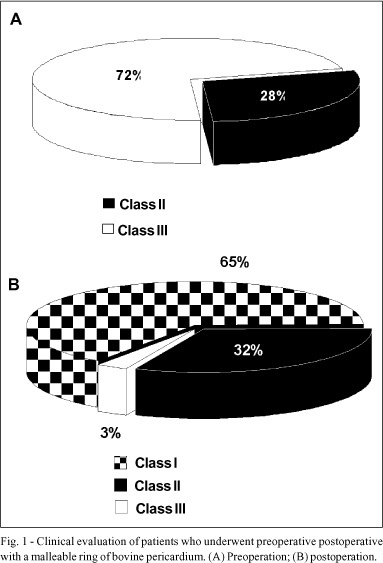
OBJECTIVE: To describe a surgical procedure utilizing a malleable bovine pericardium ring in mitral valve repair and clinical and echodopplercadiographic results. METHODS: Thirty-two (25 female and 7 male) patients, aged between 9 and 66 (M=36.4±17.2) years, were studied over a 16-month period, with 100% follow-up. In 23 (72%) of the patients, the mitral approach was the only one applied; 9 patients underwent associated operations. The technique applied consisted of measuring the perimeter of the anterior leaflet and implanting, according to this measurement, a flexible bovine pericardium prosthesis for reinforcement and conformation of the posterior mitral annulus, reducing it to the perimeter of the anterior leaflet with adjustment of the valve apparatus. RESULTS: The patient survival ratio was 93.8%, with 2 (6.2%) fatal outcomes, one from unknown causes, the other due to left ventricular failure. Only one reoperation was performed. On echodopplercardiography, 88% of the patients had functional recovery of the mitral valve (50% without and 38% with mild insufficiency and no hemodynamic repercussions). Of four (12%) of the remaining patients, 6% had moderate and 6% had seigre insufficiency. Twenty-eight percent of class II patients and 72% of class III patients passed into classes I (65%), II (32%), and III (3%), according to NYHA classification criteria. CONCLUSION: Being flexible, the bovine pericardium ring fit perfectly into the valve annulus, taking into account its geometry and contractility. Valve repair was shown to be reproducible, demonstrating significant advantages during patient evolution, which did not require anticoagulation measures.
  • annuloplasty
  • bovine pericardium
  • Mitral Valve/surgery
Read Full Article
Creative Commons Attribution (CC BY) Creative Commons license
21/11/2000 DOI: 10.1590/S0066-782X2000001100003 Views 1
Mortality due to cardiovascular disease in women during the reproductive age (15 to 49 years), in the State of São Paulo, Brazil, from 1991 to 1995
Original Article

Mortality due to cardiovascular disease in women during the reproductive age (15 to 49 years), in the State of São Paulo, Brazil, from 1991 to 1995

Nagib Haddad et al. Maria Barbosa da Silva

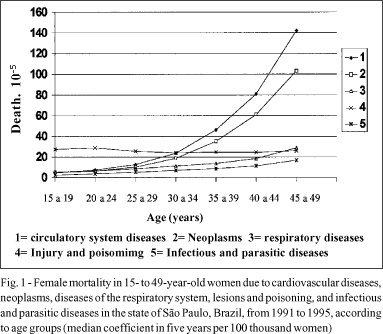
OBJECTIVE: To describe mortality due to cardiovascular diseases in women during the reproductive age (15 to 49 years) in the state of São Paulo, Brazil, from 1991 to 1995. METHODS: A list of all deaths and their underlying causes, coded according to the International Classification of Diseases, 9th revision, multiple causes of death, and estimates of the female population according to age groups were provided by the SEADE Foundation. Specific coefficients for 100 thousand women for each year as well as the medians of these coefficients related to 5 years, and the percentage of death by subgroups were calculated. RESULTS: Cerebrovascular diseases have the highest coefficients (14.24 for 100 thousand females), followed by ischemic heart disease (7.37), other heart diseases (6.39), hypertensive disease (3.03), chronic rheumatic heart disease (1.58), pulmonary vascular diseases (1.29), and active rheumatic fever (0.05). Systemic arterial hypertension, as an associated cause, occurred in 55.3% to 57.8% of all the deaths due to intracerebral hemorrhage and in 30.4% to 30.8% due to subarachnoid hemorrhage. CONCLUSION: The significance of cerebrovascular diseases, coronary artery disease, and systemic arterial hypertension as causes of mortality suggests the need to emphasize preventive actions for young women who have the potential to reproduce to avoid possible complications in future pregnancies, and premature mortality.

  • Cardiovascular Diseases
  • cerebrovascular diseases
  • female mortality
Read Full Article
Creative Commons Attribution (CC BY) Creative Commons license
21/11/2000 DOI: 10.1590/S0066-782X2000001100002
The degree of activation of cardiac muscle depends on muscle length
Updated

The degree of activation of cardiac muscle depends on muscle length

Dilson J. E. Rassier

Update

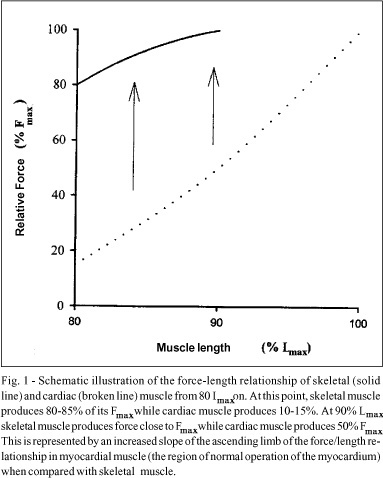
The Degree of Activation of Cardiac Muscle Depends on Muscle Length

[…]

Read Full Article
Creative Commons Attribution (CC BY) Creative Commons license
21/11/2000 DOI: 10.1590/S0066-782X2000001100009
Analysis of the risk factors for allograft vasculopathy in asymptomatic patients after cardiac transplantation
Original Article

Analysis of the risk factors for allograft vasculopathy in asymptomatic patients after cardiac transplantation

Fernando Bacal et al. Viviane Cordeiro Veiga Alfredo Inácio Fiorelli Giovanni Bellotti … Edimar Alcides Bocchi Noedir Antonio Groppo Stolf José Antonio Franchini Ramires

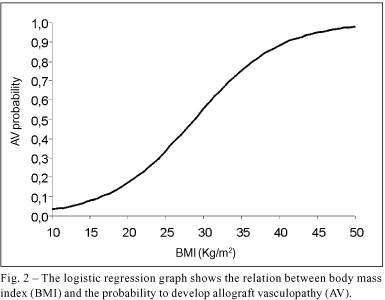
OBJECTIVE: To study the influence of immune and nonimmune risk factors on the development of allograft vasculopathy after cardiac transplantation. METHODS: We studied 39 patients with a mean age of 46±12 years. The following variables were analyzed: weight (kg), body mass index (kg/m²), donor’s age and sex, rejection episodes in the first and second years after transplantation, systolic and diastolic blood pressures (mmHg), total cholesterol and fractions (mg/dL), triglycerides (mg/dL), diabetes, and cytomegalovirus infection. The presence of allograft vasculopathy was established through coronary angiography. RESULTS: Allograft vasculopathy was observed in 15 (38%) patients. No statistically significant difference was observed between the two groups in regard to hypertension, cytomegalovirus infection, diabetes, donor’s sex and age, rejection episodes in the first and second years after transplantation, and cholesterol levels. We observed a tendency toward higher levels of triglycerides in the group with disease. Univariate and multivariate analyses showed statistically significant differences between the two groups when we analyzed the body mass index (24.53±4.3 versus 28.11±4.6; p=0.019). CONCLUSION: Body mass index was an important marker of allograft vasculopathy in the population studied.

  • allograft vasculopathy
  • body mass index
  • cardiac transplantation
  • Risk Factors
Read Full Article
Creative Commons Attribution (CC BY) Creative Commons license
21/11/2000 DOI: 10.1590/S0066-782X2000001100006 Views 1
Original Article

Clinical significance of in-hospital reocclusion after mechanical reperfusion and percutaneous transluminal coronary angioplasty for acute myocardial infarction

Eva Cantalejo Munhoz et al. Paulo Franco de Oliveira

OBJECTIVE: To analyze the effects of in-hospital reocclusion of reperfused AMI culprit coronary arteries in mortality and to identify the predictors. METHODS: The present study comprises a sample of 155 patients with AMI who underwent successful mechanical reperfusion by direct coronary angioplasty and angiographic control during hospitalization or before discharge. Patients were classified into group A: reoccluded patients (n=30) and group B: non-reoccluded patients (n=125). RESULTS: We identified in-hospital reocclusion predictors and found a greater significance in mortality among reoccluded patients (23,3% x 1.6%; p=0.00004). Silent reocclusion or typical angina at reocclusion had a good prognosis. The independent predictors of in-hospital mortality were hypertension, multiarterial lesions, totally occluded AMI culprit lesions, failed redilatation, failed redilatation in comparison with no intention to redilate, no redilatation in comparison with no atempt to redilate, and reocclusion within the first 48 to 72 hours. The decision to redilate, independently of the result, led to a 50.0% reduction in hospital mortality (p=0.0366). CONCLUSION: In-hospital AMI culprit coronary artery reocclusion had an adverse effect similar to that reported in clinical studies with high mortality rates (23.3% x 1.6%; p=0.00004). The major contribution of this study is to recommend the reopening of reoccluded AMI culprit coronary arteries as a means for the management of coronary artery reocclusion.

  • Acute Myocardial Infarction
  • coronary reocclusion
  • reinfarction
Read Full Article
Creative Commons Attribution (CC BY) Creative Commons license
21/11/2000 DOI: 10.1590/S0066-782X2000001100007 Views 2
Coronary stent implantation in diabetic versus nondiabetic patients. Early and late outcomes
Original Article

Coronary stent implantation in diabetic versus nondiabetic patients. Early and late outcomes

Denis Moulin Bayerl et al. Erasmo Siqueira Isaac Moscoso Elise Santos … Alexandre Maeda Oscar Bittencourt M. Fernanda Mauro Salvador Cristovão Adnan Salman Gustavo Sanches José Armando Mangione

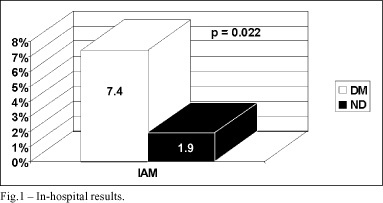
OBJECTIVE: To assess whether coronary stenting in diabetic patients provides in-hospital results and clinical evolution similar to those in nondiabetic patients. METHODS: From July `97 to April ’99 we performed coronary stent implantation in 386 patients with coronary heart disease, who were divided into two groups: diabetic patients and nondiabetic patients. The in-hospital results and the clinical evolution of each group were retrospectively analyzed. RESULTS: The nondiabetic group comprised 305 (79%) patients and the diabetic group 81 (21%) patients. Basic clinical and angiographic characteristics were similar. Angiographic success was in diabetics = 96.6% vs in nondiabetics = 97.9% (p=ns). Among the major complications in the in-hospital phase, the rate of myocardial infarction was higher in the diabetic group (7.4% vs 1.9%) (p=0.022). In the follow-up, a favorable and homogeneous evolution occurred in regard to asymptomatic patients, myocardial infarction, and death in the groups. A greater need for revascularization, however, existed in the diabetic patients (15% vs 2.4%, p<0.001). CONCLUSION: Coronary stenting in diabetic patients is an efficient procedure, with a high angiographic and clinical success rate similar to that in nondiabetic patients. Diabetic patients, however, had a higher incidence of in-hospital myocardial infarction and a greater need for additional myocardial revascularization.

  • Coronary Artery Disease
  • coronary stent
  • Diabetes Mellitus
Read Full Article
Creative Commons Attribution (CC BY) Creative Commons license
21/11/2000 DOI: 10.1590/S0066-782X2000001100001 Views 2
Original Article

Short-term follow-up of patients after aneurysmectomy of the left ventricle

Wilson Luiz da Silveira et al. Adélio Ferreira Leite Érica Coelho Garcia Soares Max Weyler Nery … Antônio Fernando Carneiro Vilmondes Gonçalves de Oliveira

OBJECTIVE: Left ventricular aneurysm is a complication of myocardial infarction that can best be treated by reconstructive surgeries that can restore ventricular geometry. We analyzed immediate results in a group of consecutive patients who underwent surgical correction of left ventricular aneurysms. METHODS: From January ’90 to August ’99, 94 patients – mean age 58.4 (ranging from 36 to 73 years), 65 (69.1%) males and 9 ( 30.8%) females – were operated upon. Pre-operative ejection fraction ranged from 0.22 to 0.58 (mean = 0.52), and the aneurysm was located in the antero-lateral area in 90.4% of the cases. Functional class III and IV (NYHA) was present in 82 (87.2%) patients, and 12 (12.7%) were in functional class I and II. Congestive heart failure was the most frequent cause (77.6%), occurring in isolation in 24.4% or associated with coronary artery diseases in 53.2%. RESULTS: Short-term follow-up showed a 7.4% mortality, and low cardiac output was the main cause of death. Coming off pump was uneventful in 73 patients (77.6%), with a 3.2% mortality and with the use of inotropics in 20 (21.3%). One patient (1%) did not come off the pump. CONCLUSION: Surgical correction was adequate in the immediate follow-up of operated patients, and mortality was higher in patients with higher functional class.

  • Cardiac Surgery
  • Coronary Artery Disease
  • left ventricular aneurysm
  • Myocardial Revascularization
Read Full Article
Creative Commons Attribution (CC BY) Creative Commons license
21/11/2000 DOI: 10.1590/S0066-782X2000001100004 Views 2
Cardiac tamponade in systemic lupus erythematosus. Report of four cases
Brief Communication

Cardiac tamponade in systemic lupus erythematosus. Report of four cases

Márcia Bueno Castier et al. Elisa M. Neves Albuquerque Maria Eduarda F. Costa Castro Menezes Evandro Klumb Francisco Manes Albanesi Fº

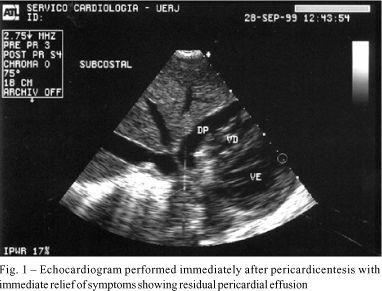
OBJECTIVE: To report and assess the incidence of cardiac tamponade in systemic lupus erythematosus as a cardiac manifestation of the disease. METHODS: We reviewed the medical records of 325 patients diagnosed with systemic lupus erythematosus according to the American Rheumatism Association and their complementary laboratory tests compatible with cardiac tamponade. RESULTS: In the 325 medical recors reviewed, we found 108 patients with pericardial effusions corresponding to 33.2% of the total and 54% of the patients studied in the active phase of the disease. Clinical assessment and transthoracic echocardiogram allowed the clinical diagnosis of cardiac tamponade in only 4 (1.23%) patients, 3 of whom were females, white, with ages ranging from 25 to 44 years. The pericardial fluid was hemorrhagic or serosanguineous with high levels of FAN and positivity for LE cells. In the treatment, we successfully used pericardicentesis associated with high doses of corticosteroids. In clinical and laboratory follow-up performed for a period of 3 years, neither recrudescence of the pericardial effusion nor evolution to constriction occurred. CONCLUSION: Even though rare (1.23%), cardiac tamponade in patients with systemic lupus erythematosus has a benign evolution when properly treated, according to our experience.

  • Cardiac Tamponade
  • Pericardial Effusion
  • Systemic Lupus Erythematosus
Read Full Article
Creative Commons Attribution (CC BY) Creative Commons license
21/11/2000 DOI: 10.1590/S0066-782X2000001100008 Views 1
Original Article

Cardiac findings in 31 patients with Noonan's syndrome

Débora Romeo Bertola et al. Ae Kim Chong Sofia M. M. Sugayama Lilian Maria José Albano … Jaqueline Wagenführ Regina Lúcia Moysés Claudette Hajaj Gonzalez

OBJECTIVE: To evaluate cardiac findings in 31 Noonan syndrome patients. METHODS: Thirty-one (18 males and 13 females)patients from 26 families affected with Noonan’s syndrome were evaluated from the cardiac point of view with electrocardiography and echodopplercardiography. RESULTS: Twenty patients had some type of cardiac abnormality. The most frequent was pulmonary valve stenosis followed by hypertrophic myocardiopathy, commonly associated with valve defects. Upper deviation of the QRS axis was observed in 80% of these patients. CONCLUSION: In view of the high frequency and diversity of cardiac abnormalities present in Noonan syndrome, cardiac evaluation with electrocardiography and echocardiography should be performed in all patients diagnostically suspected of having this disease.

  • hypertrophic myocardiopathy
  • Noonan Syndrome
  • Pulmonary Valve Stenosis
Read Full Article
Creative Commons Attribution (CC BY) Creative Commons license
21/11/2000 DOI: 10.1590/S0066-782X2000001100005 Views 2

How to cite this article

EndNote RIS

Electronic Document Format (Vancouver)

Volpe MA, Braile DM, Vieira RW, Souza DRS. Mitral valve repair with a malleable bovine pericardium ring. Arquivos Brasileiros de Cardiologia 2000;75(5):389-96.

Electronic Document Format (ABNT)

Volpe, Marco Antônio; Braile, Domingo Marcolino; Vieira, Reinaldo Wilson; Souza, Dorotéia Rossi Silva. Mitral valve repair with a malleable bovine pericardium ring. Arquivos Brasileiros de Cardiologia, v. 75, n. 5, p. 389-396, Nov. 2000.

Electronic Document Format (APA)

Volpe, M. A., Braile, D. M., Vieira, R. W., & Souza, D. R. S. (2000). Mitral valve repair with a malleable bovine pericardium ring. Arquivos Brasileiros de Cardiologia, 75(5), 389-396.

Electronic Document Format (ISO)

Volpe, Marco Antônio and Braile, Domingo Marcolino and Vieira, Reinaldo Wilson and Souza, Dorotéia Rossi Silva. Mitral valve repair with a malleable bovine pericardium ring. Arquivos Brasileiros de Cardiologia [online]. 2000, vol. 75, n. 5, [cited 2026-10-14], pp. 389-396. Available from: <https://journals.cardiol.br/en/article/mitral-valve-repair-with-a-malleable-bovine-pericardium-ring/>. ISSN 0066-782X

EndNote RIS

Electronic Document Format (Vancouver)

Haddad N, Silva MB. Mortality due to cardiovascular disease in women during the reproductive age (15 to 49 years), in the State of São Paulo, Brazil, from 1991 to 1995. Arquivos Brasileiros de Cardiologia 2000;75(5):375-9.

Electronic Document Format (ABNT)

Haddad, Nagib; Silva, Maria Barbosa da. Mortality due to cardiovascular disease in women during the reproductive age (15 to 49 years), in the State of São Paulo, Brazil, from 1991 to 1995. Arquivos Brasileiros de Cardiologia, v. 75, n. 5, p. 375-379, Nov. 2000.

Electronic Document Format (APA)

Haddad, N., & Silva, M. B. (2000). Mortality due to cardiovascular disease in women during the reproductive age (15 to 49 years), in the State of São Paulo, Brazil, from 1991 to 1995. Arquivos Brasileiros de Cardiologia, 75(5), 375-379.

Electronic Document Format (ISO)

Haddad, Nagib and Silva, Maria Barbosa da. Mortality due to cardiovascular disease in women during the reproductive age (15 to 49 years), in the State of São Paulo, Brazil, from 1991 to 1995. Arquivos Brasileiros de Cardiologia [online]. 2000, vol. 75, n. 5, [cited 2026-10-14], pp. 375-379. Available from: <https://journals.cardiol.br/en/article/mortality-due-to-cardiovascular-disease-in-women-during-the-reproductive-age-15-to-49-years-in-the-state-of-sao-paulo-brazil-from-1991-to-1995/>. ISSN 0066-782X

EndNote RIS

Electronic Document Format (Vancouver)

Rassier DJE. The degree of activation of cardiac muscle depends on muscle length. Arquivos Brasileiros de Cardiologia 2000;75(5):454-7.

Electronic Document Format (ABNT)

Rassier, Dilson J. E.. The degree of activation of cardiac muscle depends on muscle length. Arquivos Brasileiros de Cardiologia, v. 75, n. 5, p. 454-457, Nov. 2000.

Electronic Document Format (APA)

Rassier, D. J. E. (2000). The degree of activation of cardiac muscle depends on muscle length. Arquivos Brasileiros de Cardiologia, 75(5), 454-457.

Electronic Document Format (ISO)

Rassier, Dilson J. E.. The degree of activation of cardiac muscle depends on muscle length. Arquivos Brasileiros de Cardiologia [online]. 2000, vol. 75, n. 5, [cited 2026-10-14], pp. 454-457. Available from: <https://journals.cardiol.br/en/article/the-degree-of-activation-of-cardiac-muscle-depends-on-muscle-length/>. ISSN 0066-782X

EndNote RIS

Electronic Document Format (Vancouver)

Bacal F, Veiga VC, Fiorelli AI, Bellotti G, Bocchi EA, Stolf NAG, Ramires JAF, et al. Analysis of the risk factors for allograft vasculopathy in asymptomatic patients after cardiac transplantation. Arquivos Brasileiros de Cardiologia 2000;75(5):421-8.

Electronic Document Format (ABNT)

Bacal, Fernando; Veiga, Viviane Cordeiro; Fiorelli, Alfredo Inácio; Bellotti, Giovanni; Bocchi, Edimar Alcides; Stolf, Noedir Antonio Groppo; Ramires, José Antonio Franchini. Analysis of the risk factors for allograft vasculopathy in asymptomatic patients after cardiac transplantation. Arquivos Brasileiros de Cardiologia, v. 75, n. 5, p. 421-428, Nov. 2000.

Electronic Document Format (APA)

Bacal, F., Veiga, V. C., Fiorelli, A. I., Bellotti, G., Bocchi, E. A., Stolf, N. A. G., & Ramires, J. A. F. (2000). Analysis of the risk factors for allograft vasculopathy in asymptomatic patients after cardiac transplantation. Arquivos Brasileiros de Cardiologia, 75(5), 421-428.

Electronic Document Format (ISO)

Bacal, Fernando and Veiga, Viviane Cordeiro and Fiorelli, Alfredo Inácio and Bellotti, Giovanni and Bocchi, Edimar Alcides and Stolf, Noedir Antonio Groppo and Ramires, José Antonio Franchini. Analysis of the risk factors for allograft vasculopathy in asymptomatic patients after cardiac transplantation. Arquivos Brasileiros de Cardiologia [online]. 2000, vol. 75, n. 5, [cited 2026-10-14], pp. 421-428. Available from: <https://journals.cardiol.br/en/article/analysis-of-the-risk-factors-for-allograft-vasculopathy-in-asymptomatic-patients-after-cardiac-transplantation/>. ISSN 0066-782X

EndNote RIS

Electronic Document Format (Vancouver)

Munhoz EC, Oliveira PF. Clinical significance of in-hospital reocclusion after mechanical reperfusion and percutaneous transluminal coronary angioplasty for acute myocardial infarction. Arquivos Brasileiros de Cardiologia 2000;75(5):436-41.

Electronic Document Format (ABNT)

Munhoz, Eva Cantalejo; Oliveira, Paulo Franco de. Clinical significance of in-hospital reocclusion after mechanical reperfusion and percutaneous transluminal coronary angioplasty for acute myocardial infarction. Arquivos Brasileiros de Cardiologia, v. 75, n. 5, p. 436-441, Nov. 2000.

Electronic Document Format (APA)

Munhoz, E. C., & Oliveira, P. F. (2000). Clinical significance of in-hospital reocclusion after mechanical reperfusion and percutaneous transluminal coronary angioplasty for acute myocardial infarction. Arquivos Brasileiros de Cardiologia, 75(5), 436-441.

Electronic Document Format (ISO)

Munhoz, Eva Cantalejo and Oliveira, Paulo Franco de. Clinical significance of in-hospital reocclusion after mechanical reperfusion and percutaneous transluminal coronary angioplasty for acute myocardial infarction. Arquivos Brasileiros de Cardiologia [online]. 2000, vol. 75, n. 5, [cited 2026-10-14], pp. 436-441. Available from: <https://journals.cardiol.br/en/article/clinical-significance-of-in-hospital-reocclusion-after-mechanical-reperfusion-and-percutaneous-transluminal-coronary-angioplasty-for-acute-myocardial-infarction/>. ISSN 0066-782X

EndNote RIS

Electronic Document Format (Vancouver)

Bayerl DM, Siqueira E, Moscoso I, Santos E, Maeda A, Bittencourt O, Mauro MF, et al. Coronary stent implantation in diabetic versus nondiabetic patients. Early and late outcomes. Arquivos Brasileiros de Cardiologia 2000;75(5):365-8.

Electronic Document Format (ABNT)

Bayerl, Denis Moulin; Siqueira, Erasmo; Moscoso, Isaac; Santos, Elise; Maeda, Alexandre; Bittencourt, Oscar; Mauro, M. Fernanda; Cristovão, Salvador; Salman, Adnan; Sanches, Gustavo; Mangione, José Armando. Coronary stent implantation in diabetic versus nondiabetic patients. Early and late outcomes. Arquivos Brasileiros de Cardiologia, v. 75, n. 5, p. 365-368, Nov. 2000.

Electronic Document Format (APA)

Bayerl, D. M., Siqueira, E., Moscoso, I., Santos, E., Maeda, A., Bittencourt, O., Mauro, M. F., Cristovão, S., Salman, A., Sanches, G., & Mangione, J. A. (2000). Coronary stent implantation in diabetic versus nondiabetic patients. Early and late outcomes. Arquivos Brasileiros de Cardiologia, 75(5), 365-368.

Electronic Document Format (ISO)

Bayerl, Denis Moulin and Siqueira, Erasmo and Moscoso, Isaac and Santos, Elise and Maeda, Alexandre and Bittencourt, Oscar and Mauro, M. Fernanda and Cristovão, Salvador and Salman, Adnan and Sanches, Gustavo and Mangione, José Armando. Coronary stent implantation in diabetic versus nondiabetic patients. Early and late outcomes. Arquivos Brasileiros de Cardiologia [online]. 2000, vol. 75, n. 5, [cited 2026-10-14], pp. 365-368. Available from: <https://journals.cardiol.br/en/article/coronary-stent-implantation-in-diabetic-versus-nondiabetic-patients-early-and-late-outcomes/>. ISSN 0066-782X

EndNote RIS

Electronic Document Format (Vancouver)

Silveira WL, Leite AF, Soares CG, Nery MW, Carneiro AF, Oliveira VG. Short-term follow-up of patients after aneurysmectomy of the left ventricle. Arquivos Brasileiros de Cardiologia 2000;75(5):401-4.

Electronic Document Format (ABNT)

Silveira, Wilson Luiz da; Leite, Adélio Ferreira; Soares, Érica Coelho Garcia; Nery, Max Weyler; Carneiro, Antônio Fernando; Oliveira, Vilmondes Gonçalves de. Short-term follow-up of patients after aneurysmectomy of the left ventricle. Arquivos Brasileiros de Cardiologia, v. 75, n. 5, p. 401-404, Nov. 2000.

Electronic Document Format (APA)

Silveira, W. L. , Leite, A. F., Soares, C. G., Nery, M. W., Carneiro, A. F., & Oliveira, V. G. (2000). Short-term follow-up of patients after aneurysmectomy of the left ventricle. Arquivos Brasileiros de Cardiologia, 75(5), 401-404.

Electronic Document Format (ISO)

Silveira, Wilson Luiz da and Leite, Adélio Ferreira and Soares, Érica Coelho Garcia and Nery, Max Weyler and Carneiro, Antônio Fernando and Oliveira, Vilmondes Gonçalves de. Short-term follow-up of patients after aneurysmectomy of the left ventricle. Arquivos Brasileiros de Cardiologia [online]. 2000, vol. 75, n. 5, [cited 2026-10-14], pp. 401-404. Available from: <https://journals.cardiol.br/en/article/short-term-follow-up-of-patients-after-aneurysmectomy-of-the-left-ventricle/>. ISSN 0066-782X

EndNote RIS

Electronic Document Format (Vancouver)

Castier MB, Albuquerque EMN, Menezes MEFCC, Klumb E, Fº FMA. Cardiac tamponade in systemic lupus erythematosus. Report of four cases. Arquivos Brasileiros de Cardiologia 2000;75(5):446-8.

Electronic Document Format (ABNT)

Castier, Márcia Bueno; Albuquerque, Elisa M. Neves; Menezes, Maria Eduarda F. Costa Castro; Klumb, Evandro; Fº, Francisco Manes Albanesi. Cardiac tamponade in systemic lupus erythematosus. Report of four cases. Arquivos Brasileiros de Cardiologia, v. 75, n. 5, p. 446-448, Nov. 2000.

Electronic Document Format (APA)

Castier, M. B., Albuquerque, E. M. N., Menezes, M. E. F. C. C., Klumb, E., & Fº, F. M. A. (2000). Cardiac tamponade in systemic lupus erythematosus. Report of four cases. Arquivos Brasileiros de Cardiologia, 75(5), 446-448.

Electronic Document Format (ISO)

Castier, Márcia Bueno and Albuquerque, Elisa M. Neves and Menezes, Maria Eduarda F. Costa Castro and Klumb, Evandro and Fº, Francisco Manes Albanesi. Cardiac tamponade in systemic lupus erythematosus. Report of four cases. Arquivos Brasileiros de Cardiologia [online]. 2000, vol. 75, n. 5, [cited 2026-10-14], pp. 446-448. Available from: <https://journals.cardiol.br/en/article/cardiac-tamponade-in-systemic-lupus-erythematosus-report-of-four-cases/>. ISSN 0066-782X

EndNote RIS

Electronic Document Format (Vancouver)

Bertola DR, Chong AK, Sugayama SMM, Albano LMJ, Wagenführ J, Moysés RL, Gonzalez CH, et al. Cardiac findings in 31 patients with Noonan’s syndrome. Arquivos Brasileiros de Cardiologia 2000;75(5):409-12.

Electronic Document Format (ABNT)

Bertola, Débora Romeo; Chong, Ae Kim; Sugayama, Sofia M. M.; Albano, Lilian Maria José; Wagenführ, Jaqueline; Moysés, Regina Lúcia; Gonzalez, Claudette Hajaj. Cardiac findings in 31 patients with Noonan’s syndrome. Arquivos Brasileiros de Cardiologia, v. 75, n. 5, p. 409-412, Nov. 2000.

Electronic Document Format (APA)

Bertola, D. R., Chong, A. K., Sugayama, S. M. M., Albano, L. M. J., Wagenführ, J., Moysés, R. L., & Gonzalez, C. H. (2000). Cardiac findings in 31 patients with Noonan’s syndrome. Arquivos Brasileiros de Cardiologia, 75(5), 409-412.

Electronic Document Format (ISO)

Bertola, Débora Romeo and Chong, Ae Kim and Sugayama, Sofia M. M. and Albano, Lilian Maria José and Wagenführ, Jaqueline and Moysés, Regina Lúcia and Gonzalez, Claudette Hajaj. Cardiac findings in 31 patients with Noonan’s syndrome. Arquivos Brasileiros de Cardiologia [online]. 2000, vol. 75, n. 5, [cited 2026-10-14], pp. 409-412. Available from: <https://journals.cardiol.br/en/article/cardiac-findings-in-31-patients-with-noonans-syndrome/>. ISSN 0066-782X

Sede – Rio de Janeiro
Av. Marechal Câmara, 160
3º andar – Sala: 330 – Centro
Rio de Janeiro – CEP: 20020-907
Tel.: (55 +21) 3478-2700
ou (21) 99386-3961
E-mail: revista@cardiol.br

Sede – São Paulo
Alameda Santos, 705 – 11º andar
Cerqueira César | São Paulo
CEP: 01419-001
Tel.: (55 +11) 3411-5500
E-mail: revista@cardiol.br

  • About the Journal
  • Internal Regulation
  • Editors Section
  • Editorial Board
  • History
  • SBC Award

  • Guidelines for Publication
  • Editorial Policy
  • Ethics Policy
  • Policy on the Use of Artificial Intelligence
  • Mandatory Publication Form
  • Publication Fee

Issues

SBC Guidelines

  • How to Publish an Abstract Supplement?
  • Supplements from the Brazilian Congress of Cardiology