ABC Family Arquivos Brasileiros de Cardiologia International Journal of Cardiovascular Sciences ABC Heart Failure & Cardiomyopathy ABC Imagem Cardiovascular
Português English
ABC Family
Português English
  • About
    • About ABC Family
    • Internal Regulation
    • Editorial Board
    • Brazilian Society of Cardiology (SBC)
  • Issues
  • SBC Guidelines
  • Content
    • Videos
    • Podcasts
    • News
  • About
    • About ABC Family
    • Internal Regulation
    • Editorial Board
    • Brazilian Society of Cardiology (SBC)
  • Issues
  • SBC Guidelines
  • Content
    • Videos
    • Podcasts
    • News

ABC Family

  • ABC Family
  • Arquivos Brasileiros de Cardiologia
  • International Journal of Cardiovascular Sciences
  • ABC Heart Failure & Cardiomyopathy
  • ABC Imagem Cardiovascular
Search in

No content found.

Journals
Ordering
Article types
Others

  1. Home
  2. Keyword: Heart Valves/surgery
ABC
Original Article

Frailty Among Non-Elderly Patients Undergoing Cardiac Surgery

Camila Bottura et al. Livia Arcêncio Hannah Miranda Araújo Chagas Paulo Roberto Barbosa Evora Alfredo José Rodrigues

Abstract

Background:

Usually viewed as a characteristic of old age, frailty may also occur in non-elderly people, primarily in those suffering from chronic disease. Frailty may increase operative risk.

Objectives:

To determine the prevalence of frailty patients undergoing coronary artery bypass (CABG) and/or heart valve replacement or reconstruction and/or heart valve surgery, as well as the influence of frailty on postoperative outcomes.

Methods:

Our study comprised 100 adults who underwent consecutive elective cardiac operations. Frailty was assessed using the Fried scale. Patients also performed a 6-minute walk test, and we measured maximal inspiratory and expiratory pressures. A p value <0.05 was considered significant.

Results:

Of a cohort of 100 patients, based on the Fried frailty criteria, 17 patients (17%) were considered frail, 70 (70%) pre-frail and only 13 (13%) were non-frail. Among patients with valvular heart disease, 11 (18.6%) were considered frail and 43 (73%) pre-frail. Fifty three percent of the patients considered frail were less than 60 years old (median=48 years old). The differences in frailty phenotype between patients with valvular heart disease and coronary artery disease were not statistically significant (p=0.305). A comparison between non-frail, pre-frail, and frail patients showed no significant difference in the distribution of comorbidities and cardiac functional status, regardless of their cardiac disease. However, hospital mortality was significantly higher in frail patients (29.4%, p=0.026) than in pre-frail patients (8.6%) and non-frail patients (0%).

Conclusions:

Frailty is prevalent even among non-elderly patients undergoing CABG or valvular heart surgery and is associated with higher postoperative hospital mortality.
  • Frailty
  • Heart Valves/surgery
  • Myocardial Revascularization/surgery
  • Postoperative Care/mortality
Read Full Article
Creative Commons Attribution (CC BY) Creative Commons license
23/10/2020 DOI: 10.36660/abc.20190082
ABC
Editorial

Short Editorial: Frailty among Non-Elderly Patients Undergoing Cardiac Surgery

Iran Castro et al. Hugo Fontana Filho

Frailty is recognized as a geriatric syndrome characterized by an excess of vulnerability to stressors, with a low ability to maintain or recover homeostasis after a destabilizing event. The analysis of frailty is a well-known and studied subject in elderly patients, having a direct relationship with the prognosis and even with measures to be instituted pre-procedure aiming to improve the quality of life and the outcome of the patients.

Despite the original description restricting the term to patients older than 65 years, the syndrome also affects younger patients., Frailty represents more biological and phenotypic aspects than age itself, and precursors of the syndrome appear at a young age.

[…]

  • Frailty
  • Heart Valves/surgery
  • Myocardial Revascularization/surgery
  • Postoperative Care/mortality
Read Full Article
Creative Commons Attribution (CC BY) Creative Commons license
23/10/2020 DOI: 10.36660/abc.20200970 Views 2
Figure 1
IJCS
Original Article

Internal Validation of a Risk Score for Prediction of Postoperative Atrial Fibrillation after Cardiac Surgery

Rafael de March Ronsoni et al. Tiago Luiz Luz Leiria Leonardo Martins Pires Marcelo Lapa Kruse … Edemar Pereira Rogerio Gomes da Silva Gustavo Glotz de Lima

Abstract

Background:

Postoperative atrial fibrillation (POAF) after cardiac surgery has great clinical and economic implications. Many attempts have been made to identify risk factors aiming at a better evaluation of prophylactic treatment strategies.

Objective:

To perform an internal validation of a risk score for POAF.

Methods:

A prospective cohort of 1,054 patients who underwent myocardial revascularization and/or valve surgery was included. The risk score model was developed in 448 patients, and its performance was tested in the remaining 606 patients. Variables with a significance level of 5% in the cohort were included and subjected to a multiple logistic regression model with backward selection. Performance statistics was performed using the c-statistic, the chi-square and the Hosmer-Lemeshow (HL) goodness-of-fit, Pearson’s correlation coefficient.

Results:

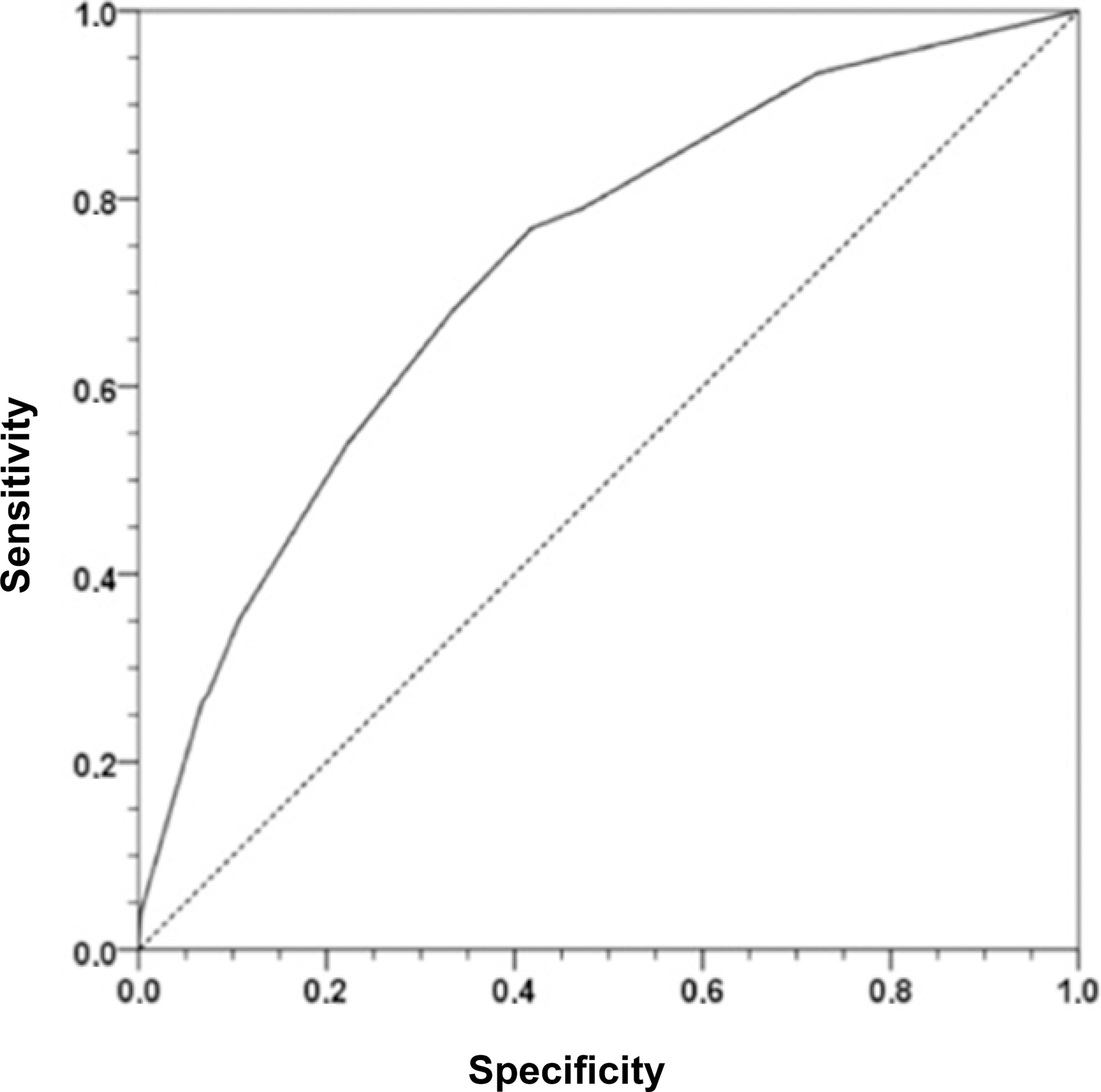
Four variables were considered predictors of outcome: age (≥ 70 years), mitral valve disease, the non-use or discontinuation of beta-blockers and a positive water balance (> 1,500 mL). The ROC curve was 0.76 (95% confidence interval [CI]: 0.72-0.79). The risk model showed a good ability according to the performance statistics – HL test x(2) = 0.93; p = 0.983 and r = 0.99 (Pearson’s coefficient). There was an increase in the frequency of POAF with the increase of the score: very low risk = 0.0%; low risk = 3.9%; intermediate risk = 10.9%; and high risk = 60.0%; p < 0.0001.

Conclusion:

The predictive variables of POAF allowed us to construct a simplified risk score. This scoring system showed good accuracy and can be used in routine clinical practice.

  • Atrial Fibrillation
  • Heart Valves/surgery
  • Myocardial Revascularization
  • Perioperative Care
  • Prevention and Control
  • risk score
Read Full Article
Creative Commons Attribution (CC BY) Creative Commons license
24/10/2019 DOI: 10.5935/2359-4802.20190085 Views 2
ABC
Editorial

Decellularization of Human Pericardium with Potential Application in Regenerative Medicine

Estela de Oliveira Lima et al. Adriana Camargo Ferrasi Andreas Kaasi

Regenerative medicine is an interdisciplinary branch of the biomedical sciences that is showing, through the transposition of basic research into the clinic, great potential for therapeutic application, and the field is consequently becoming an important frontman for Translational Medicine. The essence of regenerative medicine consists of the repair or replacement of tissues and organs in which there is structural and functional deficiency. With a view of achieving this objective, several approaches have been proposed, including therapies that include genes, cells, biologic and synthetic scaffolds, which may or may not take part of a tissue engineering strategy. When dealing with synthetic scaffolds, it is possible to manipulate and control structural and mechanical properties, nonetheless, it is not possible to guarantee the same functional capacity as natural tissue. In addition, one of the great challenges is minimizing the risk of immunogenic reactions triggered by the repair scaffold’s composition. Owing to the challenges associated with the reestablishment on a functional and structural level of the cell microenvironment, the interest in scaffolds based on natural extracellular matrix (ECM) has increased considerably.

With a view of obtaining a biomaterial closely approximating tissues or organs having suffered damage, be it structural or functional, yet at the same time presenting safety from an immunological point of view, a new technology for clinical applications of ECM has been proposed – the decellularization of tissues and organs from human or animal donors. This technology makes use of physical, chemical and/or biochemical methods to eliminate cells from the target tissue/organ, be it xenogeneic or allogeneic, whose antigens represent an elevated risk of immunogenic reaction. The process seeks to ensure immunologic safety and the preservation of basic structural and functional components of the ECM, such as proteins, collagen and glycosaminoglycans (GAGs). The end product is a three-dimensional ECM scaffold with analogous shape to the original tissue, with preserved ultrastructural architecture and with greater biocompatibility and potential of tissue regeneration when compared to synthetic scaffolds.

[…]

  • Biocompatible Materials
  • Cells
  • Heart Valves/surgery
  • Pericardium
  • Regenerative Medicine
  • Tissue Scaffolds
  • Translational Medical Research
Read Full Article
Creative Commons Attribution (CC BY) Creative Commons license
08/08/2019 DOI: 10.5935/abc.20190130

How to cite this article

EndNote RIS

Electronic Document Format (Vancouver)

Bottura C, Arcêncio L, Chagas HMA, Evora PRB, Rodrigues AJ. Frailty Among Non-Elderly Patients Undergoing Cardiac Surgery. Arquivos Brasileiros de Cardiologia 2020;115(4):604-10.

Electronic Document Format (ABNT)

Bottura, Camila; Arcêncio, Livia; Chagas, Hannah Miranda Araújo; Evora, Paulo Roberto Barbosa; Rodrigues, Alfredo José. Frailty Among Non-Elderly Patients Undergoing Cardiac Surgery. Arquivos Brasileiros de Cardiologia, v. 115, n. 4, p. 604-610, Oct. 2020.

Electronic Document Format (APA)

Bottura, C., Arcêncio, L., Chagas, H. M. A., Evora, P. R. B., & Rodrigues, A. J. (2020). Frailty Among Non-Elderly Patients Undergoing Cardiac Surgery. Arquivos Brasileiros de Cardiologia, 115(4), 604-610.

Electronic Document Format (ISO)

Bottura, Camila and Arcêncio, Livia and Chagas, Hannah Miranda Araújo and Evora, Paulo Roberto Barbosa and Rodrigues, Alfredo José. Frailty Among Non-Elderly Patients Undergoing Cardiac Surgery. Arquivos Brasileiros de Cardiologia [online]. 2020, vol. 115, n. 4, [cited 2026-10-14], pp. 604-610. Available from: <https://journals.cardiol.br/en/article/frailty-among-non-elderly-patients-undergoing-cardiac-surgery/>. ISSN 0066-782X

EndNote RIS

Electronic Document Format (Vancouver)

Castro I, Fontana Filho H. Short Editorial: Frailty among Non-Elderly Patients Undergoing Cardiac Surgery. Arquivos Brasileiros de Cardiologia 2020;115(4):611-2.

Electronic Document Format (ABNT)

Castro, Iran; Fontana Filho, Hugo. Short Editorial: Frailty among Non-Elderly Patients Undergoing Cardiac Surgery. Arquivos Brasileiros de Cardiologia, v. 115, n. 4, p. 611-612, Oct. 2020.

Electronic Document Format (APA)

Castro, I., & Fontana Filho, H. (2020). Short Editorial: Frailty among Non-Elderly Patients Undergoing Cardiac Surgery. Arquivos Brasileiros de Cardiologia, 115(4), 611-612.

Electronic Document Format (ISO)

Castro, Iran and Fontana Filho, Hugo. Short Editorial: Frailty among Non-Elderly Patients Undergoing Cardiac Surgery. Arquivos Brasileiros de Cardiologia [online]. 2020, vol. 115, n. 4, [cited 2026-10-14], pp. 611-612. Available from: <https://journals.cardiol.br/en/article/short-editorial-frailty-among-non-elderly-patients-undergoing-cardiac-surgery/>. ISSN 0066-782X

EndNote RIS

Electronic Document Format (Vancouver)

Ronsoni RM, Leiria TLL, Pires LM, Kruse ML, Pereira E, Silva RG, Lima GG, et al. Internal Validation of a Risk Score for Prediction of Postoperative Atrial Fibrillation after Cardiac Surgery. International Journal of Cardiovascular Sciences 2019;33(2):158-66.

Electronic Document Format (ABNT)

Ronsoni, Rafael de March; Leiria, Tiago Luiz Luz; Pires, Leonardo Martins; Kruse, Marcelo Lapa; Pereira, Edemar; Silva, Rogerio Gomes da; Lima, Gustavo Glotz de. Internal Validation of a Risk Score for Prediction of Postoperative Atrial Fibrillation after Cardiac Surgery. International Journal of Cardiovascular Sciences, v. 33, n. 2, p. 158-166, Oct. 2019.

Electronic Document Format (APA)

Ronsoni, R. M., Leiria, T. L. L., Pires, L. M., Kruse, M. L., Pereira, E., Silva, R. G. , & Lima, G. G. (2019). Internal Validation of a Risk Score for Prediction of Postoperative Atrial Fibrillation after Cardiac Surgery. International Journal of Cardiovascular Sciences, 33(2), 158-166.

Electronic Document Format (ISO)

Ronsoni, Rafael de March and Leiria, Tiago Luiz Luz and Pires, Leonardo Martins and Kruse, Marcelo Lapa and Pereira, Edemar and Silva, Rogerio Gomes da and Lima, Gustavo Glotz de. Internal Validation of a Risk Score for Prediction of Postoperative Atrial Fibrillation after Cardiac Surgery. International Journal of Cardiovascular Sciences [online]. 2019, vol. 33, n. 2, [cited 2026-10-14], pp. 158-166. Available from: <https://journals.cardiol.br/en/article/internal-validation-of-a-risk-score-for-prediction-of-postoperative-atrial-fibrillation-after-cardiac-surgery/>. ISSN 2359-4802

EndNote RIS

Electronic Document Format (Vancouver)

Lima EO, Ferrasi AC, Kaasi A. Decellularization of Human Pericardium with Potential Application in Regenerative Medicine. Arquivos Brasileiros de Cardiologia 2019;113(1):18-9.

Electronic Document Format (ABNT)

Lima, Estela de Oliveira; Ferrasi, Adriana Camargo; Kaasi, Andreas. Decellularization of Human Pericardium with Potential Application in Regenerative Medicine. Arquivos Brasileiros de Cardiologia, v. 113, n. 1, p. 18-19, Aug. 2019.

Electronic Document Format (APA)

Lima, E. O., Ferrasi, A. C., & Kaasi, A. (2019). Decellularization of Human Pericardium with Potential Application in Regenerative Medicine. Arquivos Brasileiros de Cardiologia, 113(1), 18-19.

Electronic Document Format (ISO)

Lima, Estela de Oliveira and Ferrasi, Adriana Camargo and Kaasi, Andreas. Decellularization of Human Pericardium with Potential Application in Regenerative Medicine. Arquivos Brasileiros de Cardiologia [online]. 2019, vol. 113, n. 1, [cited 2026-10-14], pp. 18-19. Available from: <https://journals.cardiol.br/en/article/decellularization-of-human-pericardium-with-potential-application-in-regenerative-medicine/>. ISSN 0066-782X

  • About ABC Family
  • Internal Regulation
  • Editorial Board
  • Brazilian Society of Cardiology (SBC)

Issues

SBC Guidelines

  • Videos
  • Podcasts
  • News