Physiological Characterization of Coronary Endotypes: Potential Links with Myocardial Ischemia
Abstract
Background
Comprehensive physiological characterization of coronary endotypes remains limited, especially in epicardial dysfunction.
Objectives
To describe hemodynamic profiles across the full spectrum of coronary endotypes and explore potential links with ischemia.
Methods
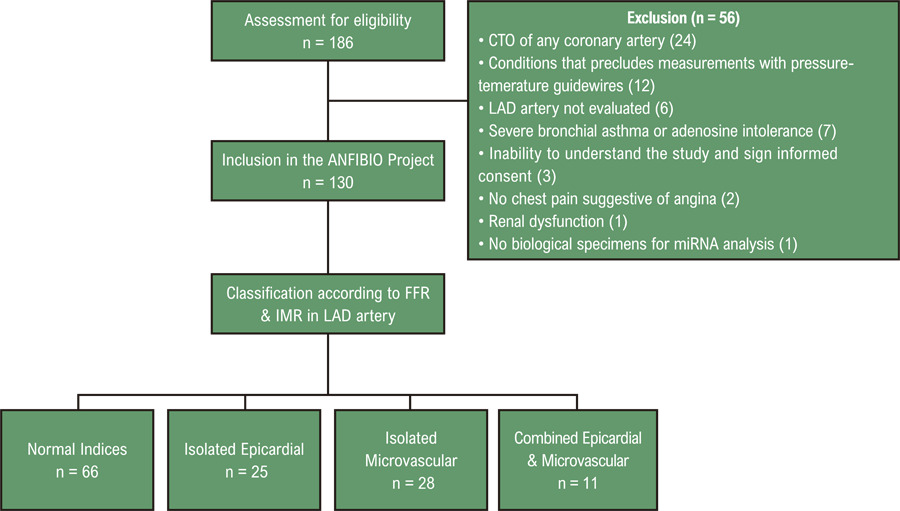
Patients with suspected chronic coronary syndromes who underwent invasive physiological assessment in the ANFIBIO Project (NCT05374694) were classified according to fractional flow reserve [(FFR)≤0.80] and index of microcirculatory resistance [(IMR)≥25] in the left anterior descending artery into four groups: normal indices, isolated epicardial, isolated microvascular, and combined dysfunction. Coronary pressure, flow, and resistance indices were compared between groups.
Results
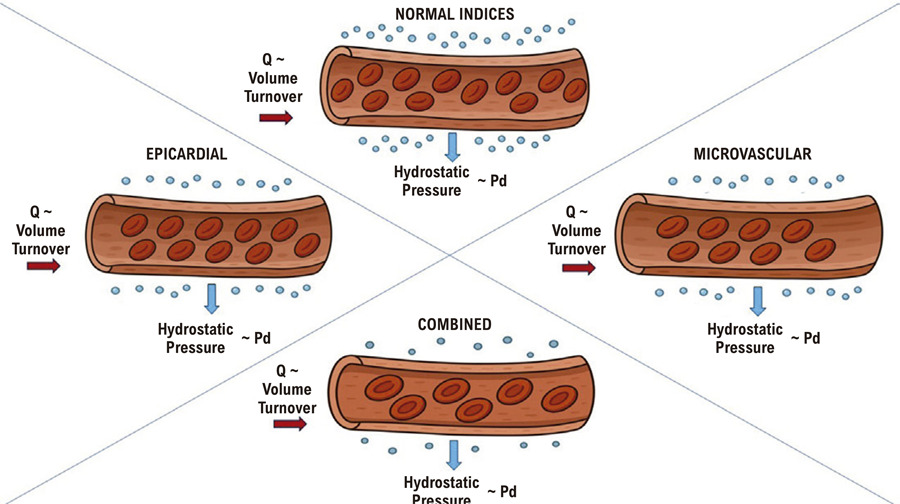
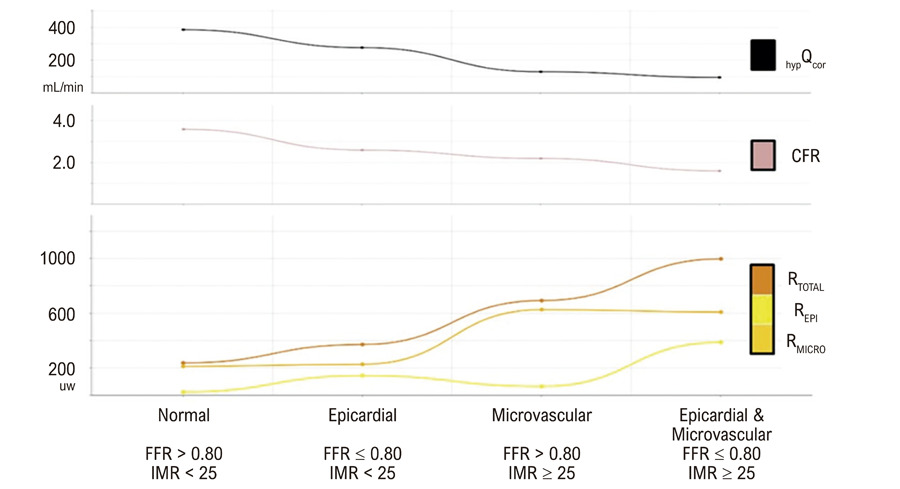
A total of 130 patients were finally included. A gradual decrease in hyperemic coronary flow [(Qcor) in mL/min; normal indices: 387±192, isolated epicardial: 278±153, isolated microvascular: 130±41, combined: 96±33; p<0.001] and a progressive increase in total coronary resistance [(RTotal) in Wood units (WU); normal indices: 238±139, isolated epicardial: 373±167, isolated microvascular: 694±210, combined: 999±342; p<0.001] were observed as more compartments were involved. Also, epicardial dysfunction was primarily associated with reduced distal coronary pressure (Pd) and elevated epicardial resistance [(REpi) in WU; normal indices: 25±18, isolated epicardial: 145±113, isolated microvascular: 66±34, combined: 389±282; p<0.001], whereas microvascular dysfunction was characterized by preserved Pd but markedly decreased Qcor and increased microvascular resistance [(RMicro) in WU; normal indices: 213±124, isolated epicardial: 228±73, isolated microvascular: 628±195, combined: 610±137; p<0.001]. Combined dysfunction shares mechanisms of both epicardial and microvascular dysfunction.
Conclusions
Coronary endotypes exhibit distinct hemodynamic patterns with specific pressure- and flow-related ischemic mechanisms. Integrated physiological assessment is essential for accurate endotype characterization and personalized therapeutic strategies.
Images
Image gallery fullscreen viewer
Comments are moderated by the editorial team before publication. Discussions should be evidence-based and use scientific language. Conflicts of interest should be declared.