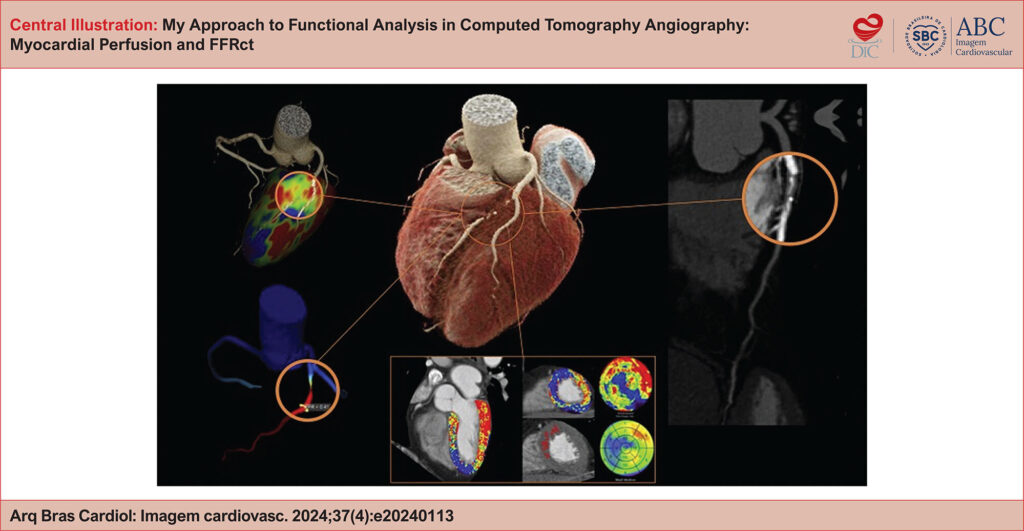
My Approach to Functional Analysis in Computed Tomography Angiography: Myocardial Perfusion and FFRct
Abstract
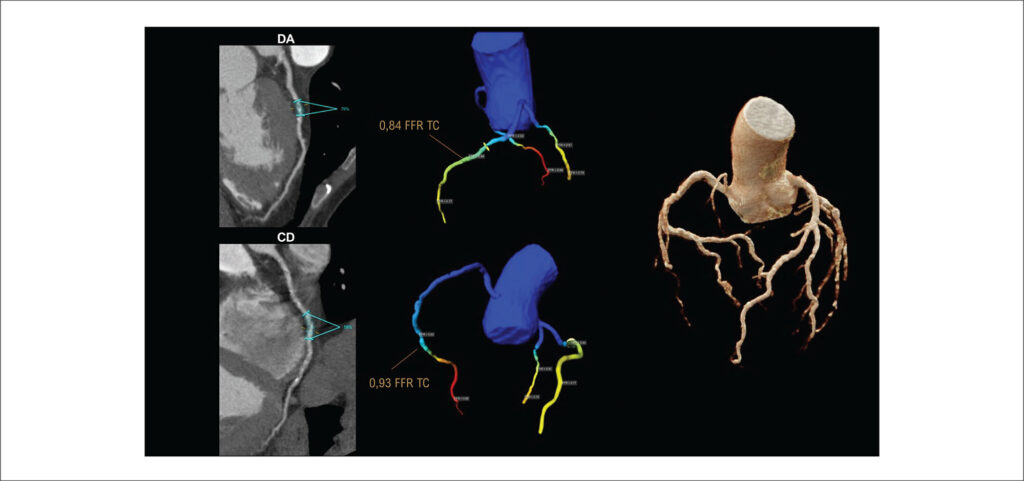
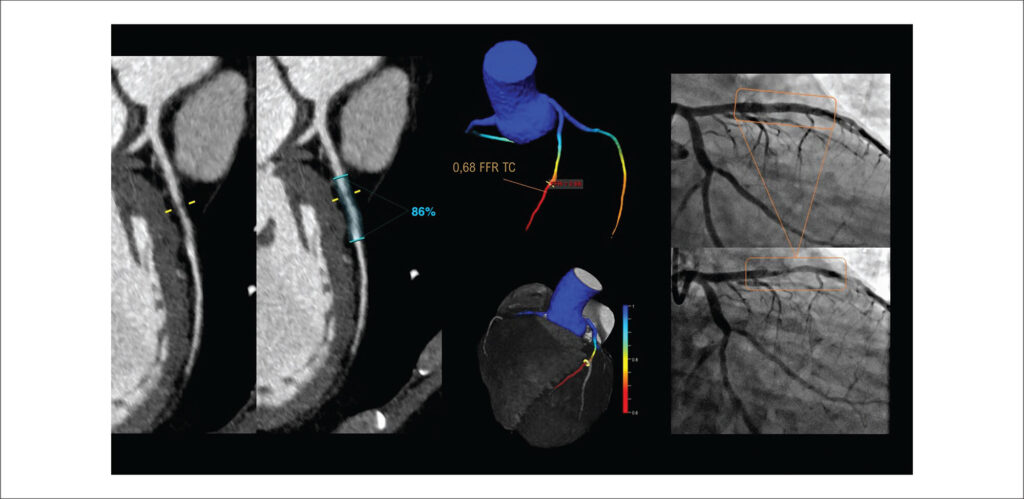
Coronary computed tomography angiography (CCTA) is an effective noninvasive method for detecting atherosclerotic disease, especially in symptomatic patients with low-to-moderate disease probability. Despite good accuracy in detecting obstructions, its relationship with functional lesion severity is limited. For a more accurate assessment, anatomical evaluation can be associated with myocardial computed tomography perfusion and fractional flow reserve derived from CCTA (FFRct). Myocardial perfusion computed tomography identifies areas of ischemia. FFRct, which assesses the hemodynamic significance of stenoses, has shown high accuracy and can reduce the need for invasive catheterizations. The image acquisition and interpretation protocols are essential to ensure reliable results and appropriate management of patients with coronary artery disease.
Images
Image gallery fullscreen viewer
Comments are moderated by the editorial team before publication. Discussions should be evidence-based and use scientific language. Conflicts of interest should be declared.