ABC Family Arquivos Brasileiros de Cardiologia International Journal of Cardiovascular Sciences ABC Heart Failure & Cardiomyopathy ABC Imagem Cardiovascular
Português English
ABC Family
Português English
  • About
    • About ABC Family
    • Internal Regulation
    • Editorial Board
    • Brazilian Society of Cardiology (SBC)
  • Issues
  • SBC Guidelines
  • Content
    • Videos
    • Podcasts
    • News
  • About
    • About ABC Family
    • Internal Regulation
    • Editorial Board
    • Brazilian Society of Cardiology (SBC)
  • Issues
  • SBC Guidelines
  • Content
    • Videos
    • Podcasts
    • News

ABC Family

  • ABC Family
  • Arquivos Brasileiros de Cardiologia
  • International Journal of Cardiovascular Sciences
  • ABC Heart Failure & Cardiomyopathy
  • ABC Imagem Cardiovascular
Search in

No content found.

Journals
Ordering
Article types
Others

  1. Home
  2. Keyword: heart failure, congestive
Cardiac troponin T for risk stratification in decompensated chronic heart failure
ABC
Artigo Original

Cardiac troponin T for risk stratification in decompensated chronic heart failure

Carlos Henrique Del Carlo et al. Antonio Carlos Pereira-Barretto Célia Maria Cassaro-Strunz Maria do Rosário Dias de Oliveira Latorre … Múcio Tavares de Oliveira Junior José Antonio Franchini Ramires

BACKGROUND: The cardiac troponins are highly sensitive and specific markers of myocardial injury. They have been detected in heart failure (HF) and are associated with a bad prognosis. OBJECTIVE: To evaluate the association of cardiac troponin T (cTnT) and its ranges with prognosis in decompensated HF. METHODS: A total of 70 patients with chronic HF worsening that needed hospitalization were studied. Cox model was used to evaluate the variables at admission capable of predicting the combined outcome that consisted of death or re-hospitalization due to HF worsening during a 1-year follow-up. RESULTS: During the follow-up, there were 44 deaths, 36 re-hospitalizations due to HF and 56 combined outcomes. At the multivariate analysis, the predictors of clinical events were the cTnT (cTnT >0.100 ng/mL; hazard ratio [HR] 3.95 95% confidence interval [CI]: 1.64-9.49, p = 0.002), left ventricular end diastolic diameter (LVDD >70 mm; HR 1.92, 95%CI: 1.06-3.47, p = 0.031) and serum sodium (Na <135 mEq/L; HR 1.79, 95%CI: 1.02-3.15, p = 0.044). To evaluate the association between the cTnT increase and the prognosis in decompensated HF, the patients were stratified in three groups: low-cTnT (cTnT 0.020 and 0.100 ng/ml, n = 12).The probabilities of survival and event-free survival were 54.2%, 31.5%, 16.7% (p = 0.020) and 36.4%, 11.5%, 8.3% (p = 0.005), respectively. CONCLUSION: The increase in cTnT is associated with a bad prognosis in decompensated HF and the degree of this increase can help the risk stratification.
  • heart failure, congestive
  • Prognosis
  • Sodium
  • Troponin T
Read Full Article
Creative Commons Attribution (CC BY) Creative Commons license
20/07/2009 DOI: 10.1590/S0066-782X2009000500012 Views 1
Hospital readmissions and death from Heart Failure: rates still alarming
ABC
Artigo Original

Hospital readmissions and death from Heart Failure: rates still alarming

Antonio Carlos Pereira Barretto et al. Carlos Henrique Del Carlo Juliano Novaes Cardoso Paulo Cesar Morgado … Robson Tadeu Munhoz Marcelo Ochiai Eid Mucio Tavares Oliveira Jr Airton Roberto Scipioni Jose Antonio Franchini Ramires

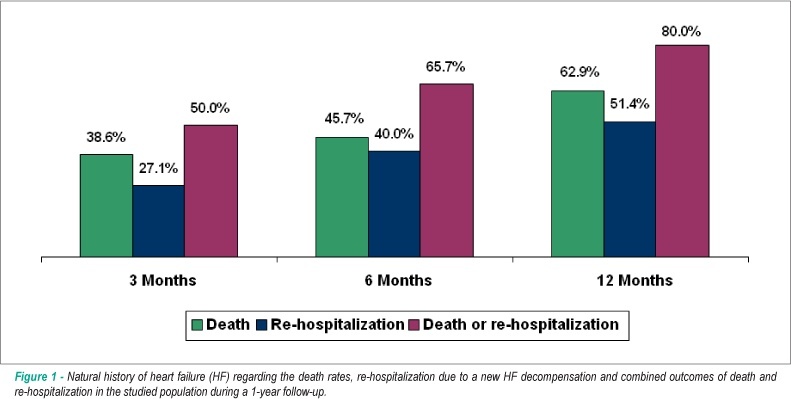
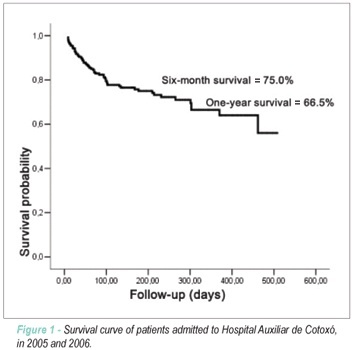
BACKGROUND: Patients who require hospitalization because of decompensated HF represent a group of the most seriously ill individuals who evolve with high mortality and hospital readmission rates. OBJECTIVES: We sought to evaluate the current natural course of HF by analyzing mortality and readmission rates in this new era of neurohormonal blockage. METHODS: We followed the progress of 263 patients with a mean EF of 27.1%, admitted for decompensated HF between January 2005 and October 2006. Patients readmitted were only those whose health status precluded discharge after assessment and drug treatment in the Emergency Department. Patients were classified as HF-FC III/IV, mean age was 59.9±15.2 years, most were men, and 63.1% required inotropic drugs for cardiac compensation in the acute phase. RESULTS: Average hospital stay was 25.1±16.7 days. During hospitalization, 23 (8.8%) patients died. After discharge, over an average follow-up period of 370 days, of the 240 patients who were discharged 123 (51.2%) returned to the Emergency Department 1 to 12 times (total number of visits: 350); 76 of them were readmitted, and the average length of readmission stay was 23.5±18.0 days. Over the first year of follow-up, 62 (25.8%) patients died. CONCLUSIONS: HF remains a condition associated with high mortality and high hospital readmission rates. At the end of the first year, 44.5% of these patients had not needed to visit the ER or had died, which indicates that we should provide HF patients with the best possible care in an attempt to change the natural course of this increasingly frequent syndrome.

  • heart failure, congestive
  • Hospitalization
  • Mortality
  • natural history of diseases
Read Full Article
Creative Commons Attribution (CC BY) Creative Commons license
05/01/2009 DOI: 10.1590/S0066-782X2008001700009
Hyperkalemia during spironolactone use in patients with decompensated heart failure
ABC
Artigo Original

Hyperkalemia during spironolactone use in patients with decompensated heart failure

Marcelo Villaça Lima et al. Marcelo Eidi Ochiai Juliano Novaes Cardoso Paulo César Morgado … Robinson Tadeu Munhoz Antonio Carlos Pereira Barretto

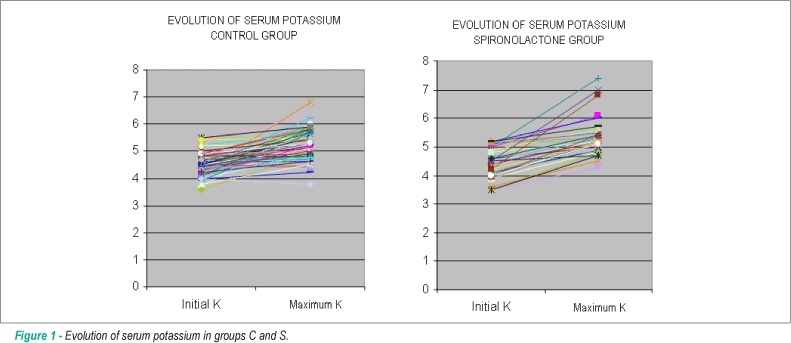
BACKGROUND: The incidence of hyperkalemia related to spironolactone use is low in stable heart failure; however, it has not been studied during decompensation. OBJECTIVE: To evaluate the influence of spironolactone on serum potassium in decompensated heart failure (HF). METHODS: In a cohort study, patients that had been hospitalized due to decompensated HF, with left ventricular ejection fraction (LVEF) 6.0 mEq/l) and the use of calcium polystyrene. A multivariate analysis through logistic regression was carried out and values of p 60.5 mg/dl during the hospitalization presents a relative risk of 9.6 (95%CI 8.03 – 11.20; p = 0.005) for the occurrence of hyperkalemia. CONCLUSION: The incidence of hyperkalemia was two-fold higher with spironolactone use, but it was not statistically significant. The increase in urea levels was associated to the hyperkalemia. Randomized studies are necessary to clarify this issue.

  • heart failure, congestive
  • hyperkalemia
  • Kidney
  • spirolactone
Read Full Article
Creative Commons Attribution (CC BY) Creative Commons license
01/10/2008 DOI: 10.1590/S0066-782X2008001500009 Views 2
Long-term follow-up of patients with indication for a implantable defibrillator for primary prevention of death
ABC
Artigo Original

Long-term follow-up of patients with indication for a implantable defibrillator for primary prevention of death

Claudio Hadid et al. Patricia Avellana Darío Di Toro Claudia Fernández Gomez … Miguel Visser Noemí Prieto

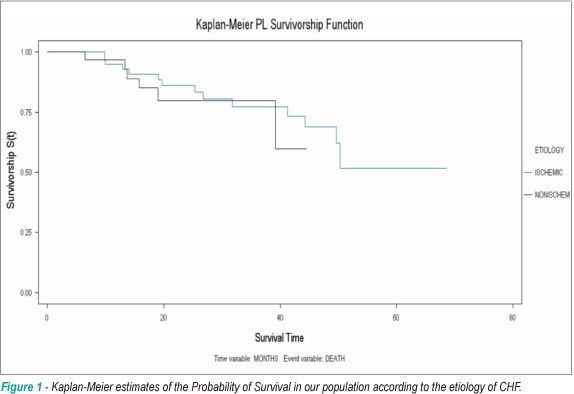
BACKGROUND: Recent MADIT II and SCD-HeFT trials have led to an expansion of indications for use of prophylactic Implantable Cardioverter Defibrillator (ICD) in patients with severe left-ventricular impairment. This therapy has not been fully adopted in our health care system, mainly due to its high cost. OBJECTIVE: To assess total mortality of SCD-HeFT-like patients from our daily practice who are under stable, optimal medical treatment and who have not received an ICD; and to compare it to that of the placebo arm of the SCD-HeFT Trial. METHODS: SCD-HeFT-like patients identified from office medical records were included in our study. Total mortality was assessed by telephone contact. Statistical analysis was performed by Student’s t-Test, Mann-Whitney Test or chi2 test, depending on the type of variable. Cumulative mortality rates were calculated according to the Kaplan-Meier method. RESULTS: Our study comprised 102 patients (seventy-four of which were men) with a median age of 64 years, and an overall median ejection fraction of 25%. We found no differences between our patients and SCD-HeFT patients across these 3 variables. Over a 19.6-month follow-up period, 21 patients died (20.6%) vs. 28.8% of the SCD-HeFT patients. This difference was not statistically significant (p = 0.08). CONCLUSION: SCD-HeFT-like patients from our practice had no difference in mortality rate than patients enrolled in the placebo arm of the SCD-HeFT trial. These results suggest that the SCD-HeFT population is representative of our patients.

  • Death, Sudden
  • Defibrillators, Implantable
  • heart failure, congestive
Read Full Article
Creative Commons Attribution (CC BY) Creative Commons license
27/05/2008 DOI: 10.1590/S0066-782X2008000500006 Views 1
Ventricular resynchronization: comparing biventricular and bifocal right ventricular pacemakers
ABC
Artigo Original

Ventricular resynchronization: comparing biventricular and bifocal right ventricular pacemakers

Eduardo Arrais Rocha et al. Tatiana Pereira Gondim Sebastião Abreu Roberto Farias … Vera Marques Almino Rocha Demóstenes Ribeiro Ricardo Pereira Pedro Negreiros Carlos Roberto M. Rodrigues José Nogueira Paes Júnior

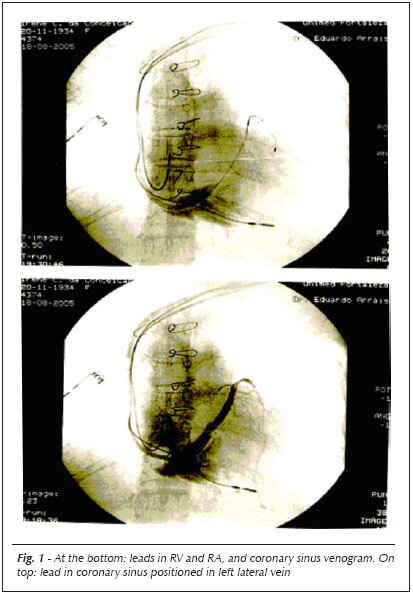
OBJECTIVE:To analyze the conventional biventricular pacing (BV) and the bifocal (BF) right ventricular (RV) pacing, and to perform a comparative analysis of these two techniques in relation to clinical, functional and echocardiographic parameters in a population without the exclusion criteria of the major studies. METHODS:A prospective non-randomized analysis of 36 patients undergoing surgery for multisite pacemaker implantation due to QRS > 130 ms, severe left ventricular dysfunction, and NYHA functional class III or ambulatory class IV congestive heart failure was performed. RESULTS: Favorable results of resynchronization were obtained with both techniques, with no significant differences in the comparison of the two groups, except for a higher QRS narrowing in the BV group, and a trend of a lower number or hospital admissions in the BV group. When the groups were analyzed separately and compared before and after the procedures, we observed that improvement was much more significant in the biventricular group, as were the more statistically relevant rates. CONCLUSION: Cardiac resynchronization therapy proved to be an efficient therapy in both groups analyzed, although with more significant outcomes in the biventricular group.

  • Cardiac Pacing, Artificial
  • heart failure, congestive
  • Pacemaker, Artificial
  • Ventricular resyncronization
Read Full Article
Creative Commons Attribution (CC BY) Creative Commons license
23/07/2007 DOI: 10.1590/S0066-782X2007000600008 Views 1
Ventricular electrical activation in cardiac resynchronization as characterized by body surface potential mapping
ABC
Artigo Original

Ventricular electrical activation in cardiac resynchronization as characterized by body surface potential mapping

Carlos Alberto Pastore et al. Nancy Tobias Nelson Samesima Martino Martinelli Filho … Anisio Pedrosa Silvana Nishioka Roberto A. Douglas Luiz Felipe Pinho Moreira José Franchini Ramires

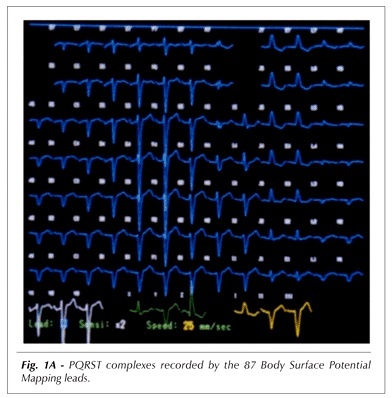
OBJECTIVES: To assess cardiac electrical activation by using body surface potential mapping (BSPM), in patients with congestive heart failure (CHF) and left bundle branch block (LBBB) undergoing cardiac resynchronization therapy (CRT) with biventricular pacemaker (BIV-PM) implantation. METHODS: Mean cardiac electrical activation times were analyzed in the right ventricle (RV) (mean RV activation time = mRV), anteroseptal area (mAS), and left ventricle (mLV) of 28 patients (mean age 61.2 ± 9.5 years; NYHA class III-IV CHF; ejection fraction <40%; LBBB of mean QRS 181.2±19.4ms, SÂQRS -8.5º±68.6º), as shown in their BSPM isochronous maps, before and after implantation of atriobiventricular pacemaker, comparing those with values obtained from a control group of normal individuals [CG], in three situations: (1) native LBBB; (2) RV pacing; and (3) atriobiventricular pacing. RESULTS: Situation (1): mRV and mAS values were similar (41.0±11.8ms x 43.6±13.4ms), with delayed mLV (81.0±12.5ms, p<0.01) and asynchronous with RV and AS areas; situation (2): mRV was greater than in CG (86.8±22.9ms, p<0.001), with greater difference between mAS and mLV (63.4±20.7ms vs. 102.7±20.3ms; p<0,001); situation (3): mLV and mRV were similar (72.0±32.0ms vs. 71.6±32.3ms), mRV was greater than in CG and native LBBB (71.6±32.3ms vs. 35.1±10.9ms and 41.0±11.8ms; p<0.001), and mAS was close to CG and native LBBB values (51.3±32.8ms vs. 50.1±11.4ms and 43.6±13.4ms). CONCLUSION: The body surface potential mapping showed that RV and LV activation times which are similar, and are close to those of the AS area, suggest patterns of synchronized ventricular activation in patients with CHF and LBBB during atriobiventricular pacing.

  • body surface potential mapping
  • Bundle Branch Block
  • Cardiac Pacing, Artificial
  • heart failure, congestive
Read Full Article
Creative Commons Attribution (CC BY) Creative Commons license
21/05/2007 DOI: 10.1590/S0066-782X2007000300001 Views 1

How to cite this article

EndNote RIS

Electronic Document Format (Vancouver)

Carlo HD, Pereira-Barretto AC, Cassaro-Strunz CM, Latorre MRDO, Oliveira Junior MT, Ramires JAF. Cardiac troponin T for risk stratification in decompensated chronic heart failure. Arquivos Brasileiros de Cardiologia 2009;92(5):404-12.

Electronic Document Format (ABNT)

Carlo, s Henrique Del; Pereira-Barretto, Antonio Carlos; Cassaro-Strunz, Célia Maria; Latorre, Maria do Rosário Dias de Oliveira; Oliveira Junior, Múcio Tavares de; Ramires, José Antonio Franchini. Cardiac troponin T for risk stratification in decompensated chronic heart failure. Arquivos Brasileiros de Cardiologia, v. 92, n. 5, p. 404-412, Jul. 2009.

Electronic Document Format (APA)

Carlo, H. D., Pereira-Barretto, A. C., Cassaro-Strunz, C. M., Latorre, M. R. D. O., Oliveira Junior, M. T. , & Ramires, J. A. F. (2009). Cardiac troponin T for risk stratification in decompensated chronic heart failure. Arquivos Brasileiros de Cardiologia, 92(5), 404-412.

Electronic Document Format (ISO)

Carlo, s Henrique Del and Pereira-Barretto, Antonio Carlos and Cassaro-Strunz, Célia Maria and Latorre, Maria do Rosário Dias de Oliveira and Oliveira Junior, Múcio Tavares de and Ramires, José Antonio Franchini. Cardiac troponin T for risk stratification in decompensated chronic heart failure. Arquivos Brasileiros de Cardiologia [online]. 2009, vol. 92, n. 5, [cited 2026-10-14], pp. 404-412. Available from: <https://journals.cardiol.br/en/article/cardiac-troponin-t-for-risk-stratification-in-decompensated-chronic-heart-failure/>. ISSN 0066-782X

EndNote RIS

Electronic Document Format (Vancouver)

Barretto ACP, Carlo HD, Cardoso JN, Morgado PC, Munhoz RT, Eid MO, Oliveira Jr MT, et al. Hospital readmissions and death from Heart Failure: rates still alarming. Arquivos Brasileiros de Cardiologia 2009;91(5):335-41.

Electronic Document Format (ABNT)

Barretto, Antonio Carlos Pereira; Carlo, s Henrique Del; Cardoso, Juliano Novaes; Morgado, Paulo Cesar; Munhoz, Robson Tadeu; Eid, Marcelo Ochiai; Oliveira Jr, Mucio Tavares; Scipioni, Airton Roberto; Ramires, Jose Antonio Franchini. Hospital readmissions and death from Heart Failure: rates still alarming. Arquivos Brasileiros de Cardiologia, v. 91, n. 5, p. 335-341, Jan. 2009.

Electronic Document Format (APA)

Barretto, A. C. P., Carlo, H. D., Cardoso, J. N., Morgado, P. C., Munhoz, R. T., Eid, M. O., Oliveira Jr, M. T., Scipioni, A. R., & Ramires, J. A. F. (2009). Hospital readmissions and death from Heart Failure: rates still alarming. Arquivos Brasileiros de Cardiologia, 91(5), 335-341.

Electronic Document Format (ISO)

Barretto, Antonio Carlos Pereira and Carlo, s Henrique Del and Cardoso, Juliano Novaes and Morgado, Paulo Cesar and Munhoz, Robson Tadeu and Eid, Marcelo Ochiai and Oliveira Jr, Mucio Tavares and Scipioni, Airton Roberto and Ramires, Jose Antonio Franchini. Hospital readmissions and death from Heart Failure: rates still alarming. Arquivos Brasileiros de Cardiologia [online]. 2009, vol. 91, n. 5, [cited 2026-10-14], pp. 335-341. Available from: <https://journals.cardiol.br/en/article/hospital-readmissions-and-death-from-heart-failure-rates-still-alarming/>. ISSN 0066-782X

EndNote RIS

Electronic Document Format (Vancouver)

Lima MV, Ochiai ME, Cardoso JN, Morgado PC, Munhoz RT, Barretto ACP. Hyperkalemia during spironolactone use in patients with decompensated heart failure. Arquivos Brasileiros de Cardiologia 2008;91(3):194-9.

Electronic Document Format (ABNT)

Lima, Marcelo Villaça; Ochiai, Marcelo Eidi; Cardoso, Juliano Novaes; Morgado, Paulo César; Munhoz, Robinson Tadeu; Barretto, Antonio Carlos Pereira. Hyperkalemia during spironolactone use in patients with decompensated heart failure. Arquivos Brasileiros de Cardiologia, v. 91, n. 3, p. 194-199, Sep. 2008.

Electronic Document Format (APA)

Lima, M. V., Ochiai, M. E., Cardoso, J. N., Morgado, P. C., Munhoz, R. T., & Barretto, A. C. P. (2008). Hyperkalemia during spironolactone use in patients with decompensated heart failure. Arquivos Brasileiros de Cardiologia, 91(3), 194-199.

Electronic Document Format (ISO)

Lima, Marcelo Villaça and Ochiai, Marcelo Eidi and Cardoso, Juliano Novaes and Morgado, Paulo César and Munhoz, Robinson Tadeu and Barretto, Antonio Carlos Pereira. Hyperkalemia during spironolactone use in patients with decompensated heart failure. Arquivos Brasileiros de Cardiologia [online]. 2008, vol. 91, n. 3, [cited 2026-10-14], pp. 194-199. Available from: <https://journals.cardiol.br/en/article/hyperkalemia-during-spironolactone-use-in-patients-with-decompensated-heart-failure/>. ISSN 0066-782X

EndNote RIS

Electronic Document Format (Vancouver)

Hadid C, Avellana P, Toro DD, Gomez CF, Visser M, Prieto N. Long-term follow-up of patients with indication for a implantable defibrillator for primary prevention of death. Arquivos Brasileiros de Cardiologia 2008;90(5):339-44.

Electronic Document Format (ABNT)

Hadid, Claudio; Avellana, Patricia; Toro, Darío Di; Gomez, Claudia Fernández; Visser, Miguel; Prieto, Noemí. Long-term follow-up of patients with indication for a implantable defibrillator for primary prevention of death. Arquivos Brasileiros de Cardiologia, v. 90, n. 5, p. 339-344, May. 2008.

Electronic Document Format (APA)

Hadid, C., Avellana, P., Toro, D. D., Gomez, C. F., Visser, M., & Prieto, N. (2008). Long-term follow-up of patients with indication for a implantable defibrillator for primary prevention of death. Arquivos Brasileiros de Cardiologia, 90(5), 339-344.

Electronic Document Format (ISO)

Hadid, Claudio and Avellana, Patricia and Toro, Darío Di and Gomez, Claudia Fernández and Visser, Miguel and Prieto, Noemí. Long-term follow-up of patients with indication for a implantable defibrillator for primary prevention of death. Arquivos Brasileiros de Cardiologia [online]. 2008, vol. 90, n. 5, [cited 2026-10-14], pp. 339-344. Available from: <https://journals.cardiol.br/en/article/long-term-follow-up-of-patients-with-indication-for-a-implantable-defibrillator-for-primary-prevention-of-death/>. ISSN 0066-782X

EndNote RIS

Electronic Document Format (Vancouver)

Rocha EA, Gondim TP, Abreu S, Farias R, Marques V, Rocha A, Ribeiro D, et al. Ventricular resynchronization: comparing biventricular and bifocal right ventricular pacemakers. Arquivos Brasileiros de Cardiologia 2007;88(6):674-82.

Electronic Document Format (ABNT)

Rocha, Eduardo Arrais; Gondim, Tatiana Pereira; Abreu, Sebastião; Farias, Roberto; Marques, Vera; Rocha, Almino; Ribeiro, Demóstenes; Pereira, Ricardo; Negreiros, Pedro; Rodrigues, Carlos Roberto M.; Paes Júnior, José Nogueira. Ventricular resynchronization: comparing biventricular and bifocal right ventricular pacemakers. Arquivos Brasileiros de Cardiologia, v. 88, n. 6, p. 674-682, Jul. 2007.

Electronic Document Format (APA)

Rocha, E. A., Gondim, T. P., Abreu, S., Farias, R., Marques, V., Rocha, A., Ribeiro, D., Pereira, R., Negreiros, P., Rodrigues, C. R. M., & Paes Júnior, J. N. (2007). Ventricular resynchronization: comparing biventricular and bifocal right ventricular pacemakers. Arquivos Brasileiros de Cardiologia, 88(6), 674-682.

Electronic Document Format (ISO)

Rocha, Eduardo Arrais and Gondim, Tatiana Pereira and Abreu, Sebastião and Farias, Roberto and Marques, Vera and Rocha, Almino and Ribeiro, Demóstenes and Pereira, Ricardo and Negreiros, Pedro and Rodrigues, Carlos Roberto M. and Paes Júnior, José Nogueira. Ventricular resynchronization: comparing biventricular and bifocal right ventricular pacemakers. Arquivos Brasileiros de Cardiologia [online]. 2007, vol. 88, n. 6, [cited 2026-10-14], pp. 674-682. Available from: <https://journals.cardiol.br/en/article/ventricular-resynchronization-comparing-biventricular-and-bifocal-right-ventricular-pacemakers/>. ISSN 0066-782X

EndNote RIS

Electronic Document Format (Vancouver)

Pastore CA, Tobias N, Samesima N, Martinelli Filho M, Pedrosa A, Nishioka S, Douglas RA, et al. Ventricular electrical activation in cardiac resynchronization as characterized by body surface potential mapping. Arquivos Brasileiros de Cardiologia 2007;88(3):251-7.

Electronic Document Format (ABNT)

Pastore, Carlos Alberto; Tobias, Nancy; Samesima, Nelson; Martinelli Filho, Martino; Pedrosa, Anisio; Nishioka, Silvana; Douglas, Roberto A.; Moreira, Luiz Felipe Pinho; Ramires, José Franchini. Ventricular electrical activation in cardiac resynchronization as characterized by body surface potential mapping. Arquivos Brasileiros de Cardiologia, v. 88, n. 3, p. 251-257, May. 2007.

Electronic Document Format (APA)

Pastore, C. A., Tobias, N., Samesima, N., Martinelli Filho, M., Pedrosa, A., Nishioka, S., Douglas, R. A., Moreira, L. F. P., & Ramires, J. F. (2007). Ventricular electrical activation in cardiac resynchronization as characterized by body surface potential mapping. Arquivos Brasileiros de Cardiologia, 88(3), 251-257.

Electronic Document Format (ISO)

Pastore, Carlos Alberto and Tobias, Nancy and Samesima, Nelson and Martinelli Filho, Martino and Pedrosa, Anisio and Nishioka, Silvana and Douglas, Roberto A. and Moreira, Luiz Felipe Pinho and Ramires, José Franchini. Ventricular electrical activation in cardiac resynchronization as characterized by body surface potential mapping. Arquivos Brasileiros de Cardiologia [online]. 2007, vol. 88, n. 3, [cited 2026-10-14], pp. 251-257. Available from: <https://journals.cardiol.br/en/article/ventricular-electrical-activation-in-cardiac-resynchronization-as-characterized-by-body-surface-potential-mapping/>. ISSN 0066-782X

  • About ABC Family
  • Internal Regulation
  • Editorial Board
  • Brazilian Society of Cardiology (SBC)

Issues

SBC Guidelines

  • Videos
  • Podcasts
  • News