Cone reconstruction in Ebstein’s anomaly repair: early and long-term results
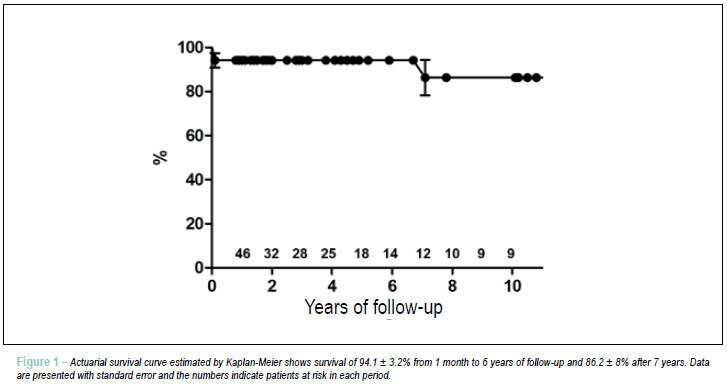
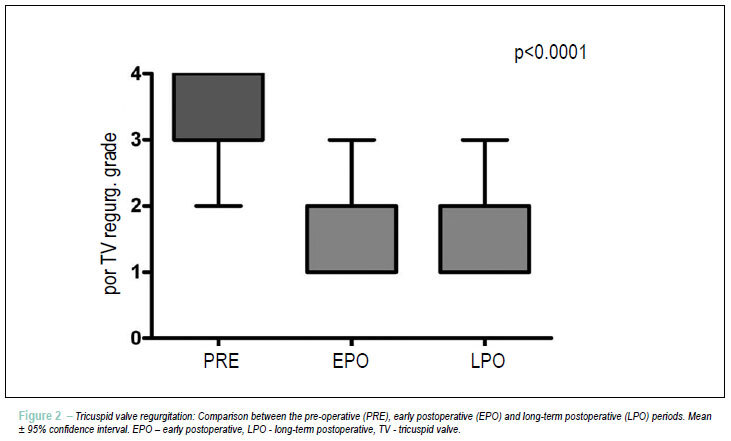
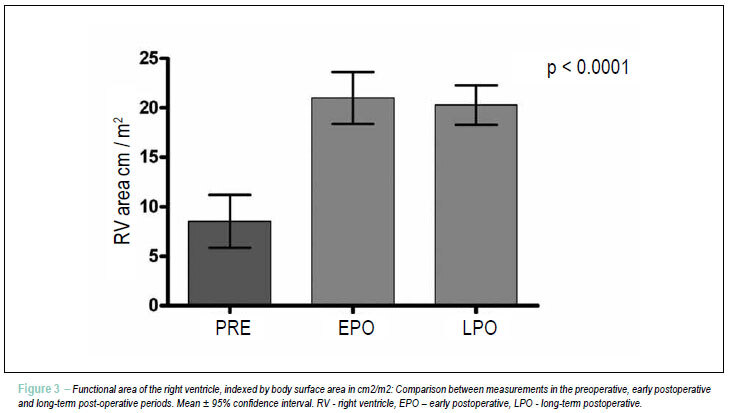
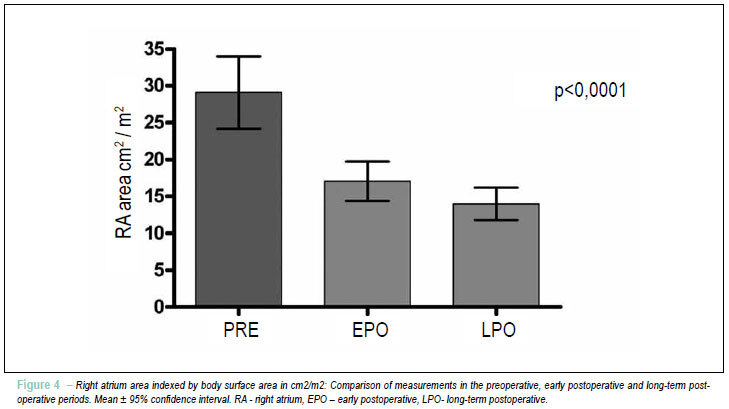
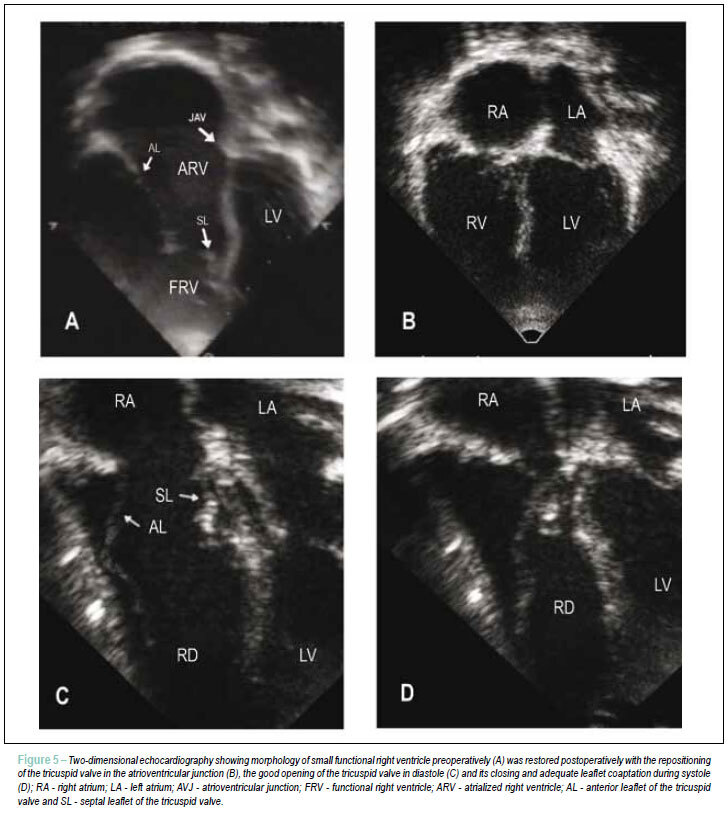
BACKGROUND: The main Ebstein anomaly (EA) repairs are based on the monocusp reconstruction of the tricuspid valve and are limited by the frequent need for replacement or the high recurrence of valve regurgitation. OBJECTIVE: To evaluate the feasibility and effects of anatomical repair of Ebstein’s anomaly using the cone reconstruction technique on patients’ clinical evaluation, tricuspid valve function and right ventricular morphology. METHODS: We compared the clinical, echocardiographic and radiological data of 52 consecutive patients, with a mean age of 18.5 ± 13.8 years, submitted to the cone reconstruction technique, obtained in the preoperative, early postoperative (EPO) and long-term (LPO) periods. RESULTS: There were two in-hospital deaths (3.8%) and two more during the follow-up. Mean functional class of pre-operative heart failure improved from 2.2 to 1.2 after 57 months of mean follow up of 97% of patients (p <0.001). The mean degree of preoperative tricuspid regurgitation decreased from 3.6 to 1.6 in the EPO (p 0.05). The indexed RV functional area increased from 8.53 ± 7.02 cm2/m2 preoperatively to 21.01 ± 6.87 cm2/m2 in the EPO (p 0.05). The mean cardiothoracic ratio was decreased from 0.66 ± 0.09 to 0.54 ± 0.06 (p <0.001) in the long term. CONCLUSION: The cone technique showed low in-hospital mortality, resulting in an effective and long-lasting repair of tricuspid regurgitation, restoring the functional area of the right ventricle and allowing reverse remodeling of the heart and clinical improvement in most patients in the long term.
Images
Image gallery fullscreen viewer
Comments are moderated by the editorial team before publication. Discussions should be evidence-based and use scientific language. Conflicts of interest should be declared.