| ABCHF
ABC Family Arquivos Brasileiros de Cardiologia International Journal of Cardiovascular Sciences ABC Heart Failure & Cardiomyopathy ABC Imagem Cardiovascular
Português English
ABC Family | ABCHF
Português English
  • About
    • About the Journal
    • Internal Regulation
    • Editors Section
    • Editorial Board
    • SBC Award
  • Instructions to Authors
    • Guidelines for Publication
    • Editorial Policy
    • Ethics Policy
    • Policy on the Use of Artificial Intelligence
    • Mandatory Publication Form
  • Issues
  • SBC Guidelines
  • About
    • About the Journal
    • Internal Regulation
    • Editors Section
    • Editorial Board
    • SBC Award
  • Instructions to Authors
    • Guidelines for Publication
    • Editorial Policy
    • Ethics Policy
    • Policy on the Use of Artificial Intelligence
    • Mandatory Publication Form
  • Issues
  • SBC Guidelines

ABC Family

  • ABC Family
  • Arquivos Brasileiros de Cardiologia
  • International Journal of Cardiovascular Sciences
  • ABC Heart Failure & Cardiomyopathy
  • ABC Imagem Cardiovascular
Search in

No content found.

Journals
Ordering
Article types
Others

  1. Home
  2. ABCHF
  3. Issues
  4. 2024, Volume 4, Number 4
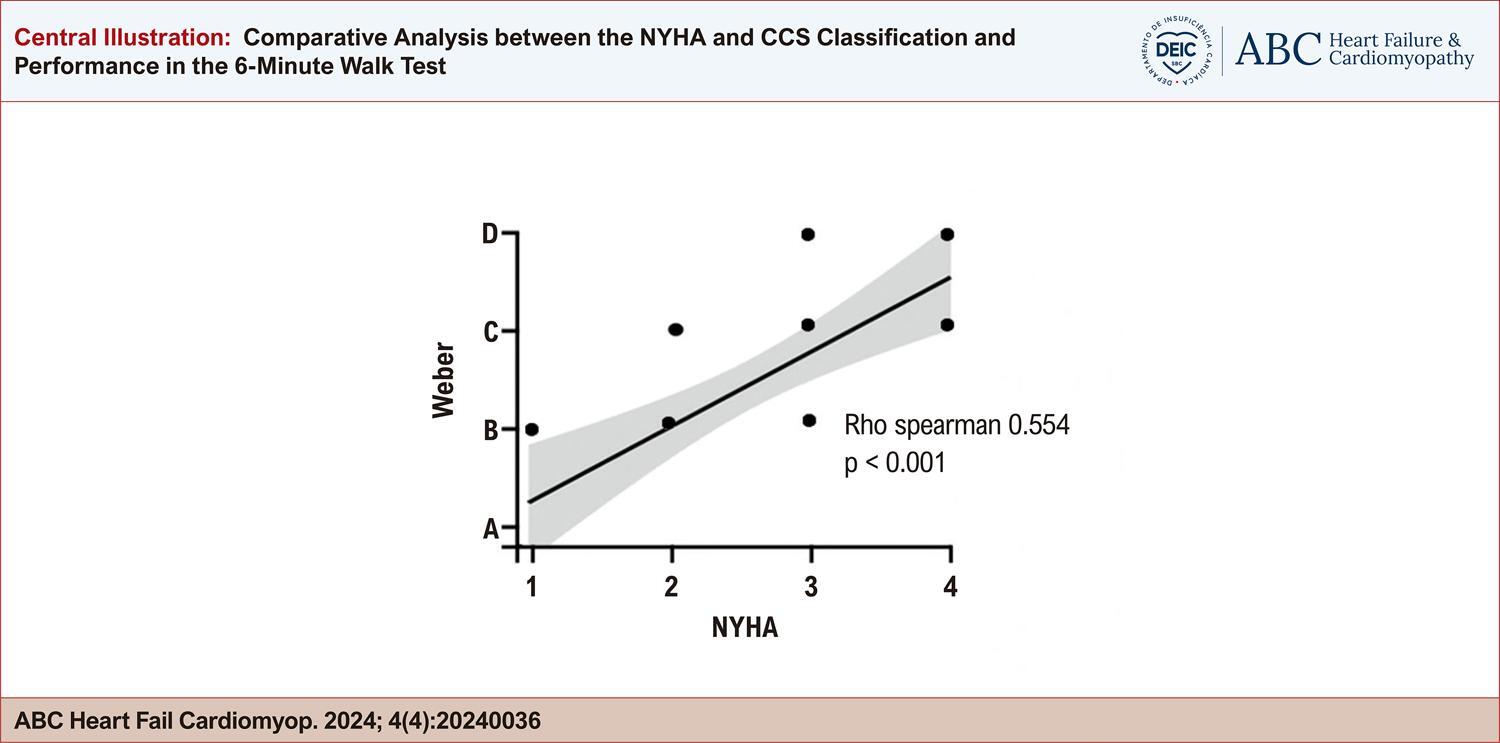
Central Illustration
Original Article

Comparative Analysis between the NYHA and CCS Classification and Performance in the 6-Minute Walk Test

Luiz Carlos Santana Passos et al. Roberval Prado dos Santos Junior Laís Fernanda Duarte Sampaio Clara Sales Figueiredo Caio Rebouças Fonseca Cafezeiro

Abstract

Background

Functional classification is a critical predictor to establish a prognosis for heart failure (HF) and Coronary Artery Disease (CAD). However, recent research has questioned the reproducibility of the New York Heart Association (NYHA) and Canadian Cardiovascular Society (CCS) classifications, and their ability to discriminate patient prognosis at an individual level.

Objective

To investigate the discordance rate between the NYHA/CCS class assigned by the physician during outpatient consultation and the 6-minute walk test (6MWT) performance to refine the assessment of patients with HF/CAD.

Methods

A retrospective cohort study collected data from medical records of patients referred for cardiovascular rehabilitation. The 6MWT was performed with the aim of evaluating the functional capacity and associated symptoms of patients with HF and CAD. The correlation between variables was assessed using the correlation coefficient and agreement was assessed using the kappa coefficient.

Results

A total of 65 patients were selected, with 50.8% male, and a mean age of 57.3 ± 11 years. The median left ventricular ejection fraction was 45%, with 13.8% of patients presenting ischemic cardiomyopathy. Discordance in functional class was observed in 54% of HF patients by NYHA and 55% of angina patients by CCS.

Conclusion

The present study identified discordance between the functional class assigned by the attending physician and that determined by the 6MWT, indicating that NYHA/CCS functional classification and 6MWT provide complementary information that is more accurate when used in concomitance.
  • Heart Failure
  • Myocardial Ischemia
  • Walk Test
Read Full Article
Creative Commons Attribution (CC BY) Creative Commons license
26/12/2024 DOI: 10.36660/abchf.20240036i Views 1
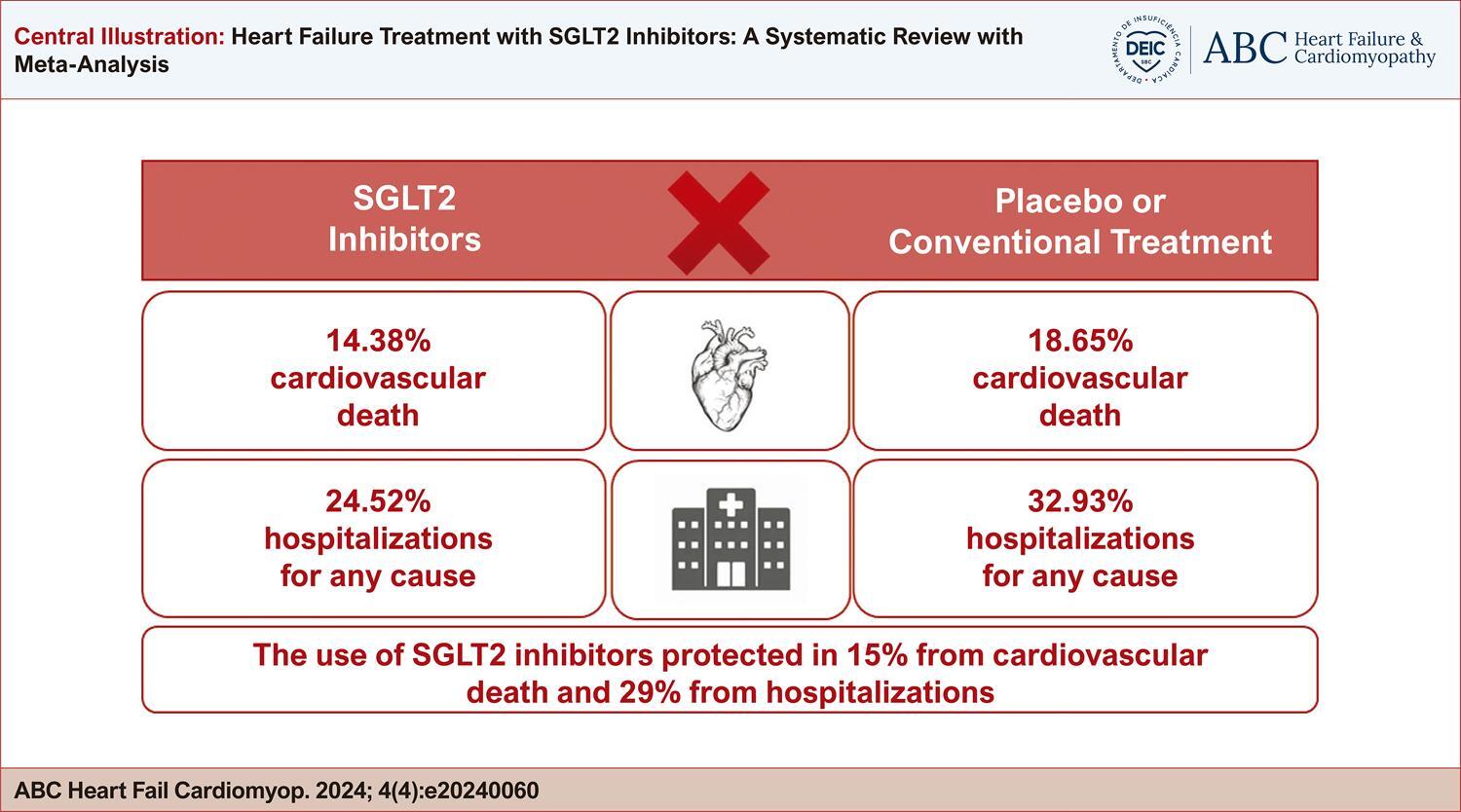
Central Illustration
Original Article

Heart Failure Treatment with SGLT2 Inhibitors: A Systematic Review with Meta-Analysis

Fernando Pierin Peres-Filho et al. Suelen Umbelino da Silva Fernando Pierin Peres Leandra Ernst Kerche

Abstract

Background

Heart failure (HF) is a clinical diagnosis of a condition that develops secondary to either left ventricular systolic or diastolic functions. Lately, inhibitors of sodium-glucose cotransporter 2 (SGLT2) have been added to the list of drugs used in the management of HF.

Objectives

To compare the efficacy of SGLT2 inhibitors to traditional treatment in hospitalization and death for HF.

Methods

Relevant databases were searched for articles published until October 2023. Out of 24 nonduplicated screened studies, 11 studies were selected. The primary analysis was for cardiovascular death, and the secondary analysis was for hospitalization for HF.

Results

We selected 11 for the systematic review and 8 studies for quantitative analysis, accounting for 54,381 patients from over 800 health centers worldwide. The use of SGLT2 inhibitors significantly reduced cardiovascular death in all patients when compared to placebo (HR 0.85, 95%CI 0.78-0.91) and also reduced hospitalizations for HF (HR 0.71, 95%CI 0.67-0.76).

Conclusions

Patients with HF in the use of SGLT2 inhibitors have a better outcome than those with conventional treatment; SGLT2 inhibitors protect 15% from cardiovascular death and 29% from hospitalizations.

  • Heart Failure
  • Mortality
  • Sodium-Glucose Transporter 2 Inhibitors
Read Full Article
Creative Commons Attribution (CC BY) Creative Commons license
26/12/2024 DOI: 10.36660/abchf.20240060i Views 1
Review Article

Impact of COVID-19 on Cardiovascular Outcomes in Patients with Chronic Heart Failure

Luiz Felipe da Silva Magalhães et al. Guilherme Capetini Sant’Anna João Carlos Amorelli Bohrer de Andrade Figueira Humberto Villacorta

Abstract

SARS-CoV-2 infection affects multiple organs and systems, including the cardiovascular system. Cardiovascular complications include myocarditis, pericarditis, acute coronary syndrome, acute heart failure (HF), pulmonary hypertension, right ventricular dysfunction, and arrhythmias. Inflammation is a mechanism that is present in both COVID-19 and HF. The mechanisms of myocardial injury due to COVID-19 include direct damage by the pathogen, hypoxemic stress, endothelial dysfunction with associated thromboembolic phenomena, and effects of systemic inflammatory syndrome. Impaired cardiopulmonary reserve makes patients with chronic HF more susceptible to decompensation during the course of COVID-19. Coronary and pulmonary vascular alterations lead to worse prognosis in relation to ischemic and thromboembolic events. These patients have longer hospital stays, increased risk of mechanical ventilation, and higher mortality.

COVID-19 increases the incidence of cardiovascular complications in the first 12 months after acute infection, including cerebrovascular, arrhythmic, thromboembolic, and ischemic events, in addition to inflammatory heart disease. An increased risk of developing HF with preserved ejection fraction has also been reported. During the 12 months following acute infection, myocardial injury has been associated with persistent symptoms, as well as increased rates of hospital readmission and mortality.

Therefore, HF is related to increased mortality, length of hospital stay, and incidence of complications in patients who are affected by SARS-CoV-2, and individuals with chronic HF who have COVID-19 show a higher rate of events during post-COVID follow-up.

  • COVID-19
  • Heart Failure
  • Prognosis
Read Full Article
Creative Commons Attribution (CC BY) Creative Commons license
18/11/2024 DOI: 10.36660/abchf.20240029i Views 1
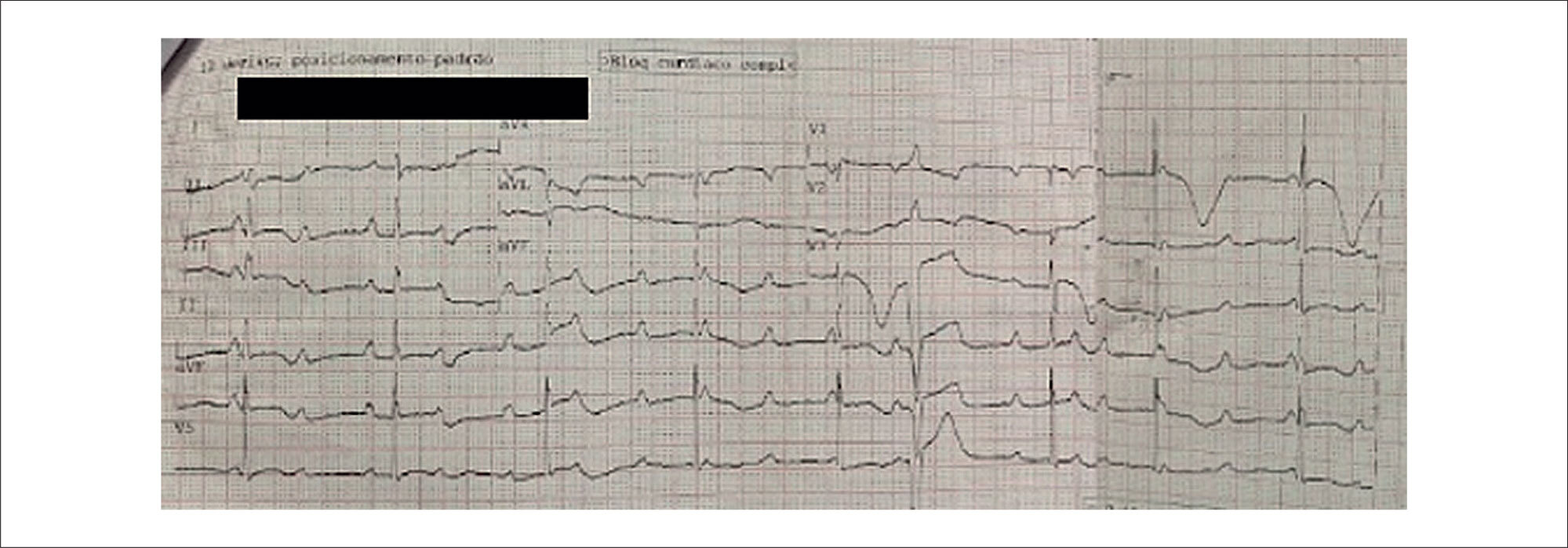
Figure 1
Case Report

Tuberculosis and Atrioventricular Block in a Patient with Takotsubo Syndrome: A Case Report

Viviana Karina Sanchez Albarracin

Case Report

An 83-year-old female patient diagnosed with senile dementia and experiencing unintentional weight loss over the past few months was referred to a tertiary hospital due to complaints of typical chest pain. There is no previous history of cardiovascular diseases.

During transport, the patient developed bradycardia, with a heart rate (HR) of 32 beats per minute, and upon arrival at the emergency room, it was observed that she was suffering from complete atrioventricular block () with episodes of non-sustained ventricular tachycardia.

[…]

  • Acute coronary syndrome
  • Atrioventricular block
  • Pulmonary Tuberculosis
  • Takotsubo Cardiomyopathy
Read Full Article
Creative Commons Attribution (CC BY) Creative Commons license
29/10/2024 DOI: 10.36660/abchf.20240031i Views 1

How to cite this article

EndNote RIS

Electronic Document Format (Vancouver)

Passos LCS, Santos Junior RP, Sampaio LFD, Figueiredo CS, Cafezeiro CRF. Comparative Analysis between the NYHA and CCS Classification and Performance in the 6-Minute Walk Test. ABC Heart Fail Cardiomyop 2024;4(4):20240036.

Electronic Document Format (ABNT)

Passos, Luiz Carlos Santana; Santos Junior, Roberval Prado dos; Sampaio, Laís Fernanda Duarte; Figueiredo, Clara Sales; Cafezeiro, Caio Rebouças Fonseca. Comparative Analysis between the NYHA and CCS Classification and Performance in the 6-Minute Walk Test. ABC Heart Fail Cardiomyop, v. 4, n. 4, 20240036, Dec. 2024.

Electronic Document Format (APA)

Passos, L. C. S., Santos Junior, R. P. , Sampaio, L. F. D., Figueiredo, C. S., & Cafezeiro, C. R. F. (2024). Comparative Analysis between the NYHA and CCS Classification and Performance in the 6-Minute Walk Test. ABC Heart Fail Cardiomyop, 4(4), 20240036.

Electronic Document Format (ISO)

Passos, Luiz Carlos Santana and Santos Junior, Roberval Prado dos and Sampaio, Laís Fernanda Duarte and Figueiredo, Clara Sales and Cafezeiro, Caio Rebouças Fonseca. Comparative Analysis between the NYHA and CCS Classification and Performance in the 6-Minute Walk Test. ABC Heart Fail Cardiomyop [online]. 2024, vol. 4, n. 4, [cited 2026-10-14], 20240036. Available from: <https://journals.cardiol.br/en/article/comparative-analysis-between-the-nyha-and-ccs-classification-and-performance-in-the-6-minute-walk-test/>

EndNote RIS

Electronic Document Format (Vancouver)

Peres-Filho FP, Silva SU, Peres FP, Kerche LE. Heart Failure Treatment with SGLT2 Inhibitors: A Systematic Review with Meta-Analysis. ABC Heart Fail Cardiomyop 2024;4(4):e20240060.

Electronic Document Format (ABNT)

Peres-Filho, Fernando Pierin; Silva, Suelen Umbelino da; Peres, Fernando Pierin; Kerche, Leandra Ernst. Heart Failure Treatment with SGLT2 Inhibitors: A Systematic Review with Meta-Analysis. ABC Heart Fail Cardiomyop, v. 4, n. 4, e20240060, Dec. 2024.

Electronic Document Format (APA)

Peres-Filho, F. P., Silva, S. U. , Peres, F. P., & Kerche, L. E. (2024). Heart Failure Treatment with SGLT2 Inhibitors: A Systematic Review with Meta-Analysis. ABC Heart Fail Cardiomyop, 4(4), e20240060.

Electronic Document Format (ISO)

Peres-Filho, Fernando Pierin and Silva, Suelen Umbelino da and Peres, Fernando Pierin and Kerche, Leandra Ernst. Heart Failure Treatment with SGLT2 Inhibitors: A Systematic Review with Meta-Analysis. ABC Heart Fail Cardiomyop [online]. 2024, vol. 4, n. 4, [cited 2026-10-14], e20240060. Available from: <https://journals.cardiol.br/en/article/heart-failure-treatment-with-sglt2-inhibitors-a-systematic-review-with-meta-analysis/>

EndNote RIS

Electronic Document Format (Vancouver)

Magalhães LFS, Sant’Anna GC, Figueira JCABA, Villacorta H. Impact of COVID-19 on Cardiovascular Outcomes in Patients with Chronic Heart Failure. ABC Heart Fail Cardiomyop 2024;4(4):e20240029.

Electronic Document Format (ABNT)

Magalhães, Luiz Felipe da Silva; Sant’Anna, Guilherme Capetini; Figueira, João Carlos Amorelli Bohrer de Andrade; Villacorta, Humberto. Impact of COVID-19 on Cardiovascular Outcomes in Patients with Chronic Heart Failure. ABC Heart Fail Cardiomyop, v. 4, n. 4, e20240029, Nov. 2024.

Electronic Document Format (APA)

Magalhães, L. F. S., Sant’Anna, G. C., Figueira, J. C. A. B. A., & Villacorta, H. (2024). Impact of COVID-19 on Cardiovascular Outcomes in Patients with Chronic Heart Failure. ABC Heart Fail Cardiomyop, 4(4), e20240029.

Electronic Document Format (ISO)

Magalhães, Luiz Felipe da Silva and Sant’Anna, Guilherme Capetini and Figueira, João Carlos Amorelli Bohrer de Andrade and Villacorta, Humberto. Impact of COVID-19 on Cardiovascular Outcomes in Patients with Chronic Heart Failure. ABC Heart Fail Cardiomyop [online]. 2024, vol. 4, n. 4, [cited 2026-10-14], e20240029. Available from: <https://journals.cardiol.br/en/article/impact-of-covid-19-on-cardiovascular-outcomes-in-patients-with-chronic-heart-failure/>

EndNote RIS

Electronic Document Format (Vancouver)

Albarracin VKS. Tuberculosis and Atrioventricular Block in a Patient with Takotsubo Syndrome: A Case Report. ABC Heart Fail Cardiomyop 2024;4(4):e20240031.

Electronic Document Format (ABNT)

Albarracin, Viviana Karina Sanchez. Tuberculosis and Atrioventricular Block in a Patient with Takotsubo Syndrome: A Case Report. ABC Heart Fail Cardiomyop, v. 4, n. 4, e20240031, Oct. 2024.

Electronic Document Format (APA)

Albarracin, V. K. S. (2024). Tuberculosis and Atrioventricular Block in a Patient with Takotsubo Syndrome: A Case Report. ABC Heart Fail Cardiomyop, 4(4), e20240031.

Electronic Document Format (ISO)

Albarracin, Viviana Karina Sanchez. Tuberculosis and Atrioventricular Block in a Patient with Takotsubo Syndrome: A Case Report. ABC Heart Fail Cardiomyop [online]. 2024, vol. 4, n. 4, [cited 2026-10-14], e20240031. Available from: <https://journals.cardiol.br/en/article/tuberculosis-and-atrioventricular-block-in-a-patient-with-takotsubo-syndrome-a-case-report/>

Sede – Rio de Janeiro
Av. Marechal Câmara, 160
3º andar – Sala: 330 – Centro
Rio de Janeiro – CEP: 20020-907
Tel.: (+55 21) 3478-2700
ou (21) 99386-3961
E-mail: abcheartfailure@cardiol.br

Sede – São Paulo
Alameda Santos, 705 – 11º andar
Cerqueira César | São Paulo
CEP: 01419-001
Tel.: (55 +11) 3411-5500
E-mail: abcheartfailure@cardiol.br

  • About the Journal
  • Internal Regulation
  • Editors Section
  • Editorial Board
  • SBC Award

  • Guidelines for Publication
  • Editorial Policy
  • Ethics Policy
  • Policy on the Use of Artificial Intelligence
  • Mandatory Publication Form

Issues

SBC Guidelines