| ABC
ABC Family Arquivos Brasileiros de Cardiologia International Journal of Cardiovascular Sciences ABC Heart Failure & Cardiomyopathy ABC Imagem Cardiovascular
Português English
ABC Family | ABC
Português English
  • About
    • About the Journal
    • Internal Regulation
    • Editors Section
    • Editorial Board
    • History
    • SBC Award
  • Instructions to Authors
    • Guidelines for Publication
    • Editorial Policy
    • Ethics Policy
    • Policy on the Use of Artificial Intelligence
    • Mandatory Publication Form
    • Publication Fee
  • Issues
  • SBC Guidelines
  • Abstracts
    • How to Publish an Abstract Supplement?
    • Supplements from the Brazilian Congress of Cardiology
  • About
    • About the Journal
    • Internal Regulation
    • Editors Section
    • Editorial Board
    • History
    • SBC Award
  • Instructions to Authors
    • Guidelines for Publication
    • Editorial Policy
    • Ethics Policy
    • Policy on the Use of Artificial Intelligence
    • Mandatory Publication Form
    • Publication Fee
  • Issues
  • SBC Guidelines
  • Abstracts
    • How to Publish an Abstract Supplement?
    • Supplements from the Brazilian Congress of Cardiology

ABC Family

  • ABC Family
  • Arquivos Brasileiros de Cardiologia
  • International Journal of Cardiovascular Sciences
  • ABC Heart Failure & Cardiomyopathy
  • ABC Imagem Cardiovascular
Search in

No content found.

Journals
Ordering
Article types
Others

  1. Home
  2. ABC
  3. Issues
  4. 2003, Volume 80, Number 4
Electrocardiographic abnormalities in neurological diseases
Original Article

Electrocardiographic abnormalities in neurological diseases

Rui Póvoa et al. Luciano Cavichio Ana Lúcia de Almeida Danielle Viotti … Celso Ferreira Luciane Galvão João Pimenta

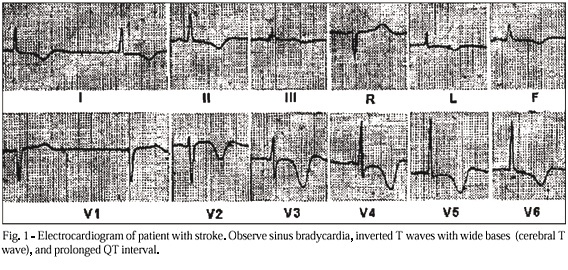
OBJECTIVE: To evaluate electrocardiographic abnormalities in patients with neurologic diseases. METHODS: We studied 161 patients with neurologic disorders by analyzing the 12-lead electrocardiogram during the pathological process. An expert who did not know anything about the patients evaluated the traces. RESULTS: Neurological process included brain tumor (41%), stroke (27.3%), cerebral aneurysm (15.5%), subarachnoid hemorrhage (6.8%), subdural hemorrhage (5%), and head injury (4.4%). Electrocardiograms were normal in 61% of cases, and the most frequent abnormality was ventricular repolarization (23.7%). The presence of T waves (4.6%) and prolonged QT intervals (8.8%) was the most characteristic of brain injuries. CONCLUSION: We observed a lower incidence of electrocardiographic abnormalities than that described in the literature.
  • Electrocardiography
  • neurologic diseases
  • QT interval
Read Full Article
Creative Commons Attribution (CC BY) Creative Commons license
19/05/2003 DOI: 10.1590/S0066-782X2003000400001 Views 1
Infective endocarditis: surgical therapy
Original Article

Infective endocarditis: surgical therapy

Luís Sérgio de Moura Fragomeni et al. Fabiano Fernandes Vieira Júlio Cesar de Mello Bajerski Roque Paulo Falleiro … Gustavo Hoppen Iselso Sartori

OBJECTIVE: To assess the major causes of surgical morbidity and mortality in patients with infective endocarditis operated upon in a regional cardiology center. METHODS: Thirty-four patients underwent surgical treatment for infective endocarditis. Their ages ranged from 20 to 68 years (mean of 40.6) and 79% were males. Their NYHA functional classes were as follows: IV – 19 (55.8%) patients; III – 12 (35.2%) patients; II – 3 (8.8%) patients. Blood cultures were positive in only 32% of the cases. Eight patients had already undergone previous cardiac surgery, whose major indication (82.3%) was heart failure refractory to clinical treatment. RESULTS: Four (11.7%) patients died at the hospital. Follow-up was complete in 26 (86%) patients. Five (14.7%) patients died later, 12, 36, 48, 60, and 89 months after hospital discharge. Of the 21 patients being currently followed up, 1 is in NYHA functional class III, and 5 in NYHA functional class II. CONCLUSION: A high degree of clinical suspicion, at an early diagnosis, and indication of surgical treatment prior to deterioration of left ventricular function and installation of generalized sepsis may improve prognosis.

  • Cardiac Surgery
  • Endocarditis
  • valvular surgery
Read Full Article
Creative Commons Attribution (CC BY) Creative Commons license
19/05/2003 DOI: 10.1590/S0066-782X2003000400006
Lipid peroxidation and nitric oxide inactivation in postmenopausal women
Original Article

Lipid peroxidation and nitric oxide inactivation in postmenopausal women

Isabela Rosier Olimpio Pereira et al. Marcelo Chiara Bertolami André Arpad Faludi Maria Fernanda Campos … Simone Ferderbar Emersom Silva Lima José Mendes Aldrighi Dulcineia Saes Parra Abdalla

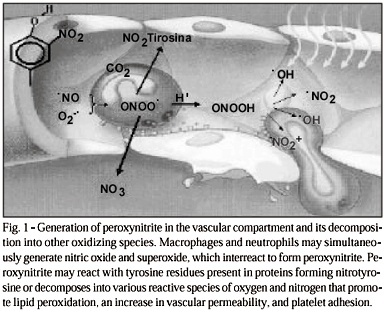
OBJECTIVE: To assess the effect of endogenous estrogens on the bioavailability of nitric oxide (·NO) and in the formation of lipid peroxidation products in pre- and postmenopausal women. METHODS: NOx and S-nitrosothiols were determined by gaseous phase chemiluminescence, nitrotyrosine was determined by ELISA, COx (cholesterol oxides) by gas chromatography, and cholesteryl linoleate hydroperoxides (CE18:2-OOH), trilinolein (TG18:2-OOH), and phospholipids (PC-OOH) by HPLC in samples of plasma. RESULTS: The concentrations of NOx, nitrotyrosine, COx, CE18:2-OOH, and PC-OOH were higher in the postmenopausal period (33.8±22.3 mM; 230±130 nM; 55±19 ng/mL; 17±8.7 nM; 2775±460 nM, respectively) as compared with those in the premenopausal period (21.1±7.3 mM; 114±41 nM; 31±13 ng/mL; 6±1.4 nM; 1635±373 nM). In contrast, the concentration of S-nitrosothiols was lower in the postmenopausal period (91±55 nM) as compared with that in the premenopausal p in the premenopausal period (237±197 nM). CONCLUSION: In the postmenopausal period, an increase in nitrotyrosine and a reduction of S-nitrosothiol formation, as well as an increase of COx, CE18:2-OOH and PC-OOH formation occurs. Therefore, •NO inactivation and the increase in lipid peroxidation may contribute to endothelial dysfunction and to the greater risk for atherosclerosis in postmenopausal women.

  • lipid peroxidation
  • Menopause
  • Nitric Oxide
Read Full Article
Creative Commons Attribution (CC BY) Creative Commons license
19/05/2003 DOI: 10.1590/S0066-782X2003000400005
Risk factors, biochemical markers, and genetic polymorphisms in early coronary artery disease
Original Article

Risk factors, biochemical markers, and genetic polymorphisms in early coronary artery disease

Maria Cristina Izar et al. Francisco Antonio Helfenstein Fonseca Sílvia Saiuli Miki Ihara Nelson Kasinski … Won Han Sang Ieda Edite Lanzarini Lopes Leonor do Espírito Santo de Almeida Pinto Waldir Gabriel Miranda Relvas Daisy Lourenço Sérgio Tufik Angelo Amato Vincenzo de Paola Antonio Carlos Camargo Carvalho

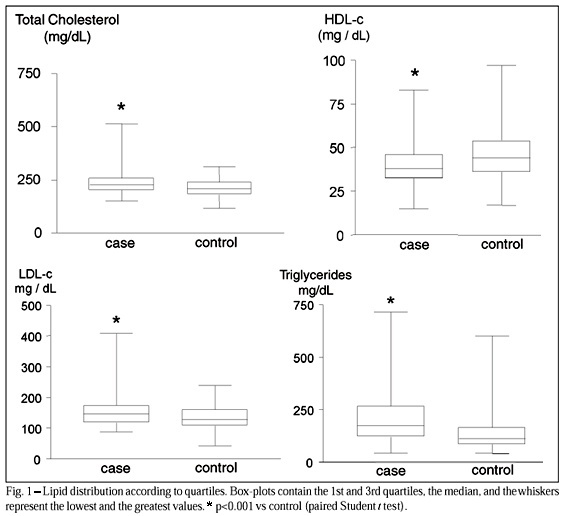
OBJECTIVE: To assess the risk factors, lipid and apolipoprotein profile, hemostasis variables, and polymorphisms of the apolipoprotein AI-CIII gene in early coronary artery disease (CAD). METHODS: Case-control study with 112 patients in each group controlled by sex and age. After clinical evaluation and nutritional instruction, blood samples were collected for biochemical assays and genetic study. RESULTS: Familial history of early CAD (64 vs 39%), arterial hypertension (69 vs 36%), diabetes mellitus (25 vs 3%), and previous smoking (71 vs 46%) were more prevalent in the case group (p<0.001). Hypertension and diabetes were independent risk factors. Early CAD was characterized by higher serum levels of total cholesterol (235 ± 6 vs 209 ± 4 mg/dL), of LDL-c (154 ± 5 vs 135 ± 4 mg/dL), triglycerides (205 ± 12 vs 143 ± 9 mg/dL), and apolipoprotein B (129 ± 3 vs 105 ± 3 mg/dL), and lower serum levels of HDL-c (40 ± 1 vs 46 ± 1 mg/dL) and apolipoprotein AI (134 ± 2 vs 146 ± 2mg/dL) [p<0.01], in addition to an elevation in fibrinogen and D-dimer (p<0.02). The simultaneous presence of the rare alleles of the APO AI-CIII genes in early CAD are associated with hypertriglyceridemia (p=0.03). CONCLUSION: Of the classical risk factors, hypertension and diabetes mellitus were independently associated with early CAD. In addition to an unfavorable lipid profile, an increase in the thrombotic risk was identified in this population. An additive effect of the APO AI-CIII genes was observed in triglyceride levels.

  • Coronary Artery Disease
  • genetic polymorphisms
  • Risk Factors
Read Full Article
Creative Commons Attribution (CC BY) Creative Commons license
19/05/2003 DOI: 10.1590/S0066-782X2003000400003 Views 1
Influence of angiotensin II receptor subtypes of the paraventricular nucleus on the physiological responses induced by angiotensin II injection into the medial septal area
Original Article

Influence of angiotensin II receptor subtypes of the paraventricular nucleus on the physiological responses induced by angiotensin II injection into the medial septal area

Wilson Abrão Saad et al. Luiz Antonio de Arruda Camargo

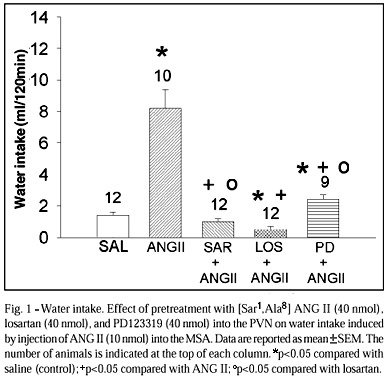
OBJECTIVE: We determined the effects of losartan and PD 123319 (antagonists of the AT1 and AT2 angiotensin receptors, respectively), and [Sar¹, Ala8] ANG II (a relatively peptide antagonist of angiotensin receptors) injected into the paraventricular nucleus (PVN) on water and 3% NaCl intake, and the diuretic, natriuretic, and pressor effects induced by administration of angiotensin II (ANG II) into the medial septal area (MSA) of conscious rats. METHODS: Holtzman rats were used . Animals were anesthetized with tribromoethanol (20 mg) per 100 grams of body weight, ip. A stainless steel guide cannula was implanted into the MSA and PVN. All drugs were injected in 0.5-mul volumes for 10-15 seconds. Seven days after brain surgery, water and 3% NaCl intake, urine and sodium excretion, and arterial blood pressure were measured. RESULTS: Losartan (40 nmol) and [Sar¹, Ala8] ANG II (40 nmol) completely eliminated whereas PD 123319 (40 nmol) partially blocked the increase in water and sodium intake and the increase in arterial blood pressure induced by ANG II (10 nmol) injected into the MSA. The PVN administration of PD 123319 and [Sar¹, Ala8] ANG II blocked whereas losartan attenuated the diuresis and natriuresis induced by MSA administration of ANG II. CONCLUSION: MSA involvement with PVN on water and sodium homeostasis and arterial pressure modulation utilizing ANGII receptors is suggested.

  • Blood Pressure
  • central nervous system
  • sodium balance
Read Full Article
Creative Commons Attribution (CC BY) Creative Commons license
19/05/2003 DOI: 10.1590/S0066-782X2003000400004
Chart I
Original Article

Percutaneous transluminal septal alcoholization for the treatment of refractory hypertrophic obstructive cardiomyopathy: initial experience in the Federal District

Evandro César Vidal Osterne et al. Tamer Najar Seixas Walter Paulo Filho Ernesto Misael Cintra Osterne Otoni Moreira Gomes

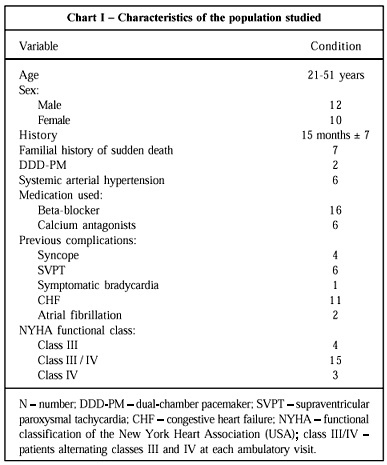
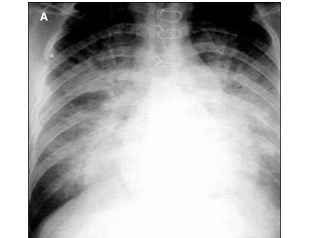
OBJECTIVE: To analyze the efficacy of percutaneous transluminal septal alcoholization in the treatment of refractory obstructive hypertrophic cardiomyopathy (HOC). METHODS: The patients were referred for alcoholization after Doppler echocardiography. Before and after alcoholization, the intraventricular pressure gradient was recorded. Alcoholization was performed with a 3mL injection of absolute alcohol through a coronary angioplasty balloon catheter. The procedure was concluded after a significant reduction or abolition of the pressure gradient. RESULTS: Of 22 patients, 18 (81.8%) successfully concluded the procedure with a reduction in intraventricular pressure gradient at baseline (from 67.6±24.2 mmHg to 3.8± 1.9 mmHg, p<0.005) and after extrasystole (from 110.4± 24.2 mmHg to 9.6±2.6 mm Hg, p<0.005). A significant reduction in mean interventricular septal thickness (from 2± 0.3 mm to 1.7±0.2 mm, p<0.005) and in peak pressure gradient (from 90.7±23.5 mmHg to 6.1±1.4 mmHg, p<0.005) was observed on Doppler echocardiography after 6 months, when all patients were in functional class I. The most frequent acute complication, present in 11% of the patients, was the need for definitive pacing implantation. Relapse of the symptoms and reappearance of the pressure gradient occurred in 16.6% of the patients. One patient (5.5%) died probably due to a diffuse coronary spasm prior to the procedure, and another died suddenly on late follow-up. CONCLUSION: Percutaneous transluminal septal alcoholization is effective and safe in the treatment of HOC.

  • Ablation
  • hypertrophic obstructive cardiomyopathy
  • percutaneous septal ablation
  • percutaneous septal alcoholization
Read Full Article
Creative Commons Attribution (CC BY) Creative Commons license
19/05/2003 DOI: 10.1590/S0066-782X2003000400002 Views 1
Endomyocardial fibrosis in infancy
Case Report

Endomyocardial fibrosis in infancy

Marcelo Biscegli Jatene et al. Ivan Salvador Bonillo Contreras Laura C. Riera Lameda José de Lima Oliveira Jr. … Munir Ebaid Elisa Rumiko Iwahashi Deipara Monteiro Abellan Vera Demarchi Aiello Miguel Barbero Marcial Sérgio Almeida de Oliveira

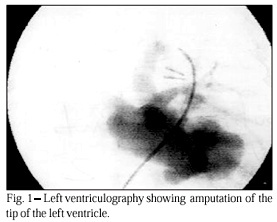
The patient was a 4-month-old infant, who underwent persistent ductus arteriosus interruption with titanium clips at the age of 13 days and, since the age of 2 months, had crises of hypoxia and hypertonicity. After clinical investigation, the presence of pulmonary hypertension was confirmed and left ventricular inflow tract obstruction was suspected. The patient underwent surgical treatment at the age of 4 months, during which right and left ventricular endocardial fibrosis was identified. The fibrosis was resected, but the infant had an unfavorable clinical evolution with significant diastolic restriction and died on the sixth postoperative day. Anatomicopathological and surgical findings suggested endomyocardial fibrosis, although that pathology is very rare at the patient’s age.

Read Full Article
Creative Commons Attribution (CC BY) Creative Commons license
19/05/2003 DOI: 10.1590/S0066-782X2003000400007

How to cite this article

EndNote RIS

Electronic Document Format (Vancouver)

Póvoa R, Cavichio L, Almeida AL, Viotti D, Ferreira C, Galvão L, Pimenta J, et al. Electrocardiographic abnormalities in neurological diseases. Arquivos Brasileiros de Cardiologia 2003;80(4):355-8.

Electronic Document Format (ABNT)

Póvoa, Rui; Cavichio, Luciano; Almeida, Ana Lúcia de; Viotti, Danielle; Ferreira, Celso; Galvão, Luciane; Pimenta, João. Electrocardiographic abnormalities in neurological diseases. Arquivos Brasileiros de Cardiologia, v. 80, n. 4, p. 355-358, May. 2003.

Electronic Document Format (APA)

Póvoa, R., Cavichio, L., Almeida, A. L. , Viotti, D., Ferreira, C., Galvão, L., & Pimenta, J. (2003). Electrocardiographic abnormalities in neurological diseases. Arquivos Brasileiros de Cardiologia, 80(4), 355-358.

Electronic Document Format (ISO)

Póvoa, Rui and Cavichio, Luciano and Almeida, Ana Lúcia de and Viotti, Danielle and Ferreira, Celso and Galvão, Luciane and Pimenta, João. Electrocardiographic abnormalities in neurological diseases. Arquivos Brasileiros de Cardiologia [online]. 2003, vol. 80, n. 4, [cited 2026-10-14], pp. 355-358. Available from: <https://journals.cardiol.br/en/article/electrocardiographic-abnormalities-in-neurological-diseases/>. ISSN 0066-782X

EndNote RIS

Electronic Document Format (Vancouver)

Fragomeni LSM, Vieira FF, Bajerski JCM, Falleiro RP, Hoppen G, Sartori I. Infective endocarditis: surgical therapy. Arquivos Brasileiros de Cardiologia 2003;80(4):431-7.

Electronic Document Format (ABNT)

Fragomeni, Luís Sérgio de Moura; Vieira, Fabiano Fernandes; Bajerski, Júlio Cesar de Mello; Falleiro, Roque Paulo; Hoppen, Gustavo; Sartori, Iselso. Infective endocarditis: surgical therapy. Arquivos Brasileiros de Cardiologia, v. 80, n. 4, p. 431-437, May. 2003.

Electronic Document Format (APA)

Fragomeni, L. S. M., Vieira, F. F., Bajerski, J. C. M., Falleiro, R. P., Hoppen, G., & Sartori, I. (2003). Infective endocarditis: surgical therapy. Arquivos Brasileiros de Cardiologia, 80(4), 431-437.

Electronic Document Format (ISO)

Fragomeni, Luís Sérgio de Moura and Vieira, Fabiano Fernandes and Bajerski, Júlio Cesar de Mello and Falleiro, Roque Paulo and Hoppen, Gustavo and Sartori, Iselso. Infective endocarditis: surgical therapy. Arquivos Brasileiros de Cardiologia [online]. 2003, vol. 80, n. 4, [cited 2026-10-14], pp. 431-437. Available from: <https://journals.cardiol.br/en/article/infective-endocarditis-surgical-therapy/>. ISSN 0066-782X

EndNote RIS

Electronic Document Format (Vancouver)

Pereira IRO, Bertolami MC, Faludi AA, Campos MF, Ferderbar S, Lima ES, Aldrighi JM, et al. Lipid peroxidation and nitric oxide inactivation in postmenopausal women. Arquivos Brasileiros de Cardiologia 2003;80(4):415-23.

Electronic Document Format (ABNT)

Pereira, Isabela Rosier Olimpio; Bertolami, Marcelo Chiara; Faludi, André Arpad; Campos, Maria Fernanda; Ferderbar, Simone; Lima, Emersom Silva; Aldrighi, José Mendes; Abdalla, Dulcineia Saes Parra. Lipid peroxidation and nitric oxide inactivation in postmenopausal women. Arquivos Brasileiros de Cardiologia, v. 80, n. 4, p. 415-423, May. 2003.

Electronic Document Format (APA)

Pereira, I. R. O., Bertolami, M. C., Faludi, A. A., Campos, M. F., Ferderbar, S., Lima, E. S., Aldrighi, J. M., & Abdalla, D. S. P. (2003). Lipid peroxidation and nitric oxide inactivation in postmenopausal women. Arquivos Brasileiros de Cardiologia, 80(4), 415-423.

Electronic Document Format (ISO)

Pereira, Isabela Rosier Olimpio and Bertolami, Marcelo Chiara and Faludi, André Arpad and Campos, Maria Fernanda and Ferderbar, Simone and Lima, Emersom Silva and Aldrighi, José Mendes and Abdalla, Dulcineia Saes Parra. Lipid peroxidation and nitric oxide inactivation in postmenopausal women. Arquivos Brasileiros de Cardiologia [online]. 2003, vol. 80, n. 4, [cited 2026-10-14], pp. 415-423. Available from: <https://journals.cardiol.br/en/article/lipid-peroxidation-and-nitric-oxide-inactivation-in-postmenopausal-women/>. ISSN 0066-782X

EndNote RIS

Electronic Document Format (Vancouver)

Izar MC, Fonseca FAH, Ihara SSM, Kasinski N, Sang WH, Lopes IEL, Pinto LESA, et al. Risk factors, biochemical markers, and genetic polymorphisms in early coronary artery disease. Arquivos Brasileiros de Cardiologia 2003;80(4):388-95.

Electronic Document Format (ABNT)

Izar, Maria Cristina; Fonseca, Francisco Antonio Helfenstein; Ihara, Sílvia Saiuli Miki; Kasinski, Nelson; Sang, Won Han; Lopes, Ieda Edite Lanzarini; Pinto, Leonor do Espírito Santo de Almeida; Relvas, Waldir Gabriel Miranda; Lourenço, Daisy; Tufik, Sérgio; Paola, Angelo Amato Vincenzo de; Carvalho, Antonio Carlos Camargo. Risk factors, biochemical markers, and genetic polymorphisms in early coronary artery disease. Arquivos Brasileiros de Cardiologia, v. 80, n. 4, p. 388-395, May. 2003.

Electronic Document Format (APA)

Izar, M. C., Fonseca, F. A. H., Ihara, S. S. M., Kasinski, N., Sang, W. H., Lopes, I. E. L., Pinto, L. E. S. A., Relvas, W. G. M., Lourenço, D., Tufik, S., Paola, A. A. V. , & Carvalho, A. C. C. (2003). Risk factors, biochemical markers, and genetic polymorphisms in early coronary artery disease. Arquivos Brasileiros de Cardiologia, 80(4), 388-395.

Electronic Document Format (ISO)

Izar, Maria Cristina and Fonseca, Francisco Antonio Helfenstein and Ihara, Sílvia Saiuli Miki and Kasinski, Nelson and Sang, Won Han and Lopes, Ieda Edite Lanzarini and Pinto, Leonor do Espírito Santo de Almeida and Relvas, Waldir Gabriel Miranda and Lourenço, Daisy and Tufik, Sérgio and Paola, Angelo Amato Vincenzo de and Carvalho, Antonio Carlos Camargo. Risk factors, biochemical markers, and genetic polymorphisms in early coronary artery disease. Arquivos Brasileiros de Cardiologia [online]. 2003, vol. 80, n. 4, [cited 2026-10-14], pp. 388-395. Available from: <https://journals.cardiol.br/en/article/risk-factors-biochemical-markers-and-genetic-polymorphisms-in-early-coronary-artery-disease/>. ISSN 0066-782X

EndNote RIS

Electronic Document Format (Vancouver)

Saad WA, Camargo LAA. Influence of angiotensin II receptor subtypes of the paraventricular nucleus on the physiological responses induced by angiotensin II injection into the medial septal area. Arquivos Brasileiros de Cardiologia 2003;80(4):401-5.

Electronic Document Format (ABNT)

Saad, Wilson Abrão; Camargo, Luiz Antonio de Arruda. Influence of angiotensin II receptor subtypes of the paraventricular nucleus on the physiological responses induced by angiotensin II injection into the medial septal area. Arquivos Brasileiros de Cardiologia, v. 80, n. 4, p. 401-405, May. 2003.

Electronic Document Format (APA)

Saad, W. A., & Camargo, L. A. A. (2003). Influence of angiotensin II receptor subtypes of the paraventricular nucleus on the physiological responses induced by angiotensin II injection into the medial septal area. Arquivos Brasileiros de Cardiologia, 80(4), 401-405.

Electronic Document Format (ISO)

Saad, Wilson Abrão and Camargo, Luiz Antonio de Arruda. Influence of angiotensin II receptor subtypes of the paraventricular nucleus on the physiological responses induced by angiotensin II injection into the medial septal area. Arquivos Brasileiros de Cardiologia [online]. 2003, vol. 80, n. 4, [cited 2026-10-14], pp. 401-405. Available from: <https://journals.cardiol.br/en/article/influence-of-angiotensin-ii-receptor-subtypes-of-the-paraventricular-nucleus-on-the-physiological-responses-induced-by-angiotensin-ii-injection-into-the-medial-septal-area/>. ISSN 0066-782X

EndNote RIS

Electronic Document Format (Vancouver)

Osterne ECV, Seixas TN, Paulo Filho W, Osterne EMC, Gomes OM. Percutaneous transluminal septal alcoholization for the treatment of refractory hypertrophic obstructive cardiomyopathy: initial experience in the Federal District. Arquivos Brasileiros de Cardiologia 2003;80(4):369-78.

Electronic Document Format (ABNT)

Osterne, Evandro César Vidal; Seixas, Tamer Najar; Paulo Filho, Walter; Osterne, Ernesto Misael Cintra; Gomes, Otoni Moreira. Percutaneous transluminal septal alcoholization for the treatment of refractory hypertrophic obstructive cardiomyopathy: initial experience in the Federal District. Arquivos Brasileiros de Cardiologia, v. 80, n. 4, p. 369-378, May. 2003.

Electronic Document Format (APA)

Osterne, E. C. V., Seixas, T. N., Paulo Filho, W., Osterne, E. M. C., & Gomes, O. M. (2003). Percutaneous transluminal septal alcoholization for the treatment of refractory hypertrophic obstructive cardiomyopathy: initial experience in the Federal District. Arquivos Brasileiros de Cardiologia, 80(4), 369-378.

Electronic Document Format (ISO)

Osterne, Evandro César Vidal and Seixas, Tamer Najar and Paulo Filho, Walter and Osterne, Ernesto Misael Cintra and Gomes, Otoni Moreira. Percutaneous transluminal septal alcoholization for the treatment of refractory hypertrophic obstructive cardiomyopathy: initial experience in the Federal District. Arquivos Brasileiros de Cardiologia [online]. 2003, vol. 80, n. 4, [cited 2026-10-14], pp. 369-378. Available from: <https://journals.cardiol.br/en/article/percutaneous-transluminal-septal-alcoholization-for-the-treatment-of-refractory-hypertrophic-obstructive-cardiomyopathy-initial-experience-in-the-federal-district/>. ISSN 0066-782X

EndNote RIS

Electronic Document Format (Vancouver)

Jatene MB, Contreras ISB, Lameda LCR, Oliveira Jr. JL, Ebaid M, Iwahashi ER, Abellan DM, et al. Endomyocardial fibrosis in infancy. Arquivos Brasileiros de Cardiologia 2003;80(4):442-5.

Electronic Document Format (ABNT)

Jatene, Marcelo Biscegli; Contreras, Ivan Salvador Bonillo; Lameda, Laura C. Riera; Oliveira Jr., José de Lima; Ebaid, Munir; Iwahashi, Elisa Rumiko; Abellan, Deipara Monteiro; Aiello, Vera Demarchi; Marcial, Miguel Barbero; Oliveira, Sérgio Almeida de. Endomyocardial fibrosis in infancy. Arquivos Brasileiros de Cardiologia, v. 80, n. 4, p. 442-445, May. 2003.

Electronic Document Format (APA)

Jatene, M. B., Contreras, I. S. B., Lameda, L. C. R., Oliveira Jr., J. L., Ebaid, M., Iwahashi, E. R., Abellan, D. M., Aiello, V. D., Marcial, M. B., & Oliveira, S. A. (2003). Endomyocardial fibrosis in infancy. Arquivos Brasileiros de Cardiologia, 80(4), 442-445.

Electronic Document Format (ISO)

Jatene, Marcelo Biscegli and Contreras, Ivan Salvador Bonillo and Lameda, Laura C. Riera and Oliveira Jr., José de Lima and Ebaid, Munir and Iwahashi, Elisa Rumiko and Abellan, Deipara Monteiro and Aiello, Vera Demarchi and Marcial, Miguel Barbero and Oliveira, Sérgio Almeida de. Endomyocardial fibrosis in infancy. Arquivos Brasileiros de Cardiologia [online]. 2003, vol. 80, n. 4, [cited 2026-10-14], pp. 442-445. Available from: <https://journals.cardiol.br/en/article/endomyocardial-fibrosis-in-infancy/>. ISSN 0066-782X

Sede – Rio de Janeiro
Av. Marechal Câmara, 160
3º andar – Sala: 330 – Centro
Rio de Janeiro – CEP: 20020-907
Tel.: (55 +21) 3478-2700
ou (21) 99386-3961
E-mail: revista@cardiol.br

Sede – São Paulo
Alameda Santos, 705 – 11º andar
Cerqueira César | São Paulo
CEP: 01419-001
Tel.: (55 +11) 3411-5500
E-mail: revista@cardiol.br

  • About the Journal
  • Internal Regulation
  • Editors Section
  • Editorial Board
  • History
  • SBC Award

  • Guidelines for Publication
  • Editorial Policy
  • Ethics Policy
  • Policy on the Use of Artificial Intelligence
  • Mandatory Publication Form
  • Publication Fee

Issues

SBC Guidelines

  • How to Publish an Abstract Supplement?
  • Supplements from the Brazilian Congress of Cardiology