Electrocardiographic abnormalities in neurological diseases
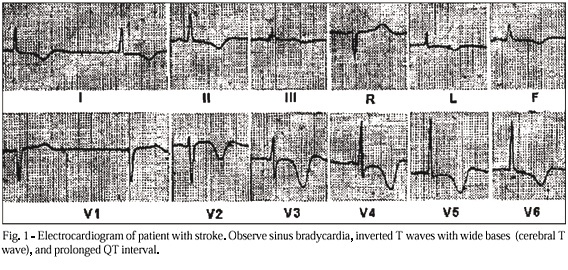
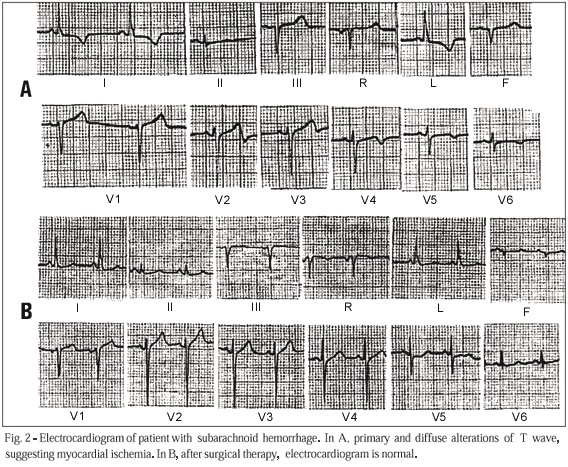
OBJECTIVE: To evaluate electrocardiographic abnormalities in patients with neurologic diseases. METHODS: We studied 161 patients with neurologic disorders by analyzing the 12-lead electrocardiogram during the pathological process. An expert who did not know anything about the patients evaluated the traces. RESULTS: Neurological process included brain tumor (41%), stroke (27.3%), cerebral aneurysm (15.5%), subarachnoid hemorrhage (6.8%), subdural hemorrhage (5%), and head injury (4.4%). Electrocardiograms were normal in 61% of cases, and the most frequent abnormality was ventricular repolarization (23.7%). The presence of T waves (4.6%) and prolonged QT intervals (8.8%) was the most characteristic of brain injuries. CONCLUSION: We observed a lower incidence of electrocardiographic abnormalities than that described in the literature.
Images
Image gallery fullscreen viewer
Comments are moderated by the editorial team before publication. Discussions should be evidence-based and use scientific language. Conflicts of interest should be declared.