| ABC
ABC Family Arquivos Brasileiros de Cardiologia International Journal of Cardiovascular Sciences ABC Heart Failure & Cardiomyopathy ABC Imagem Cardiovascular
Português English
ABC Family | ABC
Português English
  • About
    • About the Journal
    • Internal Regulation
    • Editors Section
    • Editorial Board
    • History
    • SBC Award
  • Instructions to Authors
    • Guidelines for Publication
    • Editorial Policy
    • Ethics Policy
    • Policy on the Use of Artificial Intelligence
    • Mandatory Publication Form
    • Publication Fee
  • Issues
  • SBC Guidelines
  • Abstracts
    • How to Publish an Abstract Supplement?
    • Supplements from the Brazilian Congress of Cardiology
  • About
    • About the Journal
    • Internal Regulation
    • Editors Section
    • Editorial Board
    • History
    • SBC Award
  • Instructions to Authors
    • Guidelines for Publication
    • Editorial Policy
    • Ethics Policy
    • Policy on the Use of Artificial Intelligence
    • Mandatory Publication Form
    • Publication Fee
  • Issues
  • SBC Guidelines
  • Abstracts
    • How to Publish an Abstract Supplement?
    • Supplements from the Brazilian Congress of Cardiology

ABC Family

  • ABC Family
  • Arquivos Brasileiros de Cardiologia
  • International Journal of Cardiovascular Sciences
  • ABC Heart Failure & Cardiomyopathy
  • ABC Imagem Cardiovascular
Search in

No content found.

Journals
Ordering
Article types
Others

  1. Home
  2. ABC
  3. Issues
  4. 2001, Volume 77, Number 3
Effectiveness of primary angioplasty in the treatment of acute myocardial infarction. Analysis of in-hospital and late outcomes in 135 consecutive cases
Original Article

Effectiveness of primary angioplasty in the treatment of acute myocardial infarction. Analysis of in-hospital and late outcomes in 135 consecutive cases

Rogério Sarmento Leite et al. Ana Maria Krepsky Carlos A.M. Gottschall

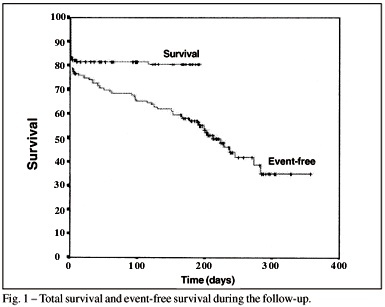
OBJECTIVE: Evaluate early and late evolution of patients submitted to primary coronary angioplasty for acute myocardial infarction. METHODS: A prospective study of 135 patients with acute myocardial infarction submitted to primary transcutaneous coronary angioplasty (PTCA). Success was defined as TIMI 3 flow and residual lesion <50%. We performed statistical analyses by univariated, multivariated methods and survival analyze by Kaplan-Meier. RESULTS: PTCA success rate was 78% and early mortality 18,5%. Killip classes III and IV was associated to higher mortality, odds ratio 22.9 (95% CI: 5,7 to 91,8) and inversely related to age <75 years (OR = 0,93; 95% CI: 0.88 to 0.98). If we had chosen success flow as TIMI 2 and had excluded patients in Killip III/IV classes, success rate would be 86% and mortality 8%. The survival probability at the end or study, follow-up time 142 ± 114 days, was 80% and event free survival 35%. Greater survival was associated to stenting (OR = 0.09; 0.01 to 0.75) and univessel disease (OR = 0.21; 0.07 to 0.61). CONCLUSION: The success rate was lower and mortality was higher than randomized trials, however similar to that of non randomized studies. This demonstrated the efficacy of primary PTCA in our local conditions.

  • Acute Myocardial Infarction
  • ischemic heart disease
  • primary percutaneous transluminal coronary angioplasty
Read Full Article
Creative Commons Attribution (CC BY) Creative Commons license
28/09/2001 DOI: 10.1590/S0066-782X2001000900001
Morphofunctional study of the junction between the left atrium and the pulmonary veins in patient with pulmonary hypertension
Original Article

Morphofunctional study of the junction between the left atrium and the pulmonary veins in patient with pulmonary hypertension

Jennecy Sales Cavalcanti et al. Laura Patrícia Ferreira Santos

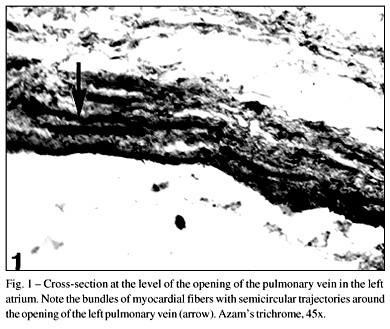
OBJECTIVE: To study the arrangement of the myocardial fiber bundles at the pulmonary venous left atrial junction in patients with pulmonary hypertension, and to discuss the pathophysiological importance of this element in the etiology of acute pulmonary edema. METHODS: We obtained 12 hearts and their pulmonary vein extremities from postmortem examinations of patients with the anatomicopathological diagnosis of acute pulmonary edema. The specimens, which had no grossly visible morphological cardiac alterations, were fixed in 10% formalin, and the muscular arrangement of the pulmonary venous left atrial junctions was analyzed. This material was then isolated, embedded in paraffin, underwent serial cutting (50 µm of thickness), and was stained with Azam’s trichrome. RESULTS: We observed in our specimens that: a) the myocardial fiber bundles that originate in the atrial wall and involve the openings of the pulmonary veins were fewer than those observed in healthy material; b) the myocardial fiber bundles that extend into the pulmonary veins were shorter than those found in material originating from individuals with no pulmonary hypertension. CONCLUSION: Anatomical changes that result in a reduction in the amount of myocardial fiber bundles in the pulmonary venous left atrial junction, isolated or associated with other factors, may be the cause of disorders in pulmonary circulation, leading to an increase in pulmonary venous pressure, and, consequently, to acute pulmonary edema.

  • Left atrium
  • Pulmonary Hypertension
  • Pulmonary Veins
Read Full Article
Creative Commons Attribution (CC BY) Creative Commons license
18/09/2001 DOI: 10.1590/S0066-782X2001000900003 Views 2
Intracoronary brachytherapy in the treatment of in-stent restenosis. Initial experience in Brazil
Brief Reports

Intracoronary brachytherapy in the treatment of in-stent restenosis. Initial experience in Brazil

Fábio Sândoli de Brito Jr et al. Rodrigo Hanriot Breno Oliveira Almeida Miguel Antonio Neves Rati … Nadia Sueli de Medeiros Mônica Lagatta José Carlos da Cruz João Victor Salvajoli Marco Antonio Perin

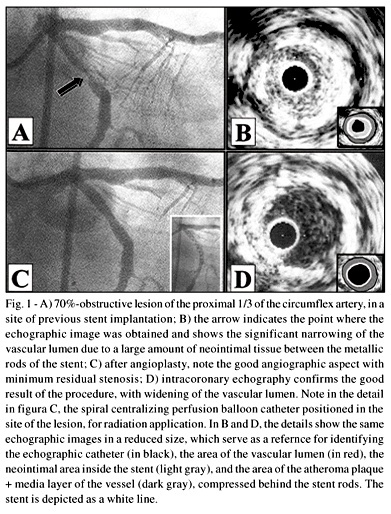
Intracoronary brachytherapy using beta or gamma radiation is currently the most efficient type of therapy for preventing the recurrence of coronary in-stent restenosis. Its implementation depends on the interaction among interventionists, radiotherapists, and physicists to assure the safety and quality of the method. The authors report the pioneering experience in Brazil of the treatment of 2 patients with coronary in-stent restenosis, in whom beta radiation was used as part of the international multicenter randomized PREVENT study (Proliferation REduction with Vascular ENergy Trial). The procedures were performed rapidly and did not require significant modifications in the traditional techniques used for conventional angioplasty. Alteration in the radiological protection devices of the hemodynamic laboratory were also not required, showing that intracoronary brachytherapy using beta radiation can be incorporated into the interventional tools of cardiology in our environment.

Read Full Article
Creative Commons Attribution (CC BY) Creative Commons license
18/09/2001 DOI: 10.1590/S0066-782X2001000900007 Views 1
Original Article

Physical activity, cardiorespiratory fitness, dietary content, and risk factors that cause a predisposition towards cardiovascular disease

Dartagnan Pinto Guedes et al. Joana Elisabete Ribeiro Pinto Guedes

OBJECTIVE: To analyze associations between levels of physical activity, cardiorespiratory fitness, dietary content, and risk factors that cause a predisposition towards cardiovascular disease. METHODS: Sixty-two individuals aged between 20 and 45 years were evaluated. Levels of physical activity were established by estimates of energy demand corresponding to everyday activity; indices for cardiorespiratory fitness were obtained from estimates of maximal oxygen consumption; information about dietary content was obtained from dietary records kept on seven consecutive days. To indicate risk factors that cause a predisposition towards cardiovascular disease, use was made of body mass indexes, waist-hip circumference relationships, levels of arterial pressure and of plasma lipid-lipoprotein concentration. To establish associations between the variables studied, multiple regression analysis was used. RESULTS: Physical activity levels and cardiorespiratory fitness levels were inversely correlated with the amount and distribution of body fat and arterial pressure. Taken together, the two variables were responsible for between 16% and 19% of the variation in arterial pressure. Total and saturated fat ingestion was associated with higher serum lipid levels. Both dietary components were responsible for between 49% and 61% of the variation in LDL-cholesterol. CONCLUSION: High ingestion of food rich in total and saturated fat and decreased levels of physical activity and of cardiorespiratory fitness are associated with an increased risk of cardiovascular disease, which supports previous data.

  • Blood Pressure
  • body fat
  • Lipoproteins
  • plasma lipids
Read Full Article
Creative Commons Attribution (CC BY) Creative Commons license
18/09/2001 DOI: 10.1590/S0066-782X2001000900005
Mini-sternotomy for the treatment of aortic valve lesions
Original Article

Mini-sternotomy for the treatment of aortic valve lesions

Altamiro Ribeiro Dias et al. Ricardo Ribeiro Dias Fábio Gaiotto José Lima O. Júnior … Filinto M.C.N. Cerqueira Max Grinberg Roney Sampaio Paulo de Lara Lavitola Nelson Elias Flávio Tarasoutchi Luiz F. Cardoso Noedir A. G. Stolf

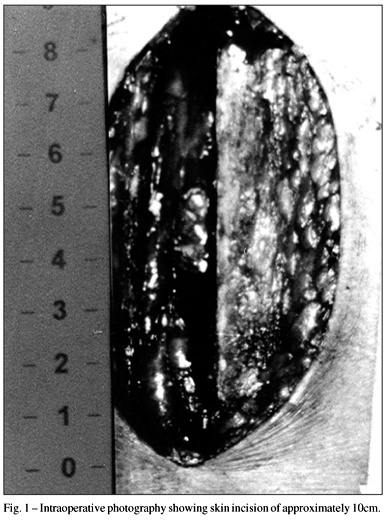
OBJECTIVE: To compare inverted-L mini-sternotomy performed above the sternal furcula with conventional sternotomy in patients with aortic valve diseases who undergo surgical treatment. METHODS: We operated upon 30 patients who had aortic valve lesions that had clinical and hemodynamic findings. All patients underwent inverted-L sternotomy, which extended from above the manubrium of the sternum to the 3rd right intercostal space, without opening the pleural cavity. Their ages ranged from 32 to 76 years, and 18 were males and 12 were females. We used negative pressure in a venous ¼-inch cannula, and the patients were maintained in Trendelemburg’s position. Twenty-seven patients received bioprostheses with diameters ranging from 23 to 29mm. Three patients underwent only removal of the calcifications of the aortic valve leaflets and aortic commissurotomy. RESULTS: The mean duration of anoxic cardiac arrest was 63.11min. Access was considered good in all patients. One death was due to pulmonary and renal problems not related to the incision. All patients had a better recovery in the intensive care unit, got out of bed sooner, coughed more easily, and performed prophylactic physiotherapeutic maneuvers for respiratory problems more easily and with less pain in the incision. Early ambulation was more easily carried out by all patients. CONCLUSION: Mini-sternotomy proved to be better than the conventional sternotomy because it provided morecomfort for the patients in the early postoperative period, with less pain and greater desire for early ambulation and all its inherent advantages.

  • Aortic Valve Disease
  • aortic valve surgery
  • Sternotomy
Read Full Article
Creative Commons Attribution (CC BY) Creative Commons license
18/09/2001 DOI: 10.1590/S0066-782X2001000900002 Views 1
Diagnosis and therapeutics of pulmonary arteriovenous fistula in childhood. Case report and review of the literature
Case Report

Diagnosis and therapeutics of pulmonary arteriovenous fistula in childhood. Case report and review of the literature

Roberto Bartolomeu Gianisella et al. Raul Ivo Rossi Filho Paulo Zielinsky

We report the case of a 3-year-old female patient, who, since birth, had cyanosis difficult to explain with usual diagnostic tests. The only findings on physical examination were cyanosis and clubbing of her fingers. Chest computerized tomography showed images of excessive attenuation in the right lung, which resembled arteriovenous fistulae that were later confirmed on cardiac catheterization. The fistulous trajectories were then embolized with 7 Gianturco coils, which resulted in an immediate increase in the arterial saturation of blood oxygen.

Read Full Article
Creative Commons Attribution (CC BY) Creative Commons license
18/09/2001 DOI: 10.1590/S0066-782X2001000900008 Views 1
Original Article

Laser assisted extraction of pacemaker and implantable defibrillator leads

Roberto Costa et al. Martino Martinelli Filho Elizabeth Sartori Crevelari Noedir Antonio Groppo Stolf Sérgio Almeida de Oliveira

OBJECTIVE: To analyze the results of laser-assisted extraction of permanent pacemaker and defibrillator leads. METHODS: We operated upon 36 patients, whose mean age was 54.2 years, and extracted 56 leads. The reasons for extracting the leads were as follows: infection in 19 patients, elective replacement in 13, and other causes in 4 patients. The mean time of catheter placement was 7.5±5.5 years. Forty-seven leads were from pacemakers, and 9 were from defibrillators. Thirty-eight leads were in use, 14 had been abandoned in the pacemaker pocket, and 4 had been abandoned inside the venous system. RESULTS: We successfully extracted 54 catheters, obtaining a 96.4% rate of success and an 82.1% rate for complete extraction. The 2 unsuccessful cases were due to the presence of calcium in the trajectory of the lead. The mean duration of laser light application was 123.0±104.5 s, using 5,215.2±4,924.0 pulses, in a total of 24.4±24.2 cycles of application. Thirty-four leads were extracted from the myocardium with countertraction after complete progression of the laser sheath, 12 leads came loose during the progression of the laser sheath, and the remaining 10 were extracted with other maneuvers. One patient experienced cardiac tamponade after extraction of the defibrillator lead, requiring open emergency surgery. CONCLUSION: The use of the excimer laser allowed extraction of the leads with a 96% rate of success; it was not effective in 2 patients who had calcification on the lead. One patient (2.8%) had a complication that required cardiac surgery on an emergency basis.

  • artificial cardiac pacemaker
  • laser light
  • lead extraction
Read Full Article
Creative Commons Attribution (CC BY) Creative Commons license
18/09/2001 DOI: 10.1590/S0066-782X2001000900004

How to cite this article

EndNote RIS

Electronic Document Format (Vancouver)

Leite RS, Krepsky AM, Gottschall CA. Effectiveness of primary angioplasty in the treatment of acute myocardial infarction. Analysis of in-hospital and late outcomes in 135 consecutive cases. Arquivos Brasileiros de Cardiologia 2001;77(3):213-20.

Electronic Document Format (ABNT)

Leite, Rogério Sarmento; Krepsky, Ana Maria; Gottschall, Carlos A.M.. Effectiveness of primary angioplasty in the treatment of acute myocardial infarction. Analysis of in-hospital and late outcomes in 135 consecutive cases. Arquivos Brasileiros de Cardiologia, v. 77, n. 3, p. 213-220, Sep. 2001.

Electronic Document Format (APA)

Leite, R. S., Krepsky, A. M., & Gottschall, C. A. (2001). Effectiveness of primary angioplasty in the treatment of acute myocardial infarction. Analysis of in-hospital and late outcomes in 135 consecutive cases. Arquivos Brasileiros de Cardiologia, 77(3), 213-220.

Electronic Document Format (ISO)

Leite, Rogério Sarmento and Krepsky, Ana Maria and Gottschall, Carlos A.M.. Effectiveness of primary angioplasty in the treatment of acute myocardial infarction. Analysis of in-hospital and late outcomes in 135 consecutive cases. Arquivos Brasileiros de Cardiologia [online]. 2001, vol. 77, n. 3, [cited 2026-10-14], pp. 213-220. Available from: <https://journals.cardiol.br/en/article/effectiveness-of-primary-angioplasty-in-the-treatment-of-acute-myocardial-infarction-analysis-of-in-hospital-and-late-outcomes-in-135-consecutive-cases/>. ISSN 0066-782X

EndNote RIS

Electronic Document Format (Vancouver)

Cavalcanti JS, Santos LPF. Morphofunctional study of the junction between the left atrium and the pulmonary veins in patient with pulmonary hypertension. Arquivos Brasileiros de Cardiologia 2001;77(3):232-4.

Electronic Document Format (ABNT)

Cavalcanti, Jennecy Sales; Santos, Laura Patrícia Ferreira. Morphofunctional study of the junction between the left atrium and the pulmonary veins in patient with pulmonary hypertension. Arquivos Brasileiros de Cardiologia, v. 77, n. 3, p. 232-234, Sep. 2001.

Electronic Document Format (APA)

Cavalcanti, J. S., & Santos, L. P. F. (2001). Morphofunctional study of the junction between the left atrium and the pulmonary veins in patient with pulmonary hypertension. Arquivos Brasileiros de Cardiologia, 77(3), 232-234.

Electronic Document Format (ISO)

Cavalcanti, Jennecy Sales and Santos, Laura Patrícia Ferreira. Morphofunctional study of the junction between the left atrium and the pulmonary veins in patient with pulmonary hypertension. Arquivos Brasileiros de Cardiologia [online]. 2001, vol. 77, n. 3, [cited 2026-10-14], pp. 232-234. Available from: <https://journals.cardiol.br/en/article/morphofunctional-study-of-the-junction-between-the-left-atrium-and-the-pulmonary-veins-in-patient-with-pulmonary-hypertension/>. ISSN 0066-782X

EndNote RIS

Electronic Document Format (Vancouver)

Brito Jr FS, Hanriot R, Almeida BO, Rati MAN, Medeiros NS, Lagatta M, Cruz JC, et al. Intracoronary brachytherapy in the treatment of in-stent restenosis. Initial experience in Brazil. Arquivos Brasileiros de Cardiologia 2001;77(3):270-3.

Electronic Document Format (ABNT)

Brito Jr, Fábio Sândoli de; Hanriot, Rodrigo; Almeida, Breno Oliveira; Rati, Miguel Antonio Neves; Medeiros, Nadia Sueli de; Lagatta, Mônica; Cruz, José Carlos da; Salvajoli, João Victor; Perin, Marco Antonio. Intracoronary brachytherapy in the treatment of in-stent restenosis. Initial experience in Brazil. Arquivos Brasileiros de Cardiologia, v. 77, n. 3, p. 270-273, Sep. 2001.

Electronic Document Format (APA)

Brito Jr, F. S. , Hanriot, R., Almeida, B. O., Rati, M. A. N., Medeiros, N. S. , Lagatta, M., Cruz, J. C. , Salvajoli, J. V., & Perin, M. A. (2001). Intracoronary brachytherapy in the treatment of in-stent restenosis. Initial experience in Brazil. Arquivos Brasileiros de Cardiologia, 77(3), 270-273.

Electronic Document Format (ISO)

Brito Jr, Fábio Sândoli de and Hanriot, Rodrigo and Almeida, Breno Oliveira and Rati, Miguel Antonio Neves and Medeiros, Nadia Sueli de and Lagatta, Mônica and Cruz, José Carlos da and Salvajoli, João Victor and Perin, Marco Antonio. Intracoronary brachytherapy in the treatment of in-stent restenosis. Initial experience in Brazil. Arquivos Brasileiros de Cardiologia [online]. 2001, vol. 77, n. 3, [cited 2026-10-14], pp. 270-273. Available from: <https://journals.cardiol.br/en/article/intracoronary-brachytherapy-in-the-treatment-of-in-stent-restenosis-initial-experience-in-brazil/>. ISSN 0066-782X

EndNote RIS

Electronic Document Format (Vancouver)

Guedes DP, Guedes JERP. Physical activity, cardiorespiratory fitness, dietary content, and risk factors that cause a predisposition towards cardiovascular disease. Arquivos Brasileiros de Cardiologia 2001;77(3):251-7.

Electronic Document Format (ABNT)

Guedes, Dartagnan Pinto; Guedes, Joana Elisabete Ribeiro Pinto. Physical activity, cardiorespiratory fitness, dietary content, and risk factors that cause a predisposition towards cardiovascular disease. Arquivos Brasileiros de Cardiologia, v. 77, n. 3, p. 251-257, Sep. 2001.

Electronic Document Format (APA)

Guedes, D. P., & Guedes, J. E. R. P. (2001). Physical activity, cardiorespiratory fitness, dietary content, and risk factors that cause a predisposition towards cardiovascular disease. Arquivos Brasileiros de Cardiologia, 77(3), 251-257.

Electronic Document Format (ISO)

Guedes, Dartagnan Pinto and Guedes, Joana Elisabete Ribeiro Pinto. Physical activity, cardiorespiratory fitness, dietary content, and risk factors that cause a predisposition towards cardiovascular disease. Arquivos Brasileiros de Cardiologia [online]. 2001, vol. 77, n. 3, [cited 2026-10-14], pp. 251-257. Available from: <https://journals.cardiol.br/en/article/physical-activity-cardiorespiratory-fitness-dietary-content-and-risk-factors-that-cause-a-predisposition-towards-cardiovascular-disease/>. ISSN 0066-782X

EndNote RIS

Electronic Document Format (Vancouver)

Dias AR, Dias RR, Gaiotto F, O. Júnior JL, Cerqueira FM, Grinberg M, Sampaio R, et al. Mini-sternotomy for the treatment of aortic valve lesions. Arquivos Brasileiros de Cardiologia 2001;77(3):225-8.

Electronic Document Format (ABNT)

Dias, Altamiro Ribeiro; Dias, Ricardo Ribeiro; Gaiotto, Fábio; O. Júnior, José Lima; Cerqueira, Filinto M.C.N.; Grinberg, Max; Sampaio, Roney; Lavitola, Paulo de Lara; Elias, Nelson; Tarasoutchi, Flávio; Cardoso, Luiz F.; Stolf, Noedir A. G.. Mini-sternotomy for the treatment of aortic valve lesions. Arquivos Brasileiros de Cardiologia, v. 77, n. 3, p. 225-228, Sep. 2001.

Electronic Document Format (APA)

Dias, A. R., Dias, R. R., Gaiotto, F., O. Júnior, J. L., Cerqueira, F. M., Grinberg, M., Sampaio, R., Lavitola, P. L., Elias, N., Tarasoutchi, F., Cardoso, L. F., & Stolf, N. A. G. (2001). Mini-sternotomy for the treatment of aortic valve lesions. Arquivos Brasileiros de Cardiologia, 77(3), 225-228.

Electronic Document Format (ISO)

Dias, Altamiro Ribeiro and Dias, Ricardo Ribeiro and Gaiotto, Fábio and O. Júnior, José Lima and Cerqueira, Filinto M.C.N. and Grinberg, Max and Sampaio, Roney and Lavitola, Paulo de Lara and Elias, Nelson and Tarasoutchi, Flávio and Cardoso, Luiz F. and Stolf, Noedir A. G.. Mini-sternotomy for the treatment of aortic valve lesions. Arquivos Brasileiros de Cardiologia [online]. 2001, vol. 77, n. 3, [cited 2026-10-14], pp. 225-228. Available from: <https://journals.cardiol.br/en/article/mini-sternotomy-for-the-treatment-of-aortic-valve-lesions/>. ISSN 0066-782X

EndNote RIS

Electronic Document Format (Vancouver)

Gianisella RB, Rossi Filho RI, Zielinsky P. Diagnosis and therapeutics of pulmonary arteriovenous fistula in childhood. Case report and review of the literature. Arquivos Brasileiros de Cardiologia 2001;77(3):278-81.

Electronic Document Format (ABNT)

Gianisella, Roberto Bartolomeu; Rossi Filho, Raul Ivo; Zielinsky, Paulo. Diagnosis and therapeutics of pulmonary arteriovenous fistula in childhood. Case report and review of the literature. Arquivos Brasileiros de Cardiologia, v. 77, n. 3, p. 278-281, Sep. 2001.

Electronic Document Format (APA)

Gianisella, R. B., Rossi Filho, R. I., & Zielinsky, P. (2001). Diagnosis and therapeutics of pulmonary arteriovenous fistula in childhood. Case report and review of the literature. Arquivos Brasileiros de Cardiologia, 77(3), 278-281.

Electronic Document Format (ISO)

Gianisella, Roberto Bartolomeu and Rossi Filho, Raul Ivo and Zielinsky, Paulo. Diagnosis and therapeutics of pulmonary arteriovenous fistula in childhood. Case report and review of the literature. Arquivos Brasileiros de Cardiologia [online]. 2001, vol. 77, n. 3, [cited 2026-10-14], pp. 278-281. Available from: <https://journals.cardiol.br/en/article/diagnosis-and-therapeutics-of-pulmonary-arteriovenous-fistula-in-childhood-case-report-and-review-of-the-literature/>. ISSN 0066-782X

EndNote RIS

Electronic Document Format (Vancouver)

Costa R, Martinelli Filho M, Crevelari ES, Stolf NAG, Oliveira SA. Laser assisted extraction of pacemaker and implantable defibrillator leads. Arquivos Brasileiros de Cardiologia 2001;77(3):239-42.

Electronic Document Format (ABNT)

Costa, Roberto; Martinelli Filho, Martino; Crevelari, Elizabeth Sartori; Stolf, Noedir Antonio Groppo; Oliveira, Sérgio Almeida de. Laser assisted extraction of pacemaker and implantable defibrillator leads. Arquivos Brasileiros de Cardiologia, v. 77, n. 3, p. 239-242, Sep. 2001.

Electronic Document Format (APA)

Costa, R., Martinelli Filho, M., Crevelari, E. S., Stolf, N. A. G., & Oliveira, S. A. (2001). Laser assisted extraction of pacemaker and implantable defibrillator leads. Arquivos Brasileiros de Cardiologia, 77(3), 239-242.

Electronic Document Format (ISO)

Costa, Roberto and Martinelli Filho, Martino and Crevelari, Elizabeth Sartori and Stolf, Noedir Antonio Groppo and Oliveira, Sérgio Almeida de. Laser assisted extraction of pacemaker and implantable defibrillator leads. Arquivos Brasileiros de Cardiologia [online]. 2001, vol. 77, n. 3, [cited 2026-10-14], pp. 239-242. Available from: <https://journals.cardiol.br/en/article/laser-assisted-extraction-of-pacemaker-and-implantable-defibrillator-leads/>. ISSN 0066-782X

Sede – Rio de Janeiro
Av. Marechal Câmara, 160
3º andar – Sala: 330 – Centro
Rio de Janeiro – CEP: 20020-907
Tel.: (55 +21) 3478-2700
ou (21) 99386-3961
E-mail: revista@cardiol.br

Sede – São Paulo
Alameda Santos, 705 – 11º andar
Cerqueira César | São Paulo
CEP: 01419-001
Tel.: (55 +11) 3411-5500
E-mail: revista@cardiol.br

  • About the Journal
  • Internal Regulation
  • Editors Section
  • Editorial Board
  • History
  • SBC Award

  • Guidelines for Publication
  • Editorial Policy
  • Ethics Policy
  • Policy on the Use of Artificial Intelligence
  • Mandatory Publication Form
  • Publication Fee

Issues

SBC Guidelines

  • How to Publish an Abstract Supplement?
  • Supplements from the Brazilian Congress of Cardiology