ABC Family Arquivos Brasileiros de Cardiologia International Journal of Cardiovascular Sciences ABC Heart Failure & Cardiomyopathy ABC Imagem Cardiovascular
Português English
ABC Family
Português English
  • About
    • About ABC Family
    • Internal Regulation
    • Editorial Board
    • Brazilian Society of Cardiology (SBC)
  • Issues
  • SBC Guidelines
  • Content
    • Videos
    • Podcasts
    • News
  • About
    • About ABC Family
    • Internal Regulation
    • Editorial Board
    • Brazilian Society of Cardiology (SBC)
  • Issues
  • SBC Guidelines
  • Content
    • Videos
    • Podcasts
    • News

ABC Family

  • ABC Family
  • Arquivos Brasileiros de Cardiologia
  • International Journal of Cardiovascular Sciences
  • ABC Heart Failure & Cardiomyopathy
  • ABC Imagem Cardiovascular
Search in

No content found.

Journals
Ordering
Article types
Others

  1. Home
  2. Keyword: ST Elevation Myocardial Infarction/complications
Figure 1
ABC
Original Article

Effects of Smoking on Very-Long Term Mortality after First ST Elevation Myocardial Infarction

Emrullah Kızıltunç et al. Yusuf Bozkurt Şahin Salih Topal Mehmet Akif Düzenli … Ekrem Karakaya Nazif Aygül Ramazan Topsakal Kurtuluş Özdemir Adnan Abacı

Abstract

Background

The smoking paradox has been a matter of debate for acute myocardial infarction patients for more than two decades. Although there is huge evidence claiming that is no real paradox, publications supporting better outcomes in post-MI smokers are still being released.

Objective

To explore the effect of smoking on very long-term mortality after ST Elevation myocardial infarction (STEMI).

Methods

This study included STEMI patients who were diagnosed between the years of 2004-2006 at three tertiary centers. Patients were categorized according to tobacco exposure (Group 1: non-smokers; Group 2: 40 package*years users). A Cox regression model was used to estimate the relative risks for very long-term mortality. P value <0.05 was considered as statistically significant.

Results

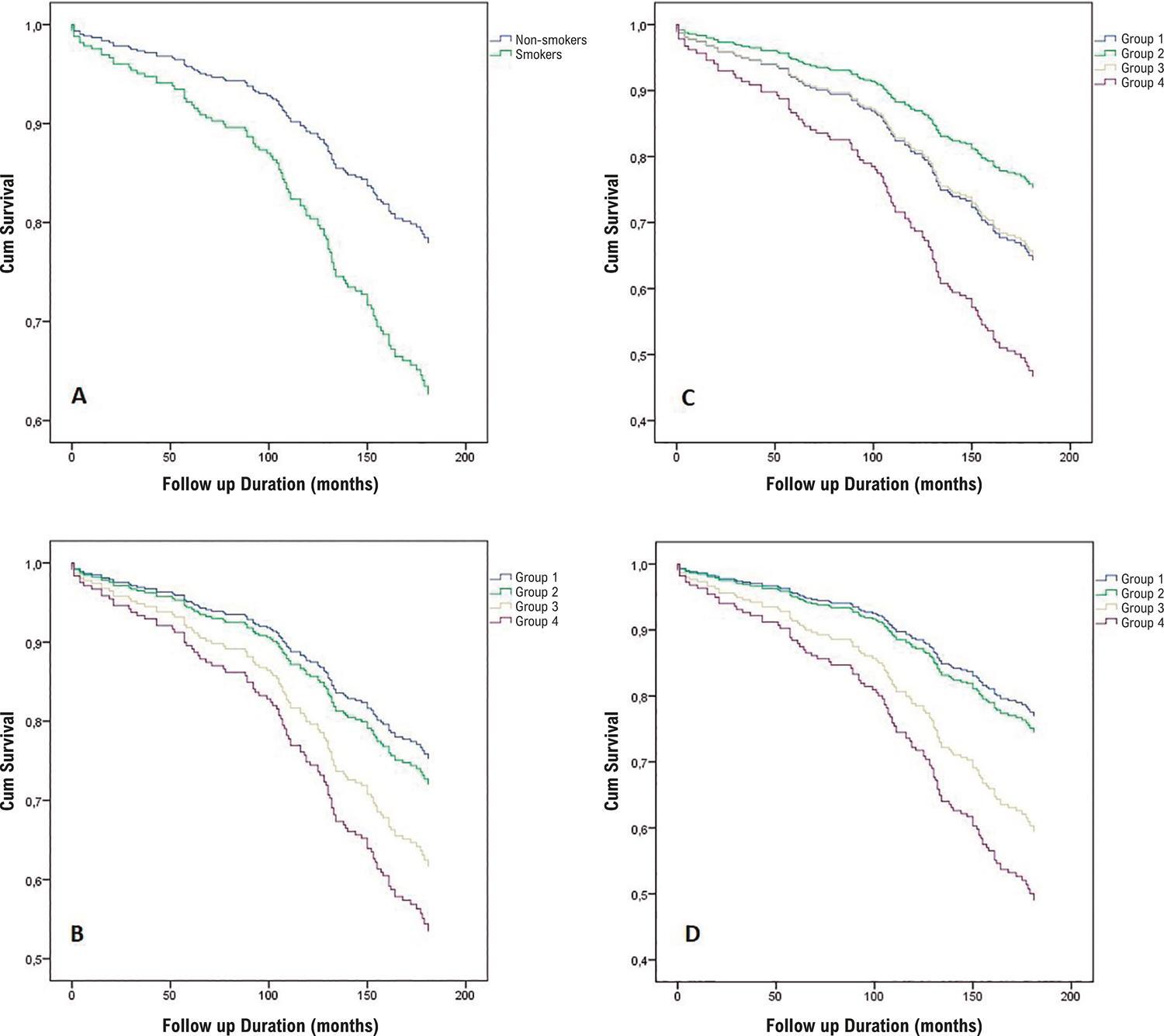
There were 313 patients (201 smokers, 112 non-smokers) who were followed-up for a median period of 174 months. Smokers were younger (54±9 vs. 62±11, p: <0.001), and the presence of cardiometabolic risk factors were more prevalent in non-smokers. A univariate analysis of the impact of the smoking habit on mortality revealed a better survival curve in Group 2 than in Group 1. However, after adjustment for confounders, it was observed that smokers had a significantly increased risk of death. The relative risk became higher with increased exposure (Group 2 vs. Group 1; HR: 1.141; 95% CI: 0.599 to 2.171, Group 3 vs Group 1; HR: 2.130; 95% CI: 1.236 to 3.670, Group 4 vs Group 1; HR: 2.602; 95% CI: 1.461 to 4.634).

Conclusion

Smoking gradually increases the risk of all-cause mortality after STEMI.
  • Mortality
  • Nicotine/adverse effects
  • Risk Factors
  • ST Elevation Myocardial Infarction/complications
  • Tobacco Use Disorder
Read Full Article
Creative Commons Attribution (CC BY) Creative Commons license
21/02/2022 DOI: 10.36660/abc.20201036 Views 1
Figure 1A
IJCS
Case Report

Sgarbossa Criteria in Left Bundle Branch Block in a Hypertensive Emergency, a Case Report

Yaser Mohammed Hassanain El Sayed

Abstract

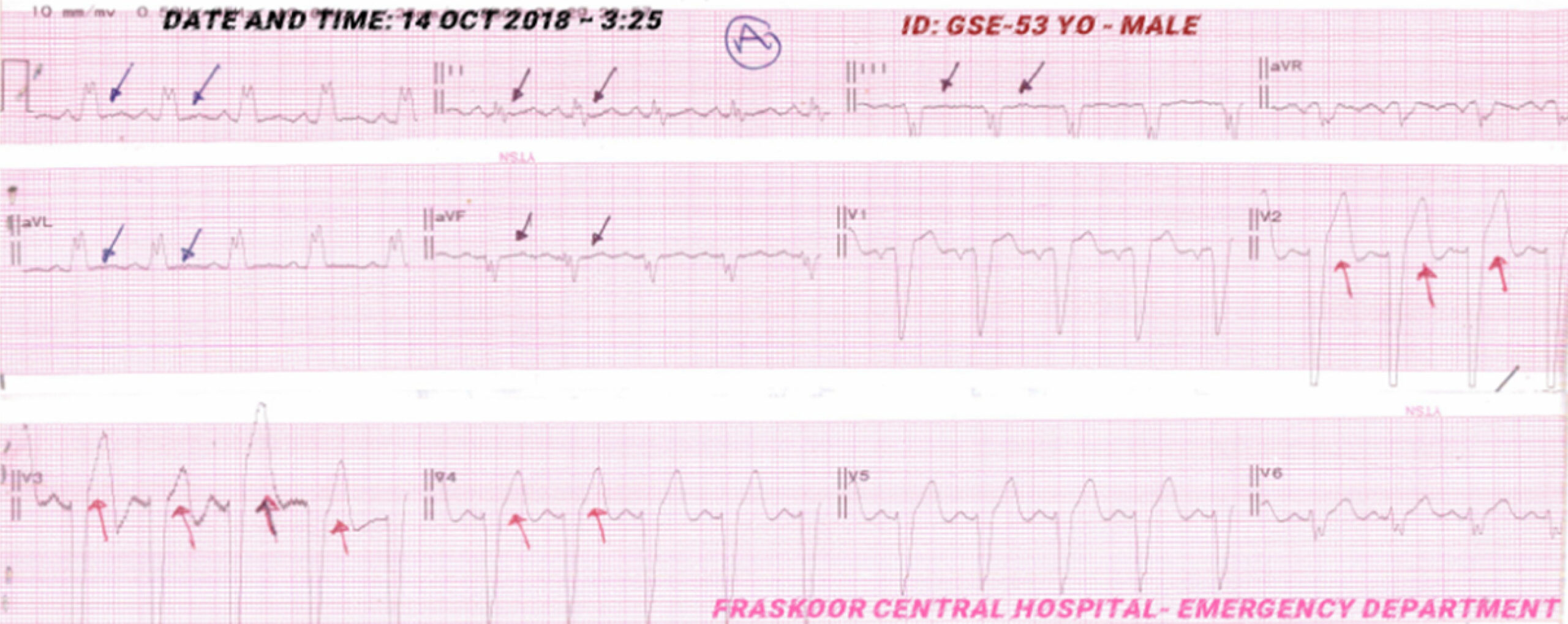
Left bundle branch block and hypertensive emergency are very common conditions in clinical cardiovascular and emergency practice. Hypertensive emergency encompasses a spectrum of clinical presentations in which uncontrolled blood pressure leads to progressive end-organ dysfunction. Suspected acute myocardial infarction in the setting of a left bundle branch block presents a unique diagnostic and therapeutic challenge to the clinician. The diagnosis is especially difficult due to electrocardiographic changes caused by altered ventricular depolarization. However, reports on the use of the Sgarbossa’s criteria during the management of hypertensive emergency are rare. My current case is a hypertensive emergency patient with acute chest pain and left bundle branch block. Sgarbossa’s criteria were initially very weak and, over time, became highly suggestive of acute ST-segment elevation myocardial infarction. Interestingly, chest pain increased as the Sgarbossa’s diagnostic criteria were met. Here, we present a case of developing ST-segment elevation myocardial infarction with left bundle branch block that is indicating for thrombolytic therapy. Thrombolytic therapy was strongly indicated because of a higher developing of Sgarbossa criteria scoring. Thus, the higher Sgarbossa criteria scoring in the case was the only indication for thrombolytic. Therefore, how did Sgarbossa criteria developing during the course of the case to indicating the need for thrombolytic therapy?

  • Bundle-Branch Block/complications
  • Coronary Occlusion/complications
  • Electrocardiography
  • Emergency Service Hospital
  • ST Elevation Myocardial Infarction/complications
Read Full Article
Creative Commons Attribution (CC BY) Creative Commons license
24/10/2019 DOI: 10.5935/2359-4802.20190071 Views 1
Figure 1
ABC
Original Article

New-Onset Atrial Fibrillation in St-Segment Elevation Myocardial Infarction: Predictors and Impact on Therapy And Mortality

Kisa Hyde Congo et al. Adriana Belo João Carvalho David Neves … Rui Guerreiro João António Pais Diogo Brás Mafalda Carrington Bruno Piçarra Ana Rita Santos José Aguiar

Abstract

Backgrund:

New-onset atrial fibrillation complicating acute myocardial infarction represents an important challenge, with prognostic significance.

Objective:

To study the incidence, impact on therapy and mortality, and to identify predictors of development of new-onset atrial fibrillation during hospital stay for ST-segment elevation myocardial infarction.

Methods:

We studied all patients with ST-elevation myocardial infarction included consecutively, between 2010 and 2017, in a Portuguese national registry and compared two groups: 1 – no atrial fibrillation and 2 – new-onset atrial fibrillation. We adjusted a logistic regression model data analysis to assess the impact of new-onset atrial fibrillation on in-hospital mortality and to identify independent predictors of its development. A p value < 0.05 was considered significant.

Results:

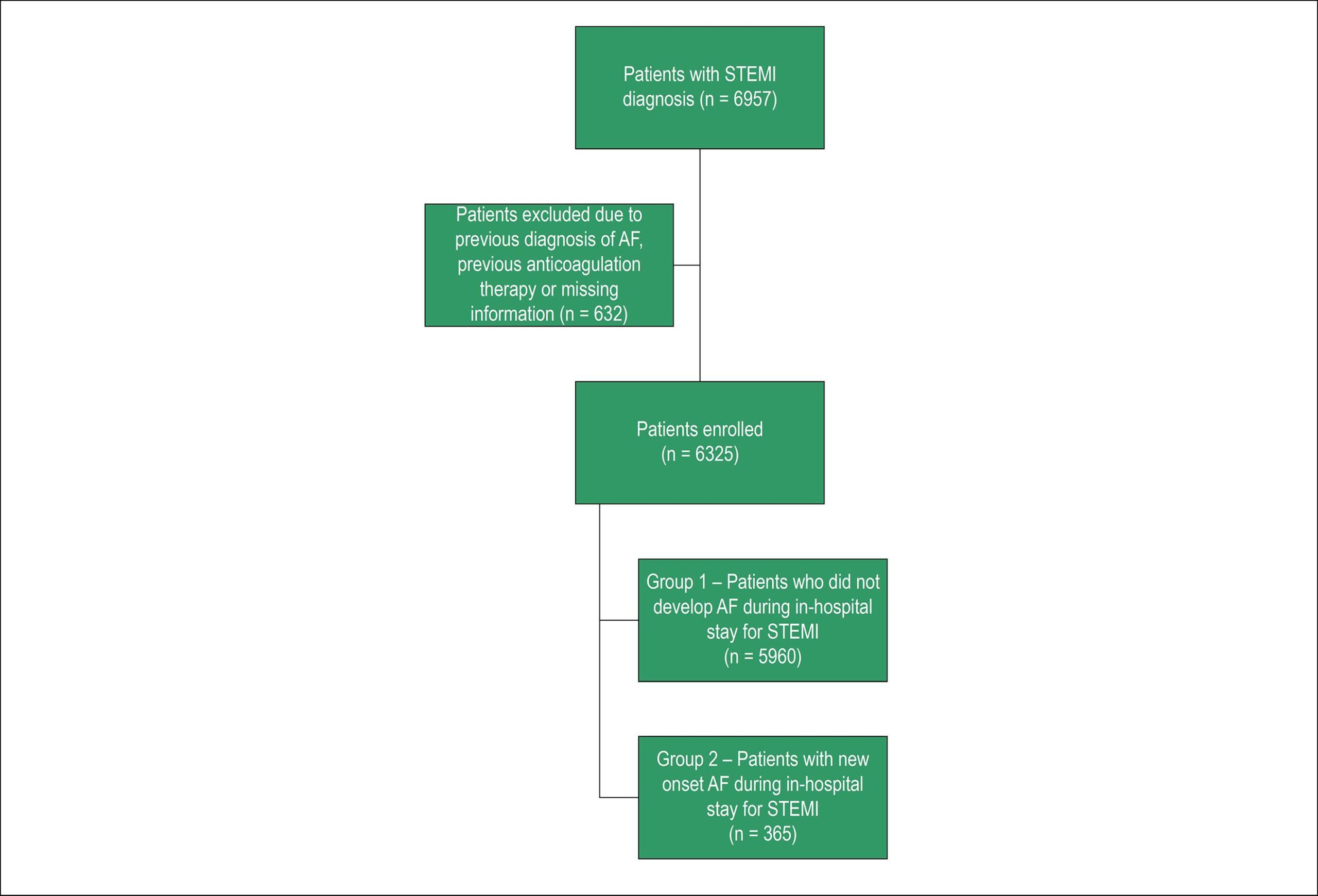
We studied 6325 patients, and new-onset atrial fibrillation was found in 365 (5.8%). Reperfusion was successfully accomplished in both groups with no difference regarding type of reperfusion. In group 2, therapy with beta-blockers and angiotensin-conversion enzyme (ACE) inhibitors/angiotensin receptor blockers (ARBs) was less frequent, 20.6% received anticoagulation at discharge and 16.1% were on triple therapy. New-onset atrial fibrillation was associated with more in-hospital complications and mortality. However, it was not found as an independent predictor of in-hospital mortality. We identified age, prior stroke, inferior myocardial infarction and complete atrioventricular block as independent predictors of new-onset atrial fibrillation.

Conclusion:

New-onset atrial fibrillation remains a frequent complication of myocardial infarction and is associated with higher rate of complications and in-hospital mortality. Age, prior stroke, inferior myocardial infarction and complete atrioventricular block were independent predictors of new onset atrial fibrillation. Only 36.7% of the patients received anticoagulation at discharge.

  • Anticoagulants
  • Antihypertensive
  • Atrial Fibrillation
  • Hospitalization
  • Mortality
  • ST Elevation Myocardial Infarction/complications
Read Full Article
Creative Commons Attribution (CC BY) Creative Commons license
23/09/2019 DOI: 10.5935/abc.20190190 Views 1
Figure 1
ABC
Original Article

Comparative Analysis between Transferred and Self-Referred STEMI Patients Undergoing Primary Angioplasty

Maurício Balk et al. Henrique Basso Gomes Alexandre Schaan de Quadros Marco Aurélio Lumertz Saffi Tiago Luiz Luz Leiria

Abstract

Background:

Studies have shown the benefits of rapid reperfusion therapy in acute myocardial infarction. However, there are still delays during transport of patients to primary angioplasty.

Objective:

To evaluate whether there is a difference in total ischemic time between patients transferred from other hospitals compared to self-referred patients in our institution.

Methods:

Historical cohort study including patients with acute myocardial infarction treated between April 2014 and September 2015. Patients were divided into transferred patients (group A) and self-referred patients (group B). Clinical characteristics of the patients were obtained from our electronic database and the transfer time was estimated based on the time the e-mail requesting patient’s transference was received by the emergency department.

Results:

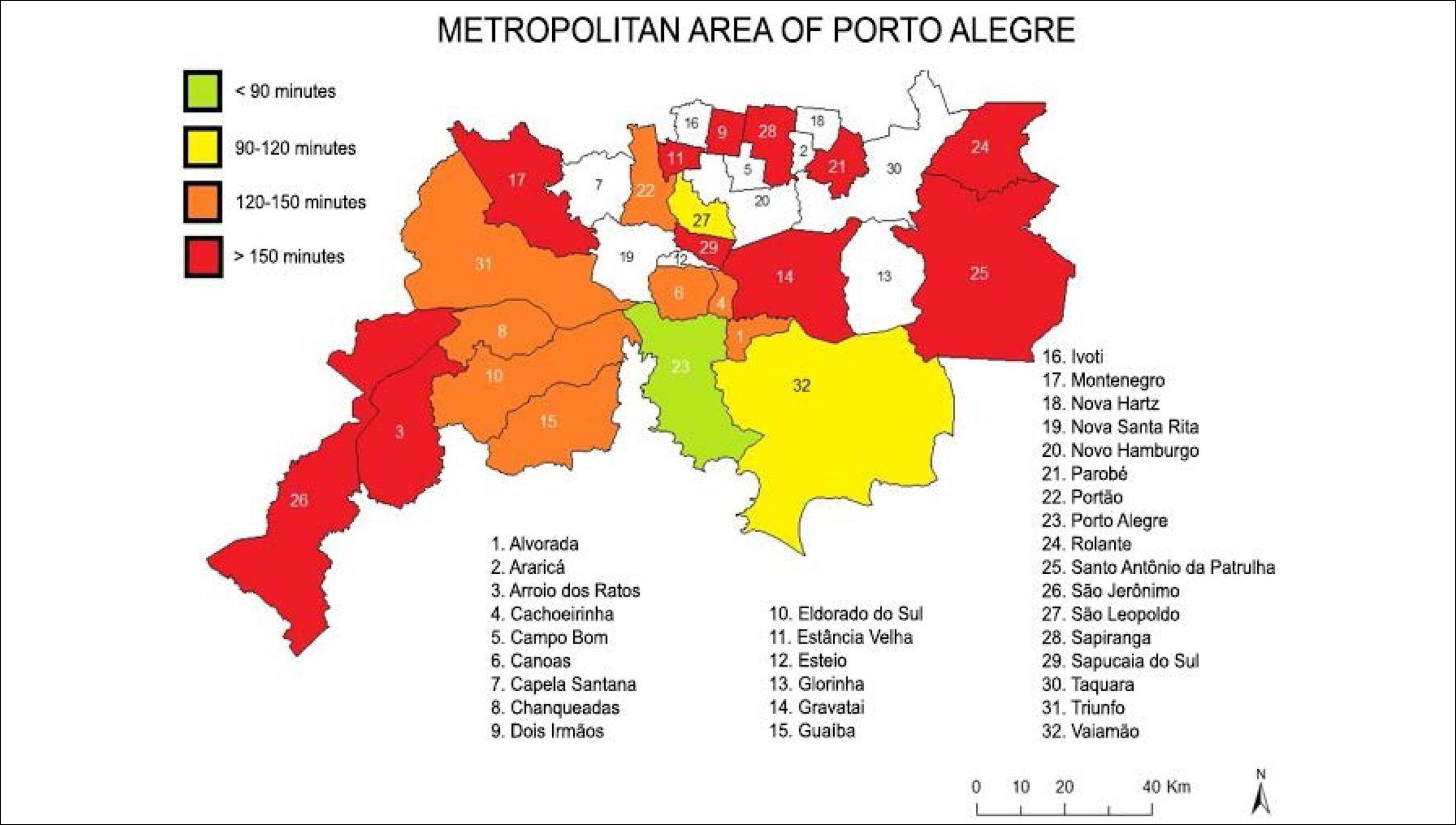
The sample included 621 patients, 215 in group A and 406 in group B. Population characteristics were similar in both groups. Time from symptom onset to arrival at the emergency department was significantly longer in group A (385 minutes vs. 307 minutes for group B, p < 0.001) with a transfer delay of 147 minutes. There was a significant relationship between the travel distance and increased transport time (R = 0.55, p < 0.001). However, no difference in mortality was found between the groups.

Conclusion:

In patients transferred from other cities for treatment of infarction, transfer time was longer than that recommended, especially in longer travel distances.

  • Angioplasty, Balloon, Coronary/methods
  • Fibrinolytic Agents
  • Intensive Care Units
  • Myocardial Reperfusion/methods
  • ST Elevation Myocardial Infarction/complications
Read Full Article
Creative Commons Attribution (CC BY) Creative Commons license
15/04/2019 DOI: 10.5935/abc.20190014 Views 1

How to cite this article

EndNote RIS

Electronic Document Format (Vancouver)

Kızıltunç E, Şahin YB, Topal S, Düzenli MA, Karakaya E, Aygül N, Topsakal R, et al. Effects of Smoking on Very-Long Term Mortality after First ST Elevation Myocardial Infarction. Arquivos Brasileiros de Cardiologia 2022;118(1):24-32.

Electronic Document Format (ABNT)

Kızıltunç, Emrullah; Şahin, Yusuf Bozkurt; Topal, Salih; Düzenli, Mehmet Akif; Karakaya, Ekrem; Aygül, Nazif; Topsakal, Ramazan; Özdemir, Kurtuluş; Abacı, Adnan. Effects of Smoking on Very-Long Term Mortality after First ST Elevation Myocardial Infarction. Arquivos Brasileiros de Cardiologia, v. 118, n. 1, p. 24-32, Feb. 2022.

Electronic Document Format (APA)

Kızıltunç, E., Şahin, Y. B., Topal, S., Düzenli, M. A., Karakaya, E., Aygül, N., Topsakal, R., Özdemir, K., & Abacı, A. (2022). Effects of Smoking on Very-Long Term Mortality after First ST Elevation Myocardial Infarction. Arquivos Brasileiros de Cardiologia, 118(1), 24-32.

Electronic Document Format (ISO)

Kızıltunç, Emrullah and Şahin, Yusuf Bozkurt and Topal, Salih and Düzenli, Mehmet Akif and Karakaya, Ekrem and Aygül, Nazif and Topsakal, Ramazan and Özdemir, Kurtuluş and Abacı, Adnan. Effects of Smoking on Very-Long Term Mortality after First ST Elevation Myocardial Infarction. Arquivos Brasileiros de Cardiologia [online]. 2022, vol. 118, n. 1, [cited 2026-10-14], pp. 24-32. Available from: <https://journals.cardiol.br/en/article/effects-of-smoking-on-very-long-term-mortality-after-first-st-elevation-myocardial-infarction/>. ISSN 0066-782X

EndNote RIS

Electronic Document Format (Vancouver)

Sayed YMHE. Sgarbossa Criteria in Left Bundle Branch Block in a Hypertensive Emergency, a Case Report. International Journal of Cardiovascular Sciences 2019;34(1):107-11.

Electronic Document Format (ABNT)

Sayed, Yaser Mohammed Hassanain El. Sgarbossa Criteria in Left Bundle Branch Block in a Hypertensive Emergency, a Case Report. International Journal of Cardiovascular Sciences, v. 34, n. 1, p. 107-111, Oct. 2019.

Electronic Document Format (APA)

Sayed, Y. M. H. E. (2019). Sgarbossa Criteria in Left Bundle Branch Block in a Hypertensive Emergency, a Case Report. International Journal of Cardiovascular Sciences, 34(1), 107-111.

Electronic Document Format (ISO)

Sayed, Yaser Mohammed Hassanain El. Sgarbossa Criteria in Left Bundle Branch Block in a Hypertensive Emergency, a Case Report. International Journal of Cardiovascular Sciences [online]. 2019, vol. 34, n. 1, [cited 2026-10-14], pp. 107-111. Available from: <https://journals.cardiol.br/en/article/sgarbossa-criteria-in-left-bundle-branch-block-in-a-hypertensive-emergency-a-case-report/>. ISSN 2359-4802

EndNote RIS

Electronic Document Format (Vancouver)

Congo KH, Belo A, Carvalho J, Neves D, Guerreiro R, Pais JA, Brás D, et al. New-Onset Atrial Fibrillation in St-Segment Elevation Myocardial Infarction: Predictors and Impact on Therapy And Mortality. Arquivos Brasileiros de Cardiologia 2019;113(5):948-57.

Electronic Document Format (ABNT)

Congo, Kisa Hyde; Belo, Adriana; Carvalho, João; Neves, David; Guerreiro, Rui; Pais, João António; Brás, Diogo; Carrington, Mafalda; Piçarra, Bruno; Santos, Ana Rita; Aguiar, José. New-Onset Atrial Fibrillation in St-Segment Elevation Myocardial Infarction: Predictors and Impact on Therapy And Mortality. Arquivos Brasileiros de Cardiologia, v. 113, n. 5, p. 948-957, Sep. 2019.

Electronic Document Format (APA)

Congo, K. H., Belo, A., Carvalho, J., Neves, D., Guerreiro, R., Pais, J. A., Brás, D., Carrington, M., Piçarra, B., Santos, A. R., & Aguiar, J. (2019). New-Onset Atrial Fibrillation in St-Segment Elevation Myocardial Infarction: Predictors and Impact on Therapy And Mortality. Arquivos Brasileiros de Cardiologia, 113(5), 948-957.

Electronic Document Format (ISO)

Congo, Kisa Hyde and Belo, Adriana and Carvalho, João and Neves, David and Guerreiro, Rui and Pais, João António and Brás, Diogo and Carrington, Mafalda and Piçarra, Bruno and Santos, Ana Rita and Aguiar, José. New-Onset Atrial Fibrillation in St-Segment Elevation Myocardial Infarction: Predictors and Impact on Therapy And Mortality. Arquivos Brasileiros de Cardiologia [online]. 2019, vol. 113, n. 5, [cited 2026-10-14], pp. 948-957. Available from: <https://journals.cardiol.br/en/article/new-onset-atrial-fibrillation-in-st-segment-elevation-myocardial-infarction-predictors-and-impact-on-therapy-and-mortality/>. ISSN 0066-782X

EndNote RIS

Electronic Document Format (Vancouver)

Balk M, Gomes HB, Quadros AS, Saffi MAL, Leiria TLL. Comparative Analysis between Transferred and Self-Referred STEMI Patients Undergoing Primary Angioplasty. Arquivos Brasileiros de Cardiologia 2019;112(4):402-7.

Electronic Document Format (ABNT)

Balk, Maurício; Gomes, Henrique Basso; Quadros, Alexandre Schaan de; Saffi, Marco Aurélio Lumertz; Leiria, Tiago Luiz Luz. Comparative Analysis between Transferred and Self-Referred STEMI Patients Undergoing Primary Angioplasty. Arquivos Brasileiros de Cardiologia, v. 112, n. 4, p. 402-407, Apr. 2019.

Electronic Document Format (APA)

Balk, M., Gomes, H. B., Quadros, A. S. , Saffi, M. A. L., & Leiria, T. L. L. (2019). Comparative Analysis between Transferred and Self-Referred STEMI Patients Undergoing Primary Angioplasty. Arquivos Brasileiros de Cardiologia, 112(4), 402-407.

Electronic Document Format (ISO)

Balk, Maurício and Gomes, Henrique Basso and Quadros, Alexandre Schaan de and Saffi, Marco Aurélio Lumertz and Leiria, Tiago Luiz Luz. Comparative Analysis between Transferred and Self-Referred STEMI Patients Undergoing Primary Angioplasty. Arquivos Brasileiros de Cardiologia [online]. 2019, vol. 112, n. 4, [cited 2026-10-14], pp. 402-407. Available from: <https://journals.cardiol.br/en/article/comparative-analysis-between-transferred-and-self-referred-stemi-patients-undergoing-primary-angioplasty/>. ISSN 0066-782X

  • About ABC Family
  • Internal Regulation
  • Editorial Board
  • Brazilian Society of Cardiology (SBC)

Issues

SBC Guidelines

  • Videos
  • Podcasts
  • News