ABC Family Arquivos Brasileiros de Cardiologia International Journal of Cardiovascular Sciences ABC Heart Failure & Cardiomyopathy ABC Imagem Cardiovascular
Português English
ABC Family
Português English
  • About
    • About ABC Family
    • Internal Regulation
    • Editorial Board
    • Brazilian Society of Cardiology (SBC)
  • Issues
  • SBC Guidelines
  • Content
    • Videos
    • Podcasts
    • News
  • About
    • About ABC Family
    • Internal Regulation
    • Editorial Board
    • Brazilian Society of Cardiology (SBC)
  • Issues
  • SBC Guidelines
  • Content
    • Videos
    • Podcasts
    • News

ABC Family

  • ABC Family
  • Arquivos Brasileiros de Cardiologia
  • International Journal of Cardiovascular Sciences
  • ABC Heart Failure & Cardiomyopathy
  • ABC Imagem Cardiovascular
Search in

No content found.

Journals
Ordering
Article types
Others

  1. Home
  2. Keyword: restenosis
Are drug-eluting stents safe and effective in the long term?
ABC
Review Article

Are drug-eluting stents safe and effective in the long term?

Sanjay Sastry et al. Marie-Claude Morice

The introduction of drug-eluting stents in 2002 revolutionized interventional cardiology by minimizing restenosis. Reports of increased late stent thrombosis with these stents compared with bare metal stents, probably due to delayed endothelialization, emerged late in 2006. These studies contained serious methodological flaws, however. Subsequent meta-analyses clearly showed only a small incremental risk of late stent thrombosis across all patient groups. Importantly, a significant and sustained benefit of drug-eluting stents due to reduced restenosis and thus repeat revascularization was also shown. Several ‘real-world’ registries have confirmed these results and suggested that the use of these stents in more complex situations is not associated with adverse outcomes. Stent thrombosis is a multifactorial problem, in which the stent is only one element. Further research is required to determine optimal procedural technique and antiplatelet regimens. Drug-eluting stents are safe and effective in the long-term, though intensive research continues into ways to reduce the risk of stent thrombosis in the next generation.

  • Drug-Eluting Stents
  • percutaneous intervention thrombosis
  • restenosis
  • Thrombosis
Read Full Article
Creative Commons Attribution (CC BY) Creative Commons license
13/04/2011 DOI: 10.1590/S0066-782X2010001500016
Late restenosis related to Cypher stent fracture
ABC
Case Report

Late restenosis related to Cypher stent fracture

Michel Pereira Cadore et al. Henrique Pereira Abelin Romualdo Bolzani dos Santos Paulo Ricardo Avancini Caramori

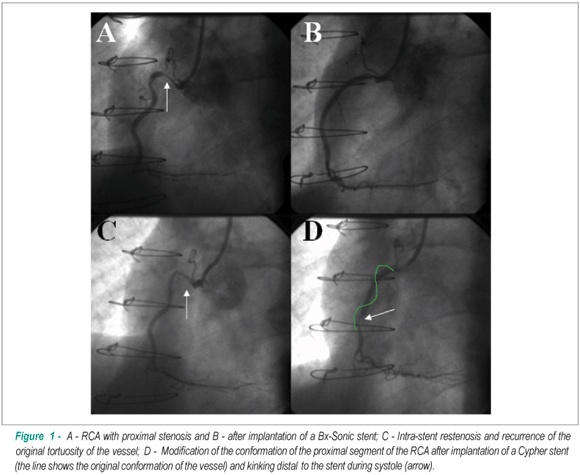
Drug-eluting stents represent a significant evolution in the therapy of coronary artery disease. Recently, restenosis and thrombosis related to drug-eluting stent fractures have been described. This work reports a case of fracture of a drug-eluting stent 18 months after implantation, associated with restenosis.

  • Drug-Eluting Stents
  • restenosis
  • Sirolimus-eluting stents
  • Stent fracture
Read Full Article
Creative Commons Attribution (CC BY) Creative Commons license
06/01/2010 DOI: 10.1590/S0066-782X2009001100021 Views 1
The effect of L-arginine on neointimal proliferation and artery remodeling on an iliac artery lesion caused by a balloon catheter in hypercholesterolemic rabbits
ABC
Artigo Original

The effect of L-arginine on neointimal proliferation and artery remodeling on an iliac artery lesion caused by a balloon catheter in hypercholesterolemic rabbits

José Knopfholz et al. Dalton B. Précoma Paulo Roberto S. Brofman Gabriela Elisete Bier … Ruy Fernando Kuenzer C. da Silva Anna Paula Kuchnir Silva Ana Carolina Lemos Priscila de Oliveira Silva Jacqueline Dompsin de Moraes

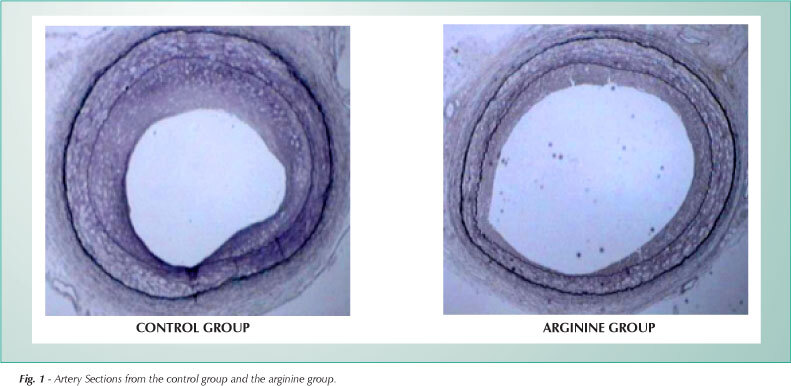
OBJECTIVE: It has been implied that neointimal proliferation and remodeling are the major causes of restenosis. The objective of this study is to assess the effect of orally administered L-arginine on these two factors in hypercholesterolemic rabbits that had suffered an injury to their iliac arteries caused by a catheter balloon. METHODS: The study included nineteen rabbits that were divided in two groups: control (CG) and arginine (AG). There were 19 arteries studied from the control group and 17 in the arginine group. The animals were placed on a 2% hypercholesterolemic diet for 15 days and then submitted to a balloon angioplasty in order to produce a lesion in their iliac arteries. Next, the AG animals were given a 1g/kg/day oral dose of a L-arginine solution. The animals were sacrificed 15 days after the angioplasty procedure and histological artery sections were prepared, stained and fixed. The ratio between the neointimal area (in mm²) and the media layer (in mm²) was used to represent lesion development. In order to determine remodeling, the ratio between the total area of the medial portion of the vessel (greater balloon contact) and the total area of the reference segment of the vessel (less balloon contact) was used. RESULTS: Mean neointimal thickness (NI/M) was 0.8151±0.2201 in CG and 0.3296±0.1133 in AG. Remodeling patterns for the two groups studied were similar. CONCLUSION: In the experimental model used, L-arginine was able to reduce intimal tissue thickness in hypercholesterolemic rabbits but did not act on artery remodeling.

  • neointimal proliferation
  • Nitric Oxide
  • remodeling
  • restenosis
Read Full Article
Creative Commons Attribution (CC BY) Creative Commons license
21/11/2006 DOI: 10.1590/S0066-782X2006001700018
Expert consensus (SBC/SBHCI) on the use of drug-eluting stents: recommendations of the Brazilian society of interventional cardiology/ Brazilian society of cardiology for the Brazilian public single healthcare system
ABC
Consenso

Expert consensus (SBC/SBHCI) on the use of drug-eluting stents: recommendations of the Brazilian society of interventional cardiology/ Brazilian society of cardiology for the Brazilian public single healthcare system

Valter C. Lima et al. Luiz Alberto P. Mattos Paulo R. A. Caramori Marco A. Perin … José A. Mangione Bruno M. Machado Wilson M. C. Coelho Ronaldo R. L. Bueno

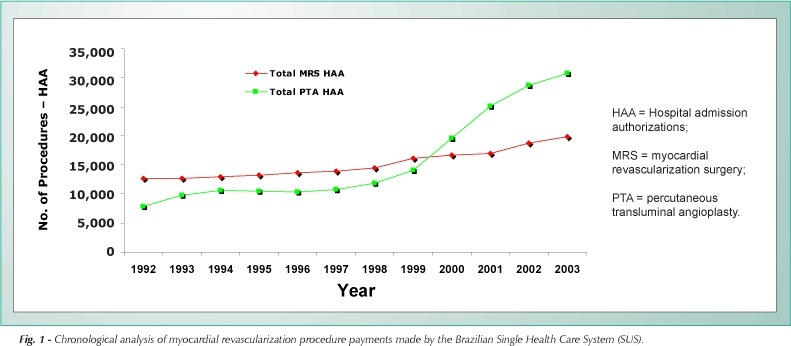
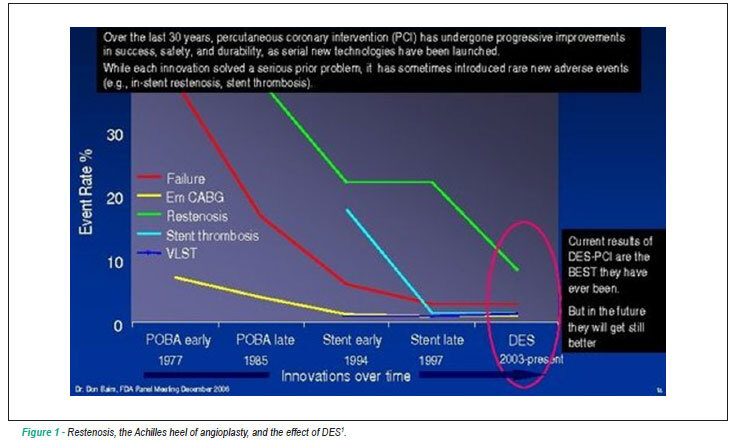
The authors review percutaneous coronary intervention (PCI) evolution and its growing application in myocardial revascularization for patients with coronary heart disease in Brazil and worldwide. PCI was introduced in 1977 using only the catheter balloon. Limitations of this method (acute occlusion and coronary restenosis) led to the adoption of coronary stents and more recently the advent of drug-eluting stents², which were developed to drastically reduce restenosis rates. These developments allowed the exponential growth of percutaneous coronary intervention (PCI) procedures in Brazil which have replaced many bypass surgery procedures and have become the gold standard for the majority of symptomatic patients suffering from coronary artery disease. The preference for this procedure gained new dimensions in 2000 when the Brazilian Public Healthcare System (SUS) began reimbursing for stent procedures. This measure exemplified the importance of the Public Healthcare System’s participation in incorporating medical advances and offering a high standard of cardiovascular treatment to a large portion of the Brazilian population. It is emphasized that prevention of in-stent restenosis is complex due to its unpredictable and ubiquitous occurrence. Control of this condition improves quality of life and reduces the recurrence of angina pectoris, the need to perform new revascularization procedures and hospital readmissions. The overall success of the drug-eluting stents has proven to be reliable and consistent in overcoming restenosis and has some beneficial impact for all clinical and angiographic conditions. This paper discusses the adoption and criteria for the use of drug-eluting stents in other countries as well as the recommendations established by the Brazilian Society of Interventional Cardiology for their reimbursement by SUS. The incorporation of new healthcare technology involves two distinct stages. During the first stage, the product is registered with the National Health Surveillance Agency (ANVISA). During this stage the interested company submits to the regulatory agency, results from clinical studies that demonstrate the efficacy and safety of the new device or pharmaceutical product. Frequently, in addition to clinical studies, approval records for clinical use from the regulatory agencies of other countries, mainly the United States of America and the European Community are also submitted. The successful completion of this stage means that the medication or device may be prescribed or used by the physicians in Brazil. The second stage in the incorporation of new healthcare technology involves the reimbursement or financing of the treatment that was approved in the previous stage based on its efficacy and safety. This stage can be more complex than the first one since the new technology, whether a substitution for established treatment methods or the introduction of a new treatment concept, are usually more expensive. The incorporation of new technology requires a cost-effectiveness analysis so that fund administrators can make decisions based on the universal scenario of limited resources to finance healthcare with treatments that are more and more burdensome. The difficulties of funding management are aggravated by medical and social ethical implications that arise when a treatment is approved based on its efficacy and safety but is not made available to patients who could benefit greatly from it. In Brazil, assessment methods for the incorporation of new technology based on reimbursement or financing have not been fully developed for either the private healthcare plans or the Brazilian Public Healthcare System (SUS). The implementation of new technology in both healthcare systems is a slow process and frequently the implementation is a result of the requirements of patients or the organizations that represent them and at times is the result of legal proceedings or political pressure imposed by physicians and their respective scientific societies. Our objective is to review the evolution of percutaneous coronary intervention (PCI) in Brazil and its current status in view of the advent of drug-eluting stents, the growing participation of drug-eluting stents in myocardial revascularization to treat patients with coronary heart disease, as well as, to compare the regulatory standards from Brazil and other countries regarding the incorporation and recommendations for the use of this new technology.

  • Angioplasty
  • coronary artery bypass surgery
  • restenosis
  • Stents
Read Full Article
Creative Commons Attribution (CC BY) Creative Commons license
21/11/2006 DOI: 10.1590/S0066-782X2006001700037 Views 1
Comparative analysis of intimal hyperplasia after sirolimus-eluting stent and thin-strut bare-metal stent implantation in small coronary arteries
ABC
Artigo Original

Comparative analysis of intimal hyperplasia after sirolimus-eluting stent and thin-strut bare-metal stent implantation in small coronary arteries

Fernando Stuchi Devito et al. Amanda G. M. R. Sousa Fausto Feres Alexandre Antonio Cunha Abizaid … Rodolfo Staico Luis Alberto Piva Mattos Luis Fernando Leite Tanajura Andréa C. L. S. Abizaid Áurea Jacob Chaves J. Eduardo M. R. Sousa

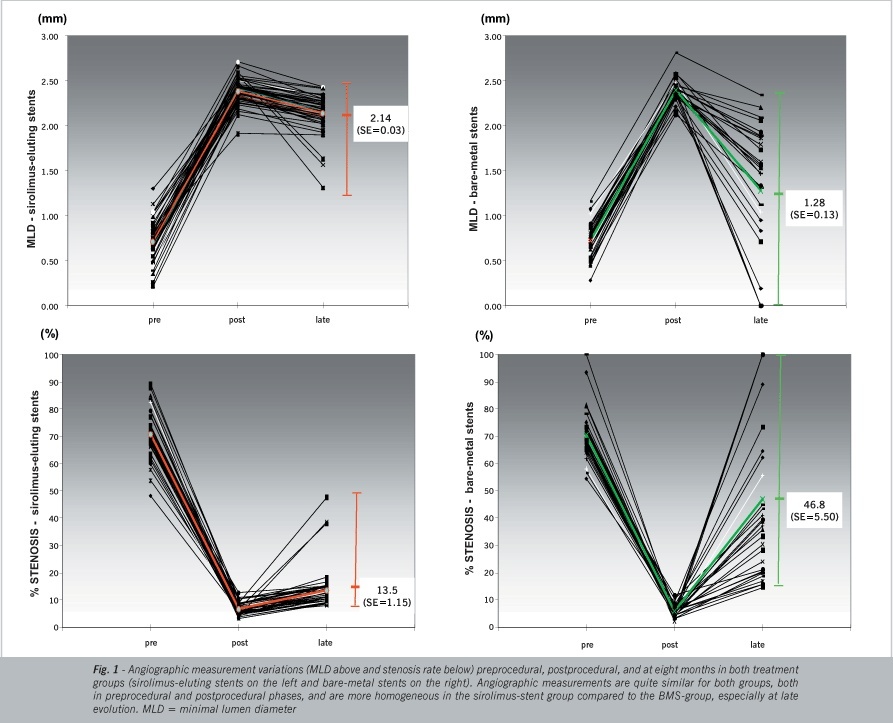
OBJECTIVE: This study aimed at evaluating reduction in intimal hyperplasia volume following angioplasty using sirolimus-eluting stents (Cypher™) compared with thin-strut bare-metal stents (Pixel™) in patients with small vessels. METHODS: Eighty patients with coronary artery disease were prospectively included in two consecutive series, the first using sirolimus-eluting stents (50) and the second using bare-metal stents (30). RESULTS: The use of sirolimus-eluting stents reduced: in-stent net volume obstruction [5.0% (SE = 0.77) x 39.0% (SE = 4.72), p < 0.001], in-stent late loss [0.25 mm (SE = 0.03) x 1,11 mm (SE = 0.13), p < 0,001], in-segment late loss [0.30 mm (SE = 0.04) x 0.83 mm (SE = 0.11), p < 0.001], in-stent restenosis (0% x 33.3%, p < 0.001) and in-segment restenosis (4% x 36.7%, p < 0.001). The event-free survival rate was 96% in the sirolimus-eluting stent group versus 86.7% in the bare-metal stent group (BMS) (p = 0.190). CONCLUSION: Sirolimus-eluting stents are superior to thin-strut bare-metal stents in reducing intimal hyperplasia (less in-stent obstruction and less late lumen loss) in patients with small vessels. The use of these stents significantly reduced angiographic restenosis at eight months.

  • restenosis
  • small vessels
  • stent
Read Full Article
Creative Commons Attribution (CC BY) Creative Commons license
25/04/2006 DOI: 10.1590/S0066-782X2006000400006
ABC
Artigo Original

Batimastat-eluting stent implantation for the treatment of coronary artery disease: results of the Brazilian pilot study

Cristiana Marques de Araujo et al. Gustavo Adolfo B. Rando Maria Fernanda Z. Mauro Salvador A. B. Cristóvão … Isaac S. Moscoso Sanchez Adnan Ali Salman João B. de Oliveira Neto José Armando Mangione

OBJECTIVE: The excellent results obtained with sirolimus (rapamicin)-eluting stents for preventing restenosis have motivated the evaluation of other substances with that property. Batimastat is a highly effective metalloproteinase enzyme blocker, with the potential to reduce the degradation of extracellular matrix and to inhibit the migration of smooth muscle cells, with the consequent capacity to control coronary restenosis. METHODS: From October 2001 to April 2002, 34 patients were prospectively selected with de novo lesions in a native coronary artery >50% and < 100%, which could be treated with stents of 3 to 4 mm in diameter and 18 mm in length. The primary outcome of the study was to assess the occurrence of major cardiovascular events (death of cardiac origin, acute myocardial infarction, and the need for revascularizing the target vessel) by the 30th day and fourth month; the secondary outcome of the study was to assess the rate of coronary restenosis 4 months after implantation and subacute thrombosis by the 30th day. RESULTS: The success rate of the procedure was 97.1%. The primary outcome occurred in 2.9% and 27.2% of the patients by the 30th day and fourth month, respectively. The binary restenosis rate on angiography was 39.3%. No episode of subacute thrombosis occurred. The comparative analysis between groups with and without restenosis showed no significant difference between both, except for late luminal loss, which was greater in G-I. CONCLUSION: Batimastat-eluting stents had a good safety profile; however, they were not effective in controlling coronary restenosis.

  • coronary angioplasty
  • coronary stent
  • restenosis
Read Full Article
Creative Commons Attribution (CC BY) Creative Commons license
19/08/2005 DOI: 10.1590/S0066-782X2005000300012 Views 1
ABC
Artigo Original

Randomized intravascular ultrasound comparison between endoprostheses with and without amorphous silicon-carbide

Luiz Fernando Leite Tanajura et al. J. Eduardo M. R. Sousa Amanda G. M. R. Sousa Alexandre Abizaid … João Eduardo T. Paula Mariano Albertal Fausto Feres Luiz Alberto P. Mattos Rodolfo Staico Ibraim M.F. Pinto

OBJECTIVE: In-stent restenosis remains a major limitation following coronary stent implantation. Amorphous silicon-carbide (a-SiC) coating has been shown to improve stent biocompatibility, therefore, reducing local inflammation and thrombus generation. Due to the latter, a-SiC coating might have an impact on the prevention of neointimal hyperplasia (NIH) and restenosis. METHODS: This prospective, randomized, open-label trial compared a-SiC-coated (group A) versus uncoated (group B) stent implantation in de novo lesions. We included 100 patients (50 patients in each group) and the primary end-point was in-stent volume of NIH measured by intravascular ultrasound. RESULTS: All patients underwent successful stent deployment. Although absolute NIH volume was greater in A (51.2 mm³ SD 18.8 mm³ versus 41.9 mm³ SD 16.4 mm³; P = 0.014), relative (divided per mm of stent length) NIH volume was similar (2.9 mm³/mm stent SD 1.0 mm³/mm stent versus 2.5 mm³/mm stent SD 0.9 mm³/mm stent; P = 0.108). Late loss, restenosis, and major adverse cardiac events (MACE) were similar. CONCLUSION: A-SiC-coated stents did not reduce either NIH or MACE at long-term follow-up.

  • Coronary Artery Disease
  • Percutaneous Coronary Intervention
  • restenosis
Read Full Article
Creative Commons Attribution (CC BY) Creative Commons license
13/12/2004 DOI: 10.1590/S0066-782X2004001900011
Influence of balloon pressure inflation in patients undergoing primary coronary stent implantation during acute myocardial infarction: a quantitative coronary angiography analysis
ABC
Original Article

Influence of balloon pressure inflation in patients undergoing primary coronary stent implantation during acute myocardial infarction: a quantitative coronary angiography analysis

Luiz Alberto Mattos et al. Amanda G.M.R. Sousa Áurea Chaves Fausto Feres … Ibraim Pinto Luiz Tanajura Marinella Centemero Alexandre Abizaid Ana C. Seixas Andréa Abizaid Galo Maldonado Rodolfo Staico J. Eduardo M.R. Sousa

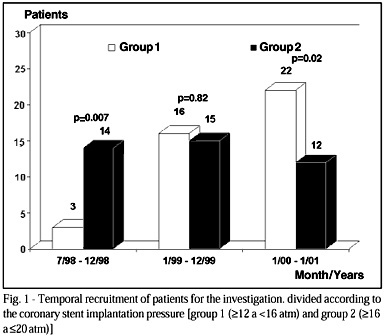
OBJECTIVE:To verify the influence of moderate- or high-pressure balloon inflation during primary coronary stent implantation for acute myocardial infarction. METHODS: After successful coronary stent implantation, 82 patients were divided into 2 groups according to the last balloon inflation pressure: group 1 (³12 to <16 atm) and group 2 (³16 to 20 atm), each with 41 cases. All patients underwent late coronary angiography. RESULTS: In group 1, the mean stent deployment pressure was 13.58±0.92 atm, and in the group 2 it was 18.15±1.66 atm. Stents implanted with moderate pressures (³12 to <16 atm) had a significantly smaller postprocedural minimal lumen diameter, compared to with those with higher pressure, with lesser acute gain (2.7± 0.4 mm vs 2.9±04 mm; p=0.004), but the late lumen loss (0,9±0,8 mm vs 0,9±0,6 mm) and the restenosis (22% vs. 17.1%) and target-vessel revascularization rates (9.8% vs 7.3%) were similar between the groups. CONCLUSION: During AMI stenting, the use of high pressures (³16 atm) did not cause a measurable improvement in late outcome, either in the late loss, its index, and the net gain, or in clinical and angiographic restenosis rates.

  • Acute Myocardial Infarction
  • restenosis
  • Stents
Read Full Article
Creative Commons Attribution (CC BY) Creative Commons license
28/03/2003 DOI: 10.1590/S0066-782X2003000300002 Views 1
Percutaneous mitral valvotomy in patients eighteen years old and younger. Immediate and late results
ABC
Original Article

Percutaneous mitral valvotomy in patients eighteen years old and younger. Immediate and late results

Cláudia Mattos et al. Sérgio Luiz Navarro Braga César Augusto Esteves José Matos Brito Castello Branco … Nisia Lira Gomes Mercedes Maldonado Valmir Fernandes Fontes

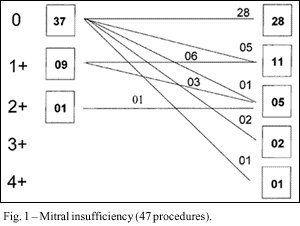
OBJECTIVE – To analyze immediate and late results of percutaneous mitral valvotomy (PMV) in patients <= 18 year. METHODS – Between August '87 and July '97, 48 procedures were performed on 40 patients. The mean age was 15.6 years; 68.7% were females four of whom were pregnant. RESULTS – Success was obtained in 91.7% of the procedures. Immediate complications were severe mitral regurgitation (6.3%) and cardiac tamponade (2.0%). Late follow-up was obtained in 88.8% of the patients (mean value=43.2±33.9 months). NYHA functional class (FC) I or II was observed in 96.2% of the patients and restenosis developed in five patients, at a mean follow-up of 29.7±11.9 months. Three patients presented with severe mitral insufficiency and underwent surgery. Two patients died. CONCLUSION – PMV represents a valid therapeutic option in young patients. In these patients, maybe because of subclinical rheumatic activity, restenosis may have a higher incidence and occur at an earlier stage than in others persons.

  • mitral valvotomy
  • restenosis
  • teenagers
Read Full Article
Creative Commons Attribution (CC BY) Creative Commons license
08/01/2002 DOI: 10.1590/S0066-782X1999001000005 Views 2
ABC
Original Article

A comparative analysis of primary stenting and optimal balloon coronary angioplasty in acute myocardial infarction. Six month results from the STENT PAMI trial

Luiz Alberto Mattos et al. Cindy L. Grines David Cox J. Eduardo Sousa … Costantino Costantini Gregg Stone Marie C. Morice William O'Neill Eulógio Garcia Judith Boura

OBJECTIVE: To compare the outcome of balloon PTCA with final coronary stenosis diameter (SD) <=30%, with elective coronary stenting. METHODS: We performed a comparative analysis of the 6 month outcomes in patients treated with primary stenting and those who obtained an optimal balloon PTCA result treated during the first 12 hours of AMI onset included in the STENT PAMI randomized trial. RESULTS: The results were analysed into 3 groups: primary stenting (441 patients, SD=22±6%), optimal PTCA (245 patients), and nonoptimal PTCA (182 patients, SD= 37±5%). At the end of the 6 months primary stent group presented with the lowest restenosis(23 vs. 31 vs. 45%, p=0.001, respectively). Ischemia-driven target vessel revascularization rate (TVR) (7 vs. 15.5 vs. 19%, p=0.001, respectively). CONCLUSION: At the 6 month follow-up, primary stenting offered the lowest restenosis and ischemia-driven TVR rates. Compared to optimal balloon PTCA. Nonoptimal primary balloon PTCA pts (SD=31-50%), had the worst late angiographic outcomes and should be treated more actively with coronary stent implantation.

  • Angioplasty
  • restenosis
  • stent
Read Full Article
Creative Commons Attribution (CC BY) Creative Commons license
08/01/2002 DOI: 10.1590/S0066-782X2000001200004 Views 1
ABC
Original Article

Safety and efficacy of coronary stent implantation. Acute and six month outcomes of 1,126 consecutive patients treated in 1996 and 1997

Luiz Alberto Mattos et al. Ibraim Pinto Alexandre Abizaid Andrea Abizaid … Aurea Chaves Fausto Feres Galo Maldonado Luiz Tanajura Marinella Centemero Amanda G. M. R. Sousa J. Eduardo Sousa

PURPOSE: The authors analyzed the 30-day and 6-month outcomes of 1,126 consecutive patients who underwent coronary stent implantation in 1996 and 1997. METHODS: The 30-day results and 6-month angiographic follow-up were analyzed in patients treated with coronary stents in 1996 and 1997. All patients underwent coronary stenting with high-pressure implantation (>12 atm) and antiplatelet drug regimen (aspirin plus ticlopidine). RESULTS: During the study period, 1,390 coronary stents were implanted in 1,200 vessels of 1,126 patients; 477 patients were treated in the year 1996 and 649 in 1997. The number of percutaneous procedures performed using stents increased significantly in 1997 compared to 1996 (64 % vs 48%, p=0.0001). The 30-day results were similar in both years; the success and stent thrombosis rates were equal (97% and 0.8%, respectively). The occurrence of new Q wave MI (1.3% vs 1.1%, 1996 vs 1997, p=NS), emergency coronary bypass surgery (1% vs 0.6%, 1996 vs 1997, p=NS) and 30-day death rates (0.2% vs 0.5%, 1996 vs 1997, p=NS) were similar. The 6-month restenosis rate was 25% in 1996 and 27% in 1997 (p= NS); the target vessel revascularization rate was 15% in 1996 and 16% in 1997 (p = NS). CONCLUSIONS: Intracoronary stenting showed a high success rate and a low incidence of 30-day occurrence of new major coronary events in both periods, despite the greater angiographic complexity of the patients treated with in 1997. These adverse variables did not have a negative influence at the 6-month clinical and angiographic follow-up, with similar rates of restenosis and ischemia-driven target lesion revascularization rates.

  • Angioplasty
  • restenosis
  • Stents
Read Full Article
Creative Commons Attribution (CC BY) Creative Commons license
24/10/2000 DOI: 10.1590/S0066-782X1999000700003
In-stent restenosis. Acute and long-term outcomes after excimer laser coronary angioplasty
ABC
Original Article

In-stent restenosis. Acute and long-term outcomes after excimer laser coronary angioplasty

Jorge Bejarano et al. Edgardo Bermudez Pedro Diaz Francesca Gallarello James R. Margolis

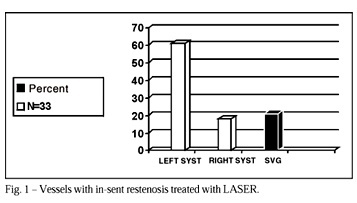
OBJETIVE: With the increased use of intracoronary stents, in-stent restenosis has become a clinically significant drawback in invasive cardiology. We retrospectively assessed the short- and long-term outcomes after excimer laser coronary angioplasty of in-stent restenosis. METHODS: Twenty-five patients with 33 incidents of in-stent restenosis treated with excimer laser coronary angioplasty (ELCA) were analyzed. Sixty-six percent were males, mean age of 73±11 years, and 83% were functional class III-IV (NYHA). ELCA was performed using 23 concentric and 10 eccentric catheters with a diameter of 1.6-2.2 mm, followed by balloon angioplasty (PTCA) and ultrasound monitoring. The procedure was performed in the following vessels: left anterior descending artery, 10; left circumflex artery, 8; right coronary artery, 6; left main coronary artery, 2; and venous bypass graft, 7. RESULTS: The ELCA was successful in 71% of the cases, and PTCA was 100% successful. The diameter of the treated vessels was 3.44±0.5mm; the minimal luminal diameter (MLD) increased from 0.30mm pre-ECLA to 1.97mm post-ELCA, and to 2.94mm post-PTCA (p<0.001). The percent stenosis was reduced from 91.4±9.5% before ECLA to 42.3±14.9% after ELCA and to 14.6 ± 9.3% after PTCA (p<0.001). Seventeen (68%) patients were asymptomatic at 6 months and 15 (60%) at 1 year. New restenosis rates were 8/33 (24.2%) at 6 months and 9 /33 (27.3%) at 12 months. CONCLUSION: ELCA is safe and effective for the treatment of in-stent restenosis. In the present sample, a slight increase in new restenotic lesions between 6 and 12 months was found.

  • laser
  • restenosis
  • Stents
Read Full Article
Creative Commons Attribution (CC BY) Creative Commons license
20/10/2000 DOI: 10.1590/S0066-782X1999000800003

How to cite this article

EndNote RIS

Electronic Document Format (Vancouver)

Sastry S, Morice M. Are drug-eluting stents safe and effective in the long term?. Arquivos Brasileiros de Cardiologia 2011;95(5):663-70.

Electronic Document Format (ABNT)

Sastry, Sanjay; Morice, Marie-Claude. Are drug-eluting stents safe and effective in the long term?. Arquivos Brasileiros de Cardiologia, v. 95, n. 5, p. 663-670, Apr. 2011.

Electronic Document Format (APA)

Sastry, S., & Morice, M. (2011). Are drug-eluting stents safe and effective in the long term?. Arquivos Brasileiros de Cardiologia, 95(5), 663-670.

Electronic Document Format (ISO)

Sastry, Sanjay and Morice, Marie-Claude. Are drug-eluting stents safe and effective in the long term?. Arquivos Brasileiros de Cardiologia [online]. 2011, vol. 95, n. 5, [cited 2026-10-14], pp. 663-670. Available from: <https://journals.cardiol.br/en/article/are-drug-eluting-stents-safe-and-effective-in-the-long-term/>. ISSN 0066-782X

EndNote RIS

Electronic Document Format (Vancouver)

Cadore MP, Abelin HP, Santos RB, Caramori PRA. Late restenosis related to Cypher stent fracture. Arquivos Brasileiros de Cardiologia 2010;93(5):e72-4.

Electronic Document Format (ABNT)

Cadore, Michel Pereira; Abelin, Henrique Pereira; Santos, Romualdo Bolzani dos; Caramori, Paulo Ricardo Avancini. Late restenosis related to Cypher stent fracture. Arquivos Brasileiros de Cardiologia, v. 93, n. 5, p. e72-e74, Jan. 2010.

Electronic Document Format (APA)

Cadore, M. P., Abelin, H. P., Santos, R. B. , & Caramori, P. R. A. (2010). Late restenosis related to Cypher stent fracture. Arquivos Brasileiros de Cardiologia, 93(5), e72-e74.

Electronic Document Format (ISO)

Cadore, Michel Pereira and Abelin, Henrique Pereira and Santos, Romualdo Bolzani dos and Caramori, Paulo Ricardo Avancini. Late restenosis related to Cypher stent fracture. Arquivos Brasileiros de Cardiologia [online]. 2010, vol. 93, n. 5, [cited 2026-10-14], pp. e72-e74. Available from: <https://journals.cardiol.br/en/article/late-restenosis-related-to-cypher-stent-fracture/>. ISSN 0066-782X

EndNote RIS

Electronic Document Format (Vancouver)

Knopfholz J, Précoma DB, Brofman PRS, Bier GE, Silva RFKC, Silva APK, Lemos AC, et al. The effect of L-arginine on neointimal proliferation and artery remodeling on an iliac artery lesion caused by a balloon catheter in hypercholesterolemic rabbits. Arquivos Brasileiros de Cardiologia 2006;87(4):520-4.

Electronic Document Format (ABNT)

Knopfholz, José; Précoma, Dalton B.; Brofman, Paulo Roberto S.; Bier, Gabriela Elisete; Silva, Ruy Fernando Kuenzer C. da; Silva, Anna Paula Kuchnir; Lemos, Ana Carolina; Silva, Priscila de Oliveira; Moraes, Jacqueline Dompsin de. The effect of L-arginine on neointimal proliferation and artery remodeling on an iliac artery lesion caused by a balloon catheter in hypercholesterolemic rabbits. Arquivos Brasileiros de Cardiologia, v. 87, n. 4, p. 520-524, Nov. 2006.

Electronic Document Format (APA)

Knopfholz, J., Précoma, D. B., Brofman, P. R. S., Bier, G. E., Silva, R. F. K. C. , Silva, A. P. K., Lemos, A. C., Silva, P. O., & Moraes, J. D. (2006). The effect of L-arginine on neointimal proliferation and artery remodeling on an iliac artery lesion caused by a balloon catheter in hypercholesterolemic rabbits. Arquivos Brasileiros de Cardiologia, 87(4), 520-524.

Electronic Document Format (ISO)

Knopfholz, José and Précoma, Dalton B. and Brofman, Paulo Roberto S. and Bier, Gabriela Elisete and Silva, Ruy Fernando Kuenzer C. da and Silva, Anna Paula Kuchnir and Lemos, Ana Carolina and Silva, Priscila de Oliveira and Moraes, Jacqueline Dompsin de. The effect of L-arginine on neointimal proliferation and artery remodeling on an iliac artery lesion caused by a balloon catheter in hypercholesterolemic rabbits. Arquivos Brasileiros de Cardiologia [online]. 2006, vol. 87, n. 4, [cited 2026-10-14], pp. 520-524. Available from: <https://journals.cardiol.br/en/article/the-effect-of-l-arginine-on-neointimal-proliferation-and-artery-remodeling-on-an-iliac-artery-lesion-caused-by-a-balloon-catheter-in-hypercholesterolemic-rabbits/>. ISSN 0066-782X

EndNote RIS

Electronic Document Format (Vancouver)

Lima VC, Mattos LAP, Caramori PRA, Perin MA, Mangione JA, Machado BM, Coelho WMC, et al. Expert consensus (SBC/SBHCI) on the use of drug-eluting stents: recommendations of the Brazilian society of interventional cardiology/ Brazilian society of cardiology for the Brazilian public single healthcare system. Arquivos Brasileiros de Cardiologia 2006;87(4):e162-7.

Electronic Document Format (ABNT)

Lima, Valter C.; Mattos, Luiz Alberto P.; Caramori, Paulo R. A.; Perin, Marco A.; Mangione, José A.; Machado, Bruno M.; Coelho, Wilson M. C.; Bueno, Ronaldo R. L.. Expert consensus (SBC/SBHCI) on the use of drug-eluting stents: recommendations of the Brazilian society of interventional cardiology/ Brazilian society of cardiology for the Brazilian public single healthcare system. Arquivos Brasileiros de Cardiologia, v. 87, n. 4, p. e162-e167, Nov. 2006.

Electronic Document Format (APA)

Lima, V. C., Mattos, L. A. P., Caramori, P. R. A., Perin, M. A., Mangione, J. A., Machado, B. M., Coelho, W. M. C., & Bueno, R. R. L. (2006). Expert consensus (SBC/SBHCI) on the use of drug-eluting stents: recommendations of the Brazilian society of interventional cardiology/ Brazilian society of cardiology for the Brazilian public single healthcare system. Arquivos Brasileiros de Cardiologia, 87(4), e162-e167.

Electronic Document Format (ISO)

Lima, Valter C. and Mattos, Luiz Alberto P. and Caramori, Paulo R. A. and Perin, Marco A. and Mangione, José A. and Machado, Bruno M. and Coelho, Wilson M. C. and Bueno, Ronaldo R. L.. Expert consensus (SBC/SBHCI) on the use of drug-eluting stents: recommendations of the Brazilian society of interventional cardiology/ Brazilian society of cardiology for the Brazilian public single healthcare system. Arquivos Brasileiros de Cardiologia [online]. 2006, vol. 87, n. 4, [cited 2026-10-14], pp. e162-e167. Available from: <https://journals.cardiol.br/en/article/expert-consensus-sbc-sbhci-on-the-use-of-drug-eluting-stents-recommendations-of-the-brazilian-society-of-interventional-cardiology-brazilian-society-of-cardiology-for-the-brazilian-public-single-h/>. ISSN 0066-782X

EndNote RIS

Electronic Document Format (Vancouver)

Devito FS, Sousa AGMR, Feres F, Abizaid AAC, Staico R, Mattos LAP, Tanajura LFL, et al. Comparative analysis of intimal hyperplasia after sirolimus-eluting stent and thin-strut bare-metal stent implantation in small coronary arteries. Arquivos Brasileiros de Cardiologia 2006;86(4):268-75.

Electronic Document Format (ABNT)

Devito, Fernando Stuchi; Sousa, Amanda G. M. R.; Feres, Fausto; Abizaid, Alexandre Antonio Cunha; Staico, Rodolfo; Mattos, Luis Alberto Piva; Tanajura, Luis Fernando Leite; Abizaid, Andréa C. L. S.; Chaves, Áurea Jacob; Sousa, J. Eduardo M. R.. Comparative analysis of intimal hyperplasia after sirolimus-eluting stent and thin-strut bare-metal stent implantation in small coronary arteries. Arquivos Brasileiros de Cardiologia, v. 86, n. 4, p. 268-275, Apr. 2006.

Electronic Document Format (APA)

Devito, F. S., Sousa, A. G. M. R., Feres, F., Abizaid, A. A. C., Staico, R., Mattos, L. A. P., Tanajura, L. F. L., Abizaid, A. C. L. S., Chaves, J., & Sousa, J. E. M. R. (2006). Comparative analysis of intimal hyperplasia after sirolimus-eluting stent and thin-strut bare-metal stent implantation in small coronary arteries. Arquivos Brasileiros de Cardiologia, 86(4), 268-275.

Electronic Document Format (ISO)

Devito, Fernando Stuchi and Sousa, Amanda G. M. R. and Feres, Fausto and Abizaid, Alexandre Antonio Cunha and Staico, Rodolfo and Mattos, Luis Alberto Piva and Tanajura, Luis Fernando Leite and Abizaid, Andréa C. L. S. and Chaves, Áurea Jacob and Sousa, J. Eduardo M. R.. Comparative analysis of intimal hyperplasia after sirolimus-eluting stent and thin-strut bare-metal stent implantation in small coronary arteries. Arquivos Brasileiros de Cardiologia [online]. 2006, vol. 86, n. 4, [cited 2026-10-14], pp. 268-275. Available from: <https://journals.cardiol.br/en/article/comparative-analysis-of-intimal-hyperplasia-after-sirolimus-eluting-stent-and-thin-strut-bare-metal-stent-implantation-in-small-coronary-arteries/>. ISSN 0066-782X

EndNote RIS

Electronic Document Format (Vancouver)

Araujo CM, Rando GAB, Mauro MFZ, Cristóvão SAB, Sanchez ISM, Salman AA, Oliveira Neto JB, et al. Batimastat-eluting stent implantation for the treatment of coronary artery disease: results of the Brazilian pilot study. Arquivos Brasileiros de Cardiologia 2005;84(3):256-60.

Electronic Document Format (ABNT)

Araujo, Cristiana Marques de; Rando, Gustavo Adolfo B.; Mauro, Maria Fernanda Z.; Cristóvão, Salvador A. B.; Sanchez, Isaac S. Moscoso; Salman, Adnan Ali; Oliveira Neto, João B. de; Mangione, José Armando. Batimastat-eluting stent implantation for the treatment of coronary artery disease: results of the Brazilian pilot study. Arquivos Brasileiros de Cardiologia, v. 84, n. 3, p. 256-260, Aug. 2005.

Electronic Document Format (APA)

Araujo, C. M. , Rando, G. A. B., Mauro, M. F. Z., Cristóvão, S. A. B., Sanchez, I. S. M., Salman, A. A., Oliveira Neto, J. B. , & Mangione, J. A. (2005). Batimastat-eluting stent implantation for the treatment of coronary artery disease: results of the Brazilian pilot study. Arquivos Brasileiros de Cardiologia, 84(3), 256-260.

Electronic Document Format (ISO)

Araujo, Cristiana Marques de and Rando, Gustavo Adolfo B. and Mauro, Maria Fernanda Z. and Cristóvão, Salvador A. B. and Sanchez, Isaac S. Moscoso and Salman, Adnan Ali and Oliveira Neto, João B. de and Mangione, José Armando. Batimastat-eluting stent implantation for the treatment of coronary artery disease: results of the Brazilian pilot study. Arquivos Brasileiros de Cardiologia [online]. 2005, vol. 84, n. 3, [cited 2026-10-14], pp. 256-260. Available from: <https://journals.cardiol.br/en/article/batimastat-eluting-stent-implantation-for-the-treatment-of-coronary-artery-disease-results-of-the-brazilian-pilot-study/>. ISSN 0066-782X

EndNote RIS

Electronic Document Format (Vancouver)

Tanajura LFL, Sousa JEMR, Sousa AGMR, Abizaid A, Paula JET, Albertal M, Feres F, et al. Randomized intravascular ultrasound comparison between endoprostheses with and without amorphous silicon-carbide. Arquivos Brasileiros de Cardiologia 2004;83(spe):59-63.

Electronic Document Format (ABNT)

Tanajura, Luiz Fernando Leite; Sousa, J. Eduardo M. R.; Sousa, Amanda G. M. R.; Abizaid, Alexandre; Paula, João Eduardo T.; Albertal, Mariano; Feres, Fausto; Mattos, Luiz Alberto P.; Staico, Rodolfo; Pinto, Ibraim M.F.. Randomized intravascular ultrasound comparison between endoprostheses with and without amorphous silicon-carbide. Arquivos Brasileiros de Cardiologia, v. 83, n. spe, p. 59-63, Dec. 2004.

Electronic Document Format (APA)

Tanajura, L. F. L., Sousa, J. E. M. R., Sousa, A. G. M. R., Abizaid, A., Paula, J. E. T., Albertal, M., Feres, F., Mattos, L. A. P., Staico, R., & Pinto, I. M. (2004). Randomized intravascular ultrasound comparison between endoprostheses with and without amorphous silicon-carbide. Arquivos Brasileiros de Cardiologia, 83(spe), 59-63.

Electronic Document Format (ISO)

Tanajura, Luiz Fernando Leite and Sousa, J. Eduardo M. R. and Sousa, Amanda G. M. R. and Abizaid, Alexandre and Paula, João Eduardo T. and Albertal, Mariano and Feres, Fausto and Mattos, Luiz Alberto P. and Staico, Rodolfo and Pinto, Ibraim M.F.. Randomized intravascular ultrasound comparison between endoprostheses with and without amorphous silicon-carbide. Arquivos Brasileiros de Cardiologia [online]. 2004, vol. 83, n. spe, [cited 2026-10-14], pp. 59-63. Available from: <https://journals.cardiol.br/article/randomized-intravascular-ultrasound-comparison-between-endoprostheses-with-and-without-amorphous-silicon-carbide/>. ISSN 0066-782X

EndNote RIS

Electronic Document Format (Vancouver)

Mattos LA, Sousa AG, Chaves , Feres F, Pinto I, Tanajura L, Centemero M, et al. Influence of balloon pressure inflation in patients undergoing primary coronary stent implantation during acute myocardial infarction: a quantitative coronary angiography analysis. Arquivos Brasileiros de Cardiologia 2003;80(3):260-8.

Electronic Document Format (ABNT)

Mattos, Luiz Alberto; Sousa, Amanda G.M.R.; Chaves, Áurea; Feres, Fausto; Pinto, Ibraim; Tanajura, Luiz; Centemero, Marinella; Abizaid, Alexandre; Seixas, Ana C.; Abizaid, Andréa; Maldonado, Galo; Staico, Rodolfo; Sousa, J. Eduardo M.R.. Influence of balloon pressure inflation in patients undergoing primary coronary stent implantation during acute myocardial infarction: a quantitative coronary angiography analysis. Arquivos Brasileiros de Cardiologia, v. 80, n. 3, p. 260-268, Mar. 2003.

Electronic Document Format (APA)

Mattos, L. A., Sousa, A. G., Chaves, , Feres, F., Pinto, I., Tanajura, L., Centemero, M., Abizaid, A., Seixas, A. C., Abizaid, A., Maldonado, G., Staico, R., & Sousa, J. E. M. (2003). Influence of balloon pressure inflation in patients undergoing primary coronary stent implantation during acute myocardial infarction: a quantitative coronary angiography analysis. Arquivos Brasileiros de Cardiologia, 80(3), 260-268.

Electronic Document Format (ISO)

Mattos, Luiz Alberto and Sousa, Amanda G.M.R. and Chaves, Áurea and Feres, Fausto and Pinto, Ibraim and Tanajura, Luiz and Centemero, Marinella and Abizaid, Alexandre and Seixas, Ana C. and Abizaid, Andréa and Maldonado, Galo and Staico, Rodolfo and Sousa, J. Eduardo M.R.. Influence of balloon pressure inflation in patients undergoing primary coronary stent implantation during acute myocardial infarction: a quantitative coronary angiography analysis. Arquivos Brasileiros de Cardiologia [online]. 2003, vol. 80, n. 3, [cited 2026-10-14], pp. 260-268. Available from: <https://journals.cardiol.br/en/article/influence-of-balloon-pressure-inflation-in-patients-undergoing-primary-coronary-stent-implantation-during-acute-myocardial-infarction-a-quantitative-coronary-angiography-analysis/>. ISSN 0066-782X

EndNote RIS

Electronic Document Format (Vancouver)

Mattos C, Braga SLN, Esteves CA, Branco JMBC, Gomes NL, Maldonado M, Fontes VF, et al. Percutaneous mitral valvotomy in patients eighteen years old and younger. Immediate and late results. Arquivos Brasileiros de Cardiologia 2002;73(4):378-81.

Electronic Document Format (ABNT)

Mattos, Cláudia; Braga, Sérgio Luiz Navarro; Esteves, César Augusto; Branco, José Matos Brito Castello; Gomes, Nisia Lira; Maldonado, Mercedes; Fontes, Valmir Fernandes. Percutaneous mitral valvotomy in patients eighteen years old and younger. Immediate and late results. Arquivos Brasileiros de Cardiologia, v. 73, n. 4, p. 378-381, Jan. 2002.

Electronic Document Format (APA)

Mattos, C., Braga, S. L. N., Esteves, C. A., Branco, J. M. B. C., Gomes, N. L., Maldonado, M., & Fontes, V. F. (2002). Percutaneous mitral valvotomy in patients eighteen years old and younger. Immediate and late results. Arquivos Brasileiros de Cardiologia, 73(4), 378-381.

Electronic Document Format (ISO)

Mattos, Cláudia and Braga, Sérgio Luiz Navarro and Esteves, César Augusto and Branco, José Matos Brito Castello and Gomes, Nisia Lira and Maldonado, Mercedes and Fontes, Valmir Fernandes. Percutaneous mitral valvotomy in patients eighteen years old and younger. Immediate and late results. Arquivos Brasileiros de Cardiologia [online]. 2002, vol. 73, n. 4, [cited 2026-10-14], pp. 378-381. Available from: <https://journals.cardiol.br/en/article/percutaneous-mitral-valvotomy-in-patients-eighteen-years-old-and-younger-immediate-and-late-results/>. ISSN 0066-782X

EndNote RIS

Electronic Document Format (Vancouver)

Mattos LA, Grines CL, Cox D, Sousa JE, Costantini C, Stone G, Morice MC, et al. A comparative analysis of primary stenting and optimal balloon coronary angioplasty in acute myocardial infarction. Six month results from the STENT PAMI trial. Arquivos Brasileiros de Cardiologia 2002;75(6):508-14.

Electronic Document Format (ABNT)

Mattos, Luiz Alberto; Grines, Cindy L.; Cox, David; Sousa, J. Eduardo; Costantini, Costantino; Stone, Gregg; Morice, Marie C.; O’Neill, William; Garcia, Eulógio; Boura, Judith. A comparative analysis of primary stenting and optimal balloon coronary angioplasty in acute myocardial infarction. Six month results from the STENT PAMI trial. Arquivos Brasileiros de Cardiologia, v. 75, n. 6, p. 508-514, Jan. 2002.

Electronic Document Format (APA)

Mattos, L. A., Grines, C. L., Cox, D., Sousa, J. E., Costantini, C., Stone, G., Morice, M. C., O’Neill, W., Garcia, E., & Boura, J. (2002). A comparative analysis of primary stenting and optimal balloon coronary angioplasty in acute myocardial infarction. Six month results from the STENT PAMI trial. Arquivos Brasileiros de Cardiologia, 75(6), 508-514.

Electronic Document Format (ISO)

Mattos, Luiz Alberto and Grines, Cindy L. and Cox, David and Sousa, J. Eduardo and Costantini, Costantino and Stone, Gregg and Morice, Marie C. and O’Neill, William and Garcia, Eulógio and Boura, Judith. A comparative analysis of primary stenting and optimal balloon coronary angioplasty in acute myocardial infarction. Six month results from the STENT PAMI trial. Arquivos Brasileiros de Cardiologia [online]. 2002, vol. 75, n. 6, [cited 2026-10-14], pp. 508-514. Available from: <https://journals.cardiol.br/en/article/a-comparative-analysis-of-primary-stenting-and-optimal-balloon-coronary-angioplasty-in-acute-myocardial-infarction-six-month-results-from-the-stent-pami-trial/>. ISSN 0066-782X

EndNote RIS

Electronic Document Format (Vancouver)

Mattos LA, Pinto I, Abizaid A, Abizaid A, Chaves A, Feres F, Maldonado G, et al. Safety and efficacy of coronary stent implantation. Acute and six month outcomes of 1,126 consecutive patients treated in 1996 and 1997. Arquivos Brasileiros de Cardiologia 2000;73(1):30-6.

Electronic Document Format (ABNT)

Mattos, Luiz Alberto; Pinto, Ibraim; Abizaid, Alexandre; Abizaid, Andrea; Chaves, Aurea; Feres, Fausto; Maldonado, Galo; Tanajura, Luiz; Centemero, Marinella; Sousa, Amanda G. M. R.; Sousa, J. Eduardo. Safety and efficacy of coronary stent implantation. Acute and six month outcomes of 1,126 consecutive patients treated in 1996 and 1997. Arquivos Brasileiros de Cardiologia, v. 73, n. 1, p. 30-36, Oct. 2000.

Electronic Document Format (APA)

Mattos, L. A., Pinto, I., Abizaid, A., Abizaid, A., Chaves, A., Feres, F., Maldonado, G., Tanajura, L., Centemero, M., Sousa, A. G. M. R., & Sousa, J. E. (2000). Safety and efficacy of coronary stent implantation. Acute and six month outcomes of 1,126 consecutive patients treated in 1996 and 1997. Arquivos Brasileiros de Cardiologia, 73(1), 30-36.

Electronic Document Format (ISO)

Mattos, Luiz Alberto and Pinto, Ibraim and Abizaid, Alexandre and Abizaid, Andrea and Chaves, Aurea and Feres, Fausto and Maldonado, Galo and Tanajura, Luiz and Centemero, Marinella and Sousa, Amanda G. M. R. and Sousa, J. Eduardo. Safety and efficacy of coronary stent implantation. Acute and six month outcomes of 1,126 consecutive patients treated in 1996 and 1997. Arquivos Brasileiros de Cardiologia [online]. 2000, vol. 73, n. 1, [cited 2026-10-14], pp. 30-36. Available from: <https://journals.cardiol.br/en/article/safety-and-efficacy-of-coronary-stent-implantation-acute-and-six-month-outcomes-of-1126-consecutive-patients-treated-in-1996-and-1997/>. ISSN 0066-782X

EndNote RIS

Electronic Document Format (Vancouver)

Bejarano J, Bermudez E, Diaz P, Gallarello F, Margolis JR. In-stent restenosis. Acute and long-term outcomes after excimer laser coronary angioplasty. Arquivos Brasileiros de Cardiologia 2000;73(2):149-56.

Electronic Document Format (ABNT)

Bejarano, Jorge; Bermudez, Edgardo; Diaz, Pedro; Gallarello, Francesca; Margolis, James R.. In-stent restenosis. Acute and long-term outcomes after excimer laser coronary angioplasty. Arquivos Brasileiros de Cardiologia, v. 73, n. 2, p. 149-156, Oct. 2000.

Electronic Document Format (APA)

Bejarano, J., Bermudez, E., Diaz, P., Gallarello, F., & Margolis, J. R. (2000). In-stent restenosis. Acute and long-term outcomes after excimer laser coronary angioplasty. Arquivos Brasileiros de Cardiologia, 73(2), 149-156.

Electronic Document Format (ISO)

Bejarano, Jorge and Bermudez, Edgardo and Diaz, Pedro and Gallarello, Francesca and Margolis, James R.. In-stent restenosis. Acute and long-term outcomes after excimer laser coronary angioplasty. Arquivos Brasileiros de Cardiologia [online]. 2000, vol. 73, n. 2, [cited 2026-10-14], pp. 149-156. Available from: <https://journals.cardiol.br/en/article/in-stent-restenosis-acute-and-long-term-outcomes-after-excimer-laser-coronary-angioplasty/>. ISSN 0066-782X

  • About ABC Family
  • Internal Regulation
  • Editorial Board
  • Brazilian Society of Cardiology (SBC)

Issues

SBC Guidelines

  • Videos
  • Podcasts
  • News