Comparative analysis of intimal hyperplasia after sirolimus-eluting stent and thin-strut bare-metal stent implantation in small coronary arteries
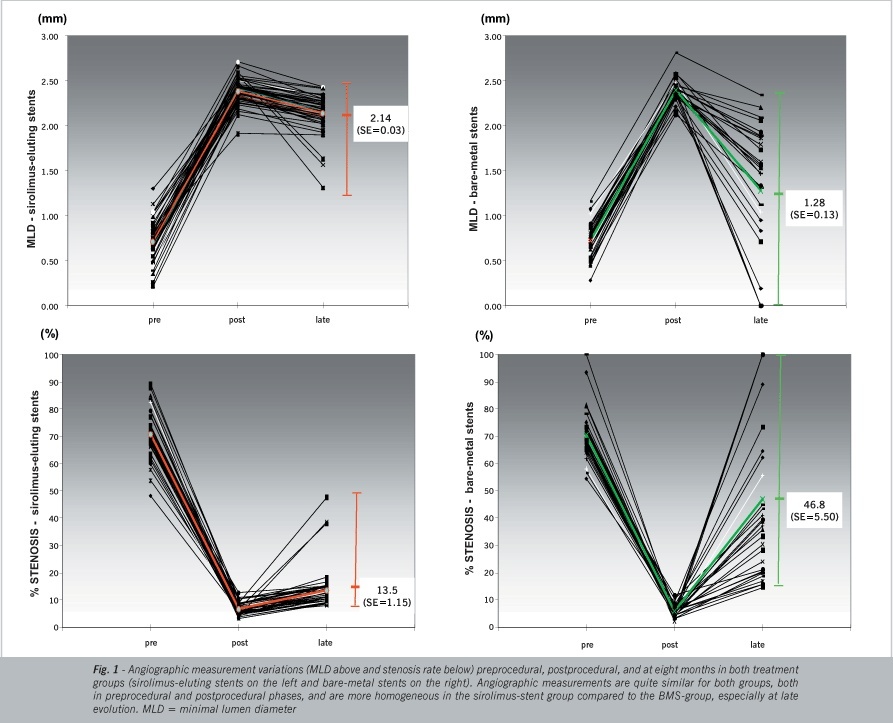
OBJECTIVE: This study aimed at evaluating reduction in intimal hyperplasia volume following angioplasty using sirolimus-eluting stents (Cypher™) compared with thin-strut bare-metal stents (Pixel™) in patients with small vessels. METHODS: Eighty patients with coronary artery disease were prospectively included in two consecutive series, the first using sirolimus-eluting stents (50) and the second using bare-metal stents (30). RESULTS: The use of sirolimus-eluting stents reduced: in-stent net volume obstruction [5.0% (SE = 0.77) x 39.0% (SE = 4.72), p < 0.001], in-stent late loss [0.25 mm (SE = 0.03) x 1,11 mm (SE = 0.13), p < 0,001], in-segment late loss [0.30 mm (SE = 0.04) x 0.83 mm (SE = 0.11), p < 0.001], in-stent restenosis (0% x 33.3%, p < 0.001) and in-segment restenosis (4% x 36.7%, p < 0.001). The event-free survival rate was 96% in the sirolimus-eluting stent group versus 86.7% in the bare-metal stent group (BMS) (p = 0.190). CONCLUSION: Sirolimus-eluting stents are superior to thin-strut bare-metal stents in reducing intimal hyperplasia (less in-stent obstruction and less late lumen loss) in patients with small vessels. The use of these stents significantly reduced angiographic restenosis at eight months.
Images
Image gallery fullscreen viewer
Comments are moderated by the editorial team before publication. Discussions should be evidence-based and use scientific language. Conflicts of interest should be declared.