Measuring What Matters: A Unified Framework for High-Value Heart Failure Care in Brazil
Introduction
In Brazil, heart failure (HF) remains one of the leading causes of cardiovascular hospitalization and mortality, placing substantial pressure on the public health system. Despite therapeutic advances, significant gaps persist, as fragmented information systems, heterogeneous indicators, and limited integration of the patient perspective continue to predominate across both the public and private sectors.,
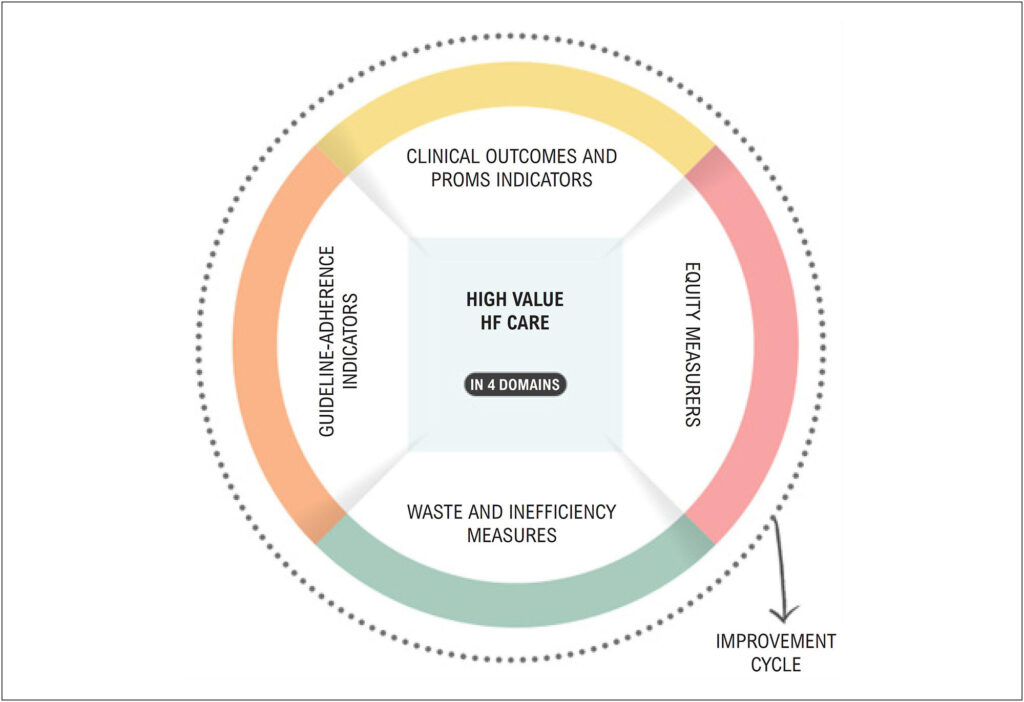
Critically, value-based healthcare, defined as health outcomes achieved relative to the resources expended, requires systematic measurement of waste and low-value care. Identifying avoidable hospitalizations, redundant testing, and delayed therapy optimization is essential for improving outcomes and ensuring health system sustainability., Economic analyses in Brazil demonstrate that inefficient HF management generates substantial costs: approximately 70% of HF-related expenditures arise from hospitalizations, many of which could be prevented through optimized outpatient care and stronger integration with primary care.
[…]
Images
Image gallery fullscreen viewer
Comments are moderated by the editorial team before publication. Discussions should be evidence-based and use scientific language. Conflicts of interest should be declared.