Bruno Ferraz de Oliveira Gomes et al. João Luiz Fernandes Petriz Iliana Regina Ribeiro Menezes Anny de Sousa Azevedo … Thiago Moreira Bastos da Silva Valdilene Lima Silva Leticia de Sousa Peres David Fernandes Pedro Pereira Giovanni Possamai Dutra Suzanna Andressa Morais de Paula Bárbara Ferreira da Silva Mendes Plinio Resende do Carmo Junior Basilio de Bragança Pereira Gláucia Maria Moraes de Oliveira
Abstract
Background
Some studies have shown a higher prevalence of deaths in patients with cardiovascular risk factors (CRF) during hospitalization for COVID-19.
Objectives
To assess the impact of high cardiovascular risk in patients hospitalized in intensive care for COVID-19
Methods
Retrospective study with patients admitted to an intensive care unit, with a diagnosis of COVID-19 confirmed by RT-PCR, and with at least one troponin measurement during hospitalization. The criteria for defining high cardiovascular risk (HCR) patients were: history of established cardiovascular disease (myocardial infarction, stroke, or peripheral arterial disease), diabetes, chronic kidney disease with clearance 65 years). The primary outcome of this study is all-cause in-hospital mortality. P<0.05 was considered significant.
Results
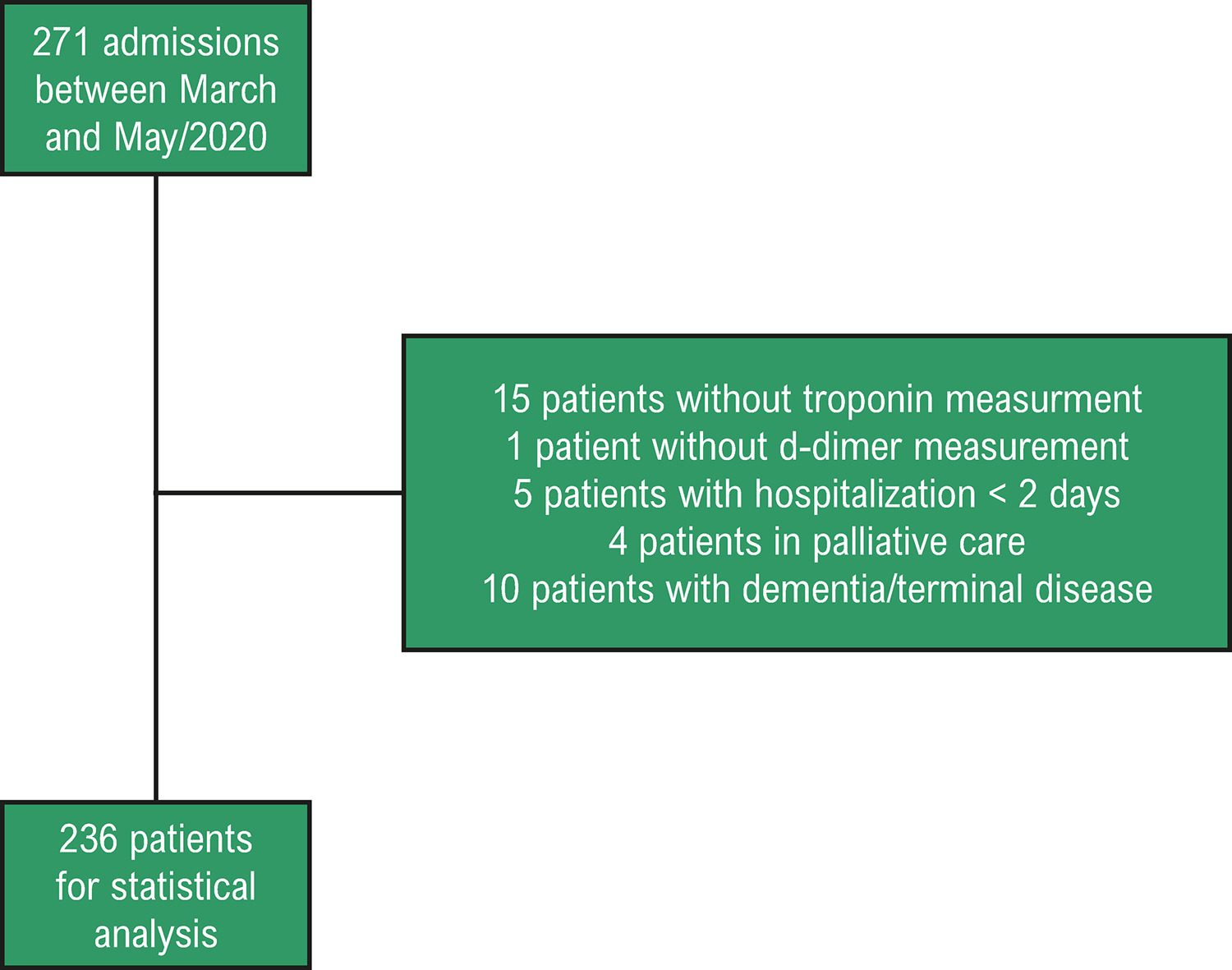
This study included 236 patients, mean age = 61.14±16.2 years, with 63.1% men, 55.5% hypertensive, and 33.1% diabetic; 47.4% of the patients also presented HCR. A significant increase in mortality was observed as the number of risk factors increased (0 FRC: 5.9%; 1 FRC: 17.5%; 2 FRC: 32.2% and ≥3 FRC: 41.2%; p=0.001). In the logistic regression adjusted for severity (SAPS3 score), the HCR and myocardial injury group had a higher occurrence of in-hospital mortality (OR 40.38; 95% CI 11.78-138.39). Patients without HCR but with myocardial injury also exhibited a significant association with the primary outcome (OR 16.7; 95% CI 4.45-62.74).
Conclusion
In patients hospitalized in intensive care for COVID-19, HCR impacts in-hospital mortality only in patients with myocardial injury.