ABC Family Arquivos Brasileiros de Cardiologia International Journal of Cardiovascular Sciences ABC Heart Failure & Cardiomyopathy ABC Imagem Cardiovascular
Português English
ABC Family
Português English
  • About
    • About ABC Family
    • Internal Regulation
    • Editorial Board
    • Brazilian Society of Cardiology (SBC)
  • Issues
  • SBC Guidelines
  • Content
    • Videos
    • Podcasts
    • News
  • About
    • About ABC Family
    • Internal Regulation
    • Editorial Board
    • Brazilian Society of Cardiology (SBC)
  • Issues
  • SBC Guidelines
  • Content
    • Videos
    • Podcasts
    • News

ABC Family

  • ABC Family
  • Arquivos Brasileiros de Cardiologia
  • International Journal of Cardiovascular Sciences
  • ABC Heart Failure & Cardiomyopathy
  • ABC Imagem Cardiovascular
Search in

No content found.

Journals
Ordering
Article types
Others

  1. Home
  2. Keyword: Infectious Diseases
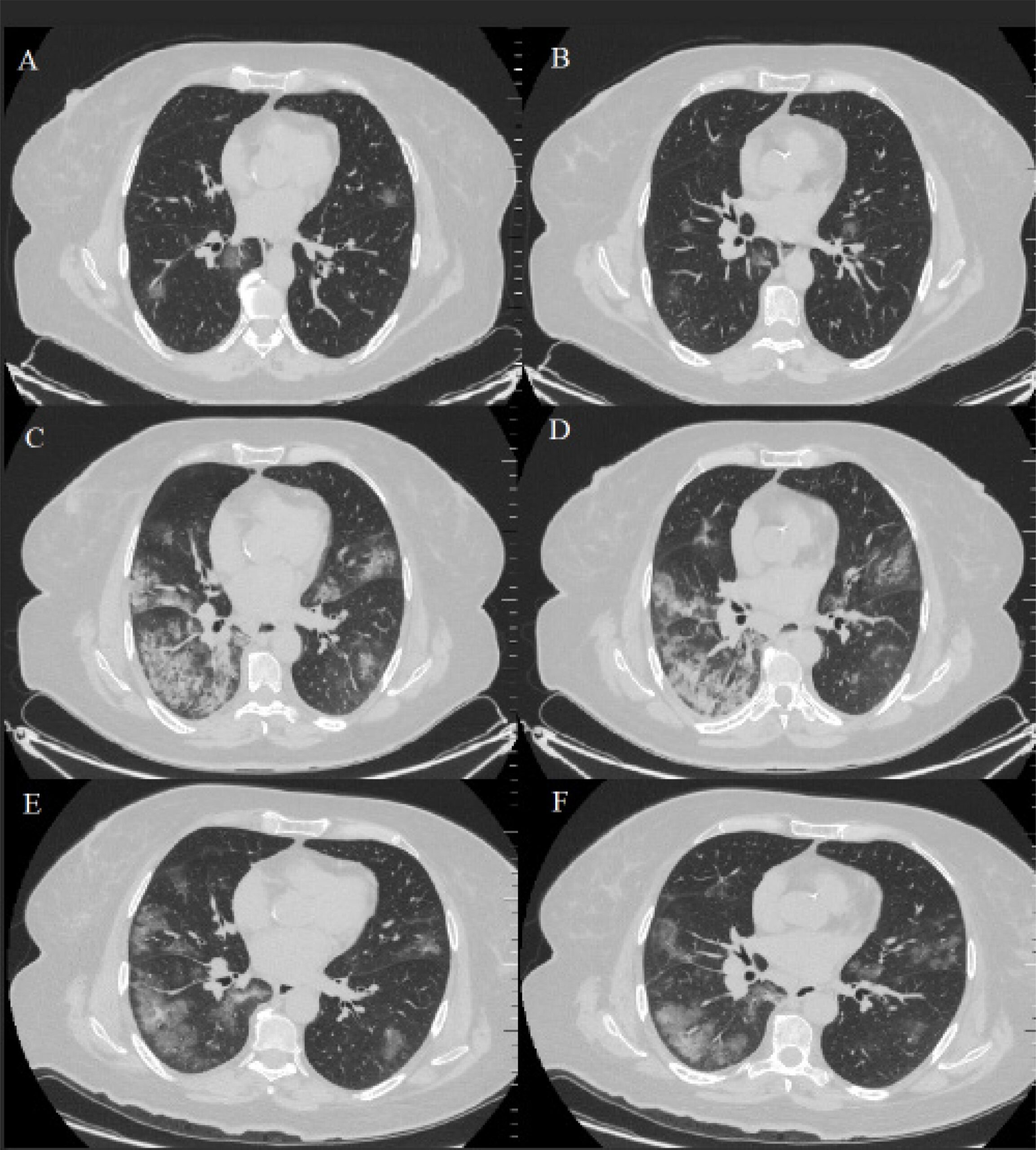
Figure 1
ABC
Case Report

Novel Coronavirus Pneumonia and Cardiomyopathy: A Case Report

Mustafa Ahmet Huyut

Case report

A 59-year-old female had had fever for 4 days, after catching a cold. One day before visiting the hospital, she had fever and cough, but no chest tightness, chest pain, chills, nausea and vomiting or diarrhea. She did not feel better after receiving antifebrile agents. Then, she was admitted to our outpatient clinic in BHT Clinic Tema Hospital. Four days before, the patient had had contact with her relative who had traveled from Europe. In her previous medical history, bariatric surgery had been performed 3 years before and she had still type II diabetes mellitus, hyperlipidemia, and hypertension as pre-existing conditions. She was hospitalized in our hospital on March/20/2020, and still had fever after admission, with the highest temperature of 39.5 °C, heart rate of 119 beats per minute; the electrocardiography was consistent with sinus tachycardia and QTc was calculated at 0.398 seconds, blood pressure at 94/60 mmHg, and conspicuous tachypnea with a respiratory rate of 24/min with sufficient oxygenation (95% ambient air saturation). The identification of 2019 novel coronavirus (2019-nCoV) in RT-PCR was positive from a throat swab. The risk of simultaneous contamination with other respiratory viruses and other pathogens were negative for the throat swab. The CT characteristics of the patient were similar to the case series reported by Pan et al. (). Laboratory results showed leukopenia, with 4.1×10/L, lymphopenia with 0.8×10/L, an only slightly increased CRP level, with 18.4 mg/L and a low procalcitonin level, with 0.01 ng/mL. The patient underwent a TTE examination with a 3.5-MHz transducer (Vivid-7 GE Medical System, Horten, Norway). Examinations and measurements were performed according to the recommendations of the American Echocardiography Unit. Simpson’s method was used to calculate LVEF. At the admission, LVEF was calculated at 65%, with normal TTE findings.

[…]

  • Acute Respiratory Syndrome
  • Cardiomyopathies
  • Cardiovascular Diseases/complications
  • Coronavirus
  • COVID-19
  • Echocardiography/methods
  • Hospitalization
  • Infectious Diseases
  • Myocarditis
  • Pneumonia
  • Tomography, X Ray-Computed/methods
Read Full Article
Creative Commons Attribution (CC BY) Creative Commons license
01/06/2020 DOI: 10.36660/abc.20200268 Views 1
ABC
Viewpoint

COVID-19: Updated Data and its Relation to the Cardiovascular System

Filipe Ferrari

Abstract

In December 2019, a new human coronavirus, called severe acute respiratory syndrome coronavirus 2 (SARS-CoV-2) or coronavirus disease 2019 (COVID-19) by the World Health Organization, emerged in the city of Wuhan, China. Spreading globally, it is now considered pandemic, with approximately 3 million cases worldwide at the end of April. Its symptoms include fever, cough, and headache, but the main one is shortness of breath. In turn, it is believed that there is a relationship between COVID-19 and damage to the heart muscle, and hypertensive and diabetic patients, for example, seem to have worse prognosis. Therefore, COVID-19 may worsen in individuals with underlying adverse conditions, and a not negligible number of patients hospitalized with this virus had cardiovascular or cerebrovascular diseases. Systemic inflammatory response and immune system disorders during disease progression may be behind this association. In addition, the virus uses angiotensin-converting enzyme (ACE) receptors, more precisely ACE2, to penetrate the cell; therefore, the use of ACE inhibitor drugs and angiotensin receptor blockers could cause an increase in these receptors, thus facilitating the entry of the virus into the cell. There is, however, no scientific evidence to support the interruption of these drugs. Since they are fundamental for certain chronic diseases, the risk and benefit of their withdrawal in this scenario should be carefully weighed. Finally, cardiologists and health professionals should be aware of the risks of infection and protect themselves as much as possible, sleeping properly and avoiding long working hours.

  • Acute Respiratory Syndrome
  • Cardiovascular Diseases/complications
  • Coronavirus
  • COVID-19
  • Infectious Diseases
  • Myocarditis
  • Risk Factors/prevention and control
Read Full Article
Creative Commons Attribution (CC BY) Creative Commons license
11/05/2020 DOI: 10.36660/abc.20200215

How to cite this article

EndNote RIS

Electronic Document Format (Vancouver)

Huyut MA. Novel Coronavirus Pneumonia and Cardiomyopathy: A Case Report. Arquivos Brasileiros de Cardiologia 2020;114(5):843-5.

Electronic Document Format (ABNT)

Huyut, Mustafa Ahmet. Novel Coronavirus Pneumonia and Cardiomyopathy: A Case Report. Arquivos Brasileiros de Cardiologia, v. 114, n. 5, p. 843-845, May. 2020.

Electronic Document Format (APA)

Huyut, M. A. (2020). Novel Coronavirus Pneumonia and Cardiomyopathy: A Case Report. Arquivos Brasileiros de Cardiologia, 114(5), 843-845.

Electronic Document Format (ISO)

Huyut, Mustafa Ahmet. Novel Coronavirus Pneumonia and Cardiomyopathy: A Case Report. Arquivos Brasileiros de Cardiologia [online]. 2020, vol. 114, n. 5, [cited 2026-10-14], pp. 843-845. Available from: <https://journals.cardiol.br/en/article/novel-coronavirus-pneumonia-and-cardiomyopathy-a-case-report/>. ISSN 0066-782X

EndNote RIS

Electronic Document Format (Vancouver)

Ferrari F. COVID-19: Updated Data and its Relation to the Cardiovascular System. Arquivos Brasileiros de Cardiologia 2020;114(5):823-6.

Electronic Document Format (ABNT)

Ferrari, Filipe. COVID-19: Updated Data and its Relation to the Cardiovascular System. Arquivos Brasileiros de Cardiologia, v. 114, n. 5, p. 823-826, May. 2020.

Electronic Document Format (APA)

Ferrari, F. (2020). COVID-19: Updated Data and its Relation to the Cardiovascular System. Arquivos Brasileiros de Cardiologia, 114(5), 823-826.

Electronic Document Format (ISO)

Ferrari, Filipe. COVID-19: Updated Data and its Relation to the Cardiovascular System. Arquivos Brasileiros de Cardiologia [online]. 2020, vol. 114, n. 5, [cited 2026-10-14], pp. 823-826. Available from: <https://journals.cardiol.br/en/article/covid-19-updated-data-and-its-relation-to-the-cardiovascular-system/>. ISSN 0066-782X

  • About ABC Family
  • Internal Regulation
  • Editorial Board
  • Brazilian Society of Cardiology (SBC)

Issues

SBC Guidelines

  • Videos
  • Podcasts
  • News