ABC Family Arquivos Brasileiros de Cardiologia International Journal of Cardiovascular Sciences ABC Heart Failure & Cardiomyopathy ABC Imagem Cardiovascular
Português English
ABC Family
Português English
  • About
    • About ABC Family
    • Internal Regulation
    • Editorial Board
    • Brazilian Society of Cardiology (SBC)
  • Issues
  • SBC Guidelines
  • Content
    • Videos
    • Podcasts
    • News
  • About
    • About ABC Family
    • Internal Regulation
    • Editorial Board
    • Brazilian Society of Cardiology (SBC)
  • Issues
  • SBC Guidelines
  • Content
    • Videos
    • Podcasts
    • News

ABC Family

  • ABC Family
  • Arquivos Brasileiros de Cardiologia
  • International Journal of Cardiovascular Sciences
  • ABC Heart Failure & Cardiomyopathy
  • ABC Imagem Cardiovascular
Search in

No content found.

Journals
Ordering
Article types
Others

  1. Home
  2. Keyword: Diagnostic Errors
ABCIC
Editorial

Mental Traps That Impact Diagnostic Imaging

Maurício Rodrigues Jordão et al. Marcelo Tavares Fábio Fernandes

Daniel Kahneman reinforced and popularized the idea of two distinct modes of thinking. System 1 relies on pattern recognition, detecting simple relationships, correlating stereotypes, and associating ideas in a search for coherence. It is fast, intuitive, automatic, and requires little or no effort or energy. It cannot be turned off and continuously monitors the environment, driven by a survival need rooted in our ancestral past. System 2, on the other hand, demands attention, compares objects based on various attributes, and makes deliberate choices among options. It evaluates scenarios using logical and statistical reasoning. Because it requires attention, its activity is interrupted when that attention is diverted. Therefore, tasks that require effort interfere with one another (for instance, making a turn while driving and performing a complex calculation simultaneously is impossible). However, System 2 is slow, deliberate, effortful, and orderly. The two systems are interconnected: System 1 effortlessly generates impressions and feelings that serve as the main source for the explicit beliefs and deliberate choices made by System 2. In daily life, we often make decisions based on heuristics—mental shortcuts closely linked to System 1—used to save time and energy. While extremely efficient, this faster way of thinking opens the door to cognitive biases, which are systematic tendencies that distort logical reasoning and lead to flawed decisions.

The causes of error in diagnostic medicine can be categorized into two main groups: perceptual errors and interpretive errors. Perceptual errors occur when an abnormality is present on the image but goes undetected. These may be related to image acquisition, post-processing, or equipment quality. Interpretive errors arise when the abnormality is seen but its significance is misunderstood. In such cases, cognitive biases may be involved and are estimated to account for up to 74% of diagnostic errors.– Approximately 30 types of cognitive biases have been described in literature. In diagnostic imaging, the most relevant include anchoring, confirmation bias, availability bias, attribution bias, framing effect, and satisfaction of search.-,

[…]
  • Bias
  • Diagnostic Errors
  • Healthcare Near Miss
  • Heuristics
Read Full Article
Creative Commons Attribution (CC BY) Creative Commons license
30/06/2025 DOI: 10.36660/abcimg.20250040i Views 1
Figure 1
ABC
Research Letter

Misdiagnosis of a Cardiac Angiosarcoma During the COVID-19 Pandemic

Arash Amin et al. Zohreh Taheri Mahshid Hesami Azin Alizahehasl … Zeinab Norouzi Nasibeh Mohammadi

Abstract

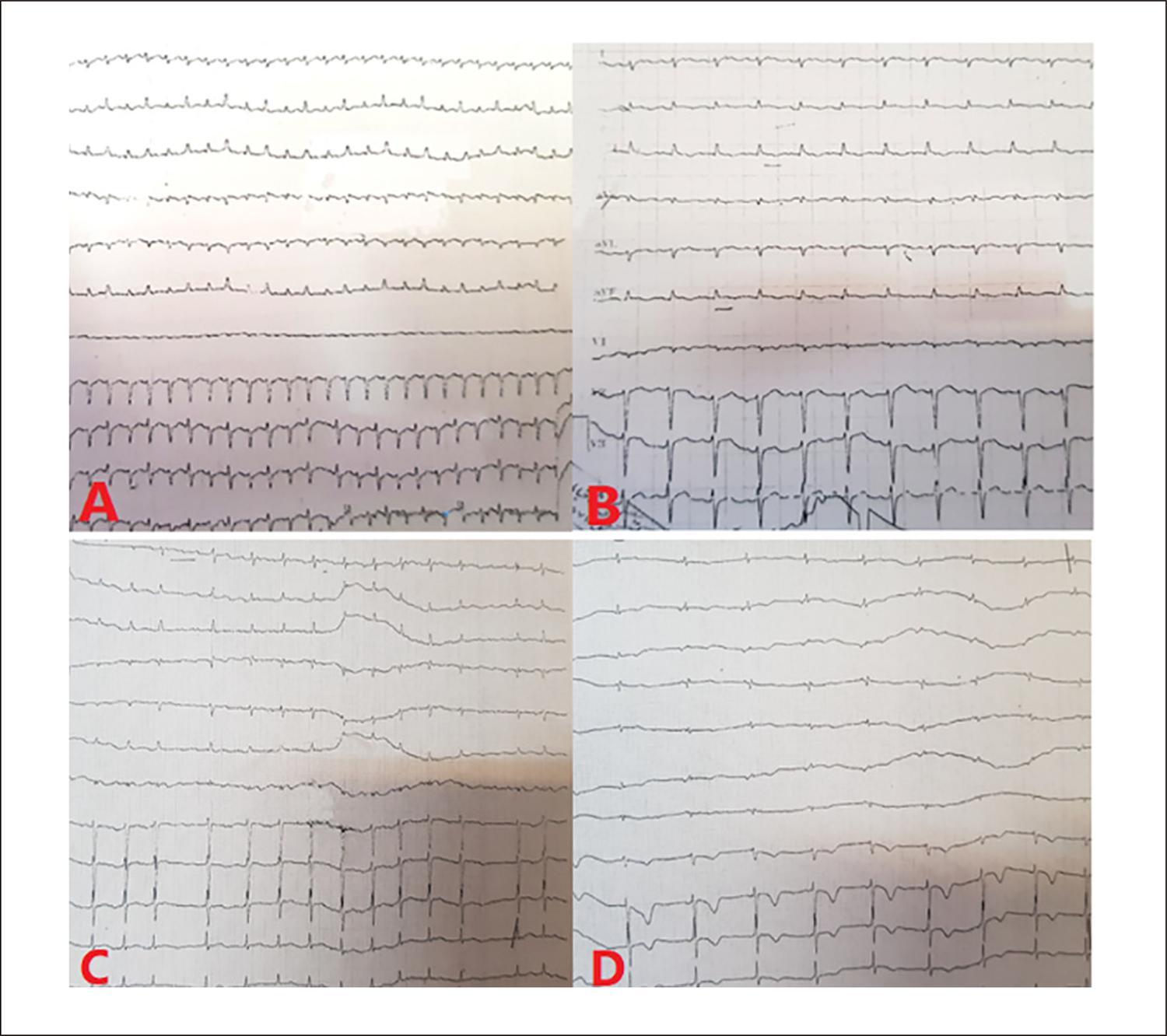
The final months of 2019 saw the emergence of a new pandemic termed “COVID-19”. Since then, this infection and its complications have been the priority of healthcare providers, with many symptoms attributed to its early and late presentations. Thus far, other diseases, even fatal situations, have been overlooked or misdiagnosed due to the attribution of patient symptoms to the presence of COVID-19 infection. We herein present a case of cardiac angiosarcoma in a young boy who had previously become infected with COVID-19 about two months earlier. Given the history of infection, the initial approach was post-COVID-19 myopericarditis management. However, the patient’s condition worsened, necessitating reevaluation via multimodalities with higher precision. Ultimately, the patient was diagnosed with a cardiac tumor. This article seeks to underscore the significance of taking heed of other diseases and fatal conditions during the COVID-19 pandemic with an emphasis on avoiding misdiagnosing other diseases.

  • Angiosarcoma/surgery
  • COVID-19/infection
  • Diagnostic Errors
  • Heart Neoplasms
  • Imaging/methods
  • Multimodal Imaging/diagnostic
Read Full Article
Creative Commons Attribution (CC BY) Creative Commons license
07/08/2023 DOI: 10.36660/abc.20220501
Figure 1
ABC
Review Article

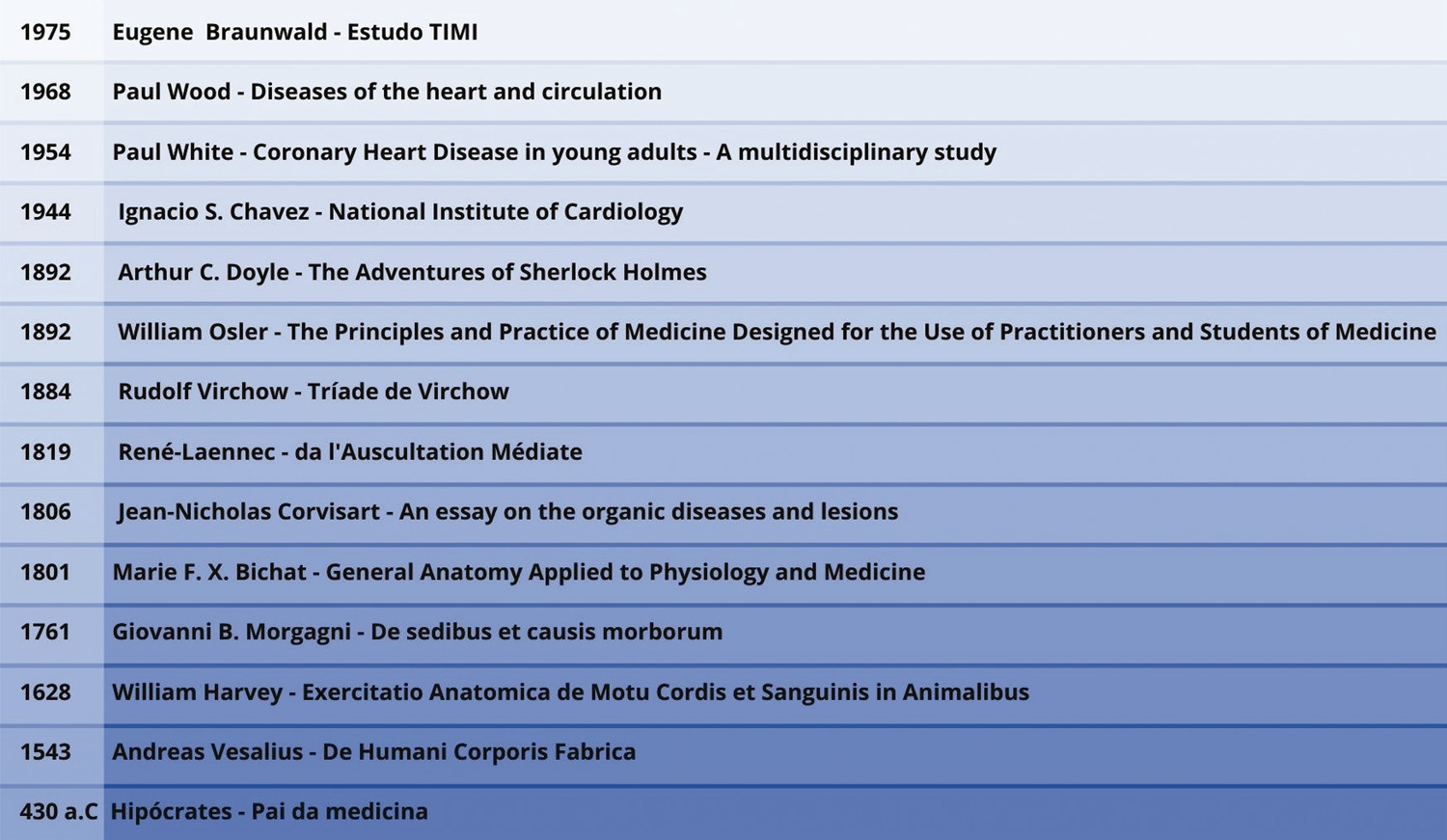
Clinical Reasoning in Cardiology: Past, Present and Future

Evandro Tinoco Mesquita et al. Mayara Gabriele Toledo Rodrigo da Silva Garcia Prieto Amanda Cunha Soares Eduardo Thadeu de Oliveira Correia

Abstract

Clinical reasoning was born 2,500 years ago with Hippocrates, having evolved over the centuries, becoming a mixture of art and science. Several personalities throughout history have contributed to improving diagnostic accuracy. Nonetheless, diagnostic error is still common and causes a severe impact on healthcare systems. To face this challenge, several clinical reasoning models have emerged to systematize the clinical thinking process. This paper describes the history of clinical reasoning and current diagnostic reasoning methods, proposes a new clinical reasoning model, called Integrative Reasoning, and brings perspectives about the future of clinical reasoning.

  • Cardiology
  • Cardiovascular System
  • Diagnostic Errors
  • History of Medicine
Read Full Article
Creative Commons Attribution (CC BY) Creative Commons license
24/08/2022 DOI: 10.36660/abc.20220002

How to cite this article

EndNote RIS

Electronic Document Format (Vancouver)

Jordão MR, Tavares M, Fernandes F. Mental Traps That Impact Diagnostic Imaging. ABC Imagem Cardiovascular 2025;38(2):e20250405.

Electronic Document Format (ABNT)

Jordão, Maurício Rodrigues; Tavares, Marcelo; Fernandes, Fábio. Mental Traps That Impact Diagnostic Imaging. ABC Imagem Cardiovascular, v. 38, n. 2, e20250405, Jun. 2025.

Electronic Document Format (APA)

Jordão, M. R., Tavares, M., & Fernandes, F. (2025). Mental Traps That Impact Diagnostic Imaging. ABC Imagem Cardiovascular, 38(2), e20250405.

Electronic Document Format (ISO)

Jordão, Maurício Rodrigues and Tavares, Marcelo and Fernandes, Fábio. Mental Traps That Impact Diagnostic Imaging. ABC Imagem Cardiovascular [online]. 2025, vol. 38, n. 2, [cited 2026-10-14], e20250405. Available from: <https://journals.cardiol.br/en/article/mental-traps-that-impact-diagnostic-imaging/>. ISSN 2318-8219

EndNote RIS

Electronic Document Format (Vancouver)

Amin A, Taheri Z, Hesami M, Alizahehasl A, Norouzi Z, Mohammadi N. Misdiagnosis of a Cardiac Angiosarcoma During the COVID-19 Pandemic. Arquivos Brasileiros de Cardiologia 2023;120(7):e20220501.

Electronic Document Format (ABNT)

Amin, Arash; Taheri, Zohreh; Hesami, Mahshid; Alizahehasl, Azin; Norouzi, Zeinab; Mohammadi, Nasibeh. Misdiagnosis of a Cardiac Angiosarcoma During the COVID-19 Pandemic. Arquivos Brasileiros de Cardiologia, v. 120, n. 7, e20220501, Aug. 2023.

Electronic Document Format (APA)

Amin, A., Taheri, Z., Hesami, M., Alizahehasl, A., Norouzi, Z., & Mohammadi, N. (2023). Misdiagnosis of a Cardiac Angiosarcoma During the COVID-19 Pandemic. Arquivos Brasileiros de Cardiologia, 120(7), e20220501.

Electronic Document Format (ISO)

Amin, Arash and Taheri, Zohreh and Hesami, Mahshid and Alizahehasl, Azin and Norouzi, Zeinab and Mohammadi, Nasibeh. Misdiagnosis of a Cardiac Angiosarcoma During the COVID-19 Pandemic. Arquivos Brasileiros de Cardiologia [online]. 2023, vol. 120, n. 7, [cited 2026-10-14], e20220501. Available from: <https://journals.cardiol.br/en/article/misdiagnosis-of-a-cardiac-angiosarcoma-during-the-covid-19-pandemic/>. ISSN 0066-782X

EndNote RIS

Electronic Document Format (Vancouver)

Mesquita ET, Toledo MG, Prieto RSG, Soares AC, Correia ETO. Clinical Reasoning in Cardiology: Past, Present and Future. Arquivos Brasileiros de Cardiologia 2022;119(5):793-800.

Electronic Document Format (ABNT)

Mesquita, Evandro Tinoco; Toledo, Mayara Gabriele; Prieto, Rodrigo da Silva Garcia; Soares, Amanda Cunha; Correia, Eduardo Thadeu de Oliveira. Clinical Reasoning in Cardiology: Past, Present and Future. Arquivos Brasileiros de Cardiologia, v. 119, n. 5, p. 793-800, Aug. 2022.

Electronic Document Format (APA)

Mesquita, E. T., Toledo, M. G., Prieto, R. S. G., Soares, A. C., & Correia, E. T. O. (2022). Clinical Reasoning in Cardiology: Past, Present and Future. Arquivos Brasileiros de Cardiologia, 119(5), 793-800.

Electronic Document Format (ISO)

Mesquita, Evandro Tinoco and Toledo, Mayara Gabriele and Prieto, Rodrigo da Silva Garcia and Soares, Amanda Cunha and Correia, Eduardo Thadeu de Oliveira. Clinical Reasoning in Cardiology: Past, Present and Future. Arquivos Brasileiros de Cardiologia [online]. 2022, vol. 119, n. 5, [cited 2026-10-14], pp. 793-800. Available from: <https://journals.cardiol.br/en/article/clinical-reasoning-in-cardiology-past-present-and-future/>. ISSN 0066-782X

  • About ABC Family
  • Internal Regulation
  • Editorial Board
  • Brazilian Society of Cardiology (SBC)

Issues

SBC Guidelines

  • Videos
  • Podcasts
  • News