ABC Family Arquivos Brasileiros de Cardiologia International Journal of Cardiovascular Sciences ABC Heart Failure & Cardiomyopathy ABC Imagem Cardiovascular
Português English
ABC Family
Português English
  • About
    • About ABC Family
    • Internal Regulation
    • Editorial Board
    • Brazilian Society of Cardiology (SBC)
  • Issues
  • SBC Guidelines
  • Content
    • Videos
    • Podcasts
    • News
  • About
    • About ABC Family
    • Internal Regulation
    • Editorial Board
    • Brazilian Society of Cardiology (SBC)
  • Issues
  • SBC Guidelines
  • Content
    • Videos
    • Podcasts
    • News

ABC Family

  • ABC Family
  • Arquivos Brasileiros de Cardiologia
  • International Journal of Cardiovascular Sciences
  • ABC Heart Failure & Cardiomyopathy
  • ABC Imagem Cardiovascular
Search in

No content found.

Journals
Ordering
Article types
Others

  1. Home
  2. Keyword: Cardiovascular Diseases/diagnostic, imaging
Figure 1
ABC
Image

“Lightning The Heart” with 3D Echo: Transillumination of a Prosthetic Mitral Valve Dehiscence

Mariana Ribeiro Silva et al. Ana Isabel Azevedo Francisco Sampaio José Ribeiro Ricardo Fontes-Carvalho

Case 1

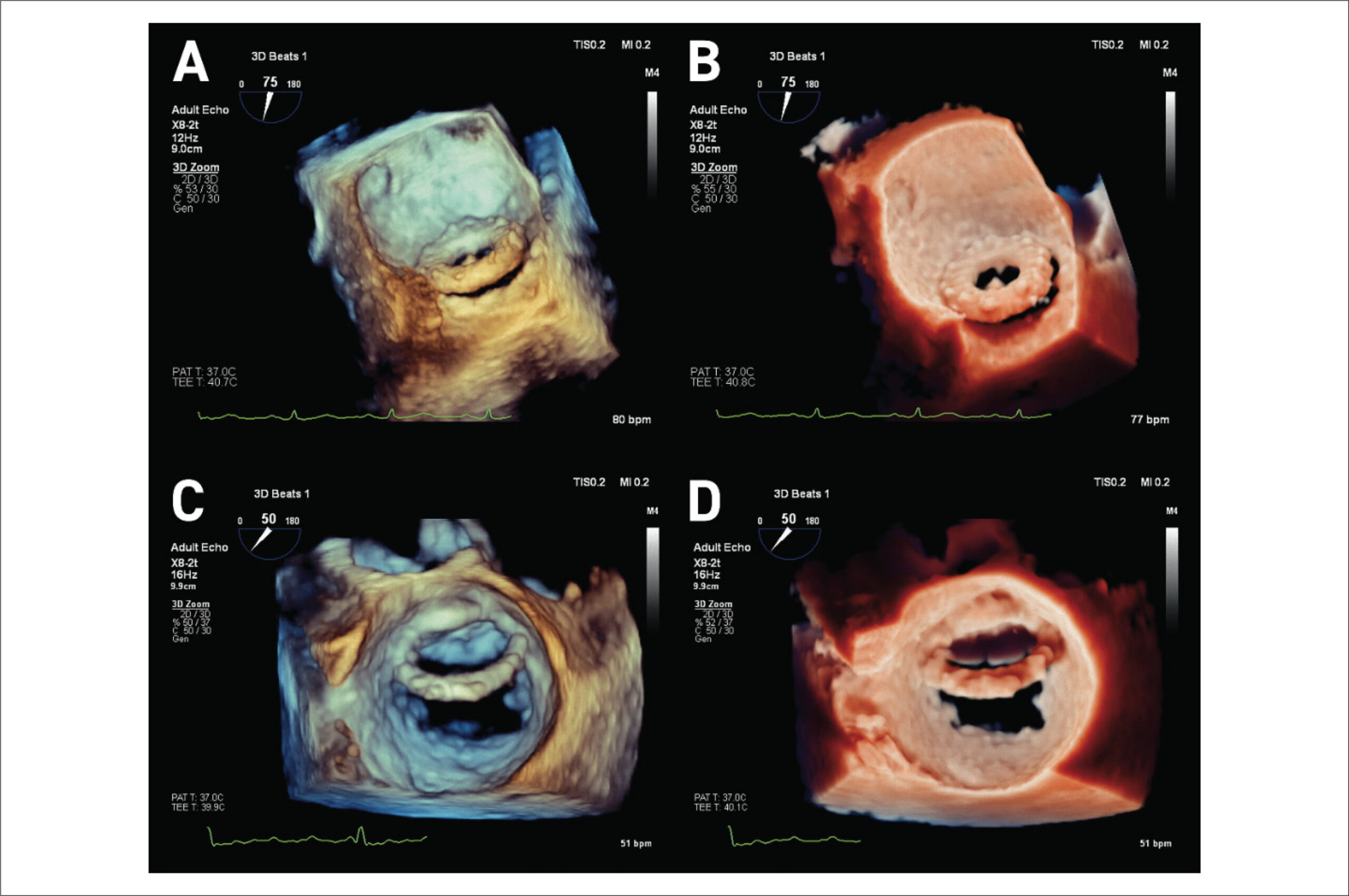
A 55-year-old man underwent mitral valve replacement with a caged-ball prosthesis (3M Starr-Edwards) at the age of 29. He was admitted with acute heart failure, functional New York Heart Association (NYHA) class III. Transthoracic echocardiography (TTE) showed a moderate-severe mitral periprosthetic leak; 3D-transesophageal echocardiography (TOE) showed prosthesis dehiscence, with a severe periprosthetic leak (). TI improved depth perception and accurate definition of the degree of prosthetic dehiscence, demonstrating a disinsertion of the mitral prosthesis, involving more than 50% of mitral circumference (; ).

[…]

  • Cardiovascular Diseases/diagnostic, imaging
  • Cardiovascular Diseases/physiopathology
  • Echocardiography, Three Dimensional / methods
  • Image Interpretation, Computer-Assisted
  • Mitral Valve/diagnosis
  • observer variation
  • Transillumination
Read Full Article
Creative Commons Attribution (CC BY) Creative Commons license
05/08/2022 DOI: 10.36660/abc.20210655
ABC
Editorial

One-Stop Shop for Non-Invasive Cardiovascular Imagers?

Rodrigo Julio Cerci et al. Afonso Akio Shiosaki

Over the past fifteen years, coronary computed tomography angiography (CCTA) has witnessed rapid technological and scientific advances in the detection of anatomical coronary artery disease (CAD), leading to an improvement in patient care. Visual assessment of stenosis severity using CCTA has a high sensitivity and negative predictive value when compared to invasive angiography, making it an ideal test to exclude obstructive CAD. With its high diagnostic performance associated with an important prognostic impact in the management of CAD, CCTA has finally established itself as a Class I recommendation in international guidelines (European Society of Cardiology – ESC).

However, CCTA is limited by modest diagnostic specificity and only provides anatomical assessment, which does not inform hemodynamic significance of specific lesions. CCTA combined with stress tomography evaluation of myocardial perfusion (CTP) is an accurate modality to determine regional myocardial flow repercussions of coronary stenosis, though it usually requires additional acquisition and is still underused. Derived flow fractional reserve – computed tomography (FFR-CT) is another “physiologic” CT approach in which computational fluid dynamics is applied to standard CCTA data and has emerged as a promising tool for the functional assessment of coronary stenosis. The diagnostic value of remotely performed FFR-CT has been prospectively validated in several large multicenter studies, but requires the use of offsite supercomputers, which can be time-consuming and cost-intensive, limiting its widespread clinical utility. –

[…]

  • Cardiovascular Diseases/diagnostic, imaging
  • Coronary Artery Disease
  • Coronary, Tomography
  • Diagnostic Imaging/trends
  • myocardial perfusion
Read Full Article
Creative Commons Attribution (CC BY) Creative Commons license
14/06/2021 DOI: 10.36660/abc.20210245 Views 2
Figure 1
ABC
Original Article

Software for Post-Processing Analysis of Strain Curves: The D-Station

Rafael Duarte de Sousa et al. Carlos Danilo Miranda Regis Ittalo dos Santos Silva Paulo Szewierenko … Renato de Aguiar Hortegal Henry Abensur

Abstract

Background

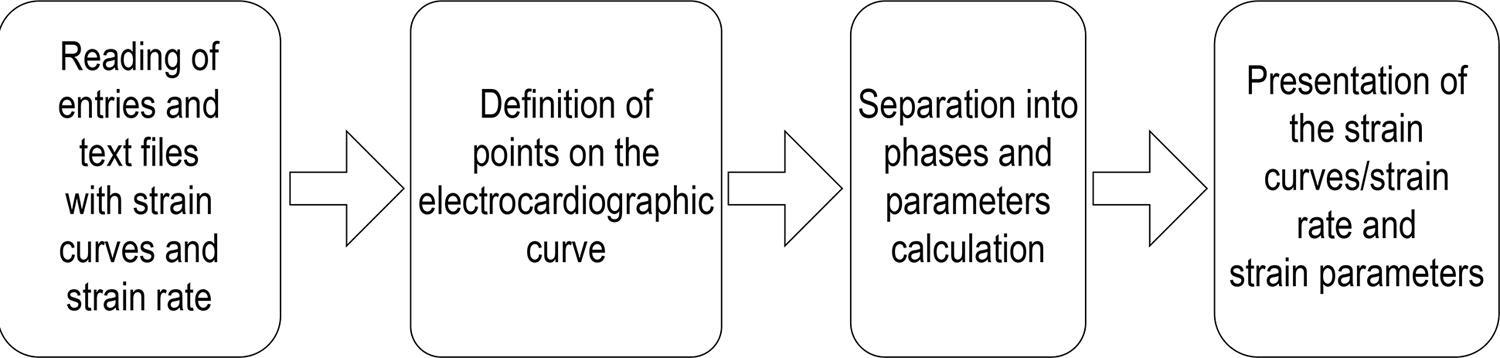
The use of speckle-tracking echocardiography for evaluation of cardiac function has great applicability in different scenarios. The broad use of this method requires tools that allow the extraction of relevant data from strain curves and inclusion of these data in traditionally used parameters.

Objectives

The present study aimed to present and validate a free software, called D-station, for analysis of strain curves.

Methods

From raw data files, the D-Station determines the phases of the cardiac cycle, and simultaneously exhibits the strain and strain rate curves of different cardiac chambers. Validation of the software was done by global longitudinal strain (GLS), and the analyses were performed: 1) graphical comparison of EchoPAC and D-Station paired measurements in relation to equality line; 2) by coefficient of correlation of these measurements; 3) test of hypothesis (p > 0.05); and 4) Bland-Altman analysis.

Results

The Spearman’s rho correlation coefficient indicated a strong correlation between the measurements. Results of the test of hypothesis showed a p-value = 0.6798 >> 0.05, thus also indicating an equivalence between the softwares. The Bland-Altman analysis revealed a bias ≤ 1% and dispersion ≤ 2% between the measurements. The tests showed that, for GLS values lower than 10%, there was a trend for higher percentage difference between the values, although the absolute values remained low.

Conclusion

The D-Station software was validated as an additional tool to the EchoPAC, which uses the raw data from the strain and strain rate curves exported from a proprietary software. (Arq Bras Cardiol. 2020; 114(3):496-506)
  • Cardiovascular Diseases/diagnostic, imaging
  • Echocardiography/methods
  • Prognosis
  • Speckle Tracking
  • Ventricular Dysfunction, Left/physiopathology
Read Full Article
Creative Commons Attribution (CC BY) Creative Commons license
06/04/2020 DOI: 10.36660/abc.20180403 Views 1
IJCS
Review Article

Improving Nuclear Medicine Practices in Cardiology in the Emerging Economies: Role of the International Atomic Energy Agency

Maurizio Dondi et al. Thomas Pascual Diana Paez

Abstract

Low- and middle-income countries (LMICs) are particularly affected by cardiovascular diseases (CVDs), as more than 75% of all CVD deaths occur in these countries. Global prognostic figures are alarming, as an estimated 23.6 million people will die each year due to CVDs by 2030. For this reason, one of the targets of the Sustainable Development Goals (SDGs) of the agenda of the United Nations (UN) aims at reducing premature mortality due to Non-Communicable Diseases (NCDs) by 30% by 2030.

Within the UN family, the International Atomic Energy Agency (IAEA) has the mandate to promote safe, secure and peaceful use of nuclear technologies. The IAEA is strongly committed to accomplish the 2030 UN Agenda and through its Human Health Division, contribute to the attainment of SDGs. One of the key objectives of the Human Health Division is to support Member States to tackle the burden of CVDs through its subprogram of Nuclear Medicine and Diagnostic Imaging. This is accomplished by supporting the establishment and strengthening of capabilities of Member States to provide appropriate and safe use of nuclear cardiology clinical applications. The support ranges from assisting countries in the planning and implementation stages, providing training, maintaining and improving quality of clinical practice, establishing quality management systems and advising on how to comply with international standards, as well as using the technology in an appropriate and safe manner. This review will cover the activities of the IAEA in promoting, implementing, and supporting nuclear applications in cardiology in LMICs.

  • Cardiovascular Diseases/diagnostic, imaging
  • International Agencies
  • Myocardium / radionuclide imaging
  • Nuclear Energy
  • Nuclear Medicine
Read Full Article
Creative Commons Attribution (CC BY) Creative Commons license
01/01/2018 DOI: 10.5935/2359-4802.20170096 Views 1

How to cite this article

EndNote RIS

Electronic Document Format (Vancouver)

Silva MR, Azevedo AI, Sampaio F, Ribeiro J, Fontes-Carvalho R. “Lightning The Heart” with 3D Echo: Transillumination of a Prosthetic Mitral Valve Dehiscence. Arquivos Brasileiros de Cardiologia 2022;119(2):358-60.

Electronic Document Format (ABNT)

Silva, Mariana Ribeiro; Azevedo, Ana Isabel; Sampaio, Francisco; Ribeiro, José; Fontes-Carvalho, Ricardo. “Lightning The Heart” with 3D Echo: Transillumination of a Prosthetic Mitral Valve Dehiscence. Arquivos Brasileiros de Cardiologia, v. 119, n. 2, p. 358-360, Aug. 2022.

Electronic Document Format (APA)

Silva, M. R., Azevedo, A. I., Sampaio, F., Ribeiro, J., & Fontes-Carvalho, R. (2022). “Lightning The Heart” with 3D Echo: Transillumination of a Prosthetic Mitral Valve Dehiscence. Arquivos Brasileiros de Cardiologia, 119(2), 358-360.

Electronic Document Format (ISO)

Silva, Mariana Ribeiro and Azevedo, Ana Isabel and Sampaio, Francisco and Ribeiro, José and Fontes-Carvalho, Ricardo. “Lightning The Heart” with 3D Echo: Transillumination of a Prosthetic Mitral Valve Dehiscence. Arquivos Brasileiros de Cardiologia [online]. 2022, vol. 119, n. 2, [cited 2026-10-14], pp. 358-360. Available from: <https://journals.cardiol.br/en/article/lightning-the-heart-with-3d-echo-transillumination-of-a-prosthetic-mitral-valve-dehiscence/>. ISSN 0066-782X

EndNote RIS

Electronic Document Format (Vancouver)

Cerci RJ, Shiosaki AA. One-Stop Shop for Non-Invasive Cardiovascular Imagers?. Arquivos Brasileiros de Cardiologia 2021;116(6):1099-100.

Electronic Document Format (ABNT)

Cerci, Rodrigo Julio; Shiosaki, Afonso Akio. One-Stop Shop for Non-Invasive Cardiovascular Imagers?. Arquivos Brasileiros de Cardiologia, v. 116, n. 6, p. 1099-1100, Jun. 2021.

Electronic Document Format (APA)

Cerci, R. J., & Shiosaki, A. A. (2021). One-Stop Shop for Non-Invasive Cardiovascular Imagers?. Arquivos Brasileiros de Cardiologia, 116(6), 1099-1100.

Electronic Document Format (ISO)

Cerci, Rodrigo Julio and Shiosaki, Afonso Akio. One-Stop Shop for Non-Invasive Cardiovascular Imagers?. Arquivos Brasileiros de Cardiologia [online]. 2021, vol. 116, n. 6, [cited 2026-10-14], pp. 1099-1100. Available from: <https://journals.cardiol.br/en/article/one-stop-shop-for-non-invasive-cardiovascular-imagers/>. ISSN 0066-782X

EndNote RIS

Electronic Document Format (Vancouver)

Sousa RD, Regis CDM, Silva IS, Szewierenko P, Hortegal RA, Abensur H. Software for Post-Processing Analysis of Strain Curves: The D-Station. Arquivos Brasileiros de Cardiologia 2020;114(3):496-50.

Electronic Document Format (ABNT)

Sousa, Rafael Duarte de; Regis, Carlos Danilo Miranda; Silva, Ittalo dos Santos; Szewierenko, Paulo; Hortegal, Renato de Aguiar; Abensur, Henry. Software for Post-Processing Analysis of Strain Curves: The D-Station. Arquivos Brasileiros de Cardiologia, v. 114, n. 3, p. 496-506, Apr. 2020.

Electronic Document Format (APA)

Sousa, R. D. , Regis, C. D. M., Silva, I. S., Szewierenko, P., Hortegal, R. A., & Abensur, H. (2020). Software for Post-Processing Analysis of Strain Curves: The D-Station. Arquivos Brasileiros de Cardiologia, 114(3), 496-506.

Electronic Document Format (ISO)

Sousa, Rafael Duarte de and Regis, Carlos Danilo Miranda and Silva, Ittalo dos Santos and Szewierenko, Paulo and Hortegal, Renato de Aguiar and Abensur, Henry. Software for Post-Processing Analysis of Strain Curves: The D-Station. Arquivos Brasileiros de Cardiologia [online]. 2020, vol. 114, n. 3, [cited 2026-10-14], pp. 496-506. Available from: <https://journals.cardiol.br/en/article/software-for-post-processing-analysis-of-strain-curves-the-d-station/>. ISSN 0066-782X

EndNote RIS

Electronic Document Format (Vancouver)

Dondi M, Pascual T, Paez D. Improving Nuclear Medicine Practices in Cardiology in the Emerging Economies: Role of the International Atomic Energy Agency. International Journal of Cardiovascular Sciences 2018;31(1):71-8.

Electronic Document Format (ABNT)

Dondi, Maurizio; Pascual, Thomas; Paez, Diana. Improving Nuclear Medicine Practices in Cardiology in the Emerging Economies: Role of the International Atomic Energy Agency. International Journal of Cardiovascular Sciences, v. 31, n. 1, p. 71-78, Dec. 2017.

Electronic Document Format (APA)

Dondi, M., Pascual, T., & Paez, D. (2018). Improving Nuclear Medicine Practices in Cardiology in the Emerging Economies: Role of the International Atomic Energy Agency. International Journal of Cardiovascular Sciences, 31(1), 71-78.

Electronic Document Format (ISO)

Dondi, Maurizio and Pascual, Thomas and Paez, Diana. Improving Nuclear Medicine Practices in Cardiology in the Emerging Economies: Role of the International Atomic Energy Agency. International Journal of Cardiovascular Sciences [online]. 2018, vol. 31, n. 1, [cited 2026-10-14], pp. 71-78. Available from: <https://journals.cardiol.br/en/article/improving-nuclear-medicine-practices-in-cardiology-in-the-emerging-economies-role-of-the-international-atomic-energy-agency/>. ISSN 2359-4802

  • About ABC Family
  • Internal Regulation
  • Editorial Board
  • Brazilian Society of Cardiology (SBC)

Issues

SBC Guidelines

  • Videos
  • Podcasts
  • News