ABC Family Arquivos Brasileiros de Cardiologia International Journal of Cardiovascular Sciences ABC Heart Failure & Cardiomyopathy ABC Imagem Cardiovascular
Português English
ABC Family
Português English
  • About
    • About ABC Family
    • Internal Regulation
    • Editorial Board
    • Brazilian Society of Cardiology (SBC)
  • Issues
  • SBC Guidelines
  • Content
    • Videos
    • Podcasts
    • News
  • About
    • About ABC Family
    • Internal Regulation
    • Editorial Board
    • Brazilian Society of Cardiology (SBC)
  • Issues
  • SBC Guidelines
  • Content
    • Videos
    • Podcasts
    • News

ABC Family

  • ABC Family
  • Arquivos Brasileiros de Cardiologia
  • International Journal of Cardiovascular Sciences
  • ABC Heart Failure & Cardiomyopathy
  • ABC Imagem Cardiovascular
Search in

No content found.

Journals
Ordering
Article types
Others

  1. Home
  2. Keyword: Nuclear Energy
Figure 1
IJCS
Viewpoint

Challenges and Opportunities in the use of Ionizing Radiation for Cardiovascular Diseases

Fernando de Amorim Fernandes et al. Alair Augusto Sarmet Moreira Damas dos Santos Anderson de Oliveira Cláudio Tinoco Mesquita

Introduction

Cardiovascular diseases are the leading cause of global death, accounting for 31% of deaths in 2015 according to the World Health Organization (WHO). Three-quarters of these deaths occurred in low- and middle-income countries. In Brazil, in 2011, there were approximately 350,000 deaths of cardiovascular origin, becoming the most important cause of death since the epidemiological transition of the 60’s. The diagnosis in the early stages and the management of more severe cases are among the most important methods in the fight against cardiovascular diseases. Imaging procedures with ionizing radiation has a major role in this area.

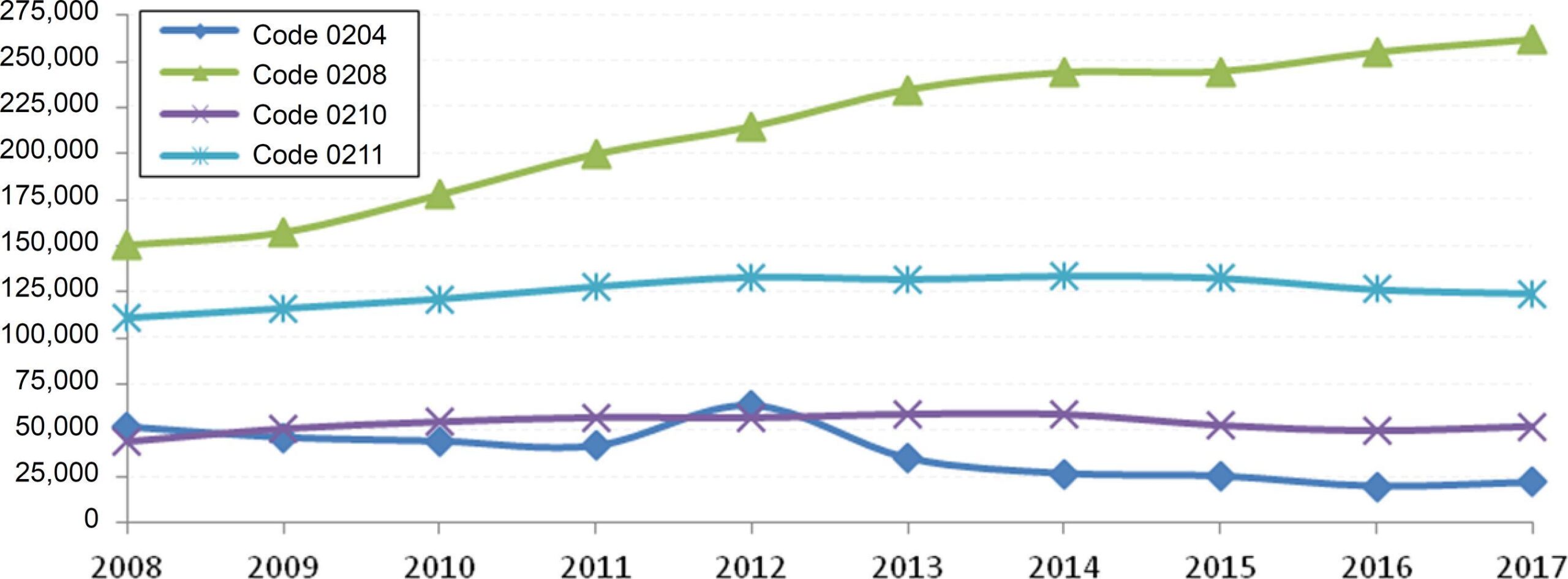
According to data from public outpatient health services of the Brazilian Unified Health System (SUS, Sistema Único de Saúde) (), in the last 10 years, the number of procedures performed for evaluation of cardiovascular diseases using ionizing radiation has increased (73% in nuclear medicine, 18% in interventional radiology and 12% in cardiac catheterization), except for conventional radiology, in which a decreased has been seen (-58%). These numbers, however, underestimate the number of tests performed with the general population, since diagnostic methods such as coronary angiotomography have not been incorporated into the SUS yet, and the time for inclusion of new techniques to public health care is much higher than to supplementary health care.

[…]

  • Air Ionization/radiation effects
  • Cardiovascular Diseases, mortality
  • Diagnostic Imaging/methods
  • Nuclear Energy
  • Nuclear Medicine
  • Radiation/protection
Read Full Article
Creative Commons Attribution (CC BY) Creative Commons license
08/08/2019 DOI: 10.5935/2359-4802.20190051
IJCS
Review Article

Improving Nuclear Medicine Practices in Cardiology in the Emerging Economies: Role of the International Atomic Energy Agency

Maurizio Dondi et al. Thomas Pascual Diana Paez

Abstract

Low- and middle-income countries (LMICs) are particularly affected by cardiovascular diseases (CVDs), as more than 75% of all CVD deaths occur in these countries. Global prognostic figures are alarming, as an estimated 23.6 million people will die each year due to CVDs by 2030. For this reason, one of the targets of the Sustainable Development Goals (SDGs) of the agenda of the United Nations (UN) aims at reducing premature mortality due to Non-Communicable Diseases (NCDs) by 30% by 2030.

Within the UN family, the International Atomic Energy Agency (IAEA) has the mandate to promote safe, secure and peaceful use of nuclear technologies. The IAEA is strongly committed to accomplish the 2030 UN Agenda and through its Human Health Division, contribute to the attainment of SDGs. One of the key objectives of the Human Health Division is to support Member States to tackle the burden of CVDs through its subprogram of Nuclear Medicine and Diagnostic Imaging. This is accomplished by supporting the establishment and strengthening of capabilities of Member States to provide appropriate and safe use of nuclear cardiology clinical applications. The support ranges from assisting countries in the planning and implementation stages, providing training, maintaining and improving quality of clinical practice, establishing quality management systems and advising on how to comply with international standards, as well as using the technology in an appropriate and safe manner. This review will cover the activities of the IAEA in promoting, implementing, and supporting nuclear applications in cardiology in LMICs.

  • Cardiovascular Diseases/diagnostic, imaging
  • International Agencies
  • Myocardium / radionuclide imaging
  • Nuclear Energy
  • Nuclear Medicine
Read Full Article
Creative Commons Attribution (CC BY) Creative Commons license
01/01/2018 DOI: 10.5935/2359-4802.20170096 Views 1

How to cite this article

EndNote RIS

Electronic Document Format (Vancouver)

Fernandes FA, Santos AASMD, Oliveira A, Mesquita CT. Challenges and Opportunities in the use of Ionizing Radiation for Cardiovascular Diseases. International Journal of Cardiovascular Sciences 2019;32(6):639-44.

Electronic Document Format (ABNT)

Fernandes, Fernando de Amorim; Santos, Alair Augusto Sarmet Moreira Damas dos; Oliveira, Anderson de; Mesquita, Cláudio Tinoco. Challenges and Opportunities in the use of Ionizing Radiation for Cardiovascular Diseases. International Journal of Cardiovascular Sciences, v. 32, n. 6, p. 639-644, Aug. 2019.

Electronic Document Format (APA)

Fernandes, F. A., Santos, A. A. S. M. D. , Oliveira, A. , & Mesquita, C. T. (2019). Challenges and Opportunities in the use of Ionizing Radiation for Cardiovascular Diseases. International Journal of Cardiovascular Sciences, 32(6), 639-644.

Electronic Document Format (ISO)

Fernandes, Fernando de Amorim and Santos, Alair Augusto Sarmet Moreira Damas dos and Oliveira, Anderson de and Mesquita, Cláudio Tinoco. Challenges and Opportunities in the use of Ionizing Radiation for Cardiovascular Diseases. International Journal of Cardiovascular Sciences [online]. 2019, vol. 32, n. 6, [cited 2026-10-14], pp. 639-644. Available from: <https://journals.cardiol.br/en/article/challenges-and-opportunities-in-the-use-of-ionizing-radiation-for-cardiovascular-diseases/>. ISSN 2359-4802

EndNote RIS

Electronic Document Format (Vancouver)

Dondi M, Pascual T, Paez D. Improving Nuclear Medicine Practices in Cardiology in the Emerging Economies: Role of the International Atomic Energy Agency. International Journal of Cardiovascular Sciences 2018;31(1):71-8.

Electronic Document Format (ABNT)

Dondi, Maurizio; Pascual, Thomas; Paez, Diana. Improving Nuclear Medicine Practices in Cardiology in the Emerging Economies: Role of the International Atomic Energy Agency. International Journal of Cardiovascular Sciences, v. 31, n. 1, p. 71-78, Dec. 2017.

Electronic Document Format (APA)

Dondi, M., Pascual, T., & Paez, D. (2018). Improving Nuclear Medicine Practices in Cardiology in the Emerging Economies: Role of the International Atomic Energy Agency. International Journal of Cardiovascular Sciences, 31(1), 71-78.

Electronic Document Format (ISO)

Dondi, Maurizio and Pascual, Thomas and Paez, Diana. Improving Nuclear Medicine Practices in Cardiology in the Emerging Economies: Role of the International Atomic Energy Agency. International Journal of Cardiovascular Sciences [online]. 2018, vol. 31, n. 1, [cited 2026-10-14], pp. 71-78. Available from: <https://journals.cardiol.br/en/article/improving-nuclear-medicine-practices-in-cardiology-in-the-emerging-economies-role-of-the-international-atomic-energy-agency/>. ISSN 2359-4802

  • About ABC Family
  • Internal Regulation
  • Editorial Board
  • Brazilian Society of Cardiology (SBC)

Issues

SBC Guidelines

  • Videos
  • Podcasts
  • News