| ABC
ABC Family Arquivos Brasileiros de Cardiologia International Journal of Cardiovascular Sciences ABC Heart Failure & Cardiomyopathy ABC Imagem Cardiovascular
Português English
ABC Family | ABC
Português English
  • About
    • About the Journal
    • Internal Regulation
    • Editors Section
    • Editorial Board
    • History
    • SBC Award
  • Instructions to Authors
    • Guidelines for Publication
    • Editorial Policy
    • Ethics Policy
    • Policy on the Use of Artificial Intelligence
    • Mandatory Publication Form
    • Publication Fee
  • Issues
  • SBC Guidelines
  • Abstracts
    • How to Publish an Abstract Supplement?
    • Supplements from the Brazilian Congress of Cardiology
  • About
    • About the Journal
    • Internal Regulation
    • Editors Section
    • Editorial Board
    • History
    • SBC Award
  • Instructions to Authors
    • Guidelines for Publication
    • Editorial Policy
    • Ethics Policy
    • Policy on the Use of Artificial Intelligence
    • Mandatory Publication Form
    • Publication Fee
  • Issues
  • SBC Guidelines
  • Abstracts
    • How to Publish an Abstract Supplement?
    • Supplements from the Brazilian Congress of Cardiology

ABC Family

  • ABC Family
  • Arquivos Brasileiros de Cardiologia
  • International Journal of Cardiovascular Sciences
  • ABC Heart Failure & Cardiomyopathy
  • ABC Imagem Cardiovascular
Search in

No content found.

Journals
Ordering
Article types
Others

  1. Home
  2. ABC
  3. Issues
  4. 2002, Volume 78, Number 6
Can the Cardiopulmonary 6-Minute Walk Test Reproduce the Usual Activities of Patients with Heart Failure?
Original Article

Can the Cardiopulmonary 6-Minute Walk Test Reproduce the Usual Activities of Patients with Heart Failure?

Guilherme Veiga Guimarães et al. Giovanni Bellotti Fernando Bacal Amilcar Mocelin Edimar Alcides Bocchi

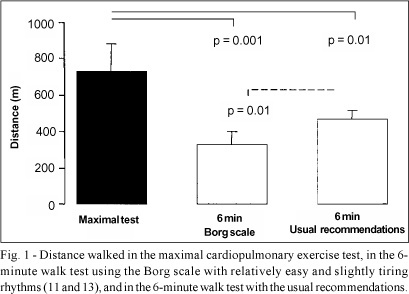
OBJECTIVE: The 6-minute walk test is an way of assessing exercise capacity and predicting survival in heart failure. The 6-minute walk test was suggested to be similar to that of daily activities. We investigated the effect of motivation during the 6-minute walk test in heart failure. METHODS: We studied 12 males, age 45±12 years, ejection fraction 23±7%, and functional class III. Patients underwent the following tests: maximal cardiopulmonary exercise test on the treadmill (max), cardiopulmonary 6-minute walk test with the walking rhythm maintained between relatively easy and slightly tiring (levels 11 and 13 on the Borg scale) (6EB), and cardiopulmonary 6-minute walk test using the usual recommendations (6RU). The 6EB and 6RU tests were performed on a treadmill with zero inclination and control of the velocity by the patient. RESULTS: The values obtained in the max, 6EB, and 6RU tests were, respectively, as follows: O2 consumption (ml.kg-1.min-1) 15.4±1.8, 9.8±1.9 (60±10%), and 13.3±2.2 (90±10%); heart rate (bpm) 142±12, 110±13 (77±9%), and 126±11 (89±7%); distance walked (m) 733±147, 332±66, and 470±48; and respiratory exchange ratio (R) 1.13±0.06, 0.9±0.06, and 1.06±0.12. Significant differences were observed in the values of the variables cited between the max and 6EB tests, the max and 6RU tests, and the 6EB and 6RU tests (p<0.05). CONCLUSION: Patients, who undergo the cardiopulmonary 6-minute walk test and are motivated to walk as much as they possibly can, usually walk almost to their maximum capacity, which may not correspond to that of their daily activities. The use of the Borg scale during the cardiopulmonary 6-minute walk test seems to better correspond to the metabolic demand of the usual activities in this group of patients.
  • Exercise
  • Heart Failure
  • Oxygen Consumption
Read Full Article
Creative Commons Attribution (CC BY) Creative Commons license
22/09/2002 DOI: 10.1590/S0066-782X2002000600003 Views 1
Primary Cardiac Angiosarcoma: A Therapeutical Dilemma
Case Report

Primary Cardiac Angiosarcoma: A Therapeutical Dilemma

José Dario Frota Filho et al. Fernando A. Lucchese Paulo Leães Luís Antônio Valente … Mariana S. Vieira Celso Blacher

Cardiac angiosarcomas are malignant tumors that almost invariably have a short and fatal evolution. The therapeutic approach includes surgery, chemotherapy, and radiation therapy, alone or in combination. Heart transplantation is an attractive option in nonresectable tumors, even though the current experience is still limited. However, in most patients, the diagnosis is still established late, and survival is only slightly altered by the proposed treatments, mainly due to previously existing and undetected metastases. We report a case that illustrates the therapeutic dilemma faced with this neoplasia, and we discuss the case based on a literature review.

Read Full Article
Creative Commons Attribution (CC BY) Creative Commons license
20/09/2002 DOI: 10.1590/S0066-782X2002000600006 Views 2
Original Article

Retrospective Study of the Survival of Patients who Underwent Cardiopulmonary Resuscitation in an Intensive Care Unit

Daniel Martins Moreira et al. Guilherme Mariante Neto Marcelo Wierzynski Oliveira Letícia Biscaino Alves … Luís Carlos Chorazje Adamatti Eliana de Andrade Trotta Sílvia Regina Rios Vieira

OBJECTIVE: To evaluate clinical and evolutive characteristics of patients admitted in an intensive care unit after cardiopulmonary resuscitation, identifying prognostic survival factors.METHODS: A retrospective study of 136 patients admitted between 1995 and 1999 to an intensive care unit, evaluating clinical conditions, mechanisms and causes of cardiopulmonary arrest, and their relation to hospital mortality.RESULTS: A 76% mortality rate independent of age and sex was observed. Asystole was the most frequent mechanism of death, and seen in isolation pulmonary arrest was the least frequent. Cardiac failure, need for mechanical ventilation, cirrhosis and previous stroke were clinically significant (p<0.01) death factors.CONCLUSION: Prognostic factors supplement the doctor's decision as to whether or not a patient will benefit from cardiopulmonary resuscitation.

  • cardiopulmonary arrest
  • Cardiopulmonary Resuscitation
  • Intensive Care Unit
Read Full Article
Creative Commons Attribution (CC BY) Creative Commons license
20/09/2002 DOI: 10.1590/S0066-782X2002000600002 Views 1
Multiple Embolism in a Female Patient with Infective Endocarditis: Low Back Pain and Hematuria as the Initial Clinical Manifestations
Case Report

Multiple Embolism in a Female Patient with Infective Endocarditis: Low Back Pain and Hematuria as the Initial Clinical Manifestations

Marcelo Luiz Campos Vieira et al. Mônica Luisa Rappi Schmidt Marcos Valério Coimbra de Resende Luis Sérgio Afonso de André Júnior

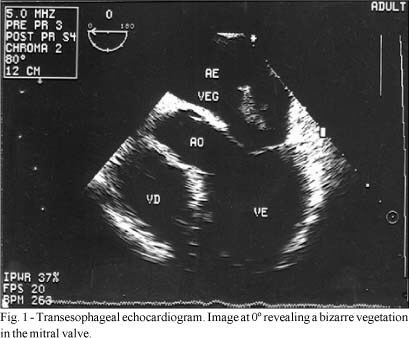
A 59-year-old female patient with mitral valve prolapse and a previous history of lumbosacral spondyloarthrosis and lumbar disk hernia had an episode of infective endocarditis due to Streptococcus viridans, which evolved with peripheral embolism to the left kidney, spleen, and left iliac artery, and intraventricular cerebral hemorrhage. Her clinical manifestations were low back pain and hematuria, which were initially attributed to an osteoarticular condition. Infective endocarditis is a severe polymorphic disease with multiple clinical manifestations and it should always be included in the differential diagnosis by clinicians.

Read Full Article
Creative Commons Attribution (CC BY) Creative Commons license
20/09/2002 DOI: 10.1590/S0066-782X2002000600007 Views 1
Pericardial Effusion with Cardiac Tamponade as a Form of Presentation of Primary Hypothyroidism
Case Report

Pericardial Effusion with Cardiac Tamponade as a Form of Presentation of Primary Hypothyroidism

Acir Rachid et al. Leiber C. Caum Ana Paula Trentini Carlos A. Fischer … Dênis A. J. Antonelli Rafael P. Hagemann

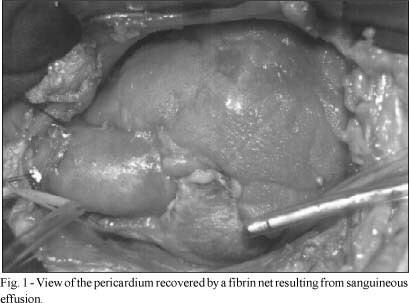
The authors describe a case of pericardial effusion accompanied by cardiac tamponade caused by primary hypothyroidism. Diagnosis was made by exclusion, because other causes of cardiac tamponade are more frequent. Emergency treatment of cardiac tamponade is pericardiocentesis (with possible pericardial window), and, after stabilization, performance of hormonal reposition therapy with L-thyroxin.

Read Full Article
Creative Commons Attribution (CC BY) Creative Commons license
20/09/2002 DOI: 10.1590/S0066-782X2002000600005 Views 1
Echocardiographic Assessment of the Pulmonary Venous Flow: An Indicator of Increased Pulmonary Flow in Congenital Cardiac Malformations
Original Article

Echocardiographic Assessment of the Pulmonary Venous Flow: An Indicator of Increased Pulmonary Flow in Congenital Cardiac Malformations

Ivan Romero Rivera et al. Valdir Ambrósio Moisés Angelo Amato V. de Paola Antonio Carlos Carvalho

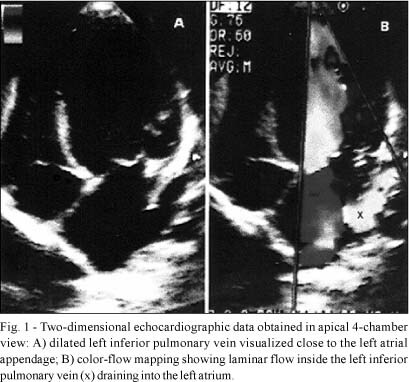
OBJECTIVE: To identify the left inferior pulmonary vein as an indirect marker of increased pulmonary flow in congenital heart diseases.METHODS: We carried out a prospective consecutive study on 40 patients divided into 2 groups as follows: G1 – 20 patients diagnosed with congenital heart disease and increased pulmonary flow; G2 (control group) – 20 patients who were either healthy or had congenital heart disease with decreased or normal pulmonary flow. We obtained the velocity-time integral of the left inferior pulmonary vein flow, excluding the “reverse A” wave, with pulsed Doppler echocardiography.RESULTS: In G1, 19 out of the 20 patients had well-identified dilation of the left inferior pulmonary vein. No G2 patient had dilation of the left inferior pulmonary vein. Dilation of the left inferior pulmonary vein in conditions of increased pulmonary flow had sensitivity of 95%, specificity of 100%, positive predictive value of 100%, and negative predictive value of 95% (1 false-negative case). The integral of time and velocity of the pulmonary venous flow obtained with pulsed Doppler echocardiography was greater in the G1 patients (G1=25.0±4.6 cm versus G2=14.8±2.1 cm, p=0.0001).CONCLUSION: The identification of dilation of the left inferior pulmonary vein suggests the presence of congenital heart disease with increased pulmonary flow. This may be used as an indirect sign of increased flow, mainly in malformations of difficult diagnosis, such as atrial septal defects of the venous sinus or coronary sinus type.

  • congenital heart diseases
  • Echocardiography
  • Pulmonary Veins
Read Full Article
Creative Commons Attribution (CC BY) Creative Commons license
20/09/2002 DOI: 10.1590/S0066-782X2002000600001 Views 1
Analysis of the Association Between Apolipoprotein E Polymorphism and Cardiovascular Risk Factors in an Elderly Population with Longevity
Original Article

Analysis of the Association Between Apolipoprotein E Polymorphism and Cardiovascular Risk Factors in an Elderly Population with Longevity

Carla Helena Augustin Schwanke et al. Ivana Beatrice Mânica da Cruz Ney Furhmann Leal Rosane Scheibe … Yukio Moriguchi Emílio Hideyuki Moriguchi

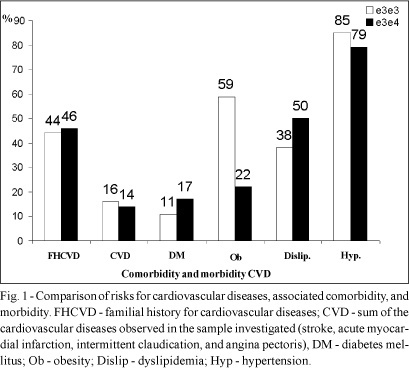
OBJECTIVE: To establish the allelic and genotypic frequencies related to apolipoprotein E (ApoE) polymorphism and association of the genotypes with risk factors and cardiovascular morbidity in an elderly population with longevity. METHODS: We analyzed 70 elderly patients aged 80 years or more who were part of the Projeto Veranópolis. We used the gene amplification technique through the polymerase chain reaction-restriction fragment length polymorphism (PCR-RFLP) and cleavage with the restriction enzyme Hha I to identify the ApoE genotypes. The most frequent genotypes were compared considering biological variables and cardiovascular risks and morbidity. RESULTS: The frequencies of the E2, E3, and E4 alleles were 0.05, 0.84, and 0.11, respectively, and of the genotypes were as follows: E3E3 (0.70), E3E4 (0.22), E2E3 (0.06), and E2E2 (0.02). Individuals with the E3E4 had a mean age greater than those with the E3E3. No association was observed between the genotypes and the variables analyzed, except for obesity, which was associated with the E3E3 genotype. Individuals with the E3E4 genotype had high levels of LDL-cholesterol and fibrinogen as compared with those with the E3E3 genotype. CONCLUSION: The results suggest that the E4E4 genotype may be associated with early mortality. A balance between the protective or neutral factors and the cardiovascular risk factors may occur among the individuals with different genotypes, attenuating the negative effects of the E4 allele.

  • apolipoprotein E
  • Cardiovascular Risk Factors
  • elderly population with longevity
Read Full Article
Creative Commons Attribution (CC BY) Creative Commons license
20/09/2002 DOI: 10.1590/S0066-782X2002000600004

How to cite this article

EndNote RIS

Electronic Document Format (Vancouver)

Guimarães GV, Bellotti G, Bacal F, Mocelin A, Bocchi EA. Can the Cardiopulmonary 6-Minute Walk Test Reproduce the Usual Activities of Patients with Heart Failure?. Arquivos Brasileiros de Cardiologia 2002;78(6):557-60.

Electronic Document Format (ABNT)

Guimarães, Guilherme Veiga; Bellotti, Giovanni; Bacal, Fernando; Mocelin, Amilcar; Bocchi, Edimar Alcides. Can the Cardiopulmonary 6-Minute Walk Test Reproduce the Usual Activities of Patients with Heart Failure?. Arquivos Brasileiros de Cardiologia, v. 78, n. 6, p. 557-560, Sep. 2002.

Electronic Document Format (APA)

Guimarães, G. V., Bellotti, G., Bacal, F., Mocelin, A., & Bocchi, E. A. (2002). Can the Cardiopulmonary 6-Minute Walk Test Reproduce the Usual Activities of Patients with Heart Failure?. Arquivos Brasileiros de Cardiologia, 78(6), 557-560.

Electronic Document Format (ISO)

Guimarães, Guilherme Veiga and Bellotti, Giovanni and Bacal, Fernando and Mocelin, Amilcar and Bocchi, Edimar Alcides. Can the Cardiopulmonary 6-Minute Walk Test Reproduce the Usual Activities of Patients with Heart Failure?. Arquivos Brasileiros de Cardiologia [online]. 2002, vol. 78, n. 6, [cited 2026-10-14], pp. 557-560. Available from: <https://journals.cardiol.br/en/article/can-the-cardiopulmonary-6-minute-walk-test-reproduce-the-usual-activities-of-patients-with-heart-failure/>. ISSN 0066-782X

EndNote RIS

Electronic Document Format (Vancouver)

Frota Filho JD, Lucchese FA, Leães P, Valente LA, Vieira MS, Blacher C. Primary Cardiac Angiosarcoma: A Therapeutical Dilemma. Arquivos Brasileiros de Cardiologia 2002;78(6):589-91.

Electronic Document Format (ABNT)

Frota Filho, José Dario; Lucchese, Fernando A.; Leães, Paulo; Valente, Luís Antônio; Vieira, Mariana S.; Blacher, Celso. Primary Cardiac Angiosarcoma: A Therapeutical Dilemma. Arquivos Brasileiros de Cardiologia, v. 78, n. 6, p. 589-591, Sep. 2002.

Electronic Document Format (APA)

Frota Filho, J. D., Lucchese, F. A., Leães, P., Valente, L. A., Vieira, M. S., & Blacher, C. (2002). Primary Cardiac Angiosarcoma: A Therapeutical Dilemma. Arquivos Brasileiros de Cardiologia, 78(6), 589-591.

Electronic Document Format (ISO)

Frota Filho, José Dario and Lucchese, Fernando A. and Leães, Paulo and Valente, Luís Antônio and Vieira, Mariana S. and Blacher, Celso. Primary Cardiac Angiosarcoma: A Therapeutical Dilemma. Arquivos Brasileiros de Cardiologia [online]. 2002, vol. 78, n. 6, [cited 2026-10-14], pp. 589-591. Available from: <https://journals.cardiol.br/en/article/primary-cardiac-angiosarcoma-a-therapeutical-dilemma/>. ISSN 0066-782X

EndNote RIS

Electronic Document Format (Vancouver)

Moreira DM, Mariante Neto G, Oliveira MW, Alves LB, Adamatti LCC, Trotta EA, Vieira SRR, et al. Retrospective Study of the Survival of Patients who Underwent Cardiopulmonary Resuscitation in an Intensive Care Unit. Arquivos Brasileiros de Cardiologia 2002;78(6):549-52.

Electronic Document Format (ABNT)

Moreira, Daniel Martins; Mariante Neto, Guilherme; Oliveira, Marcelo Wierzynski; Alves, Letícia Biscaino; Adamatti, Luís Carlos Chorazje; Trotta, Eliana de Andrade; Vieira, Sílvia Regina Rios. Retrospective Study of the Survival of Patients who Underwent Cardiopulmonary Resuscitation in an Intensive Care Unit. Arquivos Brasileiros de Cardiologia, v. 78, n. 6, p. 549-552, Sep. 2002.

Electronic Document Format (APA)

Moreira, D. M., Mariante Neto, G., Oliveira, M. W., Alves, L. B., Adamatti, L. C. C., Trotta, E. A., & Vieira, S. R. R. (2002). Retrospective Study of the Survival of Patients who Underwent Cardiopulmonary Resuscitation in an Intensive Care Unit. Arquivos Brasileiros de Cardiologia, 78(6), 549-552.

Electronic Document Format (ISO)

Moreira, Daniel Martins and Mariante Neto, Guilherme and Oliveira, Marcelo Wierzynski and Alves, Letícia Biscaino and Adamatti, Luís Carlos Chorazje and Trotta, Eliana de Andrade and Vieira, Sílvia Regina Rios. Retrospective Study of the Survival of Patients who Underwent Cardiopulmonary Resuscitation in an Intensive Care Unit. Arquivos Brasileiros de Cardiologia [online]. 2002, vol. 78, n. 6, [cited 2026-10-14], pp. 549-552. Available from: <https://journals.cardiol.br/en/article/retrospective-study-of-the-survival-of-patients-who-underwent-cardiopulmonary-resuscitation-in-an-intensive-care-unit/>. ISSN 0066-782X

EndNote RIS

Electronic Document Format (Vancouver)

Vieira MLC, Schmidt MLR, Resende MVC, André Júnior LSA. Multiple Embolism in a Female Patient with Infective Endocarditis: Low Back Pain and Hematuria as the Initial Clinical Manifestations. Arquivos Brasileiros de Cardiologia 2002;78(6):595-7.

Electronic Document Format (ABNT)

Vieira, Marcelo Luiz Campos; Schmidt, Mônica Luisa Rappi; Resende, Marcos Valério Coimbra de; André Júnior, Luis Sérgio Afonso de. Multiple Embolism in a Female Patient with Infective Endocarditis: Low Back Pain and Hematuria as the Initial Clinical Manifestations. Arquivos Brasileiros de Cardiologia, v. 78, n. 6, p. 595-597, Sep. 2002.

Electronic Document Format (APA)

Vieira, M. L. C., Schmidt, M. L. R., Resende, M. V. C. , & André Júnior, L. S. A. (2002). Multiple Embolism in a Female Patient with Infective Endocarditis: Low Back Pain and Hematuria as the Initial Clinical Manifestations. Arquivos Brasileiros de Cardiologia, 78(6), 595-597.

Electronic Document Format (ISO)

Vieira, Marcelo Luiz Campos and Schmidt, Mônica Luisa Rappi and Resende, Marcos Valério Coimbra de and André Júnior, Luis Sérgio Afonso de. Multiple Embolism in a Female Patient with Infective Endocarditis: Low Back Pain and Hematuria as the Initial Clinical Manifestations. Arquivos Brasileiros de Cardiologia [online]. 2002, vol. 78, n. 6, [cited 2026-10-14], pp. 595-597. Available from: <https://journals.cardiol.br/en/article/multiple-embolism-in-a-female-patient-with-infective-endocarditis-low-back-pain-and-hematuria-as-the-initial-clinical-manifestations/>. ISSN 0066-782X

EndNote RIS

Electronic Document Format (Vancouver)

Rachid A, Caum LC, Trentini AP, Fischer CA, Antonelli DAJ, Hagemann RP. Pericardial Effusion with Cardiac Tamponade as a Form of Presentation of Primary Hypothyroidism. Arquivos Brasileiros de Cardiologia 2002;78(6):583-5.

Electronic Document Format (ABNT)

Rachid, Acir; Caum, Leiber C.; Trentini, Ana Paula; Fischer, Carlos A.; Antonelli, Dênis A. J.; Hagemann, Rafael P.. Pericardial Effusion with Cardiac Tamponade as a Form of Presentation of Primary Hypothyroidism. Arquivos Brasileiros de Cardiologia, v. 78, n. 6, p. 583-585, Sep. 2002.

Electronic Document Format (APA)

Rachid, A., Caum, L. C., Trentini, A. P., Fischer, C. A., Antonelli, D. A. J., & Hagemann, R. P. (2002). Pericardial Effusion with Cardiac Tamponade as a Form of Presentation of Primary Hypothyroidism. Arquivos Brasileiros de Cardiologia, 78(6), 583-585.

Electronic Document Format (ISO)

Rachid, Acir and Caum, Leiber C. and Trentini, Ana Paula and Fischer, Carlos A. and Antonelli, Dênis A. J. and Hagemann, Rafael P.. Pericardial Effusion with Cardiac Tamponade as a Form of Presentation of Primary Hypothyroidism. Arquivos Brasileiros de Cardiologia [online]. 2002, vol. 78, n. 6, [cited 2026-10-14], pp. 583-585. Available from: <https://journals.cardiol.br/en/article/pericardial-effusion-with-cardiac-tamponade-as-a-form-of-presentation-of-primary-hypothyroidism/>. ISSN 0066-782X

EndNote RIS

Electronic Document Format (Vancouver)

Rivera IR, Moisés VA, Paola AAV, Carvalho AC. Echocardiographic Assessment of the Pulmonary Venous Flow: An Indicator of Increased Pulmonary Flow in Congenital Cardiac Malformations. Arquivos Brasileiros de Cardiologia 2002;78(6):541-4.

Electronic Document Format (ABNT)

Rivera, Ivan Romero; Moisés, Valdir Ambrósio; Paola, Angelo Amato V. de; Carvalho, Antonio Carlos. Echocardiographic Assessment of the Pulmonary Venous Flow: An Indicator of Increased Pulmonary Flow in Congenital Cardiac Malformations. Arquivos Brasileiros de Cardiologia, v. 78, n. 6, p. 541-544, Sep. 2002.

Electronic Document Format (APA)

Rivera, I. R., Moisés, V. A., Paola, A. A. V. , & Carvalho, A. C. (2002). Echocardiographic Assessment of the Pulmonary Venous Flow: An Indicator of Increased Pulmonary Flow in Congenital Cardiac Malformations. Arquivos Brasileiros de Cardiologia, 78(6), 541-544.

Electronic Document Format (ISO)

Rivera, Ivan Romero and Moisés, Valdir Ambrósio and Paola, Angelo Amato V. de and Carvalho, Antonio Carlos. Echocardiographic Assessment of the Pulmonary Venous Flow: An Indicator of Increased Pulmonary Flow in Congenital Cardiac Malformations. Arquivos Brasileiros de Cardiologia [online]. 2002, vol. 78, n. 6, [cited 2026-10-14], pp. 541-544. Available from: <https://journals.cardiol.br/en/article/echocardiographic-assessment-of-the-pulmonary-venous-flow-an-indicator-of-increased-pulmonary-flow-in-congenital-cardiac-malformations/>. ISSN 0066-782X

EndNote RIS

Electronic Document Format (Vancouver)

Schwanke CHA, Cruz IBM, Leal NF, Scheibe R, Moriguchi Y, Moriguchi EH. Analysis of the Association Between Apolipoprotein E Polymorphism and Cardiovascular Risk Factors in an Elderly Population with Longevity. Arquivos Brasileiros de Cardiologia 2002;78(6):571-9.

Electronic Document Format (ABNT)

Schwanke, Carla Helena Augustin; Cruz, Ivana Beatrice Mânica da; Leal, Ney Furhmann; Scheibe, Rosane; Moriguchi, Yukio; Moriguchi, Emílio Hideyuki. Analysis of the Association Between Apolipoprotein E Polymorphism and Cardiovascular Risk Factors in an Elderly Population with Longevity. Arquivos Brasileiros de Cardiologia, v. 78, n. 6, p. 571-579, Sep. 2002.

Electronic Document Format (APA)

Schwanke, C. H. A., Cruz, I. B. M. , Leal, N. F., Scheibe, R., Moriguchi, Y., & Moriguchi, E. H. (2002). Analysis of the Association Between Apolipoprotein E Polymorphism and Cardiovascular Risk Factors in an Elderly Population with Longevity. Arquivos Brasileiros de Cardiologia, 78(6), 571-579.

Electronic Document Format (ISO)

Schwanke, Carla Helena Augustin and Cruz, Ivana Beatrice Mânica da and Leal, Ney Furhmann and Scheibe, Rosane and Moriguchi, Yukio and Moriguchi, Emílio Hideyuki. Analysis of the Association Between Apolipoprotein E Polymorphism and Cardiovascular Risk Factors in an Elderly Population with Longevity. Arquivos Brasileiros de Cardiologia [online]. 2002, vol. 78, n. 6, [cited 2026-10-14], pp. 571-579. Available from: <https://journals.cardiol.br/en/article/analysis-of-the-association-between-apolipoprotein-e-polymorphism-and-cardiovascular-risk-factors-in-an-elderly-population-with-longevity/>. ISSN 0066-782X

Sede – Rio de Janeiro
Av. Marechal Câmara, 160
3º andar – Sala: 330 – Centro
Rio de Janeiro – CEP: 20020-907
Tel.: (55 +21) 3478-2700
ou (21) 99386-3961
E-mail: revista@cardiol.br

Sede – São Paulo
Alameda Santos, 705 – 11º andar
Cerqueira César | São Paulo
CEP: 01419-001
Tel.: (55 +11) 3411-5500
E-mail: revista@cardiol.br

  • About the Journal
  • Internal Regulation
  • Editors Section
  • Editorial Board
  • History
  • SBC Award

  • Guidelines for Publication
  • Editorial Policy
  • Ethics Policy
  • Policy on the Use of Artificial Intelligence
  • Mandatory Publication Form
  • Publication Fee

Issues

SBC Guidelines

  • How to Publish an Abstract Supplement?
  • Supplements from the Brazilian Congress of Cardiology