Combination of Tele-Cardiology Tools for Cardiovascular Risk Stratification in Primary Care: Data from the PROVAR+ Study
Abstract
Background:
Tele-cardiology tools are valuable strategies to improve risk stratification.
Objective:
We aimed to evaluate the accuracy of tele-electrocardiography (ECG) to predict abnormalities in screening echocardiography (echo) in primary care (PC).
Methods:
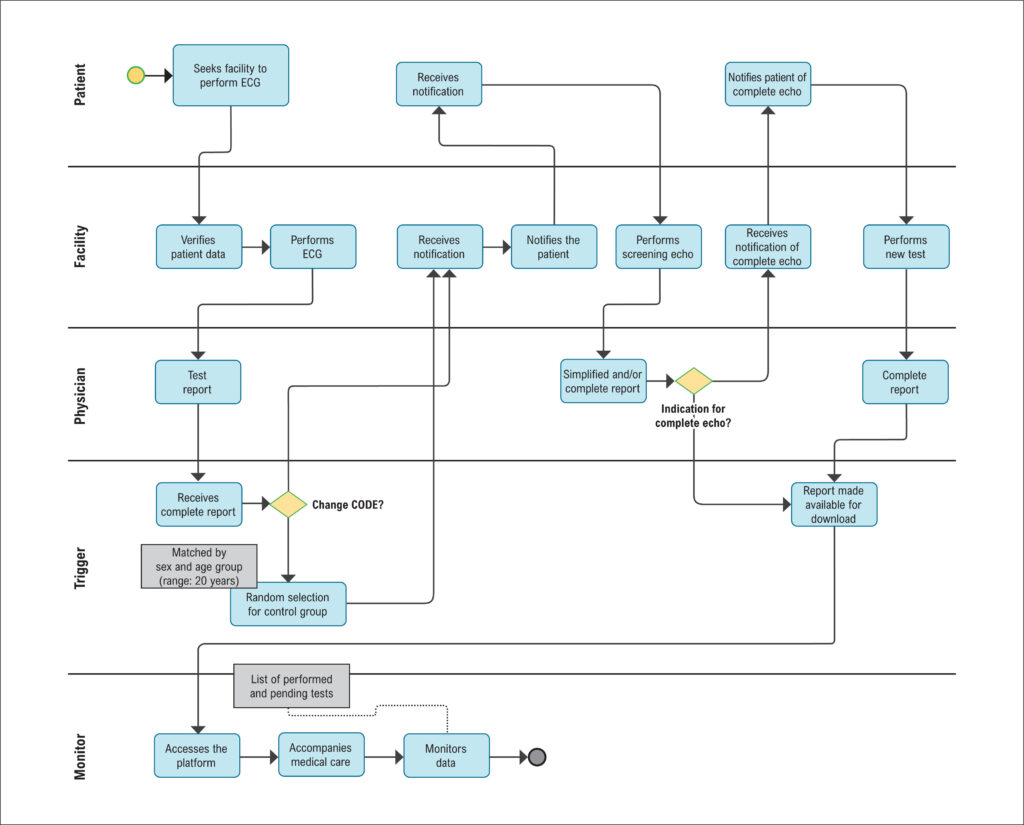
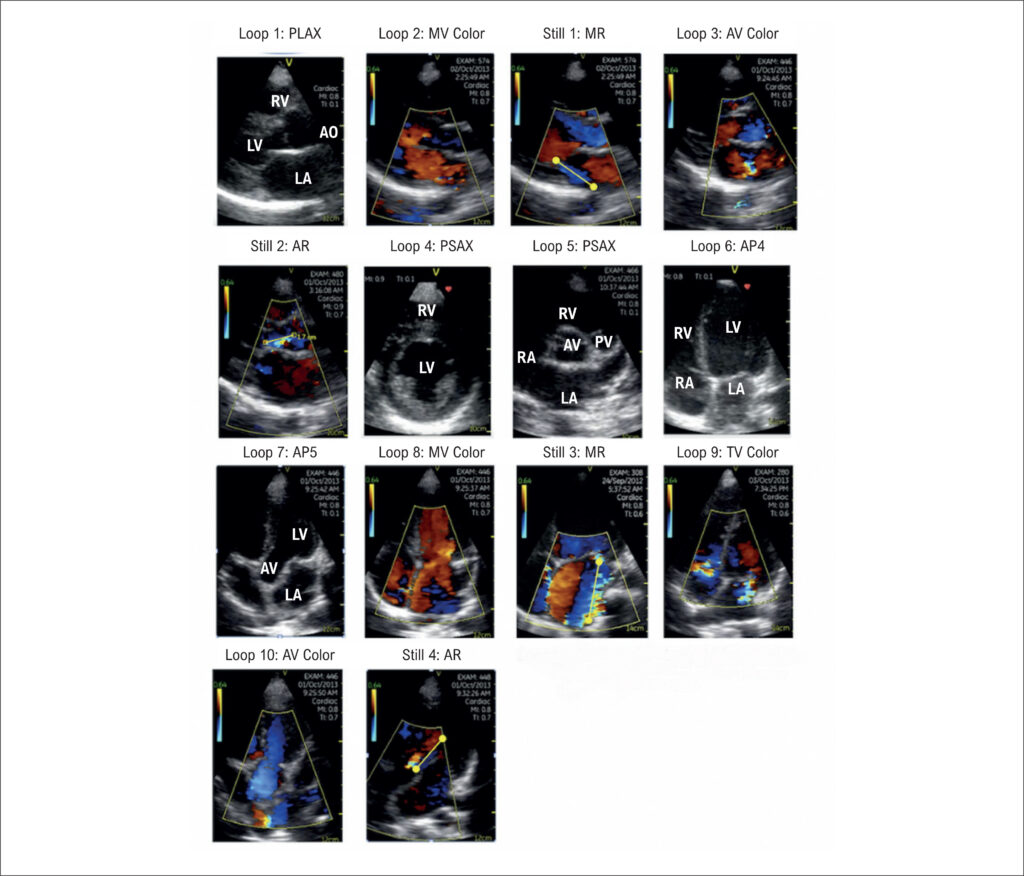
In 17 months, 6 health providers at 16 PC units were trained on simplified handheld echo protocols. Tele-ECGs were recorded for final diagnosis by a cardiologist. Consented patients with major ECG abnormalities by the Minnesota code, and a 1:5 sample of normal individuals underwent clinical questionnaire and screening echo interpreted remotely. Major heart disease was defined as moderate/severe valve disease, ventricular dysfunction/hypertrophy, pericardial effusion, or wall-motion abnormalities. Association between major ECG and echo abnormalities was assessed by logistic regression as follows: 1) unadjusted model; 2) model 1 adjusted for age/sex; 3) model 2 plus risk factors (hypertension/diabetes); 4) model 3 plus history of cardiovascular disease (Chagas/rheumatic heart disease/ischemic heart disease/stroke/heart failure). P-values < 0.05 were considered significant.
Results:
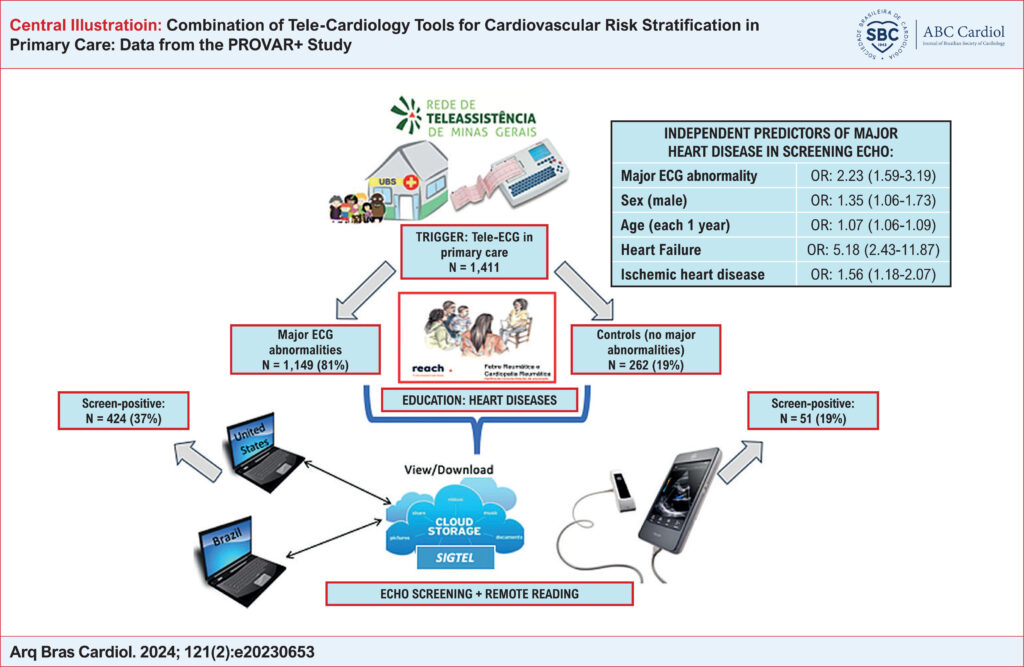
A total 1,411 patients underwent echo; 1,149 (81%) had major ECG abnormalities. Median age was 67 (IQR 60 to 74) years, and 51.4% were male. Major ECG abnormalities were associated with a 2.4-fold chance of major heart disease on echo in bivariate analysis (OR = 2.42 [95% CI 1.76 to 3.39]), and remained significant after adjustments in models (p < 0.001) 2 (OR = 2.57 [95% CI 1.84 to 3.65]), model 3 (OR = 2.52 [95% CI 1.80 to3.58]), and model 4 (OR = 2.23 [95%CI 1.59 to 3.19]). Age, male sex, heart failure, and ischemic heart disease were also independent predictors of major heart disease on echo.
Conclusions:
Tele-ECG abnormalities increased the likelihood of major heart disease on screening echo, even after adjustments for demographic and clinical variables.
Images
Image gallery fullscreen viewer
Comments are moderated by the editorial team before publication. Discussions should be evidence-based and use scientific language. Conflicts of interest should be declared.