ABC Family Arquivos Brasileiros de Cardiologia International Journal of Cardiovascular Sciences ABC Heart Failure & Cardiomyopathy ABC Imagem Cardiovascular
Português English
ABC Family
Português English
  • About
    • About ABC Family
    • Internal Regulation
    • Editorial Board
    • Brazilian Society of Cardiology (SBC)
  • Issues
  • SBC Guidelines
  • Content
    • Videos
    • Podcasts
    • News
  • About
    • About ABC Family
    • Internal Regulation
    • Editorial Board
    • Brazilian Society of Cardiology (SBC)
  • Issues
  • SBC Guidelines
  • Content
    • Videos
    • Podcasts
    • News

ABC Family

  • ABC Family
  • Arquivos Brasileiros de Cardiologia
  • International Journal of Cardiovascular Sciences
  • ABC Heart Failure & Cardiomyopathy
  • ABC Imagem Cardiovascular
Search in

No content found.

Journals
Ordering
Article types
Others

  1. Home
  2. Keyword: Vascular Patency
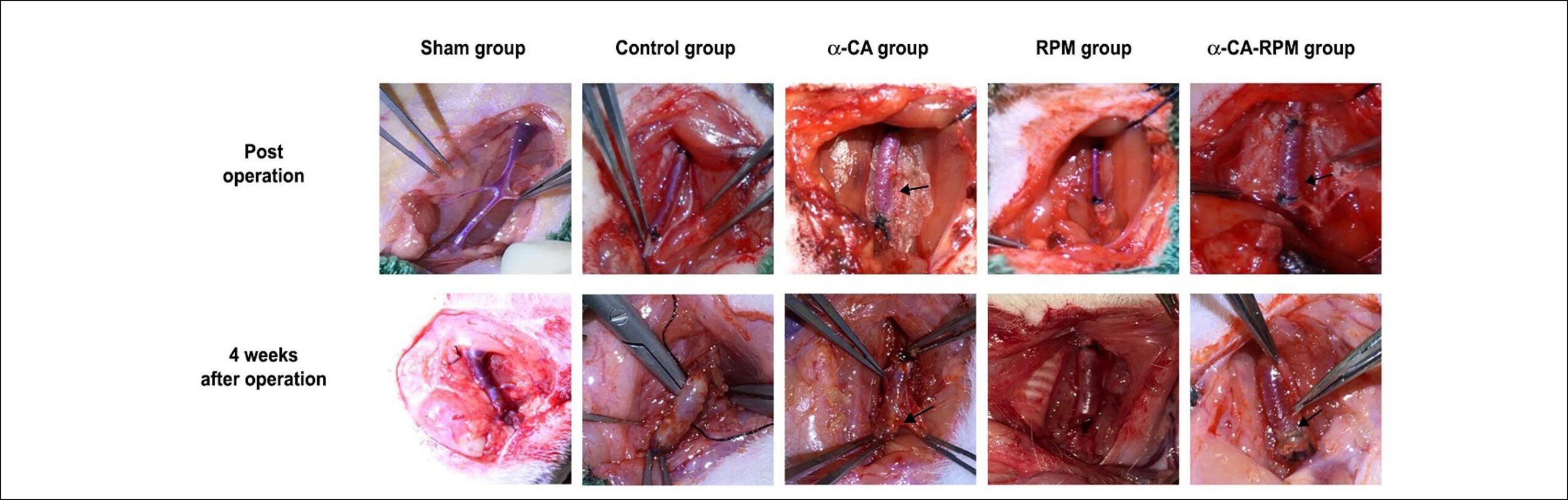
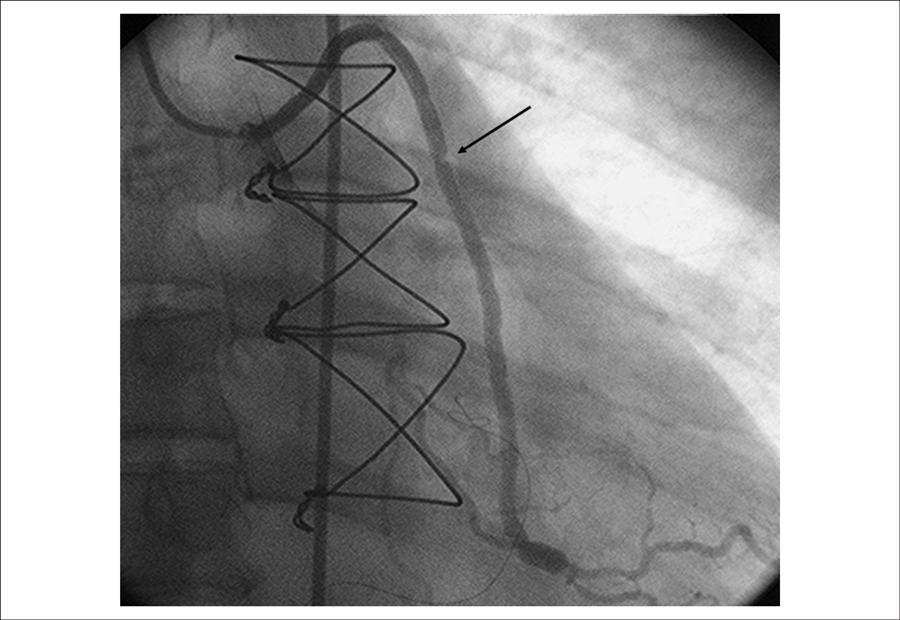
Figure 1
ABC
Original Article

Rapamycin Combined with α-Cyanoacrylate Contributes to Inhibiting Intimal Hyperplasia in Rat Models

Jianjun Ge

Abstract

Background:

Vein graft restenosis has an adverse impact on bridge vessel circulation and patient prognosis after coronary artery bypass grafting.

Objectives:

We used the extravascular supporter α-cyanoacrylate (α-CA), the local application rapamycin/sirolimus (RPM), and a combination of the two (α-CA-RPM) in rat models of autogenous vein graft to stimulate vein graft change. The aim of our study was to observe the effect of α-CA, RPM, and α-CA-RPM on vein hyperplasia.

Methods:

Fifty healthy Sprague Dawley (SD) rats were randomized into the following 5 groups: sham, control, α-CA, RPM, and α-CA-RPM. Operating procedure as subsequently described was used to build models of grafted rat jugular vein on carotid artery on one side. The level of endothelin-1 (ET-1) was determined by enzyme-linked immunosorbent assay (ELISA). Grafted veins were observed via naked eye 4 weeks later; fresh veins were observed via microscope and image-processing software in hematoxylin-eosin (HE) staining and immunohistochemistry after having been fixed and stored” (i.e. First they were fixed and stored, and second they were observed); α-Smooth Muscle Actin (αSMA) and von Willebrand factor (vWF) were measured with reverse transcription-polymerase chain reaction (RT-PCR). Comparisons were made with single-factor analysis of variance and Fisher’s least significant difference test, with p < 0.05 considered significant.

Results:

We found that intimal thickness of the α-CA, RPM, and α-CA-RPM groups was lower than that of the control group (p < 0.01), and the thickness of the α-CA-RPM group was notably lower than that of the α-CA and RPM groups (p < 0.05).

Conclusion:

RPM combined with α-CA contributes to inhibiting intimal hyperplasia in rat models and is more effective for vascular patency than individual use of either α-CA or RPM.

  • Cyanocrylates
  • Graft Occlusion, Vascular
  • Hyperplasia
  • Myocardial Revascularization/surgery
  • Rats
  • Sirolimus
  • Vascular Patency
Read Full Article
Creative Commons Attribution (CC BY) Creative Commons license
17/12/2018 DOI: 10.5935/abc.20180247 Views 1
IJCS
Brief Communication

The Influence of Comorbid Conditions on Graft Stenosis in Patients with Coronary Artery Bypass Graft Operation

Turgut Karabag et al. Belma Kalayci Bahar Sahin Elif Coskun … Mustafa Umut Somuncu Mustafa Ozan Cakir

Abstract

The primary goal of coronary artery bypass grafting is to achieve complete revascularization with grafts that will remain patent throughout the patient’s lifetime. This study investigated the association between bypass graft patency and comorbidity burden determined by Charlson comorbidity index (CCI) among patients with previous bypass operation who underwent a control angiography. One-hundred and two patients who had undergone CABG in the past were included to the study. Critical stenosis was defined as 50% or greater coronary luminal obstruction of any coronary vessel or its lateral branch. Patients were divided into 2 groups group 1; critical graft stenosis; (54 pts; 41M, mean age 66.5 ± 7.8 years), group 2; graft patent (48 pts; 31M, mean age; 65.9 ± 8.2 years). Charlson comorbidity index (CCI) and modified CCI scores were used for detecting comorbidities. The comparison of continuous variables between the control and critical CAD groups was performed by the independent sample test. A p value less than 0.05 was considered statistically significant. The two groups were statistically similar with respect to demographic properties, time since bypass operation, cardiovascular risk factors, systolic blood pressure, heart rate, medications used, complete blood counts parameters, and lipid profiles. CCI was significantly higher in Group 1 compared to Group 2 (7.14 ± 2.02 vs 4.72 ± 1.58; p < 0.001). Modified CCI scores were also higher in Group 1 than in Group 2 (6.14 ± 2.02 vs 3.73 ± 1.60; p < 0.001). Graft occlusion was more common among patients with a high comorbidity burden. CCI scoring system may be helpful for determining patients at increased risk at both the preoperative and postoperative periods.

  • Comorbidity
  • Coronary Artery Disease
  • Coronary stenosis
  • Myocardial Revascularization
  • Vascular Patency
Read Full Article
Creative Commons Attribution (CC BY) Creative Commons license
01/01/2018 DOI: 10.5935/2359-4802.20180055
Figure 1
ABC
Artigo Original

Effects of Skeletonized versus Pedicled Radial Artery on Postoperative Graft Patency and Flow

Rômulo C. Arnal Bonini et al. Rodolfo Staico Mario Issa Antoninho Sanfins Arnoni … Paulo Chaccur Camilo Abdulmassih Neto Jarbas Jackson Dinkhuysen Paulo Paredes Paulista Luiz Carlos Bento de Souza Luiz Felipe P. Moreira

Background:

Radial artery (RA) was the second arterial graft introduced in clinical practice for myocardial revascularization. The skeletonization technique of the left internal thoracic artery (LITA) may actually change the graft’s flow capacity with potential advantages. This leads to the assumption that the behavior of the RA, as a coronary graft, is similar to that of the LITA, when skeletonized.

Objective:

This study evaluated ‘free’ aortic-coronary radial artery (RA) grafts, whether skeletonized or with adjacent tissues.

Methods:

A prospective randomized study comparing 40 patients distributed into two groups was conducted. In group I, we used skeletonized radial arteries (20 patients), and in group II, we used radial arteries with adjacent tissues (20 patients). After the surgical procedure, patients underwent flow velocity measurements.

Results:

The main surgical variables were: RA internal diameter, RA length, and free blood flow in the radial artery. The mean RA graft diameters as calculated using quantitative angiography in the immediate postoperative period were similar, as well as the flow velocity measurement variables. On the other hand, coronary cineangiography showed the presence of occlusion in one RA graft and stenosis in five RA grafts in GII, while GI presented stenosis in only one RA graft (p = 0.045).

Conclusion:

These results show that the morphological and pathological features, as well as the hemodynamic performance of the free radial artery grafts, whether prepared in a skeletonized manner or with adjacent tissues, are similar. However, a larger number of non-obstructive lesions may be observed when RA is prepared with adjacent tissues.

  • Coronary Diseases / surgery
  • Radial Artery / abnormalities
  • Radial Artery / surgery
  • Vascular Patency
Read Full Article
Creative Commons Attribution (CC BY) Creative Commons license
01/05/2014 DOI: 10.5935/abc.20140016 Views 1

How to cite this article

EndNote RIS

Electronic Document Format (Vancouver)

Ge J. Rapamycin Combined with α-Cyanoacrylate Contributes to Inhibiting Intimal Hyperplasia in Rat Models. Arquivos Brasileiros de Cardiologia 2018;112(1):3-10.

Electronic Document Format (ABNT)

Ge, Jianjun. Rapamycin Combined with α-Cyanoacrylate Contributes to Inhibiting Intimal Hyperplasia in Rat Models. Arquivos Brasileiros de Cardiologia, v. 112, n. 1, p. 3-10, Dec. 2018.

Electronic Document Format (APA)

Ge, J. (2018). Rapamycin Combined with α-Cyanoacrylate Contributes to Inhibiting Intimal Hyperplasia in Rat Models. Arquivos Brasileiros de Cardiologia, 112(1), 3-10.

Electronic Document Format (ISO)

Ge, Jianjun. Rapamycin Combined with α-Cyanoacrylate Contributes to Inhibiting Intimal Hyperplasia in Rat Models. Arquivos Brasileiros de Cardiologia [online]. 2018, vol. 112, n. 1, [cited 2026-10-14], pp. 3-10. Available from: <https://journals.cardiol.br/en/article/rapamycin-combined-with-%ce%b1-cyanoacrylate-contributes-to-inhibiting-intimal-hyperplasia-in-rat-models/>. ISSN 0066-782X

EndNote RIS

Electronic Document Format (Vancouver)

Karabag T, Kalayci B, Sahin B, Coskun E, Somuncu MU, Cakir MO. The Influence of Comorbid Conditions on Graft Stenosis in Patients with Coronary Artery Bypass Graft Operation. International Journal of Cardiovascular Sciences 2018;31(5):544-7.

Electronic Document Format (ABNT)

Karabag, Turgut; Kalayci, Belma; Sahin, Bahar; Coskun, Elif; Somuncu, Mustafa Umut; Cakir, Mustafa Ozan. The Influence of Comorbid Conditions on Graft Stenosis in Patients with Coronary Artery Bypass Graft Operation. International Journal of Cardiovascular Sciences, v. 31, n. 5, p. 544-547, Dec. 2017.

Electronic Document Format (APA)

Karabag, T., Kalayci, B., Sahin, B., Coskun, E., Somuncu, M. U., & Cakir, M. O. (2018). The Influence of Comorbid Conditions on Graft Stenosis in Patients with Coronary Artery Bypass Graft Operation. International Journal of Cardiovascular Sciences, 31(5), 544-547.

Electronic Document Format (ISO)

Karabag, Turgut and Kalayci, Belma and Sahin, Bahar and Coskun, Elif and Somuncu, Mustafa Umut and Cakir, Mustafa Ozan. The Influence of Comorbid Conditions on Graft Stenosis in Patients with Coronary Artery Bypass Graft Operation. International Journal of Cardiovascular Sciences [online]. 2018, vol. 31, n. 5, [cited 2026-10-14], pp. 544-547. Available from: <https://journals.cardiol.br/en/article/the-influence-of-comorbid-conditions-on-graft-stenosis-in-patients-with-coronary-artery-bypass-graft-operation/>. ISSN 2359-4802

EndNote RIS

Electronic Document Format (Vancouver)

Bonini RCA, Staico R, Issa M, Arnoni AS, Chaccur P, Abdulmassih Neto C, Dinkhuysen JJ, et al. Effects of Skeletonized versus Pedicled Radial Artery on Postoperative Graft Patency and Flow. Arquivos Brasileiros de Cardiologia 2014;102(5):441-8.

Electronic Document Format (ABNT)

Bonini, Rômulo C. Arnal; Staico, Rodolfo; Issa, Mario; Arnoni, Antoninho Sanfins; Chaccur, Paulo; Abdulmassih Neto, Camilo; Dinkhuysen, Jarbas Jackson; Paulista, Paulo Paredes; Souza, Luiz Carlos Bento de; Moreira, Luiz Felipe P.. Effects of Skeletonized versus Pedicled Radial Artery on Postoperative Graft Patency and Flow. Arquivos Brasileiros de Cardiologia, v. 102, n. 5, p. 441-448, Apr. 2014.

Electronic Document Format (APA)

Bonini, R. C. A., Staico, R., Issa, M., Arnoni, A. S., Chaccur, P., Abdulmassih Neto, C., Dinkhuysen, J. J., Paulista, P. P., Souza, L. C. B. , & Moreira, L. F. P. (2014). Effects of Skeletonized versus Pedicled Radial Artery on Postoperative Graft Patency and Flow. Arquivos Brasileiros de Cardiologia, 102(5), 441-448.

Electronic Document Format (ISO)

Bonini, Rômulo C. Arnal and Staico, Rodolfo and Issa, Mario and Arnoni, Antoninho Sanfins and Chaccur, Paulo and Abdulmassih Neto, Camilo and Dinkhuysen, Jarbas Jackson and Paulista, Paulo Paredes and Souza, Luiz Carlos Bento de and Moreira, Luiz Felipe P.. Effects of Skeletonized versus Pedicled Radial Artery on Postoperative Graft Patency and Flow. Arquivos Brasileiros de Cardiologia [online]. 2014, vol. 102, n. 5, [cited 2026-10-14], pp. 441-448. Available from: <https://journals.cardiol.br/en/article/effects-of-skeletonized-versus-pedicled-radial-artery-on-postoperative-graft-patency-and-flow/>. ISSN 0066-782X

  • About ABC Family
  • Internal Regulation
  • Editorial Board
  • Brazilian Society of Cardiology (SBC)

Issues

SBC Guidelines

  • Videos
  • Podcasts
  • News