ABC Family Arquivos Brasileiros de Cardiologia International Journal of Cardiovascular Sciences ABC Heart Failure & Cardiomyopathy ABC Imagem Cardiovascular
Português English
ABC Family
Português English
  • About
    • About ABC Family
    • Internal Regulation
    • Editorial Board
    • Brazilian Society of Cardiology (SBC)
  • Issues
  • SBC Guidelines
  • Content
    • Videos
    • Podcasts
    • News
  • About
    • About ABC Family
    • Internal Regulation
    • Editorial Board
    • Brazilian Society of Cardiology (SBC)
  • Issues
  • SBC Guidelines
  • Content
    • Videos
    • Podcasts
    • News

ABC Family

  • ABC Family
  • Arquivos Brasileiros de Cardiologia
  • International Journal of Cardiovascular Sciences
  • ABC Heart Failure & Cardiomyopathy
  • ABC Imagem Cardiovascular
Search in

No content found.

Journals
Ordering
Article types
Others

  1. Home
  2. Keyword: Sports Medicine/Trends
IJCS
Editorial

The Truth is that Doctors do not Prescribe Physical Activities

Lorena Christine A. Albuquerque et al. Nabil Ghorayeb

Considering the well-established health benefits of regular physical activity, doctors have a primary role in counseling, encouragement, and education. In fact, they should be proactive in promoting health. Multiple published manuscripts attempted to link the doctors’ level of physical activity to the encouragement of their patients’ physical activity. Sufficient evidence has been provided that medical advice alone does not lead to sustained changes in the behavior of their patients.

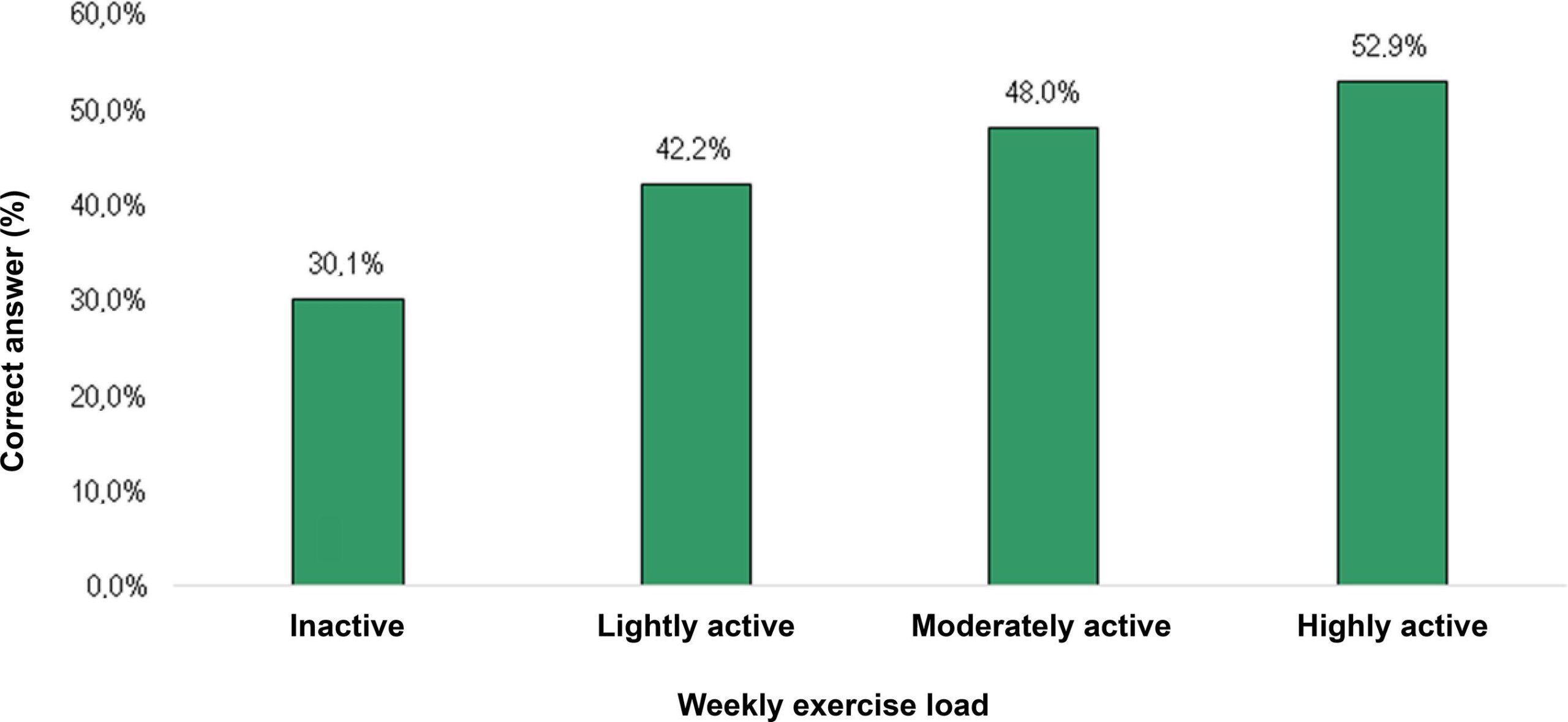
There was statistical significance in the manuscript that we analyzed, by Meira DT, et al.: “Talk the Talk and Walk the Walk! Association between Weekly Exercise Load and Knowledge about Recommendations for Fighting Inactivity”, demonstrating a linear association between the amount of physical exercise recommended per week and the knowledge of the WHO recommendations against a sedentary lifestyle among the health professionals attending the Conference of the Society of Cardiology of Rio de Janeiro in 2017.

[…]

  • Cardiovascular Diseases/prevention and control
  • Exercise
  • Quality of Life, Risk Factors/Prevention and Control
  • Sports
  • Sports Medicine/Trends
Read Full Article
Creative Commons Attribution (CC BY) Creative Commons license
03/10/2019 DOI: 10.5935/2359-4802.20190076
Figure 1
IJCS
Original Article

Talk the talk and walk the walk! Association between Weekly Exercise Load and Knowledge about Recommendations for Fighting Innactivity

Diogo Thadeu Meira et al. Leonardo Giglio Gonçalves Luiz Henrique Araújo Matheus Gasparini … Bernardo Souza Cunha Amanda Monteiro Michele Heringer Christiane Prado Andre Volschan Fabrício Braga da Silva

Abstract

Background:

The World Health Organization (WHO) recommends as a weekly “target dose” of exercise 150 minutes of moderate exercise or 75 minutes of intense exercise. Public health policies have prioritized the practice of exercise as a strategy for disease prevention and health promotion, with health professionals as their main promoters.

Objective:

To assess the interaction between the amount of exercise per week and the knowledge about recommendations for fighting a sedentary lifestyle among health care professionals attending a congress of cardiology.

Methods:

Participants of the 2017 Rio de Janeiro Society of Cardiology Congress were interviewed. Knowledge about the World Health Organization (WHO) recommendations for fighting a sedentary lifestyle was assessed by asking participants the question: “How much weekly exercise is recommended by the WHO?” Responders were stratified by the weekly exercise load reported. A multivariate logistic model was created to determine independent predictors of knowledge.

Results:

A total of 426 participants were interviewed (45.5% men, median age 31 years, 37.8% physicians, 65.8% of the physicians were cardiologists). The overall knowledge level was 44.6%; 38.1%, 52.7% and 56.6% among non-physicians, non-cardiologists and cardiologists, respectively (p = 0.002). Of all participants, 21.8% were inactive, 15% were lightly active, 34.7% moderately active and 28.4% highly active, and the percentage of individuals who gave a correct answer to the question on exercise recommendations was 30.1%, 42%, 48% and 52.9% respectively (p < 0.0001). In the multivariate analysis, being highly active (OR = 2.25, IC95%, 1.238 – 4.089), moderately active (OR = 1.93, IC 95% 1.105 – 3.39) and being a cardiologist (OR = 2.01, IC 95% 1.243 – 3,267) were predictors of knowledge.

Conclusions:

There was a linear association between exercise level and knowledge about the WHO recommendations on exercise. Policies to stimulate the practice of exercise among health professionals can positively impact campaigns for reducing sedentary lifestyle in the general population.

  • Cardiovascular Diseases/prevention and control
  • Exercise
  • Health Promotion, Preventive Medicine
  • physical fitness
  • Sports
  • Sports Medicine/Trends
Read Full Article
Creative Commons Attribution (CC BY) Creative Commons license
01/04/2019 DOI: 10.5935/2359-4802.20190023 Views 1

How to cite this article

EndNote RIS

Electronic Document Format (Vancouver)

Albuquerque LCA, Ghorayeb N. The Truth is that Doctors do not Prescribe Physical Activities. International Journal of Cardiovascular Sciences 2019;32(5):481-2.

Electronic Document Format (ABNT)

Albuquerque, Lorena Christine A.; Ghorayeb, Nabil. The Truth is that Doctors do not Prescribe Physical Activities. International Journal of Cardiovascular Sciences, v. 32, n. 5, p. 481-482, Oct. 2019.

Electronic Document Format (APA)

Albuquerque, L. C. A., & Ghorayeb, N. (2019). The Truth is that Doctors do not Prescribe Physical Activities. International Journal of Cardiovascular Sciences, 32(5), 481-482.

Electronic Document Format (ISO)

Albuquerque, Lorena Christine A. and Ghorayeb, Nabil. The Truth is that Doctors do not Prescribe Physical Activities. International Journal of Cardiovascular Sciences [online]. 2019, vol. 32, n. 5, [cited 2026-10-14], pp. 481-482. Available from: <https://journals.cardiol.br/en/article/the-truth-is-that-doctors-do-not-prescribe-physical-activities/>. ISSN 2359-4802

EndNote RIS

Electronic Document Format (Vancouver)

Meira DT, Gonçalves LG, Araújo LH, Gasparini M, Cunha BS, Monteiro A, Heringer M, et al. Talk the talk and walk the walk! Association between Weekly Exercise Load and Knowledge about Recommendations for Fighting Innactivity. International Journal of Cardiovascular Sciences 2019;32(5):473-80.

Electronic Document Format (ABNT)

Meira, Diogo Thadeu; Gonçalves, Leonardo Giglio; Araújo, Luiz Henrique; Gasparini, Matheus; Cunha, Bernardo Souza; Monteiro, Amanda; Heringer, Michele; Prado, Christiane; Volschan, Andre; Silva, Fabrício Braga da. Talk the talk and walk the walk! Association between Weekly Exercise Load and Knowledge about Recommendations for Fighting Innactivity. International Journal of Cardiovascular Sciences, v. 32, n. 5, p. 473-480, Mar. 2019.

Electronic Document Format (APA)

Meira, D. T., Gonçalves, L. G., Araújo, L. H., Gasparini, M., Cunha, B. S., Monteiro, A., Heringer, M., Prado, C., Volschan, A., & Silva, F. B. (2019). Talk the talk and walk the walk! Association between Weekly Exercise Load and Knowledge about Recommendations for Fighting Innactivity. International Journal of Cardiovascular Sciences, 32(5), 473-480.

Electronic Document Format (ISO)

Meira, Diogo Thadeu and Gonçalves, Leonardo Giglio and Araújo, Luiz Henrique and Gasparini, Matheus and Cunha, Bernardo Souza and Monteiro, Amanda and Heringer, Michele and Prado, Christiane and Volschan, Andre and Silva, Fabrício Braga da. Talk the talk and walk the walk! Association between Weekly Exercise Load and Knowledge about Recommendations for Fighting Innactivity. International Journal of Cardiovascular Sciences [online]. 2019, vol. 32, n. 5, [cited 2026-10-14], pp. 473-480. Available from: <https://journals.cardiol.br/en/article/talk-the-talk-and-walk-the-walk-association-between-weekly-exercise-load-and-knowledge-about-recommendations-for-fighting-innactivity/>. ISSN 2359-4802

  • About ABC Family
  • Internal Regulation
  • Editorial Board
  • Brazilian Society of Cardiology (SBC)

Issues

SBC Guidelines

  • Videos
  • Podcasts
  • News