ABC Family Arquivos Brasileiros de Cardiologia International Journal of Cardiovascular Sciences ABC Heart Failure & Cardiomyopathy ABC Imagem Cardiovascular
Português English
ABC Family
Português English
  • About
    • About ABC Family
    • Internal Regulation
    • Editorial Board
    • Brazilian Society of Cardiology (SBC)
  • Issues
  • SBC Guidelines
  • Content
    • Videos
    • Podcasts
    • News
  • About
    • About ABC Family
    • Internal Regulation
    • Editorial Board
    • Brazilian Society of Cardiology (SBC)
  • Issues
  • SBC Guidelines
  • Content
    • Videos
    • Podcasts
    • News

ABC Family

  • ABC Family
  • Arquivos Brasileiros de Cardiologia
  • International Journal of Cardiovascular Sciences
  • ABC Heart Failure & Cardiomyopathy
  • ABC Imagem Cardiovascular
Search in

No content found.

Journals
Ordering
Article types
Others

  1. Home
  2. Keyword: Internship and Residency
Figure 1
ABC
Research Letter

Medical Residency in Brazil in the Era of Chronic Diseases: The Need for Cardiometabolic Medicine Residency

Eduardo Thadeu de Oliveira Correia et al. Letícia Mara dos Santos Barbetta Mayara Gabriele Toledo Evandro Tinoco Mesquita Jeffrey I. Mechanick

Introduction

Cardiovascular diseases (CVD) are the leading cause of death in Brazil, significantly decreasing life expectancy, impairing quality of life, and causing a great impact on the Brazilian Unified Health System. However, it is important to highlight the enormous progress in cardiovascular research and in Brazilian cardiology over the past 6 decades, which have contributed to the increase in life expectancy from 54. years in 1960 to 75.6 years in 2018.

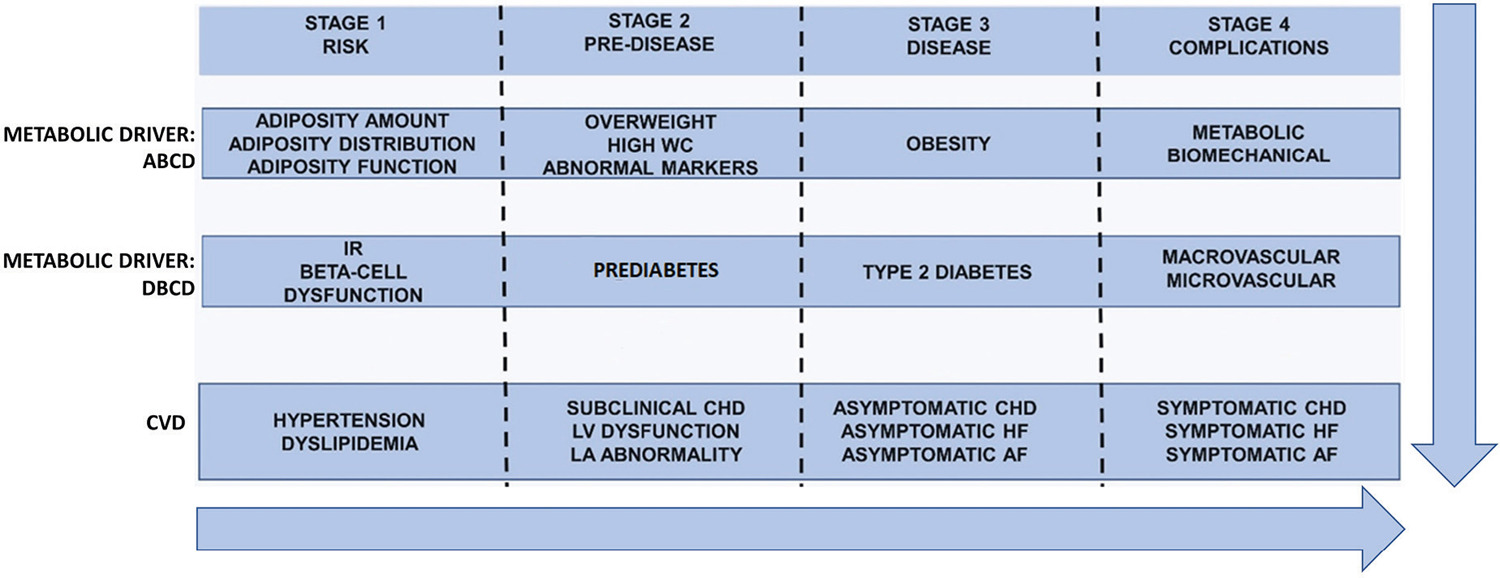
Whereas in the last century, cardiology waged a major battle against acute diseases, such as endocarditis and acute myocardial infarction, medical research has made breakthrough advancements in the management of these conditions. Nonetheless, at the same time, the era of chronic diseases emerged, in which primary drivers (e.g., genetics, environment, and behavior), metabolic drivers (e.g., obesity, diabetes, high cholesterol, and hypertension), co-morbidities (e.g., non-alcoholic fatty liver disease and chronic kidney disease [CKD]), and clinical endpoints (e.g., coronary heart disease, heart failure, and atrial fibrillation) were modeled to improve patient outcomes. As an effort to improve this concept, Mechanick et al. , introduced the Cardiometabolic-Based Chronic Disease (CMBCD) model, which focused on the impact of primary and metabolic drivers on the development of CVD, identifying key targets to reduce progression from risk (Stage 1 CMBCD) to pre-disease (Stage 2 CMBCD), disease (Stage 3 CMBCD), and complications (Stage 4 CMBCD). This classification is depicted in and marks a new era in the care of cardiometabolic diseases.

[…]
  • Diabetes Mellitus
  • Hypertension
  • Internship and Residency
  • Obesity
Read Full Article
Creative Commons Attribution (CC BY) Creative Commons license
18/03/2022 DOI: 10.36660/abc.20210339 Views 1
Figure 1
IJCS
Viewpoint

Difficult Times: The Coronavirus Pandemic and Cardiology Residency – The Experience of the Rio Grande do Sul Cardiology Institute

Raphael Boesche Guimarães et al. Simone Louise Savaris Henrique Basso Gomes Marcelo Haertel Miglioranza

Medical residency programs were first established in 1889 in Baltimore, Maryland, at John Hopkins University. At the time, Dr. William Healstead realized that seriously ill patients treated by recently certified clinicians had higher mortality rates. In response to this, and in the hopes of increasing the quality and success rates of patient care, Healstead created a new type of training program, in which emerging clinicians would receive their final training in the hospital environment itself. This model, replicated globally, is currently known as medical residency.

In Brazil, the Orthopedic Department at Hospital of Clínicas, associated with the University of São Paulo (USP), pioneered the first Brazilian medical residency program in 1945. However, this training model was not officially adopted in the country until September 5, 1977, through decree No. 80281, which instituted residency training as a formal component of medical graduate training. – Since then, physicians worldwide have been able to train in specialized medical residency programs that not only deepen their theoretical understanding, but also provide a supervised environment for development of the practical skills required by their desired area of expertise.

[…]

  • Betacoronavirus
  • Confidentiality
  • Containment of Biohazards
  • Information Security
  • Internship and Residency
  • Pandemics
Read Full Article
Creative Commons Attribution (CC BY) Creative Commons license
09/10/2020 DOI: 10.36660/ijcs.20200114 Views 2
Figure 1
ABC
Viewpoint

Cardiology Training in Brazil and Developed Countries: Some Ideas for Improvement

Lucas Colombo Godoy et al. Michael E. Farkouh Isabela C. K. Abud Manta Talia F. Dalçóquio … Remo Holanda de Mendonça Furtado Eric H. C. Yu Carlos Gun José Carlos Nicolau

Abstract

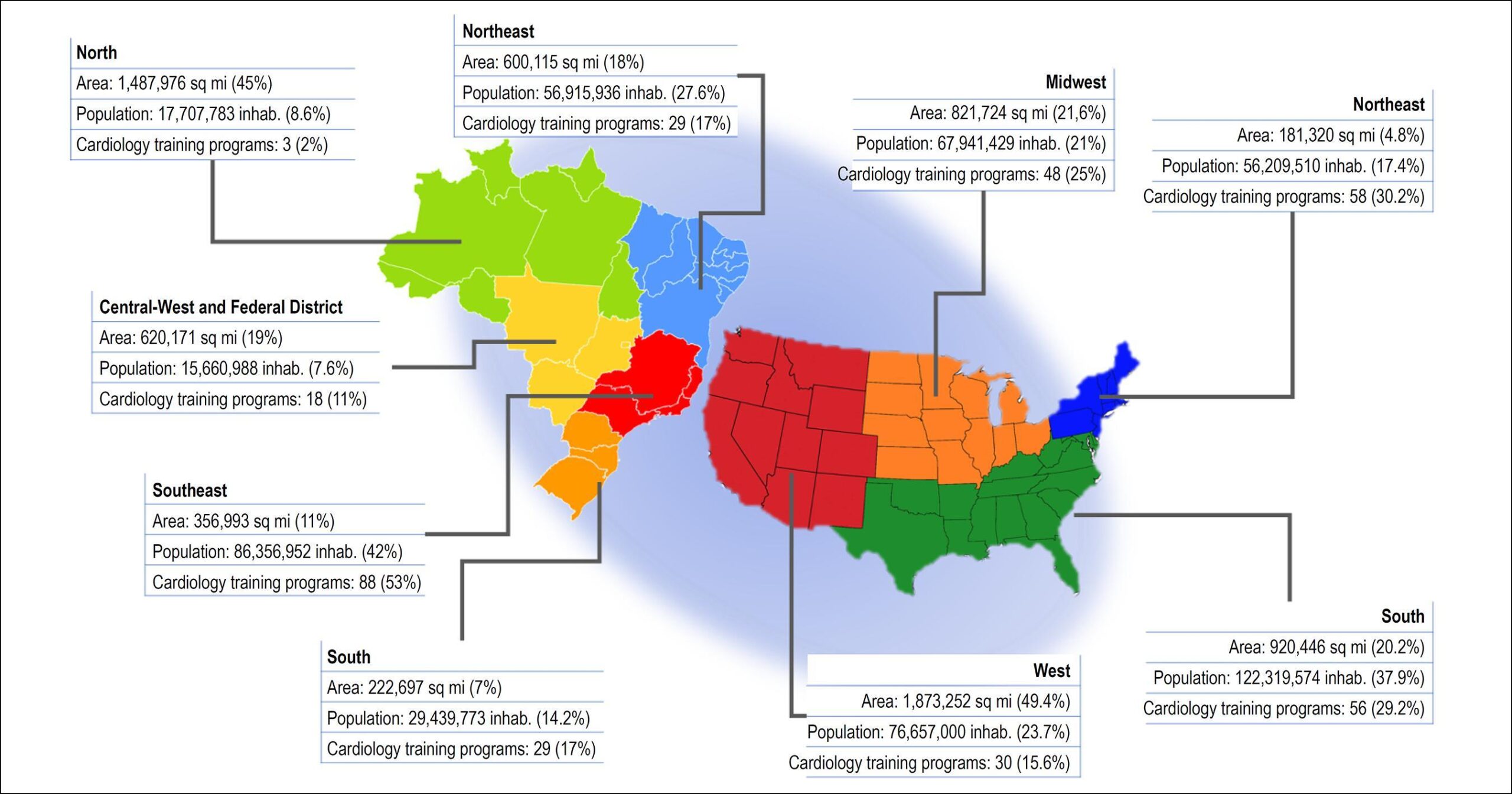
Huge variations exist in cardiology training programs across the world. In developing (middle-income) countries, such as Brazil, to find the right balance between training improvements and social and economic conditions of the country may be a difficult task. Adding more training years or different mandatory rotations, for instance, may be costly and not have an immediate direct impact on enhancing patient care or public health. In this text, we compare the Brazilian cardiology training system with other proposals implemented in developed countries from North America and Europe, aiming to point out issues worth of future discussion. Factors such as training rotations and competencies, and program duration and distribution across the countries are presented. The number of first year cardiology trainees per inhabitants is similar between Brazil and the United States (0.24 medical residents/100,000 inhabitants in Brazil and 0.26 medical residents/100,000 inhabitants in the USA). These numbers should be analyzed considering the inequality in training program distribution across Brazil, since most centers are located in the Southeast and South regions. Having more residency programs in distant areas could improve cardiovascular care in these areas. Duration of cardiology Residency Training is shorter in Brazil (two years) in comparison with developed countries (> 3 years). Brazilian residency programs give less emphasis to scientific research and diagnostic methods. Unifying minimum training requirements across the globe would facilitate the development of international learning opportunities and even professional exchange around the world.

  • Brazil
  • Cardiology
  • Education, Medical
  • Fellowships and Scholarships
  • Internship and Residency
  • Program Accreditation
Read Full Article
Creative Commons Attribution (CC BY) Creative Commons license
04/11/2019 DOI: 10.5935/abc.20190212 Views 1

How to cite this article

EndNote RIS

Electronic Document Format (Vancouver)

Correia ETO, Barbetta LMS, Toledo MG, Mesquita ET, Mechanick JI. Medical Residency in Brazil in the Era of Chronic Diseases: The Need for Cardiometabolic Medicine Residency. Arquivos Brasileiros de Cardiologia 2022;118(3):655-8.

Electronic Document Format (ABNT)

Correia, Eduardo Thadeu de Oliveira; Barbetta, Letícia Mara dos Santos; Toledo, Mayara Gabriele; Mesquita, Evandro Tinoco; Mechanick, Jeffrey I.. Medical Residency in Brazil in the Era of Chronic Diseases: The Need for Cardiometabolic Medicine Residency. Arquivos Brasileiros de Cardiologia, v. 118, n. 3, p. 655-658, Mar. 2022.

Electronic Document Format (APA)

Correia, E. T. O., Barbetta, L. M. S., Toledo, M. G., Mesquita, E. T., & Mechanick, J. I. (2022). Medical Residency in Brazil in the Era of Chronic Diseases: The Need for Cardiometabolic Medicine Residency. Arquivos Brasileiros de Cardiologia, 118(3), 655-658.

Electronic Document Format (ISO)

Correia, Eduardo Thadeu de Oliveira and Barbetta, Letícia Mara dos Santos and Toledo, Mayara Gabriele and Mesquita, Evandro Tinoco and Mechanick, Jeffrey I.. Medical Residency in Brazil in the Era of Chronic Diseases: The Need for Cardiometabolic Medicine Residency. Arquivos Brasileiros de Cardiologia [online]. 2022, vol. 118, n. 3, [cited 2026-10-14], pp. 655-658. Available from: <https://journals.cardiol.br/en/article/medical-residency-in-brazil-in-the-era-of-chronic-diseases-the-need-for-cardiometabolic-medicine-residency/>. ISSN 0066-782X

EndNote RIS

Electronic Document Format (Vancouver)

Guimarães RB, Savaris SL, Gomes HB, Miglioranza MH. Difficult Times: The Coronavirus Pandemic and Cardiology Residency – The Experience of the Rio Grande do Sul Cardiology Institute. International Journal of Cardiovascular Sciences 2020;33(5):582-5.

Electronic Document Format (ABNT)

Guimarães, Raphael Boesche; Savaris, Simone Louise; Gomes, Henrique Basso; Miglioranza, Marcelo Haertel. Difficult Times: The Coronavirus Pandemic and Cardiology Residency – The Experience of the Rio Grande do Sul Cardiology Institute. International Journal of Cardiovascular Sciences, v. 33, n. 5, p. 582-585, Oct. 2020.

Electronic Document Format (APA)

Guimarães, R. B., Savaris, S. L., Gomes, H. B., & Miglioranza, M. H. (2020). Difficult Times: The Coronavirus Pandemic and Cardiology Residency – The Experience of the Rio Grande do Sul Cardiology Institute. International Journal of Cardiovascular Sciences, 33(5), 582-585.

Electronic Document Format (ISO)

Guimarães, Raphael Boesche and Savaris, Simone Louise and Gomes, Henrique Basso and Miglioranza, Marcelo Haertel. Difficult Times: The Coronavirus Pandemic and Cardiology Residency – The Experience of the Rio Grande do Sul Cardiology Institute. International Journal of Cardiovascular Sciences [online]. 2020, vol. 33, n. 5, [cited 2026-10-14], pp. 582-585. Available from: <https://journals.cardiol.br/en/article/difficult-times-the-coronavirus-pandemic-and-cardiology-residency-the-experience-of-the-rio-grande-do-sul-cardiology-institute/>. ISSN 2359-4802

EndNote RIS

Electronic Document Format (Vancouver)

Godoy LC, Farkouh ME, Manta ICKA, Dalçóquio TF, Furtado RHM, Yu EHC, Gun C, et al. Cardiology Training in Brazil and Developed Countries: Some Ideas for Improvement. Arquivos Brasileiros de Cardiologia 2019;113(4):768-74.

Electronic Document Format (ABNT)

Godoy, Lucas Colombo; Farkouh, Michael E.; Manta, Isabela C. K. Abud; Dalçóquio, Talia F.; Furtado, Remo Holanda de Mendonça; Yu, Eric H. C.; Gun, Carlos; Nicolau, José Carlos. Cardiology Training in Brazil and Developed Countries: Some Ideas for Improvement. Arquivos Brasileiros de Cardiologia, v. 113, n. 4, p. 768-774, Nov. 2019.

Electronic Document Format (APA)

Godoy, L. C., Farkouh, M. E., Manta, I. C. K. A., Dalçóquio, T. F., Furtado, R. H. M., Yu, E. H. C., Gun, C., & Nicolau, J. C. (2019). Cardiology Training in Brazil and Developed Countries: Some Ideas for Improvement. Arquivos Brasileiros de Cardiologia, 113(4), 768-774.

Electronic Document Format (ISO)

Godoy, Lucas Colombo and Farkouh, Michael E. and Manta, Isabela C. K. Abud and Dalçóquio, Talia F. and Furtado, Remo Holanda de Mendonça and Yu, Eric H. C. and Gun, Carlos and Nicolau, José Carlos. Cardiology Training in Brazil and Developed Countries: Some Ideas for Improvement. Arquivos Brasileiros de Cardiologia [online]. 2019, vol. 113, n. 4, [cited 2026-10-14], pp. 768-774. Available from: <https://journals.cardiol.br/en/article/cardiology-training-in-brazil-and-developed-countries-some-ideas-for-improvement/>. ISSN 0066-782X

  • About ABC Family
  • Internal Regulation
  • Editorial Board
  • Brazilian Society of Cardiology (SBC)

Issues

SBC Guidelines

  • Videos
  • Podcasts
  • News