Gustavo de Azevedo Martinhago et al. Alan Rodrigues Andrade Vinicius Machado Correia Fabio Fernandes … Jose Augusto Duncan Santiago Ricardo Ribeiro Dias Vagner Madrini Junior
Abstract
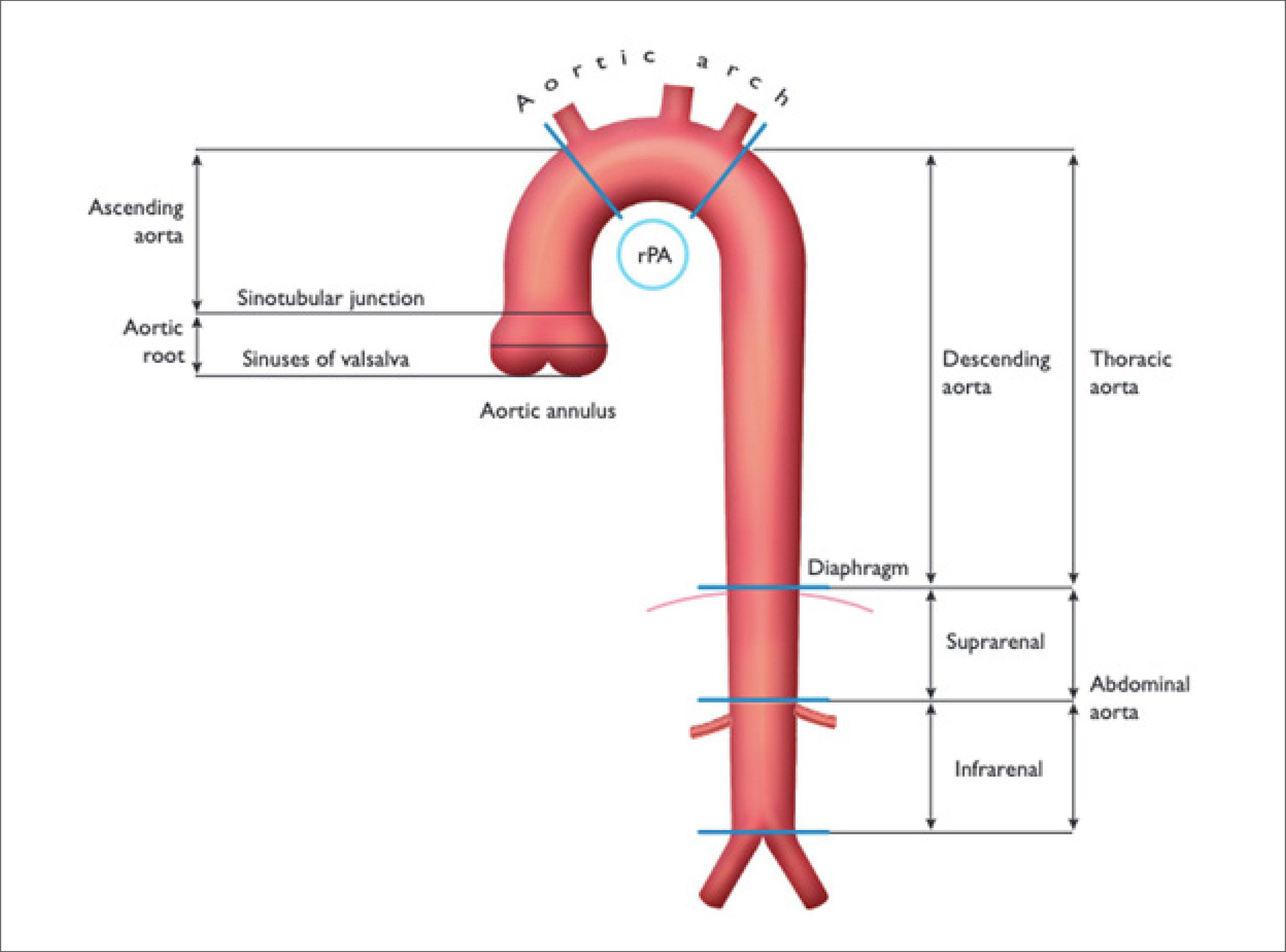
The echocardiogram is an available and essential imaging tool for the evaluation of thoracic aortic diseases. This examination plays a significant role in the identification and diagnosis, as well as the follow-up of chronic cases. Its availability, portability, cost-effectiveness, and the absence of exposure to radiation or contrast make it an important tool for monitoring patients with known aortopathy, who usually require serial examinations for follow-up. Although it is inferior in the total and detailed characterization of the aorta in all its sections compared to aortic angiotomography or angioresonance, the echocardiogram allows for functional assessment of the aortic valve and valve apparatus. In acute aortopathies, it also enables the evaluation of complications and can be performed on hemodynamically unstable patients. This article will discuss the theoretical and practical aspects of the applicability of the echocardiogram in the context of aortopathies.