Lack of effect of captopril on the metabolism of an artificial lipid emulsion similar to chylomicrons in hypertensive hypercholesterolemic patients
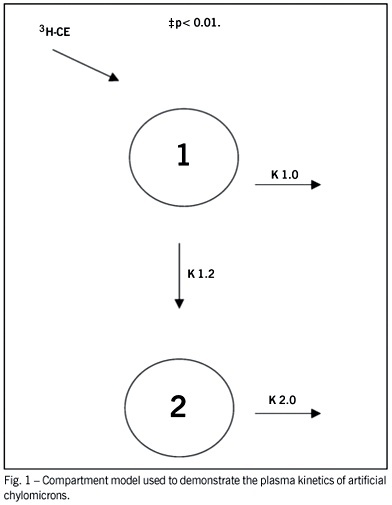
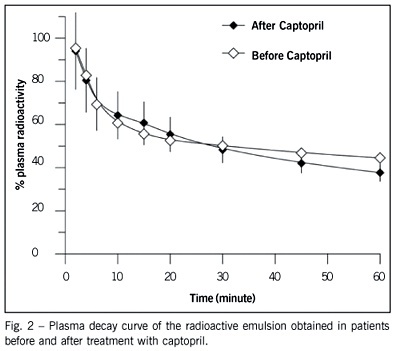
OBJECTIVE: To assess the effect of captopril, an angiotensin-converting enzyme inhibitor, on the metabolism of chylomicrons and their remnants and the possible alterations in the concentrations of plasma lipids caused by the drug in hypertensive hypercholesterolemic individuals. METHODS: The metabolism of chylomicrons was tested with the method of artificial lipid emulsion of chylomicrons labeled with ³H-cholesteryl oleate. The emulsion was injected intravenously in 10 patients with mild-moderate arterial hypertension before and 45 days after treatment with captopril (50 mg/day). After injection, blood samples were collected during 60 minutes at pre-established time intervals for determining the decay curve, the fractional catabolic rate (FCR in min-1), and the plasma residence time of the artificial lipid emulsion by analyzing different compartments. The plasma concentrations of the lipids were also assessed before and after treatment. RESULTS: The fractional catabolic rate (min-1) of the lipid emulsion before and after treatment with captopril (0.012±0.003 and 0.011±0.003, respectively; p=0.85, n.s.) and the plasma residence time of the emulsion (83.3±20.8 and 90.9±22.5 min, n.s.) did not change, but the total cholesterol and LDL-C levels decreased by 7% and 10%, respectively (p=0.02). The concentrations of HDL-C, triglycerides, Lp(a), and apolipoproteins AI and B did not change. CONCLUSION: Treatment with captopril, evaluated with the artificial lipid emulsion method, does not cause deleterious changes in the metabolism of chylomicrons and their remnants.
Imagens
Visualizador da galeria de imagens em tela cheia
Os comentários são moderados pela equipe editorial antes da publicação. As discussões devem ser baseadas em evidências e utilizar linguagem científica. Conflitos de interesse devem ser declarados.