Early Markers of Atherosclerotic Disease in Individuals with Excess Weight and Dyslipidemia
Abstract
Background:
Excessive weight is a cardiovascular risk factor since it generates a chronic inflammatory process that aggravates the endothelial function.
Objective:
To evaluate the endothelial function in individuals with excess weight and mild dyslipidemia using brachial artery flow-mediated dilation (BAFMD), and the association of endothelial function with anthropometric and biochemical variables.
Methods:
Cross-sectional study that included 74 individuals and evaluated anthropometric variables (body mass index [BMI], waist-hip ratio [WHR], waist circumference [AC], and percentage of body fat [PBF]), biochemical (blood glucose, insulinemia, ultrasensitive C-reactive protein, fibrinogen, total cholesterol, HDL-cholesterol, triglycerides, and LDL-cholesterol) and endothelial function (BAFMD, evaluated by ultrasound). The statistical analysis was performed with SPSS, version 16.0. To study the association between the variables, we used chi-square, Student’s t and Mann-Whitney tests, and Pearson’s correlation. Logistic regression analyzed the independent influence of the factors. Values of p < 0.05 were considered significant.
Results:
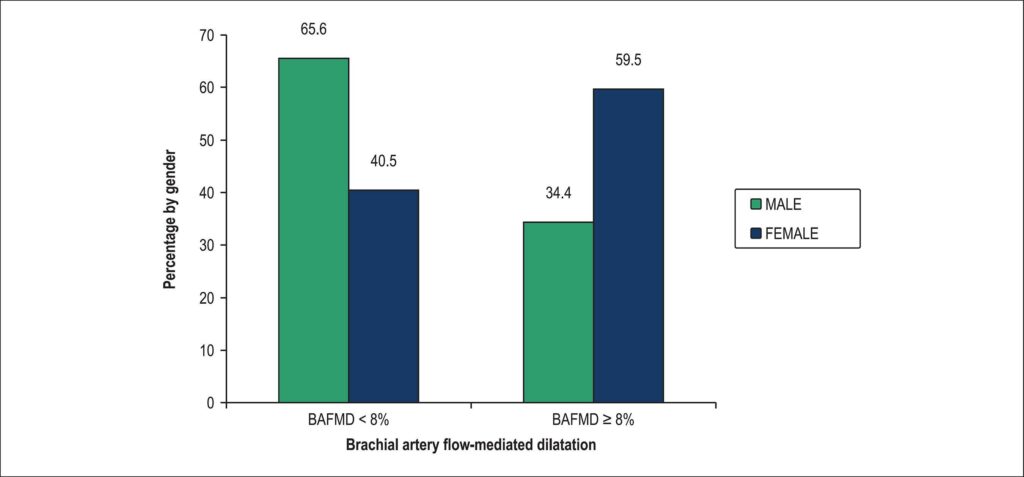
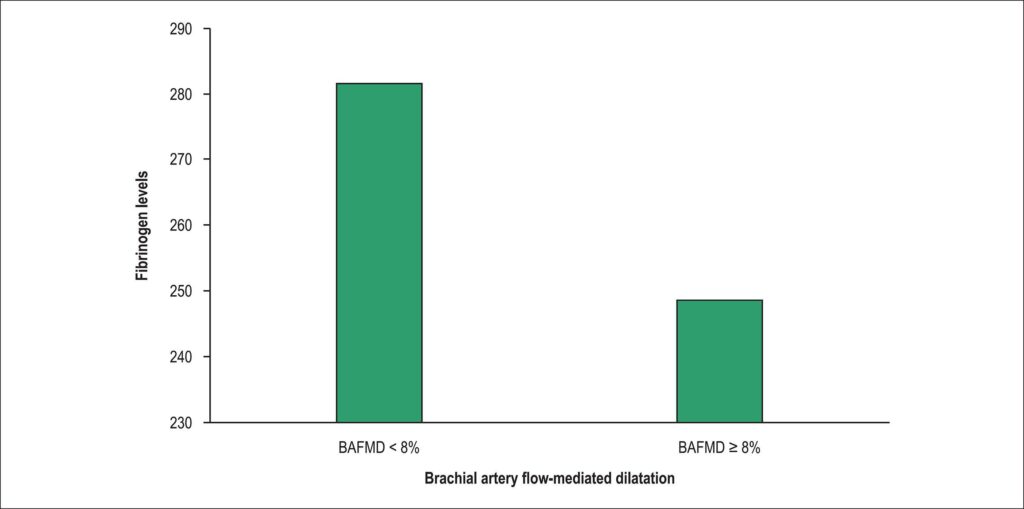
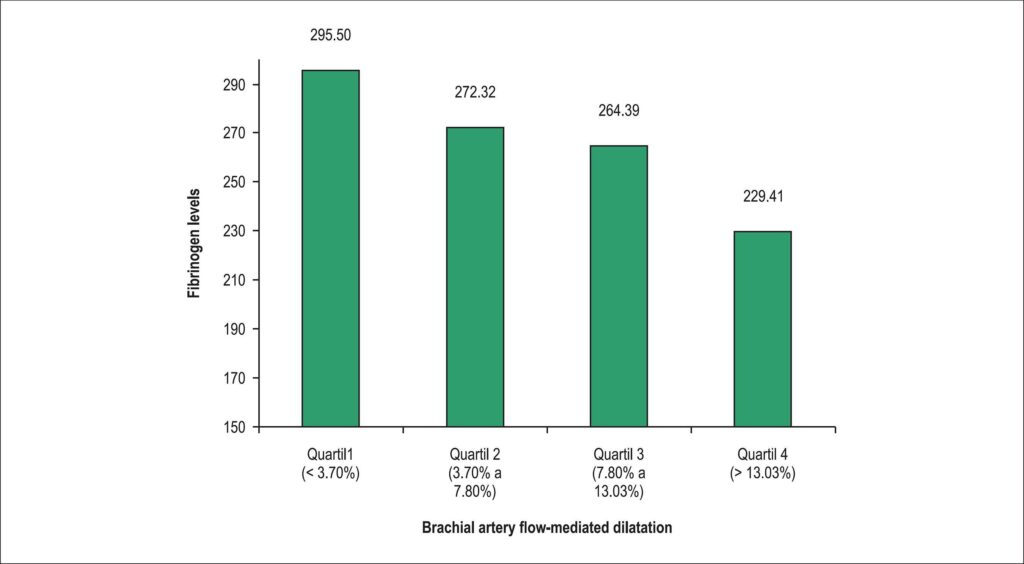
The participants had a mean age of 50.8 years, and 57% were female. BMI, WC, WHR, and PBF showed no significant association with BAFMD. The male gender (p = 0.02) and higher serum levels of fibrinogen (p = 0.02) were significantly and independently associated with a BAFMD below 8%.
Conclusions:
In individuals with excess weight and mild untreated dyslipidemia, male gender and higher levels of fibrinogen were independently associated with worse BAFMD.
Images
Image gallery fullscreen viewer
Comments are moderated by the editorial team before publication. Discussions should be evidence-based and use scientific language. Conflicts of interest should be declared.