Comparison of the Effects of Alcoholic and Non-Alcoholic Red Wine on Flow-Mediated Dilation and Brachial Artery Vasodilation
Abstract
Background:
Cardiovascular diseases are the leading cause of mortality worldwide. Wine consumption has been associated with cardiovascular benefits, which are attributed to the presence of flavonoids.
Objectives:
To assess the effects of alcoholic and non-alcoholic red wine on endothelial function by measuring variations in brachial artery flow-mediated dilation (FMD) and analyzing changes in arterial diameter, heart rate, and blood pressure.
Methods:
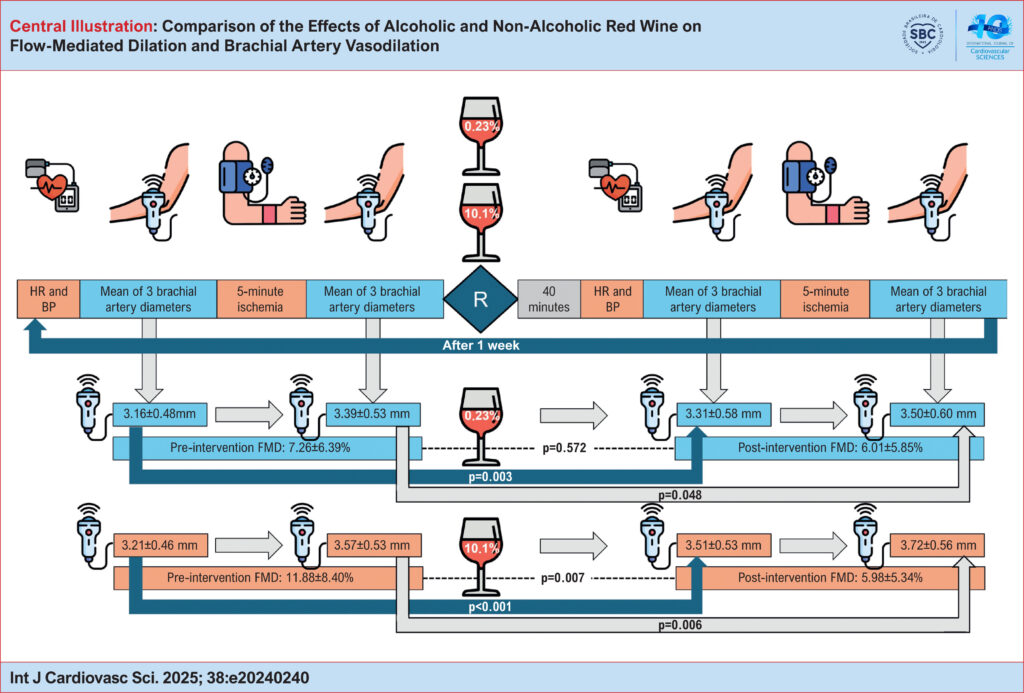
A randomized, parallel, controlled clinical trial was conducted with 22 participants assessed at 2 distinct time points. Participants consumed 200 mL of red wine and, after a 7-day washout period, received 200 mL of non-alcoholic wine. Data were analyzed using Student’s t test. P values < 0.05 were considered statistically significant.
Results:
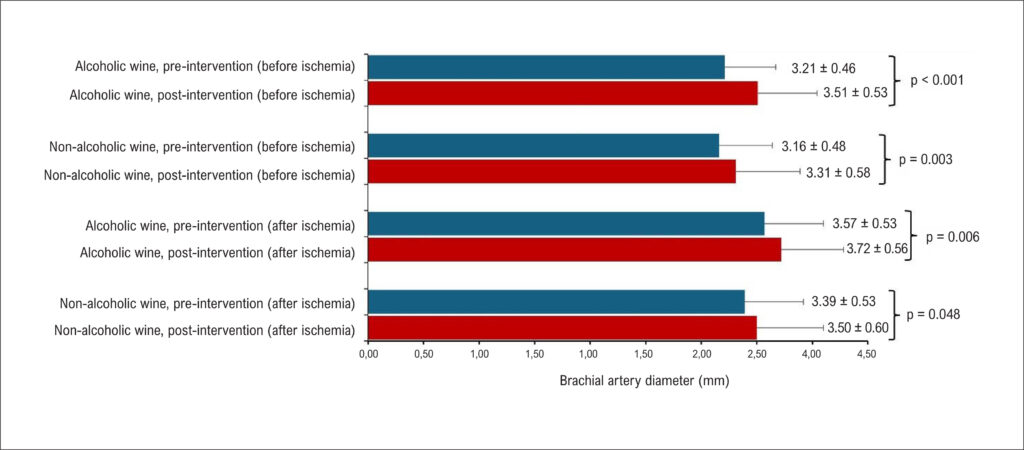
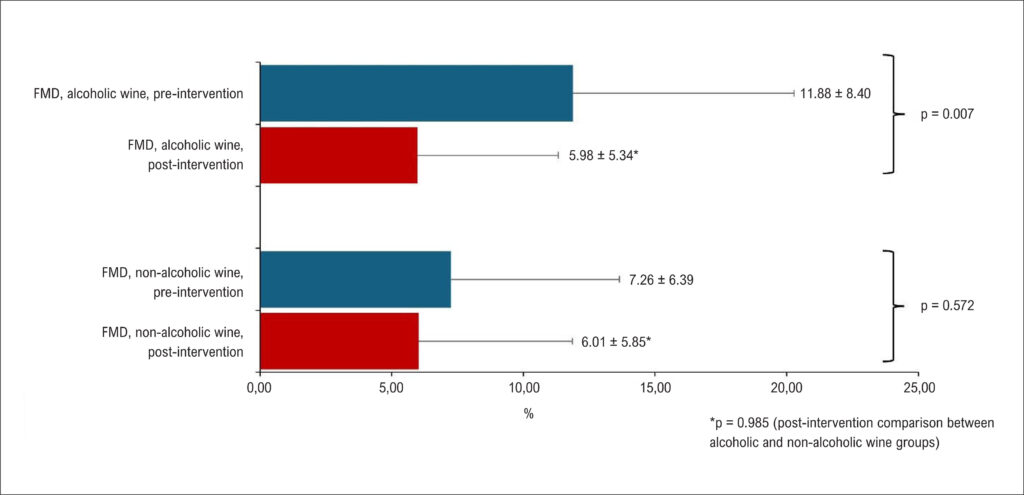
Pre-ischemia brachial artery diameter increased after both interventions: with alcoholic wine (3.21 ± 0.46 mm before versus 3.51 ± 0.53 mm after; p < 0.001) and non-alcoholic wine (3.16 ± 0.48 mm before versus 3.31 ± 0.58 mm after; p = 0.003). FMD showed a decrease after consumption of alcoholic wine (11.88% ± 8.40% before versus 5.98% ± 5.34% after; p = 0.007), whereas consumption of non-alcoholic wine did not result in significant changes (7.26% ± 6.39% before versus 6.01% ± 5.85% after; p = 0.572). Other parameters, such as heart rate and blood pressure, did not show any significant differences.
Conclusion:
Consumption of red wine, with and without alcohol, increased brachial artery diameter. However, alcoholic red wine was associated with reduced FMD, suggesting that ethanol may negatively affect endothelial function.
Images
Image gallery fullscreen viewer
Comments are moderated by the editorial team before publication. Discussions should be evidence-based and use scientific language. Conflicts of interest should be declared.