ABC Family Arquivos Brasileiros de Cardiologia International Journal of Cardiovascular Sciences ABC Heart Failure & Cardiomyopathy ABC Imagem Cardiovascular
Português English
ABC Family
Português English
  • About
    • About ABC Family
    • Internal Regulation
    • Editorial Board
    • Brazilian Society of Cardiology (SBC)
  • Issues
  • SBC Guidelines
  • Content
    • Videos
    • Podcasts
    • News
  • About
    • About ABC Family
    • Internal Regulation
    • Editorial Board
    • Brazilian Society of Cardiology (SBC)
  • Issues
  • SBC Guidelines
  • Content
    • Videos
    • Podcasts
    • News

ABC Family

  • ABC Family
  • Arquivos Brasileiros de Cardiologia
  • International Journal of Cardiovascular Sciences
  • ABC Heart Failure & Cardiomyopathy
  • ABC Imagem Cardiovascular
Search in

No content found.

Journals
Ordering
Article types
Others

  1. Home
  2. Keyword: Perfusion
Figure 1
ABC
Case Report

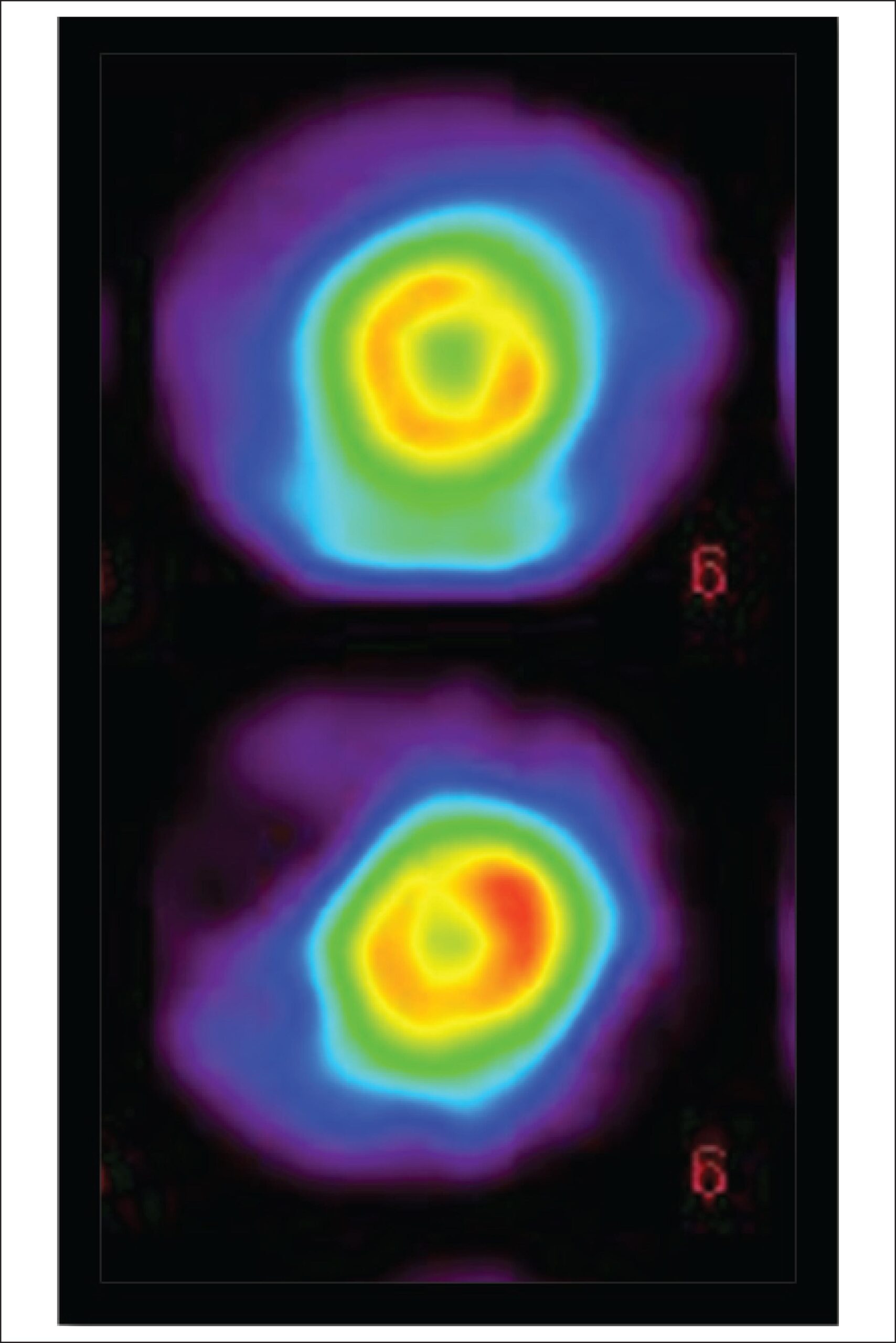
Myocardial Bridge and Angiotomography of the Coronary Arteries: Perfusion under Pharmacological Stress

Wilter dos Santos Ker et al. Daniel Gama Neves Alair Sarmet A. A. Damas Cláudio Tinoco Mesquita Marcelo Souto Nacif

Introduction

The myocardial bridge is one of the most prevalent congenital anomalies that involve the coronary circulation, and its incidence in the general population is high, affecting from 23 to 55% in necropsy studies.The impairment of the anterior descending artery is more frequent, on its proximal 2/3.In most patients, the myocardial bridges do not cause symptoms, because in order to have ischemia, there must be an imbalance between supply and consumption of oxygen. The superficial bridges, with small or slender muscle band, are the most common ones, and they may account for 75% of the cases, with average length of 1.5 cm and usually without causing symptoms. In approximately 24% of the cases, we observed deep myocardial bridges, with thicker muscle band.,

Atherosclerosis is the most common cause of ischemic heart disease. However, other causes for ischemia are frequent, and among them, we highlight the myocardial bridge, which may provoke typical or atypicalchest angina,acute myocardial infarction and sudden death.–

[…]
  • Computed Tomography
  • Coronary Artery Disease
  • Myocardial Bridge
  • Myocardial Ischemia
  • Perfusion
  • Radionuclide Imaging
Read Full Article
Creative Commons Attribution (CC BY) Creative Commons license
01/06/2017 DOI: 10.5935/abc.20170021
Assessment of myocardial perfusion and function in victims of scorpion envenomation using Gated-SPECT
ABC
Artigo Original

Assessment of myocardial perfusion and function in victims of scorpion envenomation using Gated-SPECT

Alexandre Baldini de Figueiredo et al. Palmira Cupo Antônio O Pintya Fábio Caligaris … José A Marin-Neto Sylvia E Hering Marcus Vinicius Simões

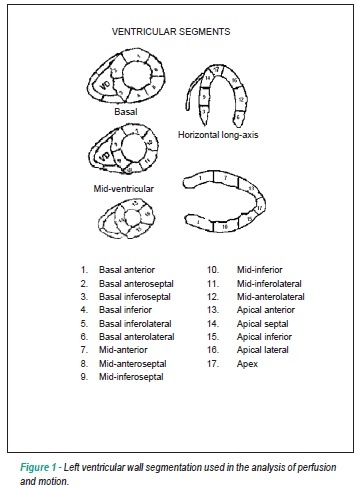
BACKGROUND: Cardiogenic shock and acute pulmonary edema are the major causes of death of patients with scorpion envenomation, whose pathophysiological mechanism remains controversial. OBJECTIVE: To investigate the correlation between myocardial perfusion abnormalities and left ventricular contractile function in victims of scorpion envenomation. METHODS: Fifteen patients underwent ECG-gated myocardial perfusion scintigraphy (gated SPECT) within 72 hours of, and 15 days after scorpion envenomation. Images were analyzed by means of a semi-quantitative visual perfusion score (0 = normal, 4 = absent) and motion score (0 = normal, 4 = akinesia), using the 17-segment model. Summed perfusion (SPS) and summed motion (SMS) scores were calculated for each patient. Ejection fraction (LVEF) was calculated by a commercially available software. RESULTS: At baseline, 12 out of the 15 patients presented abnormal myocardial perfusion and contractility. Mean values of SPS, SMS and LVEF were 12.5 ± 7.3, 17.0 ± 12.8, and 44.6 ± 16.0%, respectively. A positive correlation between SPS and SMS (r = 0.68; p = 0.005) and negative correlation between SPS and LVEF (r = -0.75; p = 0.0021) were found. The follow-up studies showed recovery of global contractility (LVEF of 68.9 ± 9.5, p = 0.0002), segmental contractility (SMS of 2.6 ± 3.1, p = 0.0009) and perfusion (SPS of 3.7 ± 3.3, p = 0.0003). Improvement of LVEF correlated positively with improvement of SPS (r = 0.72; p = 0.0035). CONCLUSIONS: Myocardial perfusion abnormalities are common in scorpion envenomation and correlate topographically with the contractile dysfunction. Recovery of contractility correlates with reversibility of perfusion defects. These findings suggest the participation of myocardial perfusion abnormalities in the pathophysiology of this form of acute ventricular failure. (Arq Bras Cardiol 2010;94(4): 418-425)

  • Perfusion
  • Pulmonary Edema
  • Radionuclide Imaging
  • Scorpions
  • Ventricular Dysfunction
Read Full Article
Creative Commons Attribution (CC BY) Creative Commons license
22/09/2010 DOI: 10.1590/S0066-782X2010000400003

How to cite this article

EndNote RIS

Electronic Document Format (Vancouver)

Ker WS, Neves DG, Damas ASAA, Mesquita CT, Nacif MS. Myocardial Bridge and Angiotomography of the Coronary Arteries: Perfusion under Pharmacological Stress. Arquivos Brasileiros de Cardiologia 2017;108(6):572-5.

Electronic Document Format (ABNT)

Ker, Wilter dos Santos; Neves, Daniel Gama; Damas, Alair Sarmet A. A.; Mesquita, Cláudio Tinoco; Nacif, Marcelo Souto. Myocardial Bridge and Angiotomography of the Coronary Arteries: Perfusion under Pharmacological Stress. Arquivos Brasileiros de Cardiologia, v. 108, n. 6, p. 572-575, May. 2017.

Electronic Document Format (APA)

Ker, W. S., Neves, D. G., Damas, A. S. A. A., Mesquita, C. T., & Nacif, M. S. (2017). Myocardial Bridge and Angiotomography of the Coronary Arteries: Perfusion under Pharmacological Stress. Arquivos Brasileiros de Cardiologia, 108(6), 572-575.

Electronic Document Format (ISO)

Ker, Wilter dos Santos and Neves, Daniel Gama and Damas, Alair Sarmet A. A. and Mesquita, Cláudio Tinoco and Nacif, Marcelo Souto. Myocardial Bridge and Angiotomography of the Coronary Arteries: Perfusion under Pharmacological Stress. Arquivos Brasileiros de Cardiologia [online]. 2017, vol. 108, n. 6, [cited 2026-10-14], pp. 572-575. Available from: <https://journals.cardiol.br/en/article/myocardial-bridge-and-angiotomography-of-the-coronary-arteries-perfusion-under-pharmacological-stress/>. ISSN 0066-782X

EndNote RIS

Electronic Document Format (Vancouver)

Figueiredo AB, Cupo P, Pintya AO, Caligaris F, Marin-Neto JA, Hering SE, Simões MV, et al. Assessment of myocardial perfusion and function in victims of scorpion envenomation using Gated-SPECT. Arquivos Brasileiros de Cardiologia 2010;94(4):444-51.

Electronic Document Format (ABNT)

Figueiredo, Alexandre Baldini de; Cupo, Palmira; Pintya, Antônio O; Caligaris, Fábio; Marin-Neto, José A; Hering, Sylvia E; Simões, Marcus Vinicius. Assessment of myocardial perfusion and function in victims of scorpion envenomation using Gated-SPECT. Arquivos Brasileiros de Cardiologia, v. 94, n. 4, p. 444-451, Sep. 2010.

Electronic Document Format (APA)

Figueiredo, A. B. , Cupo, P., Pintya, A. O., Caligaris, F., Marin-Neto, J. A., Hering, S. E., & Simões, M. V. (2010). Assessment of myocardial perfusion and function in victims of scorpion envenomation using Gated-SPECT. Arquivos Brasileiros de Cardiologia, 94(4), 444-451.

Electronic Document Format (ISO)

Figueiredo, Alexandre Baldini de and Cupo, Palmira and Pintya, Antônio O and Caligaris, Fábio and Marin-Neto, José A and Hering, Sylvia E and Simões, Marcus Vinicius. Assessment of myocardial perfusion and function in victims of scorpion envenomation using Gated-SPECT. Arquivos Brasileiros de Cardiologia [online]. 2010, vol. 94, n. 4, [cited 2026-10-14], pp. 444-451. Available from: <https://journals.cardiol.br/en/article/assessment-of-myocardial-perfusion-and-function-in-victims-of-scorpion-envenomation-using-gated-spect/>. ISSN 0066-782X

  • About ABC Family
  • Internal Regulation
  • Editorial Board
  • Brazilian Society of Cardiology (SBC)

Issues

SBC Guidelines

  • Videos
  • Podcasts
  • News