ABC Family Arquivos Brasileiros de Cardiologia International Journal of Cardiovascular Sciences ABC Heart Failure & Cardiomyopathy ABC Imagem Cardiovascular
Português English
ABC Family
Português English
  • About
    • About ABC Family
    • Internal Regulation
    • Editorial Board
    • Brazilian Society of Cardiology (SBC)
  • Issues
  • SBC Guidelines
  • Content
    • Videos
    • Podcasts
    • News
  • About
    • About ABC Family
    • Internal Regulation
    • Editorial Board
    • Brazilian Society of Cardiology (SBC)
  • Issues
  • SBC Guidelines
  • Content
    • Videos
    • Podcasts
    • News

ABC Family

  • ABC Family
  • Arquivos Brasileiros de Cardiologia
  • International Journal of Cardiovascular Sciences
  • ABC Heart Failure & Cardiomyopathy
  • ABC Imagem Cardiovascular
Search in

No content found.

Journals
Ordering
Article types
Others

  1. Home
  2. Keyword: Hyponatremia
Hypertonic Saline Solution: How, Why, and for Whom?
ABCHF
Review Article

Hypertonic Saline Solution: How, Why, and for Whom?

Ciro Mancilha Murad et al. Fabiana Goulart Marcondes-Braga

Abstract

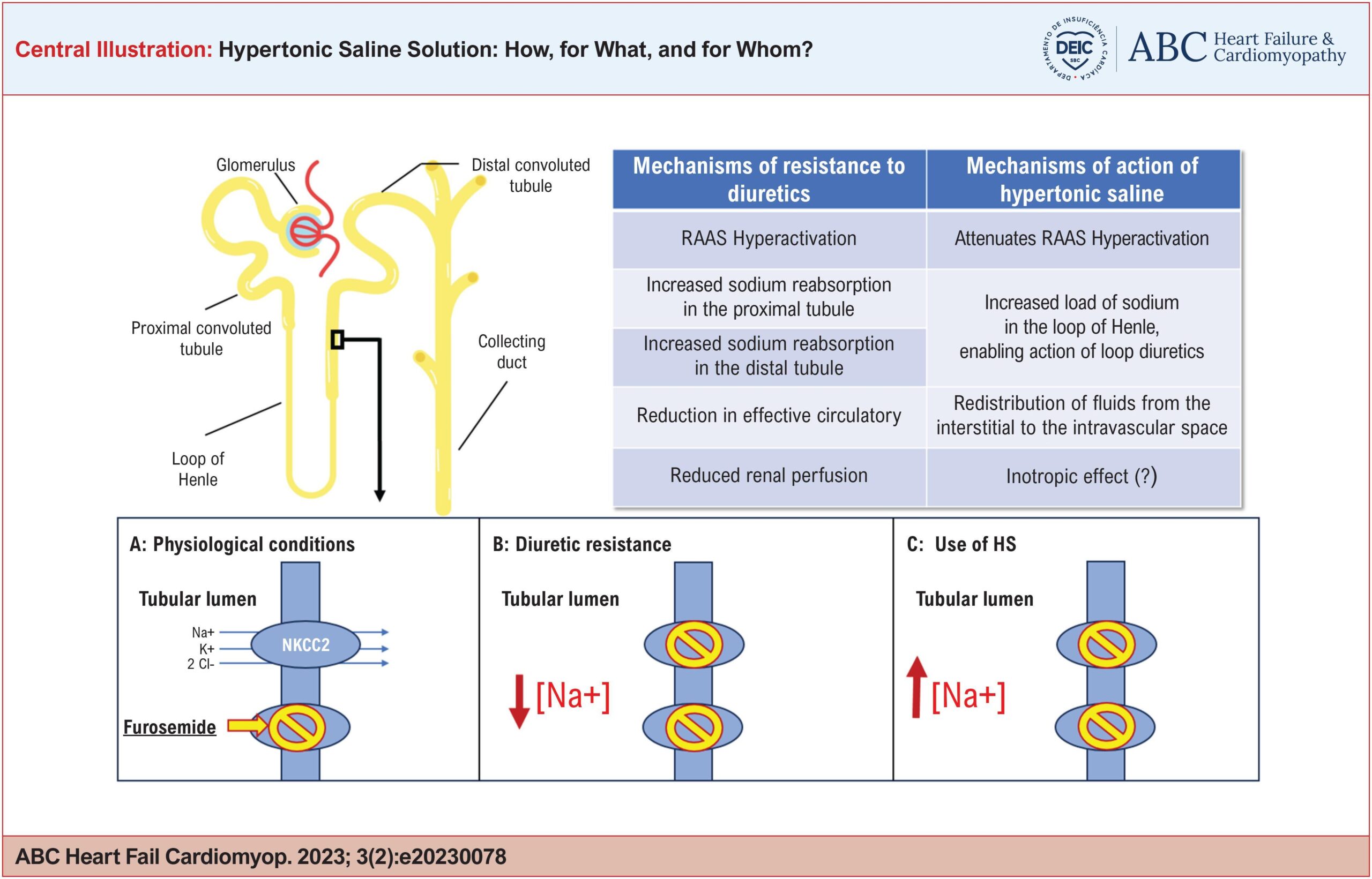
The administration of hypertonic saline (HS) in decompensated heart failure (HF) seems counterintuitive, given the concept that sodium is universally harmful for these patients. However, increasingly, strict sodium restrictions have been questioned due to the lack of proven benefits. On the other hand, we know that in acute HF complicated with diuretic resistance, there is hyperactivation of the renin-angiotensin-aldosterone system (RAAS), resulting in a state of excessive increase in renal avidity for sodium, hindering the action of loop diuretics. In this sense, HS would have the potential to attenuate the hyperactivation of RAAS and provide a supply of sodium to the renal tubules, enabling the action of loop diuretics. Several studies have consistently demonstrated that the association of HS with loop diuretics results in greater diuresis, weight loss, and possibly improved renal function. Therefore, despite being underused, we believe that HS is an effective, low-cost, and widely available strategy whose mechanism of action addresses one of the central points in the pathophysiology of diuretic resistance.

  • Acute Kidney Injury
  • Diuretics
  • Heart Failure
  • Hyponatremia
Read Full Article
Creative Commons Attribution (CC BY) Creative Commons license
31/12/2023 DOI: 10.36660/abchf.20230078
ABC
Original Article

Role of Sodium Levels on Atrial Fibrillation in Heart Failure: Active Player or a Bystander?

Aydın Akyüz et al. Derya Baykız Demet Özkaramanlı Gür Sümeyra Gökçek … Muhammet Mucip Efe Şeref Alpsoy

Abstract

Background

The coexistence of hyponatremia and atrial fibrillation (AF) increases morbidity and mortality in patients with heart failure (HF). However, it is not established whether hyponatremia is related to AF or not.

Objective

Our study aims to seek a potential association of hyponatremia with AF in patients with reduced ejection fraction heart failure (HFrEF).

Methods

This observational cross-sectional single-center study included 280 consecutive outpatients diagnosed with HFrEF with 40% or less. Based on sodium concentrations ≤135 mEq/L or higher, the patients were classified into hyponatremia (n=66) and normonatremia (n=214). A p-value <0.05 was considered significant.

Results

Mean age was 67.6±10.5 years, 202 of them (72.2%) were male, mean blood sodium level was 138±3.6 mEq/L, and mean ejection fraction was 30±4%. Of those, 195 (69.6%) patients were diagnosed with coronary artery disease. AF was detected in 124 (44.3%) patients. AF rate was higher in patients with hyponatremia compared to those with normonatremia (n=39 [59.1%] vs. n=85 [39.7%), p= 0.020). In the logistic regression analysis, hyponatremia was not related to AF (OR=1.022, 95% CI=0.785–1.330, p=0.871). Advanced age (OR=1.046, 95% CI=1.016–1.177, p=0.003), presence of CAD (OR=2.058, 95% CI=1.122–3.777, p=0.020), resting heart rate (OR=1.041, 95% CI=1.023–1.060, p<0.001), and left atrium diameter (OR=1.049, 95% CI=1.011–1.616, p=0.002) were found to be predictors of AF.

Conclusion

AF was higher in outpatients with HFrEF and hyponatremia. However, there is no association between sodium levels and AF in patients with HFrEF.

  • Atrial Fibrillation
  • Heart Failure
  • Hyponatremia
Read Full Article
Creative Commons Attribution (CC BY) Creative Commons license
07/02/2022 DOI: 10.36660/abc.20210139 Views 2
Hypertonic saline solution for renal failure prevention in patients with decompensated heart failure
ABC
Artigo Original

Hypertonic saline solution for renal failure prevention in patients with decompensated heart failure

Victor Sarli Issa et al. Fernando Bacal Sandrigo Mangini Rodrigo Moreno Dias Carneiro … Cristiano Humberto Naves de Freitas Azevedo Paulo Roberto Chizzola Silvia Moreira Ayub Ferreira Edimar Alcides Bocchi

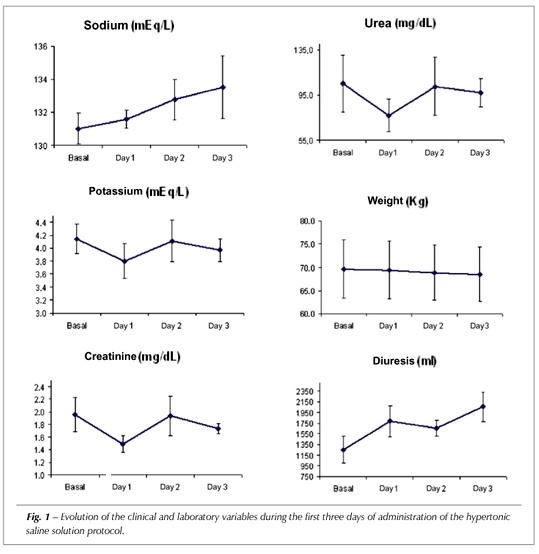
BACKGROUND: Hyponatremia and congestive phenomena indicate a bad prognosis in decompensated heart failure. The occurrence of renal failure is associated to an increased death risk. OBJECTIVE: To evaluate the safety and efficacy of the hypertonic saline solution in patients with decompensated heart failure for renal failure prevention. METHODS: Patients with decompensated heart failure, congestion and hyponatremia participated in the study. In addition to the standard treatment, the patients received hypertonic saline solution and were submitted to clinical as well as laboratory assessment. RESULTS: Nine patients were enrolled in the study. Mean age was 55 + 14.2 years, being 5 male (55.5%) and 4 (44.5%) female patients. All of them presented functional class III-IV of the New York Heart Association (NYHA), and 5 (55.5%) received dobutamine. All of them presented initial creatinine > 1.4 mg/dl. The mean tonicity of the solution was 4.39% + 0.018% (2.5% to 7.5%) and the duration of treatment was 4.9 days + 4.1 days (1-15 days). There were no severe adverse effects; none of the patients presented clinical worsening or neurologic disorders; hypokalemia occurred in 4 cases (44.5%). The comparison of the variables before and after treatment showed a decrease in urea (105 mg/dl + 74.8 mg/dl vs. 88 mg/dl + 79.4 mg/dl; p = 0.03) and increase in the urinary volume (1,183 ml/day vs. 1,778 ml/day; p = 0.03); there was no tendency to creatinine decrease (2.0 mg/dl + 0.8 mg/dl vs. 1.7 mg/dl + 1.0 mg/dl; p = 0.08). Despite the elevation in sodium levels (131 mEq/l + 2.8 mEq/l vs. 134 mEq/l + 4.9 mEq/l) and weight decrease (69.5 kg + 18.6 kg vs. 68.2 kg + 17.1 kg), there was no statistically significant difference. CONCLUSION: The use of hypertonic saline solution in patients with decompensated heart failure can be a safe therapeutic method and potentially related to clinical improvement and renal failure prevention.

  • Heart Failure
  • Hypertonic solutions
  • Hyponatremia
  • Renal Insufficiency
Read Full Article
Creative Commons Attribution (CC BY) Creative Commons license
18/04/2008 DOI: 10.1590/S0066-782X2007001600007
Major clinical characteristics of patients surviving 24 months or more after hospitalization due to decompensated heart failure
ABC
Artigo Original

Major clinical characteristics of patients surviving 24 months or more after hospitalization due to decompensated heart failure

Mucio Tavares de Oliveira Jr et al. Manoel Fernandes Canesin Robson Tadeu Munhoz Carlos Henrique Del Carlo … Airton Scipioni José Antonio Franchini Ramires Antonio Carlos Pereira Barretto

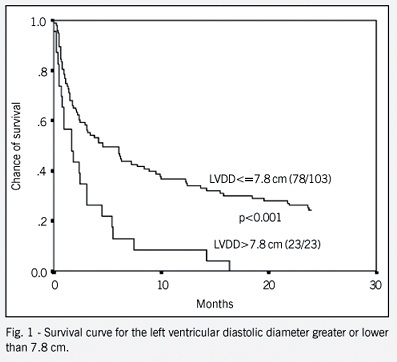
OBJECTIVE: To study the major clinical characteristics of patients with heart failure who survived more than 24 months after hospitalization for compensation. METHODS: The study comprised 126 patients with heart failure in functional class III or IV, with a mean age of 51.7 years. Most patients were men (73%), had a mean ejection fraction (EF) of 0.36 and left ventricular diastolic diameter (DD) of 7.13 cm. The major clinical and laboratory characteristics were assessed, and, on follow-up, 25 (19.8%) patients, who survived more than 24 months after hospital discharge, were identified. Data of survivors (G1) were compared with those of patients who died (G2) before 24 months. RESULTS: In G1, the following levels were greater: serum sodium (138.3±3.4 vs 134.5±5.8 mEq/L; P=0.001); blood pressure levels (120.0 vs 96.7 mm Hg; P=0.003); and LVEF levels (0.40±0.08 vs 0.34±0.09; P=0.004); and the following levels were lower: urea (59.8 vs 76.3 mg/dL; P=0.007); prothrombin time (12.9 vs 14.8 seconds; P=0.001); LVDD (6.78±0.55 vs 7.22±0.91; P=0.003); and LA diameter (4.77 vs 4.99cm; P=0.0003). More survivors were found among patients with idiopathic cardiomyopathy and arterial hypertension than among patients with Chagas’ disease and coronary artery disease. In multivariate analysis, the following variables remained as independent predictors of mortality: LVDD > 7.8 cm (HR 1.95); Na 14 seconds (HR 1.69). CONCLUSION: The study allowed predicting which patients with heart failure will have a good survival after hospital discharge and those with a greater chance of a long survival after discharge.

  • Advanced Heart Failure
  • Hyponatremia
  • Shock
  • Survival
  • ventricular systolic dysfunction
Read Full Article
Creative Commons Attribution (CC BY) Creative Commons license
08/03/2005 DOI: 10.1590/S0066-782X2005000200013

How to cite this article

EndNote RIS

Electronic Document Format (Vancouver)

Murad CM, Marcondes-Braga FG. Hypertonic Saline Solution: How, Why, and for Whom?. ABC Heart Fail Cardiomyop 2023;3(2):e20230078.

Electronic Document Format (ABNT)

Murad, Ciro Mancilha; Marcondes-Braga, Fabiana Goulart. Hypertonic Saline Solution: How, Why, and for Whom?. ABC Heart Fail Cardiomyop, v. 3, n. 2, e20230078, Dec. 2023.

Electronic Document Format (APA)

Murad, C. M., & Marcondes-Braga, F. G. (2023). Hypertonic Saline Solution: How, Why, and for Whom?. ABC Heart Fail Cardiomyop, 3(2), e20230078.

Electronic Document Format (ISO)

Murad, Ciro Mancilha and Marcondes-Braga, Fabiana Goulart. Hypertonic Saline Solution: How, Why, and for Whom?. ABC Heart Fail Cardiomyop [online]. 2023, vol. 3, n. 2, [cited 2026-10-14], e20230078. Available from: <https://journals.cardiol.br/en/article/hypertonic-saline-solution-how-why-and-for-whom/>

EndNote RIS

Electronic Document Format (Vancouver)

Akyüz A, Baykız D, Gür D, Gökçek S, Efe MM, Alpsoy . Role of Sodium Levels on Atrial Fibrillation in Heart Failure: Active Player or a Bystander?. Arquivos Brasileiros de Cardiologia 2022;118(4):712-8.

Electronic Document Format (ABNT)

Akyüz, Aydın; Baykız, Derya; Gür, Demet Özkaramanlı; Gökçek, Sümeyra; Efe, Muhammet Mucip; Alpsoy, Şeref. Role of Sodium Levels on Atrial Fibrillation in Heart Failure: Active Player or a Bystander?. Arquivos Brasileiros de Cardiologia, v. 118, n. 4, p. 712-718, Feb. 2022.

Electronic Document Format (APA)

Akyüz, A., Baykız, D., Gür, D. , Gökçek, S., Efe, M. M., & Alpsoy, (2022). Role of Sodium Levels on Atrial Fibrillation in Heart Failure: Active Player or a Bystander?. Arquivos Brasileiros de Cardiologia, 118(4), 712-718.

Electronic Document Format (ISO)

Akyüz, Aydın and Baykız, Derya and Gür, Demet Özkaramanlı and Gökçek, Sümeyra and Efe, Muhammet Mucip and Alpsoy, Şeref. Role of Sodium Levels on Atrial Fibrillation in Heart Failure: Active Player or a Bystander?. Arquivos Brasileiros de Cardiologia [online]. 2022, vol. 118, n. 4, [cited 2026-10-14], pp. 712-718. Available from: <https://journals.cardiol.br/en/article/role-of-sodium-levels-on-atrial-fibrillation-in-heart-failure-active-player-or-a-bystander/>. ISSN 0066-782X

EndNote RIS

Electronic Document Format (Vancouver)

Issa VS, Bacal F, Mangini S, Carneiro RMD, Azevedo CHNF, Chizzola PR, Ferreira SMA, et al. Hypertonic saline solution for renal failure prevention in patients with decompensated heart failure. Arquivos Brasileiros de Cardiologia 2008;89(4):251-5.

Electronic Document Format (ABNT)

Issa, Victor Sarli; Bacal, Fernando; Mangini, Sandrigo; Carneiro, Rodrigo Moreno Dias; Azevedo, Cristiano Humberto Naves de Freitas; Chizzola, Paulo Roberto; Ferreira, Silvia Moreira Ayub; Bocchi, Edimar Alcides. Hypertonic saline solution for renal failure prevention in patients with decompensated heart failure. Arquivos Brasileiros de Cardiologia, v. 89, n. 4, p. 251-255, Apr. 2008.

Electronic Document Format (APA)

Issa, V. S., Bacal, F., Mangini, S., Carneiro, R. M. D., Azevedo, C. H. N. F., Chizzola, P. R., Ferreira, S. M. A., & Bocchi, E. A. (2008). Hypertonic saline solution for renal failure prevention in patients with decompensated heart failure. Arquivos Brasileiros de Cardiologia, 89(4), 251-255.

Electronic Document Format (ISO)

Issa, Victor Sarli and Bacal, Fernando and Mangini, Sandrigo and Carneiro, Rodrigo Moreno Dias and Azevedo, Cristiano Humberto Naves de Freitas and Chizzola, Paulo Roberto and Ferreira, Silvia Moreira Ayub and Bocchi, Edimar Alcides. Hypertonic saline solution for renal failure prevention in patients with decompensated heart failure. Arquivos Brasileiros de Cardiologia [online]. 2008, vol. 89, n. 4, [cited 2026-10-14], pp. 251-255. Available from: <https://journals.cardiol.br/article/hypertonic-saline-solution-for-renal-failure-prevention-in-patients-with-decompensated-heart-failure/>. ISSN 0066-782X

EndNote RIS

Electronic Document Format (Vancouver)

Oliveira Jr MT, Canesin MF, Munhoz RT, Carlo HD, Scipioni A, Ramires JAF, Barretto ACP, et al. Major clinical characteristics of patients surviving 24 months or more after hospitalization due to decompensated heart failure. Arquivos Brasileiros de Cardiologia 2005;84(2):161-6.

Electronic Document Format (ABNT)

Oliveira Jr, Mucio Tavares de; Canesin, Manoel Fernandes; Munhoz, Robson Tadeu; Carlo, s Henrique Del; Scipioni, Airton; Ramires, José Antonio Franchini; Barretto, Antonio Carlos Pereira. Major clinical characteristics of patients surviving 24 months or more after hospitalization due to decompensated heart failure. Arquivos Brasileiros de Cardiologia, v. 84, n. 2, p. 161-166, Mar. 2005.

Electronic Document Format (APA)

Oliveira Jr, M. T. , Canesin, M. F., Munhoz, R. T., Carlo, H. D., Scipioni, A., Ramires, J. A. F., & Barretto, A. C. P. (2005). Major clinical characteristics of patients surviving 24 months or more after hospitalization due to decompensated heart failure. Arquivos Brasileiros de Cardiologia, 84(2), 161-166.

Electronic Document Format (ISO)

Oliveira Jr, Mucio Tavares de and Canesin, Manoel Fernandes and Munhoz, Robson Tadeu and Carlo, s Henrique Del and Scipioni, Airton and Ramires, José Antonio Franchini and Barretto, Antonio Carlos Pereira. Major clinical characteristics of patients surviving 24 months or more after hospitalization due to decompensated heart failure. Arquivos Brasileiros de Cardiologia [online]. 2005, vol. 84, n. 2, [cited 2026-10-14], pp. 161-166. Available from: <https://journals.cardiol.br/en/article/major-clinical-characteristics-of-patients-surviving-24-months-or-more-after-hospitalization-due-to-decompensated-heart-failure/>. ISSN 0066-782X

  • About ABC Family
  • Internal Regulation
  • Editorial Board
  • Brazilian Society of Cardiology (SBC)

Issues

SBC Guidelines

  • Videos
  • Podcasts
  • News