Lucas Mollinari Veloso da Silveira et al. Joana Carolina Junqueira de Brum Luiz Claudio Danzmann Diego Costa Cardoso … Estevan Letti Marcela Cunha Sales Fernando Antônio Lucchese
Introduction
Cardiac pseudoaneurysms occur when a rupture in a blood vessel or myocardial wall is contained by surrounding structures such as the pericardium, thrombus, or adhesions. Unlike true aneurysms, pseudoaneurysms are more susceptible to late, potentially fatal ruptures., These lesions most commonly develop as complications of myocardial infarction, typically involving the left ventricle.
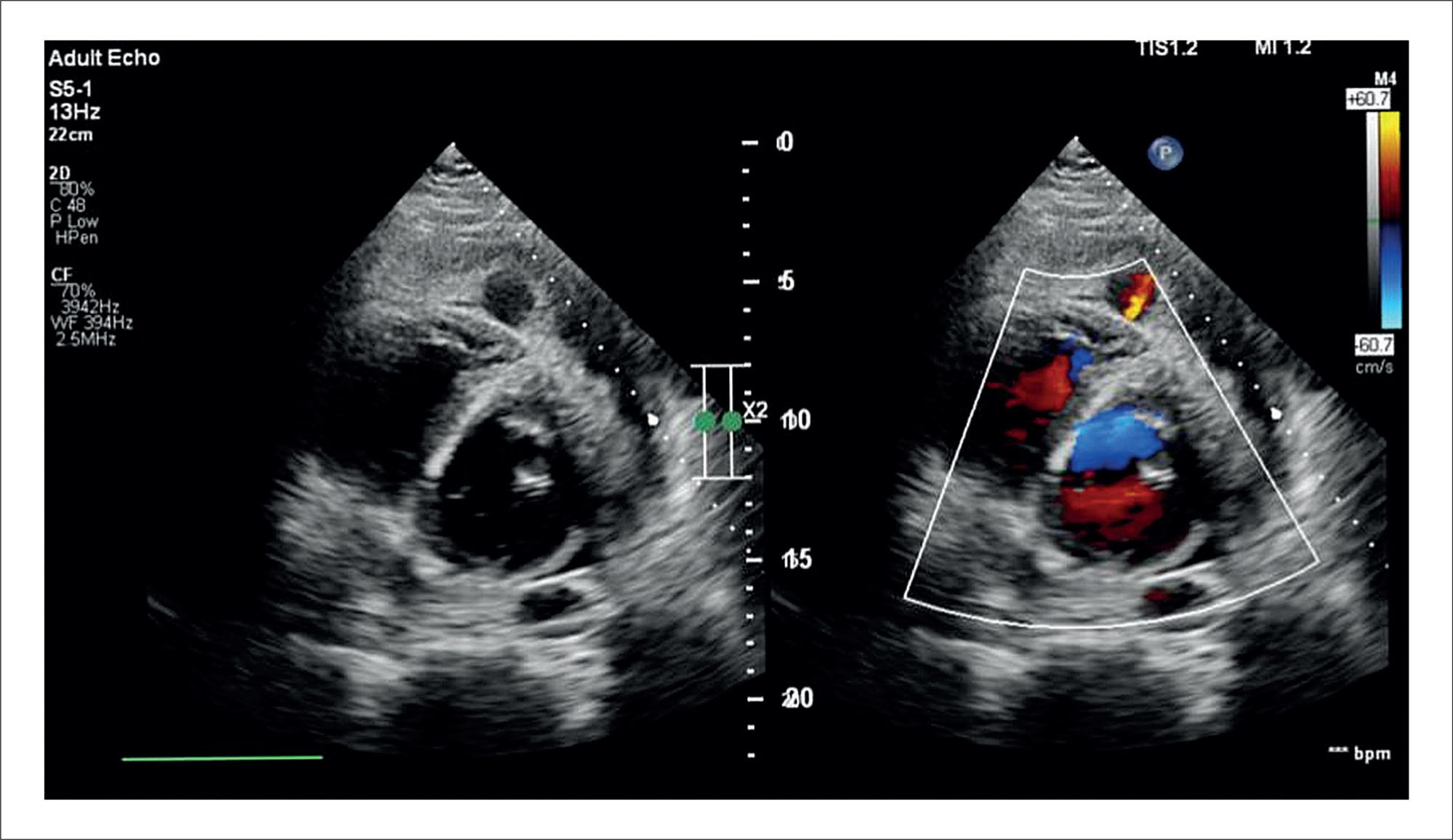
Less frequently, pseudoaneurysms can form in the right ventricle due to lipoma, postcardiac surgery, following device lead extraction, in the infectious setting, after remote myocardial infarction, as a complication of endomyocardial biopsy, and after penetrating chest wall trauma. The optimal management of right ventricular pseudoaneurysms is not well established, with current strategies focused on preventing rupture.
[…]