João Afonso Astolfi Martins et al. Amanda de Vasconcelos Eng Edgar Lira Filho Claudio Henrique Fischer … Claudia Gianini Monaco Alessandra Joslin Oliveira Fernando Rodrigues da Camara Oliveira Marcelo Luiz Campos Vieira Samira Saady Morhy Ana Clara Tude Rodrigues
Abstract
Background
Anxiety is an important factor that influences patient experience during medical procedures. Transesophageal echocardiography (TEE) is an exam that requires sedation, which can exacerbate anxiety and affect its practice.
Objective
To assess variables that influence the degree of anxiety experienced by patients undergoing TEE and its correlation with sedation.
Methods
We assessed patients of both sexes, age >18 years, referred for TEE. We applied an anxiety questionnaire (none, mild, moderate, and high) and collected demographic, clinical, and physiological data. For comparison purposes, patients were divided into the following 2 groups: no/mild anxiety and moderate/severe anxiety.
Results
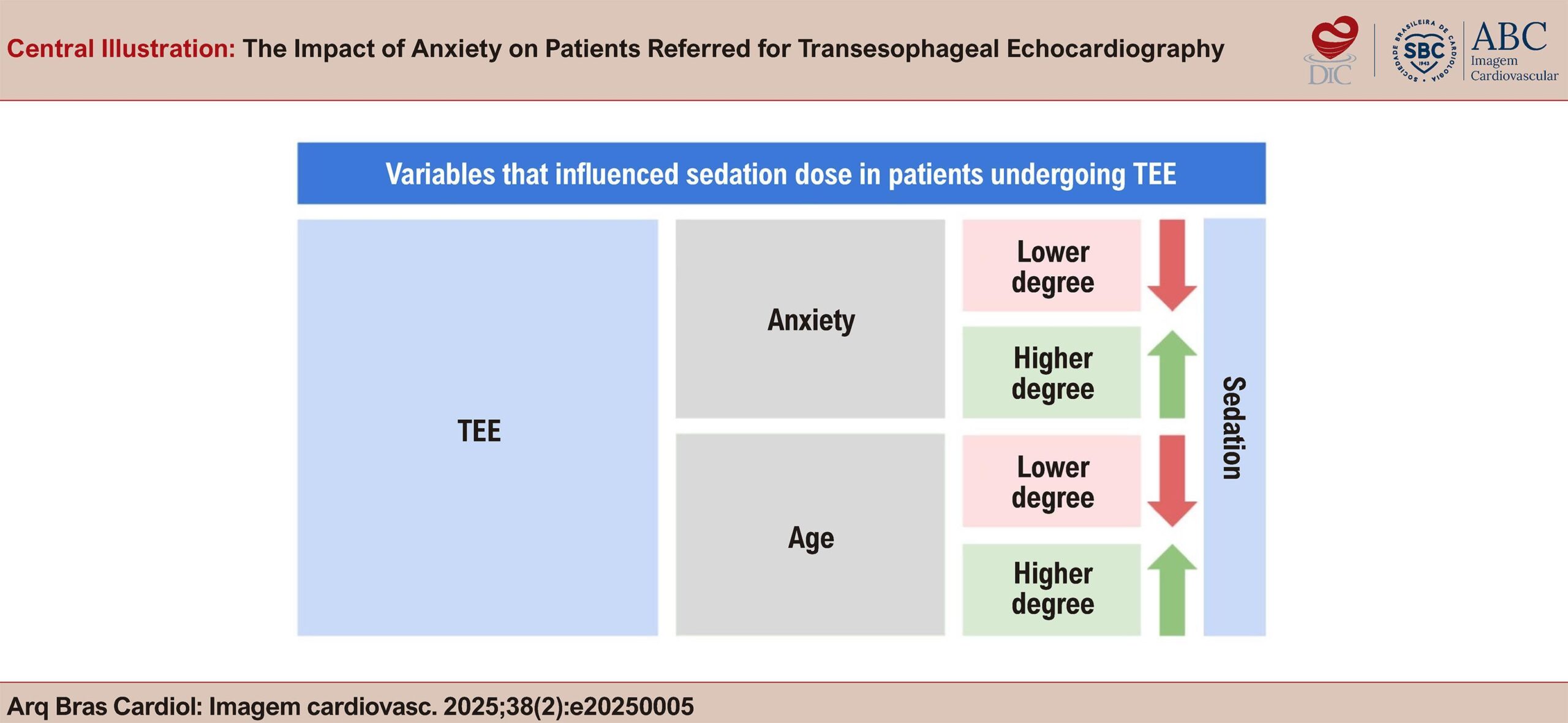
We studied 63 patients, 41 (66%) of whom were male. The majority were White (87.3%), and the mean age was 52.5 ± 14.7 years. Only 35% of patients had comorbidities, the most frequent being hypertension (63.6%), and 70% patients were undergoing TEE for the first time. The main indication for TEE was valvular disease (30%). The majority of patients (62%) reported some degree of anxiety, as follows: 25 (40%) mild, 10 (16%) moderate, and 4 (6%) severe. Patients with moderate/severe anxiety (p = 0.03) and younger patients (p = 0.001) required higher doses of midazolam for sedation.
Conclusion
Anxiety was common in patients referred for TEE, and it appeared to be less influenced by clinical variables. However, we concluded that more anxious and younger patients required higher doses of sedation.