Dietary Adequacy of Individuals with Cardiovascular Disease According to Clinical Guidelines in the Brazilian Cardioprotective Nutritional (BALANCE)
Abstract
Background
Achieving nutritional goals established by scientific societies is a constant challenge and not always achieved.
Objective
To investigate the dietary adequacy of individuals with cardiovascular disease (CVD), participants in the Cardioprotective Brazilian Food Program residing in the Northeast region of Brazil, according to the recommendations of the Brazilian Society of Cardiology (SBC).
Methods
Cross-sectional analysis with data from the study implementing the Brazilian Cardioprotective Diet (DICA BR), which evaluated individuals with CVD treated in specialized cardiovascular health centers in eight states in the Northeast region. Food consumption was obtained by 24-hour dietary records and dietary adequacy followed SBC recommendations. Values of p < 0.05 were considered significant.
Results
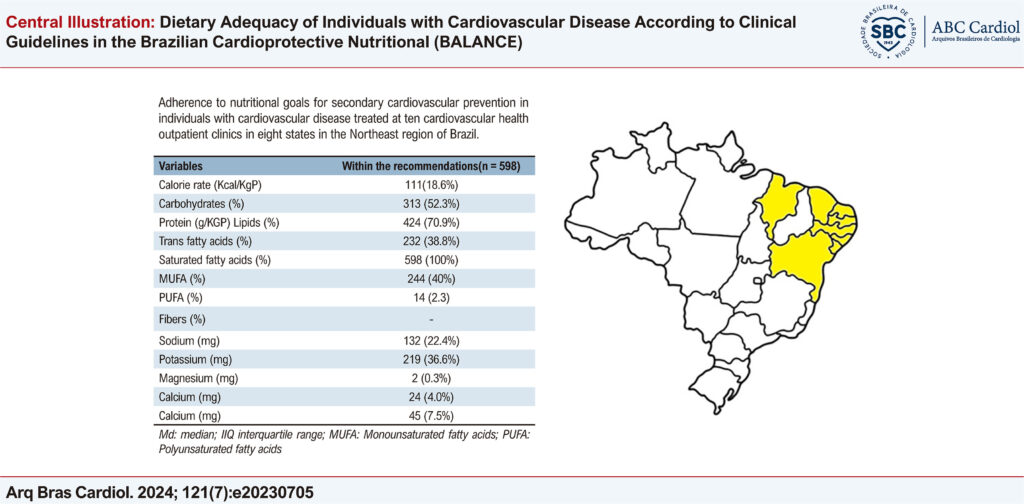
647 patients were studied, with a mean (standard deviation) age of 63.1 (9.4) years, 50.2% of whom were female. When evaluating food intake, a low adequacy of carbohydrates (52.3%), proteins (70.9%), lipids (38.8%), and fiber (22.4%) was observed. It was observed that the majority of women consumed a low-protein diet (59.2%) and the elderly had a greater inadequacy in carbohydrate consumption (52.6%). Regarding sodium intake, men had a higher intake (72.9%), while the elderly showed a 13% reduction. Furthermore, it was shown that men ate more fiber (28.1%) and individuals with higher education had a high consumption of saturated fatty acids (70.5%).
Conclusions
Most individuals did not achieve the recommended dietary therapy goals for secondary cardiovascular prevention. The findings of the present study reinforce the need to implement structured strategies to encourage healthy eating habits in these individuals.
Images
Image gallery fullscreen viewer
Comments are moderated by the editorial team before publication. Discussions should be evidence-based and use scientific language. Conflicts of interest should be declared.