The Role of Platelets in Long COVID Development: A Literature Review
Abstract
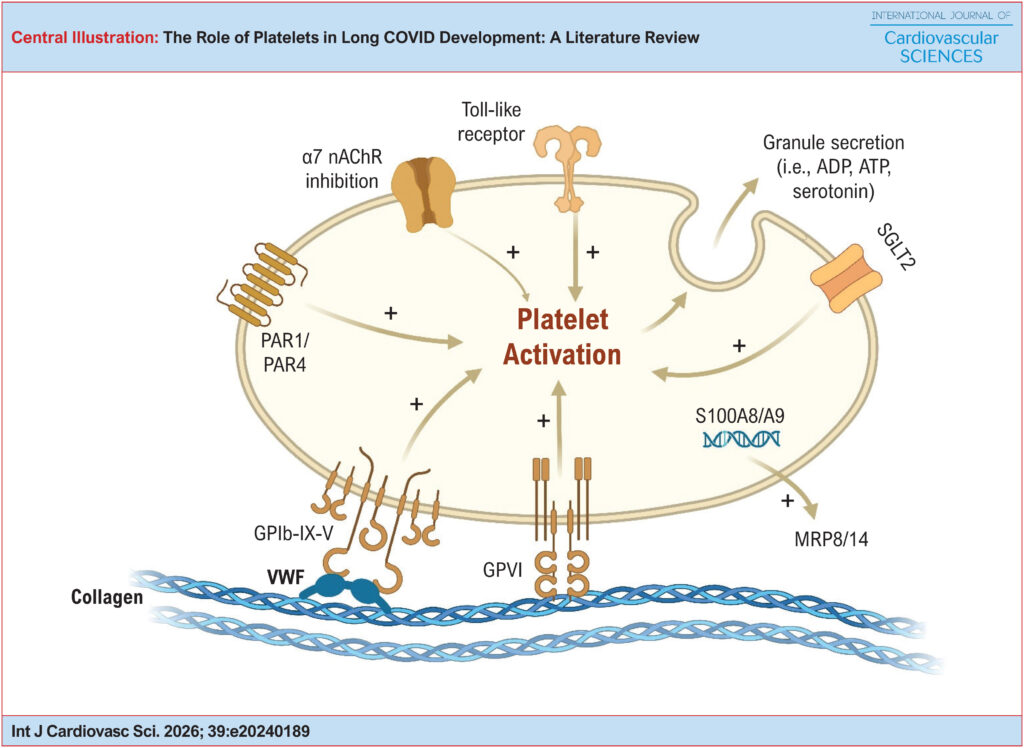
At its peak during the pandemic, coronavirus disease 2019 profoundly impacted global populations and introduced numerous post-infection complications, collectively referred to as long coronavirus disease. The mechanisms underlying the syndrome’s chronicity are multifaceted; however, a notable aspect of long coronavirus disease pathophysiology is its intricate association with platelets. The chronic inflammatory response triggered by severe acute respiratory syndrome coronavirus 2 is closely related to platelet activity, wherein inflammatory molecules bind to specific platelet receptors, inducing the release of platelet granules containing procoagulant and proinflammatory molecules. Consequently, there is a marked elevation in coagulation-related proteins, fostering the development of abnormal microthrombi and a dysfunctional fibrinolytic system. All these changes are indicative of an imbalance in coagulation regulation. Therefore, investigating pharmacological targets linked to this process is crucial for syndrome management, aiming to enhance the quality of life for affected individuals. This review aimed to highlight the importance of platelet function and activity in the pathophysiology of long coronavirus disease, as well as to identify molecular targets directly related to long coronavirus disease or coronavirus disease 2019–related disturbances in platelet homeostasis.
Images
Image gallery fullscreen viewer
Comments are moderated by the editorial team before publication. Discussions should be evidence-based and use scientific language. Conflicts of interest should be declared.