Prognostic Value of QTc Interval and Other Ventricular Repolarization Parameters in Acute Stroke
Abstract
Background:
The electrocardiogram (ECG) is routinely used in stroke evaluation, although interactions within the brain–heart axis remain incompletely understood. The prognostic relevance of the QTc interval and other ventricular repolarization markers has gained increasing interest in stroke populations.
Objectives:
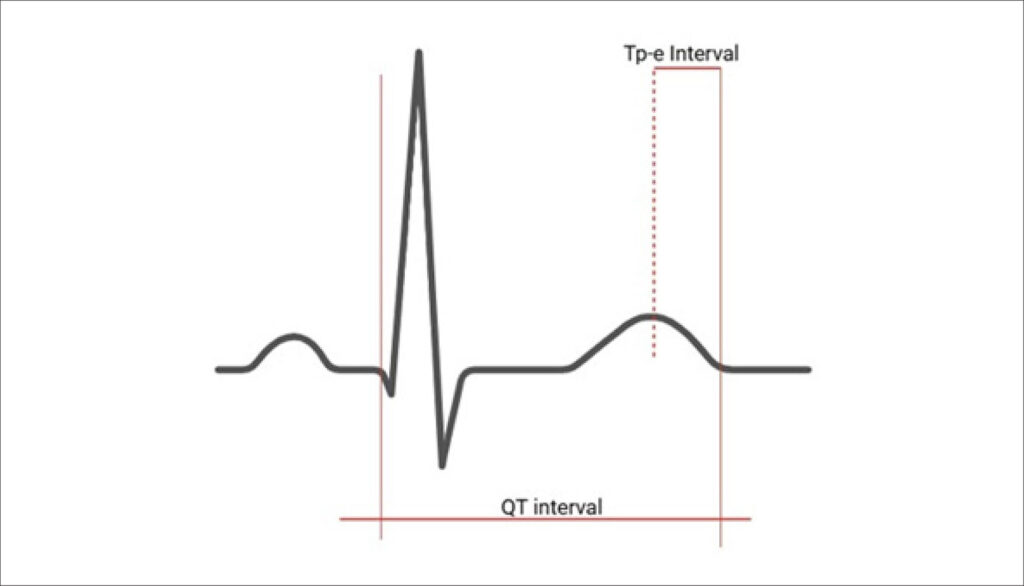
To evaluate the association of QTc interval, QTc dispersion (QTc-d), Tpeak–end interval (Tp-e), and Tp-e/QTc ratio with neurological disability and in-hospital mortality in acute stroke.
Methods:
This retrospective cohort included patients admitted with acute stroke between January 2018 and April 2020. QTc was analyzed as both a continuous and categorical variable, using a cutoff of 480 ms. Functional disability was assessed using the modified Rankin Scale (mRS) and categorized as no disability (mRS ≤ 2) or disability (mRS > 2). Sample size calculation indicated a minimum of 482 patients (85% power; 5% significance), based on functional outcome differences between prolonged and normal QTc. A 5% significance level was used for all analyses.
Results:
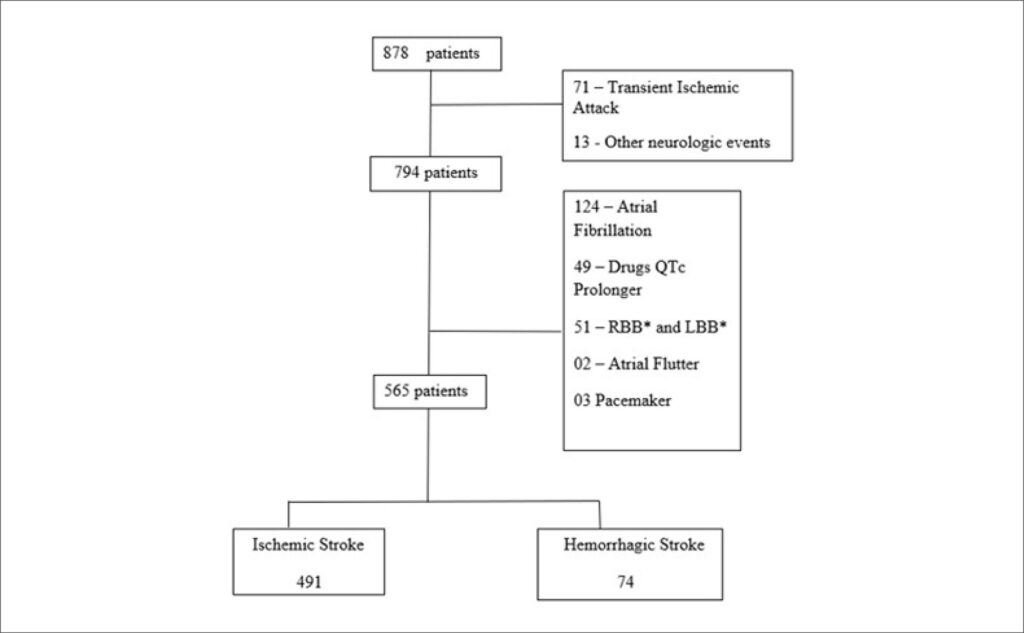
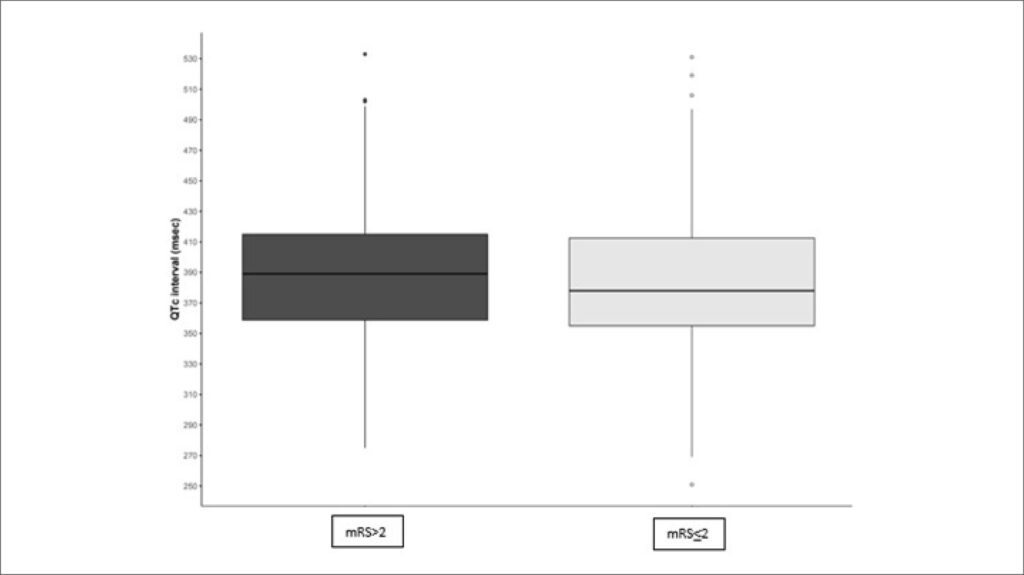
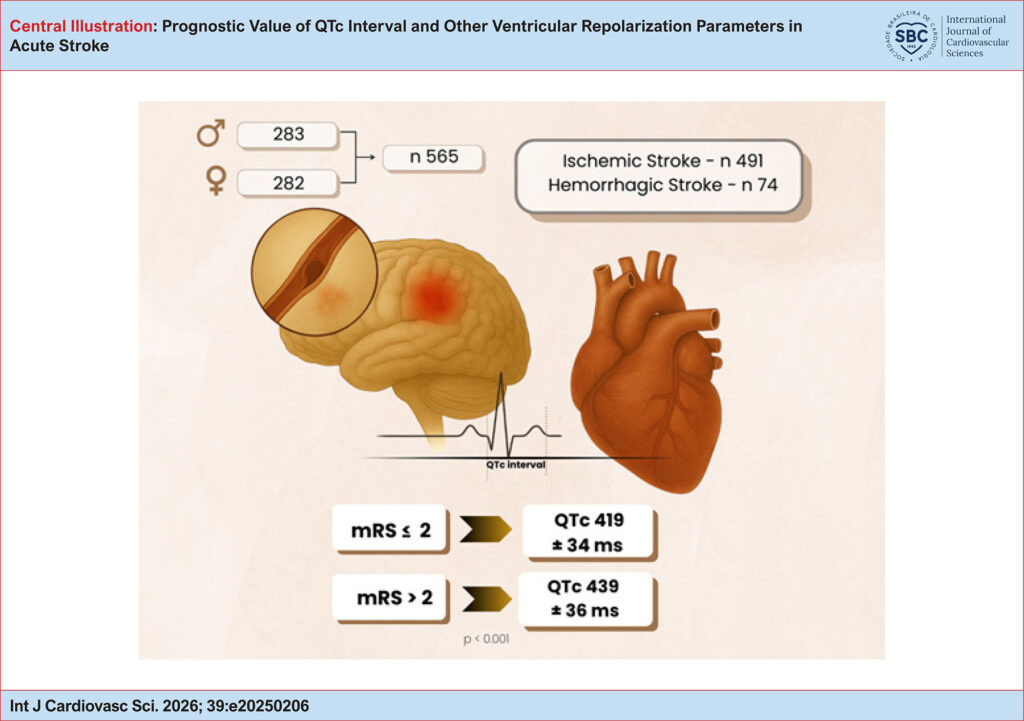
A total of 565 patients were included (50.1% male; mean age 65 ± 13 years). Of these, 280 (49.6%) had mRS > 2, and 69 (12.5%) died during hospitalization. Higher QTc values were associated with worse neurological outcomes in univariable (HR 1.01; 95% CI, 1.00–1.01; p 480 ms was also associated with disability in univariable (HR 2.43) and multivariable models (HR 2.67). QTc was not associated with in-hospital mortality.
Conclusion:
QTc prolongation, particularly QTc > 480 ms, was independently associated with unfavorable neurological outcomes.
Images
Image gallery fullscreen viewer
Comments are moderated by the editorial team before publication. Discussions should be evidence-based and use scientific language. Conflicts of interest should be declared.