Pharmaceutical Care in Primary Care: an Experience with Hypertensive Patients in the North of Brazil
Abstract
Background:
Uncontrolled blood pressure has been associated with poor adherence to drug treatment.
Objectives:
To assess blood pressure control in hypertensive patients attending primary health centers after implementation of a pharmaceutical follow-up program in a city of the north of Brazil.
Methods:
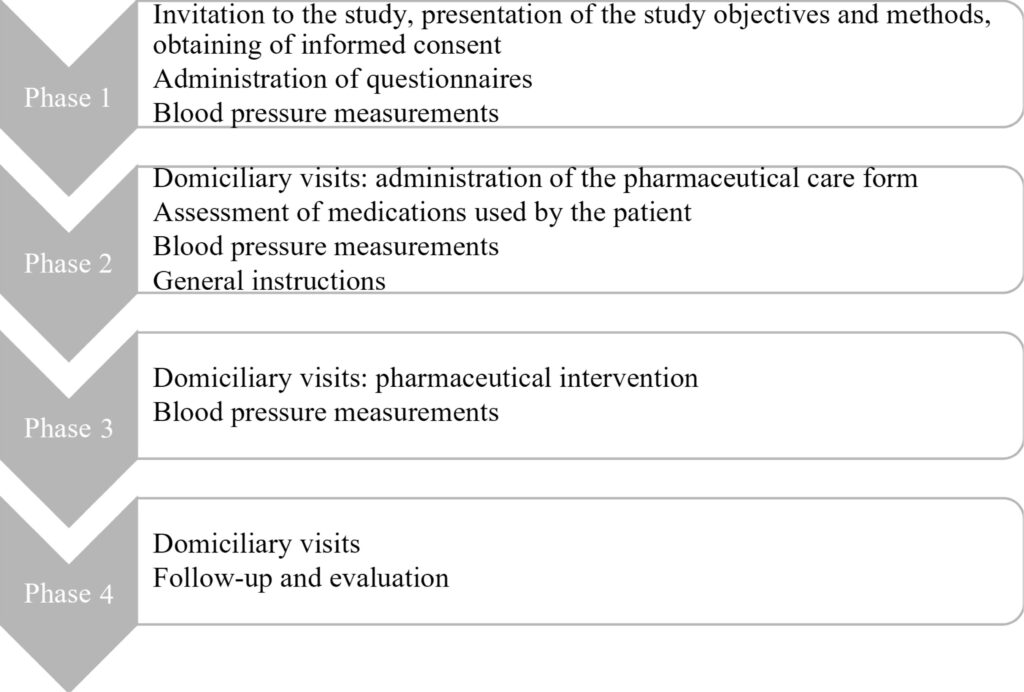
Observational, cross sectional, descriptive study with 163 hypertensive patients attending public primary health care centers – one located on the riverside and one in the urban area of the city of Santarem, western Pará, Brazil. Adherence to the anti-hypertensive treatment was assessed using the eight-item Morisky test. Pharmacotherapy follow-up (Dader method) of patients with uncontrolled hypertension and non-adherent to anti-hypertensive treatment was performed. Results of the normality test showed that the data did not follow a normal distribution. Continuous variables were then compared using the Wilcoxon signed-rank test, and categorical variables by the likelihood ratio and the McNemar tests. Statistical significance was set at 5%.
Results:
Of the total sample, 94.5% were not adherent to anti-hypertensive drug therapy and 77.2% had uncontrolled hypertension. Adherence rate was higher in men than women (p=0.006). Pharmacotherapy follow-up improved blood pressure levels, particularly systolic blood pressure (p<0.001).
Conclusion:
An individualized pharmacotherapeutic follow-up, considering regional and cultural specificities, can contribute to the treatment of hypertensin in the primary care.
Images
Image gallery fullscreen viewer
Comments are moderated by the editorial team before publication. Discussions should be evidence-based and use scientific language. Conflicts of interest should be declared.