Malnutrition in Outpatients with Heart Failure: Prevalence, Associated Factors and 6-Month Impact
Abstract
Background
Malnutrition is common in heart failure with reduced ejection fraction (HFrEF) and may negatively affect prognosis.
Objective
To determine the prevalence of malnutrition in outpatients with HFrEF, identify associated clinical factors, and evaluate its impact on mortality and clinical outcomes at 6 months.
Methods
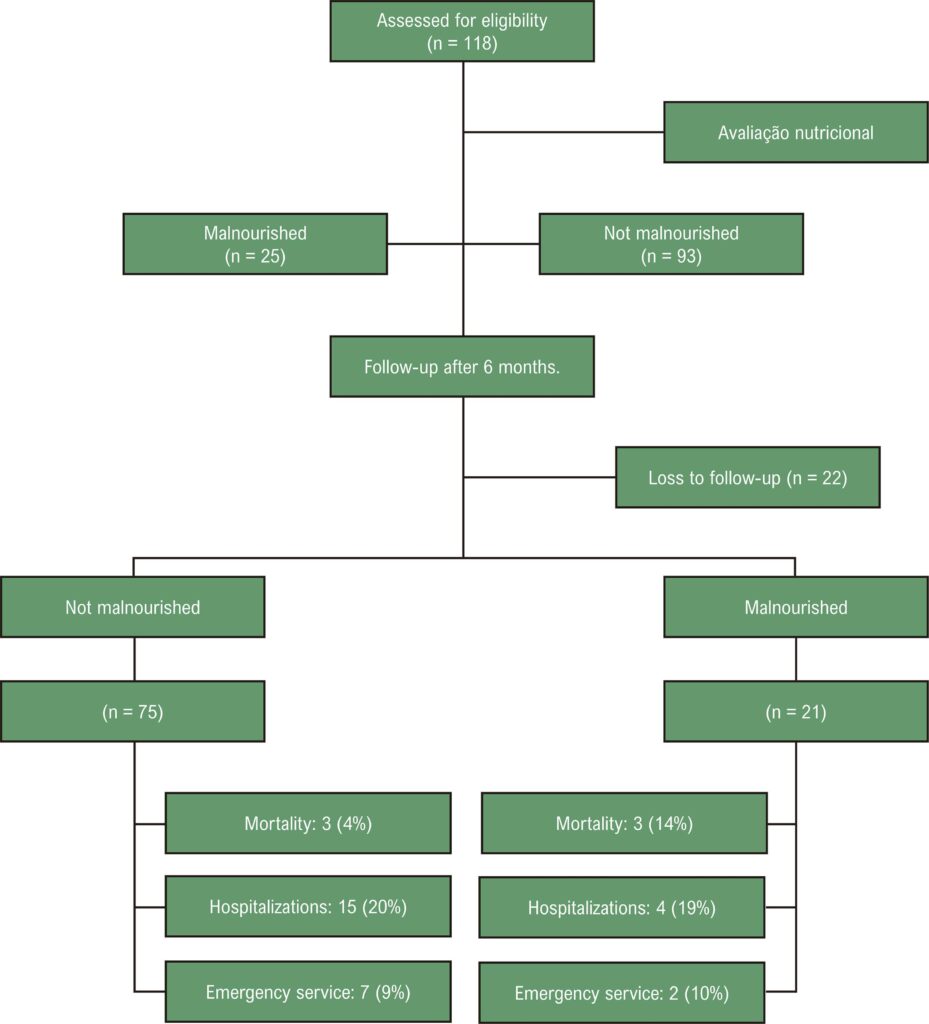
Prospective observational cohort study including 118 outpatients with HFrEF. Nutritional status was assessed using the Mini Nutritional Assessment (MNA) and the Subjective Global Assessment (SGA). Six-month follow-up documented mortality, hospitalizations, and emergency department visits.
Results
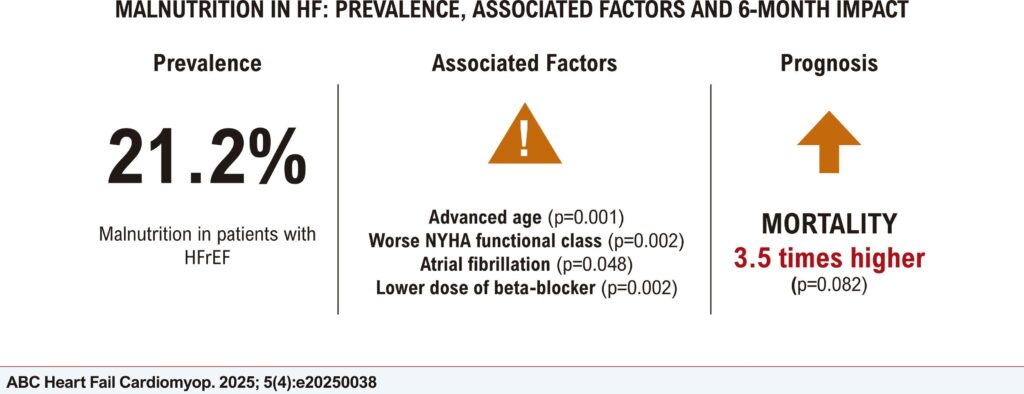
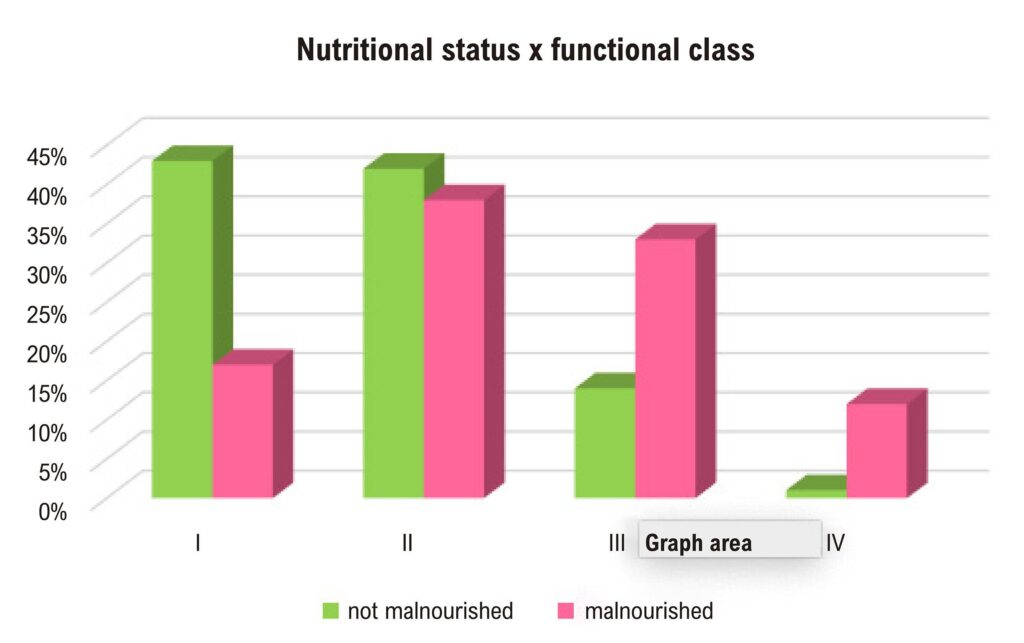
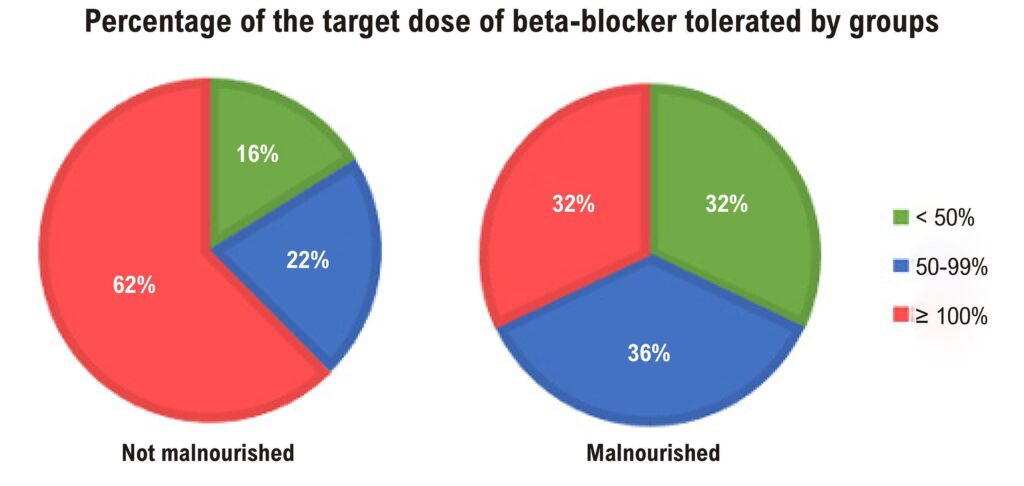
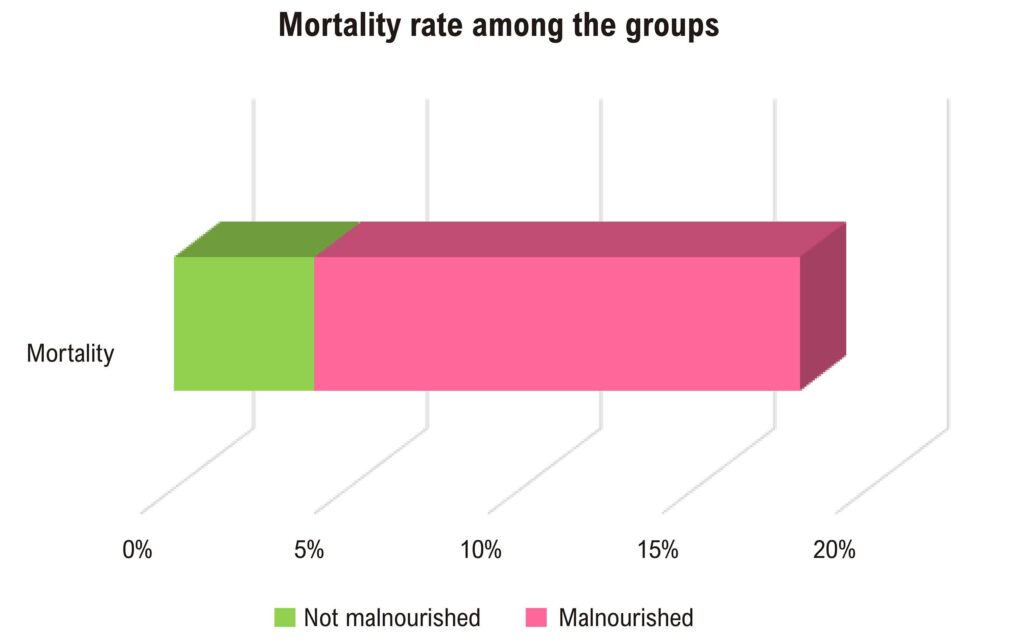
The prevalence of malnutrition was 21.2% (25/118). Malnourished patients were older (68 ± 12 vs. 60 ± 10 years; p=0.001), had a higher prevalence of NYHA functional class III–IV (45% vs. 15%; p=0.002) and atrial fibrillation (44% vs. 25%; p=0.048), and achieved a lower percentage of target beta-blocker dose (57.9% vs. 79.8%; p=0.002). No statistically significant difference in 6-month mortality was observed between the groups, although it was numerically higher in the malnourished group (14% vs. 4%; p=0.082). No differences were observed in hospitalization rates (p=0.94) or emergency department visits (p=0.97).
Conclusion
Malnutrition is present in approximately one in five outpatients with HFrEF, more common in the elderly and those with atrial fibrillation and was associated with a trend towards higher mortality in 6 months.
Images
Image gallery fullscreen viewer
Comments are moderated by the editorial team before publication. Discussions should be evidence-based and use scientific language. Conflicts of interest should be declared.