Lung Ultrasound: The Cardiologists’ New Friend
The role of pulmonary congestion in heart failure and the limits of the traditional clinical examination
Pulmonary congestion, such as low cardiac output, is a preponderant element in patients with heart failure (HF), which is considered an important cause of hospital admissions and death., Thus, the identification of pulmonary extravascular fluid in patients with HF can be used as an aid in strategies to optimize clinical therapy.
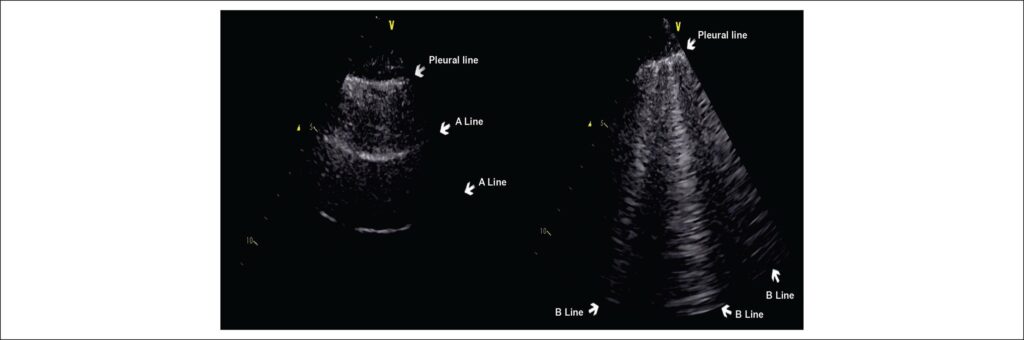
Traditionally, assessment of pulmonary congestion has been based on the patient’s clinical status and physical examination. However, this evaluation presents limitations even for skilled professionals, showing high specificity, but low sensitivity for the detection of pulmonary congestion., Thus, cases of decompensation are often recognized at a very late stage of clinical congestion, so frequent hospitalizations are not avoided. In the cascade of congestion, the clinical manifestation represents a final stage, different from hemodynamic congestion (increase in left ventricular filling pressure), which is pulmonary and systemic. Pulmonary congestion corresponds specifically to the presence of extravascular pulmonary fluid, which can be evaluated by lung ultrasound.
[…]
Images
Image gallery fullscreen viewer
Comments are moderated by the editorial team before publication. Discussions should be evidence-based and use scientific language. Conflicts of interest should be declared.