Does Ad Hoc Coronary Intervention Reduce Radiation Exposure? – Analysis of 568 Patients
Background:
Advantages and disadvantages of ad hoc percutaneous coronary intervention have been described. However little is known about the radiation exposure of that procedure as compared with the staged intervention.
Objective:
To compare the radiation dose of the ad hoc percutaneous coronary intervention with that of the staged procedure
Methods:
The dose-area product and total Kerma were measured, and the doses of the diagnostic and therapeutic procedures were added. In addition, total fluoroscopic time and number of acquisitions were evaluated.
Results:
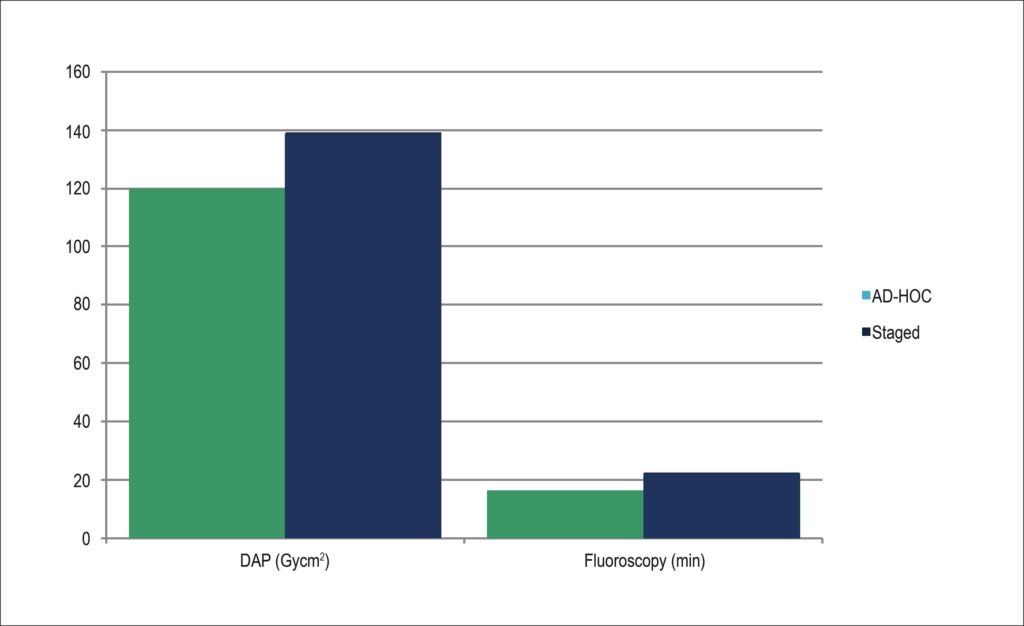
A total of 568 consecutive patients were treated with ad hoc percutaneous coronary intervention (n = 320) or staged percutaneous coronary intervention (n = 248). On admission, the ad hoc group had less hypertension (74.1% vs 81.9%; p = 0.035), dyslipidemia (57.8% vs. 67.7%; p = 0.02) and three-vessel disease (38.8% vs. 50.4%; p = 0.015). The ad hoc group was exposed to significantly lower radiation doses, even after baseline characteristic adjustment between both groups. The ad hoc group was exposed to a total dose-area product of 119.7 ± 70.7 Gycm2, while the staged group, to 139.2 ± 75.3 Gycm2 (p < 0.001).
Conclusion:
Ad hoc percutaneous coronary intervention reduced radiation exposure as compared with diagnostic and therapeutic procedures performed at two separate times.
Images
Image gallery fullscreen viewer
Comments are moderated by the editorial team before publication. Discussions should be evidence-based and use scientific language. Conflicts of interest should be declared.