Cardiac Amyloidosis and SGLT2 Inhibitors: Signal, Hope, and the Need for Randomized Evidence
Heart failure secondary to cardiac amyloidosis remains one of the most challenging scenarios in contemporary cardiovascular medicine. Despite major advances in disease-modifying therapies for both transthyretin (ATTR) and light-chain (AL) amyloidosis, outcomes are still largely driven by progressive heart failure, renal dysfunction, and cardiovascular deaths. Conventional heart failure therapies are often poorly tolerated or ineffective in this restrictive cardiomyopathy, leaving clinicians with limited options to improve prognosis. In this context, the real-world analysis by Nunes et al. provides timely and provocative evidence supporting a potential role for sodium-glucose cotransporter 2 (SGLT2) inhibitors in this high-risk population.
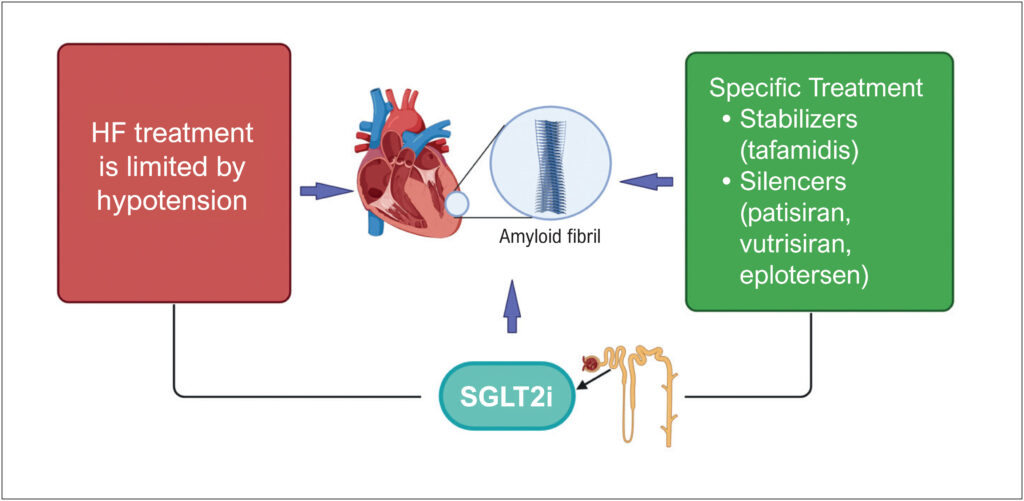
Using data from the TriNetX global collaborative network, the authors evaluated more than 2,700 propensity score-matched patients with heart failure due to ATTR or AL amyloidosis. Across both amyloid subtypes, treatment with SGLT2 inhibitors was consistently associated with substantial reductions in all-cause mortality, hospitalization, and renal events at 12 months. The magnitude of benefit is striking: approximately 50% relative reduction in mortality and meaningful improvements in both heart failure and renal outcomes. These findings extend the growing body of observational data suggesting that the benefits of SGLT2 inhibition may transcend traditional heart failure phenotypes and etiologies, and may have a specific role in cardiac amyloidosis, as shown in .
[…]
Images
Image gallery fullscreen viewer
Comments are moderated by the editorial team before publication. Discussions should be evidence-based and use scientific language. Conflicts of interest should be declared.