ABC Family Arquivos Brasileiros de Cardiologia International Journal of Cardiovascular Sciences ABC Heart Failure & Cardiomyopathy ABC Imagem Cardiovascular
Português English
ABC Family
Português English
  • About
    • About ABC Family
    • Internal Regulation
    • Editorial Board
    • Brazilian Society of Cardiology (SBC)
  • Issues
  • SBC Guidelines
  • Content
    • Videos
    • Podcasts
    • News
  • About
    • About ABC Family
    • Internal Regulation
    • Editorial Board
    • Brazilian Society of Cardiology (SBC)
  • Issues
  • SBC Guidelines
  • Content
    • Videos
    • Podcasts
    • News

ABC Family

  • ABC Family
  • Arquivos Brasileiros de Cardiologia
  • International Journal of Cardiovascular Sciences
  • ABC Heart Failure & Cardiomyopathy
  • ABC Imagem Cardiovascular
Search in

No content found.

Journals
Ordering
Article types
Others

  1. Home
  2. Keyword: Swine
ABCHF
Editorial

Heart Transplant from a Genetically-Modified Pig: A Paradigm Shift?

Fernando Bacal

Heart transplant remains the therapy of choice for patients with end-stage heart failure but is limited by chronic shortage of donated organs. Mechanical circulatory support (MCS) devices, with modern designs, have been used as destiny therapy, yielding better results that have positively impacted patient survival. The indications for MCS have significantly increased and become part of the current context of potential candidates for transplant, be it as destiny therapy, bridge-to-transplant or bridge-to candidacy. However, there remains a considerable number of patients who would benefit from the transplant if the availability of donated organs was higher. According to the Brazilian Organ Transplant Association (ABTO), approximately 400 heart transplants are performed yearly in Brazil, but the demand for this procedure is 1,600 per year, i.e., many patients die waiting for an organ.

A possible solution for this issue is xenotransplantation, the process of transplanting organs from other animals, which has gained increasing interest in the last years, for a combination of reasons. First, the efficacy of preclinical models has improved, with an increase in survival time of xenografts. Second, the rapid advances in genome editing, particularly the advent of CRISPR (Clustered Regularly Interspaced Short Palindromic Repeats), which allowed the generation of donor pigs with multiple genetic protection modifications; what used to take years can now be done in months, with more accurate and comprehensive results. Third, the spectrum of the porcine endogenous retrovirus (PERV) significantly reduced. There is no evidence of PERV transmission in clinical trials of preclinical models, and novel treatment options and even elimination of these viral diseases are now available. Due to its potential, the importance of xenotransplantation as a solution for the shortage of human organs and tissues remains a great hope for the transplant community, especially for the patients who face advanced disease and high mortality while waiting for a donated heart.

[…]

  • Allergy and Immunology
  • Genetically Modified Animals
  • Heart Transplantation
  • Heterologous
  • Swine
  • Transplantation
Read Full Article
Creative Commons Attribution (CC BY) Creative Commons license
29/06/2022 DOI: 10.36660/abchf.20220027 Views 1
Are the virtual lines created with the ensite electroanatomical mapping system really continuous?
ABC
Artigo Original

Are the virtual lines created with the ensite electroanatomical mapping system really continuous?

Thais Nascimento et al. Fernanda Mota Luis Felipe Neves dos Santos Sérgio de Araújo … Mieko Okada Marcello Franco Angelo A. V. de Paola Guilherme Fenelon

BACKGROUND: EnSiteNavx electroanatomic mapping system is widely used in radiofrequency (RF) atrial fibrillation ablation, helping the creation of linear lesions. However, the correspondence of the virtual line created by EnSite with the pathological lesion has not yet been evaluated. OBJECTIVE: to assess the continuousness of Ensite-guided virtual lines in a swine model. METHODS: we performed RF ablation linear lesions (8mm and irrigated catheters tips) in both atria of 14 pigs (35Kg) guided by the EnSite. The animals were sacrificed 14 days post-ablation for macroscopic and histological analysis. RESULTS: a total of 23 lines in the right atrium and 21 lines in the left atrium were created in 14 animals. The medium power, impedance and temperature applications were 56 W, 54 ºC and 231 Ω for the 8mm tip, and 39W, 37ºC, 194 Ω for the irrigated tip catheter, respectively. All (100%) lines were identified on the epicardial and endocardial surfaces, denoting transmurality. At macroscopic examination, lesions were extensive and pale, continuous, with 3.61 cm long and 0.71 cm deep. The transmurality of the lesions was confirmed by microscopy. There was a correlation in the location of the lines at the virtual map and the anatomical lesions in 21 of 23 (91.3%) of the right atrium and 19/21 (90.4%) of the left atrium. CONCLUSION: In this model, the lines created in the virtual map by EnSiteNavX system correspond to continuous transmural linear lesions in anatomical specimen, suggesting that this method is suitable for linear ablation of atrial fibrillation.

  • Atrial Fibrillation
  • Catheter Ablation
  • Heart Atria
  • Swine
Read Full Article
Creative Commons Attribution (CC BY) Creative Commons license
14/06/2013 DOI: 10.5935/abc.20130127 Views 1
Hemodynamic effects of experimental acute right ventricular overload
ABC
Artigo Original

Hemodynamic effects of experimental acute right ventricular overload

Flávio Brito Filho et al. Kleber Nogueira de Campos Humberto Alves de Oliveira Josué Fernandes … César Augusto Melo e Silva Eduardo Gaio Edwin Roger Parra Paulo Henrique Cândido de Carvalho Paulo Manoel Pêgo Fernandes

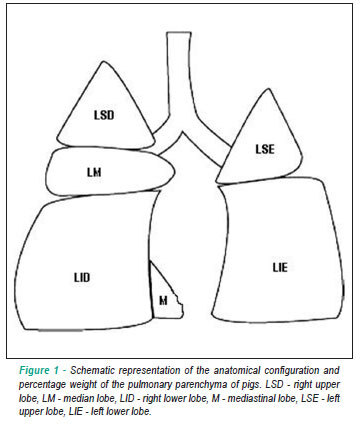
BACKGROUND: Acute right ventricular overload is associated with high morbidity and mortality clinical situations such as: extensive lung resection, pulmonary thromboembolism, lung transplantation and high altitude pulmonary edema. Some points of its pathophysiology remain unclear. OBJECTIVE: To assess the hemodynamic effects of experimental acute right ventricular overload in pigs. METHODS: Right ventricular overload was induced through the occlusion of the pulmonary arteries using ligationss. Twenty pigs were used in the study, divided into 04 groups: one control group not subject to pulmonary vascular occlusion, and three right ventricular overload groups subject to occlusion of the following pulmonary arteries: SVD1 (left pulmonary artery); SVD2 (left pulmonary artery and right lower lobe) and SVD3 (left pulmonary artery, right lower lobe and mediastinal lobe), obstructing the pulmonary vasculature in 42, 76 and 82.0% respectively. Hemodynamic variables were measured every 15 minutes during one hour of study. The statistical analysis employed mixed linear models with variance and covariance structures. RESULTS: Group comparisons revealed significant increases in heart rate (p = 0.004), mean pulmonary artery pressure (p = 0.001) and pulmonary capillary wedge pressure (p < 0.0001). There was no significant difference in cardiac index (p = 0.94). CONCLUSION: Despite the severe right ventricular overload promoted by 82.0% obstruction of the pulmonary vasculature and the significant increase in pulmonary arterial pressure, there was no severe cardiovascular dysfunction and/or circulatory shock during the study period.

  • catheterization, Swan-Ganz
  • Pulmonary embolism
  • Swine
  • Ventricular Dysfunction Right
Read Full Article
Creative Commons Attribution (CC BY) Creative Commons license
04/03/2011 DOI: 10.1590/S0066-782X2011005000029 Views 1

How to cite this article

EndNote RIS

Electronic Document Format (Vancouver)

Bacal F. Heart Transplant from a Genetically-Modified Pig: A Paradigm Shift?. ABC: Heart Failure & Cardiomyopathy 2022;2(2):133-5.

Electronic Document Format (ABNT)

Bacal, Fernando. Heart Transplant from a Genetically-Modified Pig: A Paradigm Shift?. ABC: Heart Failure & Cardiomyopathy, v. 2, n. 2, p. 133-135, Jun. 2022.

Electronic Document Format (APA)

Bacal, F. (2022). Heart Transplant from a Genetically-Modified Pig: A Paradigm Shift?. ABC: Heart Failure & Cardiomyopathy, 2(2), 133-135.

Electronic Document Format (ISO)

Bacal, Fernando. Heart Transplant from a Genetically-Modified Pig: A Paradigm Shift?. ABC: Heart Failure & Cardiomyopathy [online]. 2022, vol. 2, n. 2, [cited 2026-10-14], pp. 133-135. Available from: <https://journals.cardiol.br/en/article/heart-transplant-from-a-genetically-modified-pig-a-paradigm-shift/>

EndNote RIS

Electronic Document Format (Vancouver)

Nascimento T, Mota F, Santos LFN, Araújo S, Okada M, Franco M, Paola AAV, et al. Are the virtual lines created with the ensite electroanatomical mapping system really continuous?. Arquivos Brasileiros de Cardiologia 2013;101(2):169-75.

Electronic Document Format (ABNT)

Nascimento, Thais; Mota, Fernanda; Santos, Luis Felipe Neves dos; Araújo, Sérgio de; Okada, Mieko; Franco, Marcello; Paola, Angelo A. V. de; Fenelon, Guilherme. Are the virtual lines created with the ensite electroanatomical mapping system really continuous?. Arquivos Brasileiros de Cardiologia, v. 101, n. 2, p. 169-175, Jun. 2013.

Electronic Document Format (APA)

Nascimento, T., Mota, F., Santos, L. F. N. , Araújo, S. , Okada, M., Franco, M., Paola, A. A. V. , & Fenelon, G. (2013). Are the virtual lines created with the ensite electroanatomical mapping system really continuous?. Arquivos Brasileiros de Cardiologia, 101(2), 169-175.

Electronic Document Format (ISO)

Nascimento, Thais and Mota, Fernanda and Santos, Luis Felipe Neves dos and Araújo, Sérgio de and Okada, Mieko and Franco, Marcello and Paola, Angelo A. V. de and Fenelon, Guilherme. Are the virtual lines created with the ensite electroanatomical mapping system really continuous?. Arquivos Brasileiros de Cardiologia [online]. 2013, vol. 101, n. 2, [cited 2026-10-14], pp. 169-175. Available from: <https://journals.cardiol.br/en/article/are-the-virtual-lines-created-with-the-ensite-electroanatomical-mapping-system-really-continuous/>. ISSN 0066-782X

EndNote RIS

Electronic Document Format (Vancouver)

Brito Filho F, Campos KN, Oliveira HA, Fernandes J, Silva CAM, Gaio E, Parra ER, et al. Hemodynamic effects of experimental acute right ventricular overload. Arquivos Brasileiros de Cardiologia 2011;96(4):284-92.

Electronic Document Format (ABNT)

Brito Filho, Flávio; Campos, Kleber Nogueira de; Oliveira, Humberto Alves de; Fernandes, Josué; Silva, César Augusto Melo e; Gaio, Eduardo; Parra, Edwin Roger; Carvalho, Paulo Henrique Cândido de; Fernandes, Paulo Manoel Pêgo. Hemodynamic effects of experimental acute right ventricular overload. Arquivos Brasileiros de Cardiologia, v. 96, n. 4, p. 284-292, Mar. 2011.

Electronic Document Format (APA)

Brito Filho, F., Campos, K. N. , Oliveira, H. A. , Fernandes, J., Silva, C. A. M. , Gaio, E., Parra, E. R., Carvalho, P. H. C. , & Fernandes, P. M. P. (2011). Hemodynamic effects of experimental acute right ventricular overload. Arquivos Brasileiros de Cardiologia, 96(4), 284-292.

Electronic Document Format (ISO)

Brito Filho, Flávio and Campos, Kleber Nogueira de and Oliveira, Humberto Alves de and Fernandes, Josué and Silva, César Augusto Melo e and Gaio, Eduardo and Parra, Edwin Roger and Carvalho, Paulo Henrique Cândido de and Fernandes, Paulo Manoel Pêgo. Hemodynamic effects of experimental acute right ventricular overload. Arquivos Brasileiros de Cardiologia [online]. 2011, vol. 96, n. 4, [cited 2026-10-14], pp. 284-292. Available from: <https://journals.cardiol.br/en/article/hemodynamic-effects-of-experimental-acute-right-ventricular-overload/>. ISSN 0066-782X

  • About ABC Family
  • Internal Regulation
  • Editorial Board
  • Brazilian Society of Cardiology (SBC)

Issues

SBC Guidelines

  • Videos
  • Podcasts
  • News