ABC Family Arquivos Brasileiros de Cardiologia International Journal of Cardiovascular Sciences ABC Heart Failure & Cardiomyopathy ABC Imagem Cardiovascular
Português English
ABC Family
Português English
  • About
    • About ABC Family
    • Internal Regulation
    • Editorial Board
    • Brazilian Society of Cardiology (SBC)
  • Issues
  • SBC Guidelines
  • Content
    • Videos
    • Podcasts
    • News
  • About
    • About ABC Family
    • Internal Regulation
    • Editorial Board
    • Brazilian Society of Cardiology (SBC)
  • Issues
  • SBC Guidelines
  • Content
    • Videos
    • Podcasts
    • News

ABC Family

  • ABC Family
  • Arquivos Brasileiros de Cardiologia
  • International Journal of Cardiovascular Sciences
  • ABC Heart Failure & Cardiomyopathy
  • ABC Imagem Cardiovascular
Search in

No content found.

Journals
Ordering
Article types
Others

  1. Home
  2. Keyword: Transplantation
Figure 1
ABC
Research Letter

ABTO Brazilian Transplant Registry and ISHLT Heart Transplant Registry: An Important/Valuable Partnership

Fernando A. Atik et al. Paulo Manoel Pego-Fernandes Juan A. Mejia Livia A. Goldraich … Fabiana G. Marcondes-Braga Estela Azeka Fernando Augusto Figueira Valter Duro Garcia Luciana Haddad Wida Cherikh Josef Stehlik Rebecca Cogswell

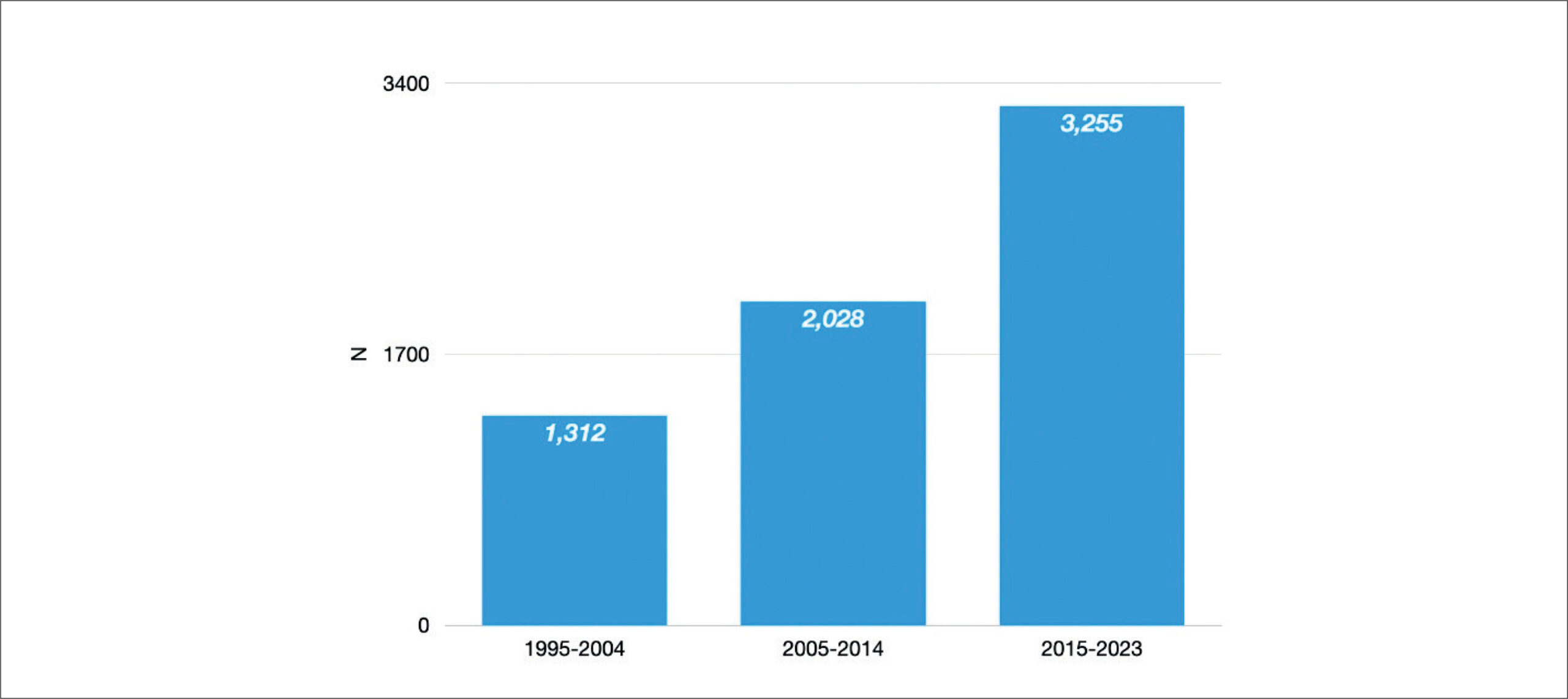
Since 1983, data of more than 220,000 heart, lung and heart-lung transplant recipients from 481 heart transplant centers and 260 lung transplant centers in 47 countries have been submitted to the International Society for Heart and Lung Transplantation (ISHLT) Registry. The ISHLT Registry mission is to improve the care of patients with advanced heart and lung disease. The ISHLT Registry has engaged members from diverse regions, provided outcome data from thoracic transplants worldwide and catalyzed scientific and clinical collaboration. Ten Brazilian hospitals used to participate in the ISHLT Registry in the past. During this period, some problems were observed. First, there was heterogenous commitment among participating centers to the complete dataset. Second, there was lack of human resources in some hospitals dedicated to the Registry. Third, data collection was each center’s responsibility and submission of the data to the ISHLT registry was not mandatory.

In 2021, the ISHLT Registry was interrupted due to new data sharing regulations and data collection approaches. Data fields and data upload process were updated. In 2024, the ISHLT Registry began to exchange data only with national and regional registries, such as United Network for Organ Sharing and Eurotransplant, and no longer with individual hospitals or institutions.

[…]
  • Heart Transplantation
  • Records
  • Transplantation
Read Full Article
Creative Commons Attribution (CC BY) Creative Commons license
10/02/2025 DOI: 10.36660/abc.20240370i
ABCHF
Editorial

Heart Transplant from a Genetically-Modified Pig: A Paradigm Shift?

Fernando Bacal

Heart transplant remains the therapy of choice for patients with end-stage heart failure but is limited by chronic shortage of donated organs. Mechanical circulatory support (MCS) devices, with modern designs, have been used as destiny therapy, yielding better results that have positively impacted patient survival. The indications for MCS have significantly increased and become part of the current context of potential candidates for transplant, be it as destiny therapy, bridge-to-transplant or bridge-to candidacy. However, there remains a considerable number of patients who would benefit from the transplant if the availability of donated organs was higher. According to the Brazilian Organ Transplant Association (ABTO), approximately 400 heart transplants are performed yearly in Brazil, but the demand for this procedure is 1,600 per year, i.e., many patients die waiting for an organ.

A possible solution for this issue is xenotransplantation, the process of transplanting organs from other animals, which has gained increasing interest in the last years, for a combination of reasons. First, the efficacy of preclinical models has improved, with an increase in survival time of xenografts. Second, the rapid advances in genome editing, particularly the advent of CRISPR (Clustered Regularly Interspaced Short Palindromic Repeats), which allowed the generation of donor pigs with multiple genetic protection modifications; what used to take years can now be done in months, with more accurate and comprehensive results. Third, the spectrum of the porcine endogenous retrovirus (PERV) significantly reduced. There is no evidence of PERV transmission in clinical trials of preclinical models, and novel treatment options and even elimination of these viral diseases are now available. Due to its potential, the importance of xenotransplantation as a solution for the shortage of human organs and tissues remains a great hope for the transplant community, especially for the patients who face advanced disease and high mortality while waiting for a donated heart.

[…]

  • Allergy and Immunology
  • Genetically Modified Animals
  • Heart Transplantation
  • Heterologous
  • Swine
  • Transplantation
Read Full Article
Creative Commons Attribution (CC BY) Creative Commons license
29/06/2022 DOI: 10.36660/abchf.20220027 Views 1
Combined transplantation of skeletal myoblasts and mesenchymal cells (cocultivation) in ventricular dysfunction after myocardial infarction
ABC
Artigo Original

Combined transplantation of skeletal myoblasts and mesenchymal cells (cocultivation) in ventricular dysfunction after myocardial infarction

Luiz Cesar Guarita Souza et al. Katherine Athayde Teixeira de Carvalho Carmen Rebelatto Alessandra Senegaglia … Marcus Furuta Nelson Miyague Paula Hansen Julio C Francisco Paulo Roberto Slud Brofman

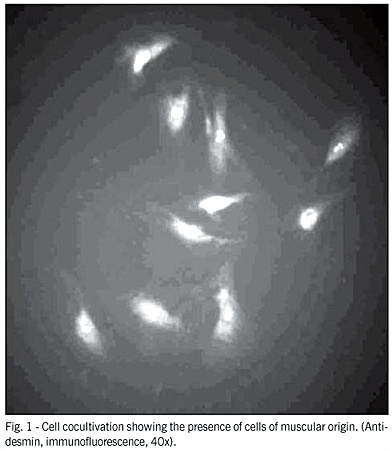
OBJECTIVE: Cell therapy in the myocardium has been mainly performed with satisfactory results using 2 cell types: skeletal myoblasts (myogenic) and mesenchymal cells (angiogenic). This study assessed the combined transplantation of those 2 cell types (SMM) into infarcted rats. METHODS: Myocardial infarction was induced by ligature of the left coronary artery in 26 Wistar rats. After one week, the animals underwent echocardiography for assessing ejection fraction (EF%) and left ventricular end-diastolic and systolic volumes (EDV, ESV, mL). After 2 days, the animals were reoperated on and divided into 2 groups: 1) control (n=10), which received 0.15 mL of culture medium; and 2) SMM (n=16), which received 7.5×10(6) heterologous skeletal myoblasts and mesenchymal cells in the infarcted region. The cells were obtained from puncture of the iliac crest and biopsy of skeletal muscle, and were cultured in vitro. After one month, the animals underwent a new echocardiography. RESULTS: No significant difference in EF, EDV, and ESV was observed between the 2 groups on baseline echocardiographic values. One month after transplantation, the following was observed: a reduction in EF in the control group (29.31 ± 5.6% to 23.54 ± 6.51%; P=0.048); and an increase in EF in the SMM group (24.03 ± 8.68% to 31.77 ± 9.06%; P=0.011). The presence of neovascularization and muscle fibers was identified in the regions of myocardial fibrosis in the SMM group. CONCLUSION: Cocultivation of skeletal myoblasts and mesenchymal cells is functionally effective.

  • mesenchymal cells
  • Myocardial Infarction
  • skeletal myoblasts
  • Transplantation
  • Ventricular Dysfunction
Read Full Article
Creative Commons Attribution (CC BY) Creative Commons license
22/10/2004 DOI: 10.1590/S0066-782X2004001600004
ABC
Ensaios Terapêuticos

Effects of carvedilol (beta1,beta2,alpha1-blocker) on refractory congestive heart failure

Edimar Alcides Bocchi et al. Fernando Bacal Giovanni Bellotti Dirceu Carrara José Antonio Franchini Ramires

PURPOSE: The effects of beta-blockers on severe heart failure are not well known. We investigated the effects of carvedilol (b1,b2,a1-blocker) on symptoms, functional class (FC), and left ventricular function in patients with refractory heart failure. METHODS: We studied 21 patients, mean age 56±10 years, 9 in FC IV, e 12 in FC III (intermittently with class IV). The initial dosage was 6.25mg, and it was increased progressively as tolerated. The mean dose was 42±11mg. The patients were submitted to routine clinical evaluation, and electrocardiogram. We determined after 196±60 days of follow-up the left ventricular end diastolic dimension (by echocardiogram), and left ventricular ejection fraction (using MUGA). RESULTS: Carvedilol was well tolerated by 16 (76%) patients. One patient is in FC II during increment of the dosage. Eight patients were in FC I, and 7 in FC II at 196±60 days of follow-up. Heart rate decreased from 96±15 to 67±10bpm (p<0.0001), left ventricular end diastolic diameter from 73±13 to 66±12mm (p<0.009), and the left ventricular ejection fraction increased from 0.21±0.06 to 0.34±0.12 (p<0.0003). CONCLUSION: Carvedilol may have beneficial effects on cardiac function, remodeling process, and FC. If tolerated, it seems to be a potential alternative option in the medical treatment of refractory heart failure. However, investigations are still necessary to clarify the long-term effects of carvedilol on this specific subgroup of patients.

  • Adrenergic beta-Antagonists
  • congestive heart failure
  • Transplantation
Read Full Article
Creative Commons Attribution (CC BY) Creative Commons license
08/01/2002 DOI: 10.1590/S0066-782X1998000800014 Views 1

How to cite this article

EndNote RIS

Electronic Document Format (Vancouver)

Atik FA, Pego-Fernandes PM, Mejia JA, Goldraich LA, Marcondes-Braga FG, Azeka E, Figueira FA, et al. ABTO Brazilian Transplant Registry and ISHLT Heart Transplant Registry: An Important/Valuable Partnership. Arquivos Brasileiros de Cardiologia 2025;122(1):e20240370.

Electronic Document Format (ABNT)

Atik, Fernando A.; Pego-Fernandes, Paulo Manoel; Mejia, Juan A.; Goldraich, Livia A.; Marcondes-Braga, Fabiana G.; Azeka, Estela; Figueira, Fernando Augusto; Garcia, Valter Duro; Haddad, Luciana; Cherikh, Wida; Stehlik, Josef; Cogswell, Rebecca. ABTO Brazilian Transplant Registry and ISHLT Heart Transplant Registry: An Important/Valuable Partnership. Arquivos Brasileiros de Cardiologia, v. 122, n. 1, e20240370, Feb. 2025.

Electronic Document Format (APA)

Atik, F. A., Pego-Fernandes, P. M., Mejia, J. A., Goldraich, L. A., Marcondes-Braga, F. G., Azeka, E., Figueira, F. A., Garcia, V. D., Haddad, L., Cherikh, W., Stehlik, J., & Cogswell, R. (2025). ABTO Brazilian Transplant Registry and ISHLT Heart Transplant Registry: An Important/Valuable Partnership. Arquivos Brasileiros de Cardiologia, 122(1), e20240370.

Electronic Document Format (ISO)

Atik, Fernando A. and Pego-Fernandes, Paulo Manoel and Mejia, Juan A. and Goldraich, Livia A. and Marcondes-Braga, Fabiana G. and Azeka, Estela and Figueira, Fernando Augusto and Garcia, Valter Duro and Haddad, Luciana and Cherikh, Wida and Stehlik, Josef and Cogswell, Rebecca. ABTO Brazilian Transplant Registry and ISHLT Heart Transplant Registry: An Important/Valuable Partnership. Arquivos Brasileiros de Cardiologia [online]. 2025, vol. 122, n. 1, [cited 2026-10-14], e20240370. Available from: <https://journals.cardiol.br/en/article/abto-brazilian-transplant-registry-and-ishlt-heart-transplant-registry-an-important-valuable-partnership/>. ISSN 0066-782X

EndNote RIS

Electronic Document Format (Vancouver)

Bacal F. Heart Transplant from a Genetically-Modified Pig: A Paradigm Shift?. ABC: Heart Failure & Cardiomyopathy 2022;2(2):133-5.

Electronic Document Format (ABNT)

Bacal, Fernando. Heart Transplant from a Genetically-Modified Pig: A Paradigm Shift?. ABC: Heart Failure & Cardiomyopathy, v. 2, n. 2, p. 133-135, Jun. 2022.

Electronic Document Format (APA)

Bacal, F. (2022). Heart Transplant from a Genetically-Modified Pig: A Paradigm Shift?. ABC: Heart Failure & Cardiomyopathy, 2(2), 133-135.

Electronic Document Format (ISO)

Bacal, Fernando. Heart Transplant from a Genetically-Modified Pig: A Paradigm Shift?. ABC: Heart Failure & Cardiomyopathy [online]. 2022, vol. 2, n. 2, [cited 2026-10-14], pp. 133-135. Available from: <https://journals.cardiol.br/en/article/heart-transplant-from-a-genetically-modified-pig-a-paradigm-shift/>

EndNote RIS

Electronic Document Format (Vancouver)

Souza LCG, Carvalho KAT, Rebelatto C, Senegaglia A, Furuta M, Miyague N, Hansen P, et al. Combined transplantation of skeletal myoblasts and mesenchymal cells (cocultivation) in ventricular dysfunction after myocardial infarction. Arquivos Brasileiros de Cardiologia 2004;83(4):288-93.

Electronic Document Format (ABNT)

Souza, Luiz Cesar Guarita; Carvalho, Katherine Athayde Teixeira de; Rebelatto, Carmen; Senegaglia, Alessandra; Furuta, Marcus; Miyague, Nelson; Hansen, Paula; Francisco, Julio C; Brofman, Paulo Roberto Slud. Combined transplantation of skeletal myoblasts and mesenchymal cells (cocultivation) in ventricular dysfunction after myocardial infarction. Arquivos Brasileiros de Cardiologia, v. 83, n. 4, p. 288-293, Oct. 2004.

Electronic Document Format (APA)

Souza, L. C. G., Carvalho, K. A. T. , Rebelatto, C., Senegaglia, A., Furuta, M., Miyague, N., Hansen, P., Francisco, J. C., & Brofman, P. R. S. (2004). Combined transplantation of skeletal myoblasts and mesenchymal cells (cocultivation) in ventricular dysfunction after myocardial infarction. Arquivos Brasileiros de Cardiologia, 83(4), 288-293.

Electronic Document Format (ISO)

Souza, Luiz Cesar Guarita and Carvalho, Katherine Athayde Teixeira de and Rebelatto, Carmen and Senegaglia, Alessandra and Furuta, Marcus and Miyague, Nelson and Hansen, Paula and Francisco, Julio C and Brofman, Paulo Roberto Slud. Combined transplantation of skeletal myoblasts and mesenchymal cells (cocultivation) in ventricular dysfunction after myocardial infarction. Arquivos Brasileiros de Cardiologia [online]. 2004, vol. 83, n. 4, [cited 2026-10-14], pp. 288-293. Available from: <https://journals.cardiol.br/en/article/combined-transplantation-of-skeletal-myoblasts-and-mesenchymal-cells-cocultivation-in-ventricular-dysfunction-after-myocardial-infarction/>. ISSN 0066-782X

EndNote RIS

Electronic Document Format (Vancouver)

Bocchi EA, Bacal F, Bellotti G, Carrara D, Ramires JAF. Effects of carvedilol (beta1,beta2,alpha1-blocker) on refractory congestive heart failure. Arquivos Brasileiros de Cardiologia 2002;71(2):169-73.

Electronic Document Format (ABNT)

Bocchi, Edimar Alcides; Bacal, Fernando; Bellotti, Giovanni; Carrara, Dirceu; Ramires, José Antonio Franchini. Effects of carvedilol (beta1,beta2,alpha1-blocker) on refractory congestive heart failure. Arquivos Brasileiros de Cardiologia, v. 71, n. 2, p. 169-173, Jan. 2002.

Electronic Document Format (APA)

Bocchi, E. A., Bacal, F., Bellotti, G., Carrara, D., & Ramires, J. A. F. (2002). Effects of carvedilol (beta1,beta2,alpha1-blocker) on refractory congestive heart failure. Arquivos Brasileiros de Cardiologia, 71(2), 169-173.

Electronic Document Format (ISO)

Bocchi, Edimar Alcides and Bacal, Fernando and Bellotti, Giovanni and Carrara, Dirceu and Ramires, José Antonio Franchini. Effects of carvedilol (beta1,beta2,alpha1-blocker) on refractory congestive heart failure. Arquivos Brasileiros de Cardiologia [online]. 2002, vol. 71, n. 2, [cited 2026-10-14], pp. 169-173. Available from: <https://journals.cardiol.br/en/article/effects-of-carvedilol-beta1beta2alpha1-blocker-on-refractory-congestive-heart-failure/>. ISSN 0066-782X

  • About ABC Family
  • Internal Regulation
  • Editorial Board
  • Brazilian Society of Cardiology (SBC)

Issues

SBC Guidelines

  • Videos
  • Podcasts
  • News