ABC Family Arquivos Brasileiros de Cardiologia International Journal of Cardiovascular Sciences ABC Heart Failure & Cardiomyopathy ABC Imagem Cardiovascular
Português English
ABC Family
Português English
  • About
    • About ABC Family
    • Internal Regulation
    • Editorial Board
    • Brazilian Society of Cardiology (SBC)
  • Issues
  • SBC Guidelines
  • Content
    • Videos
    • Podcasts
    • News
  • About
    • About ABC Family
    • Internal Regulation
    • Editorial Board
    • Brazilian Society of Cardiology (SBC)
  • Issues
  • SBC Guidelines
  • Content
    • Videos
    • Podcasts
    • News

ABC Family

  • ABC Family
  • Arquivos Brasileiros de Cardiologia
  • International Journal of Cardiovascular Sciences
  • ABC Heart Failure & Cardiomyopathy
  • ABC Imagem Cardiovascular
Search in

No content found.

Journals
Ordering
Article types
Others

  1. Home
  2. Keyword: Renal Artery Obstruction
ABCIC
Image

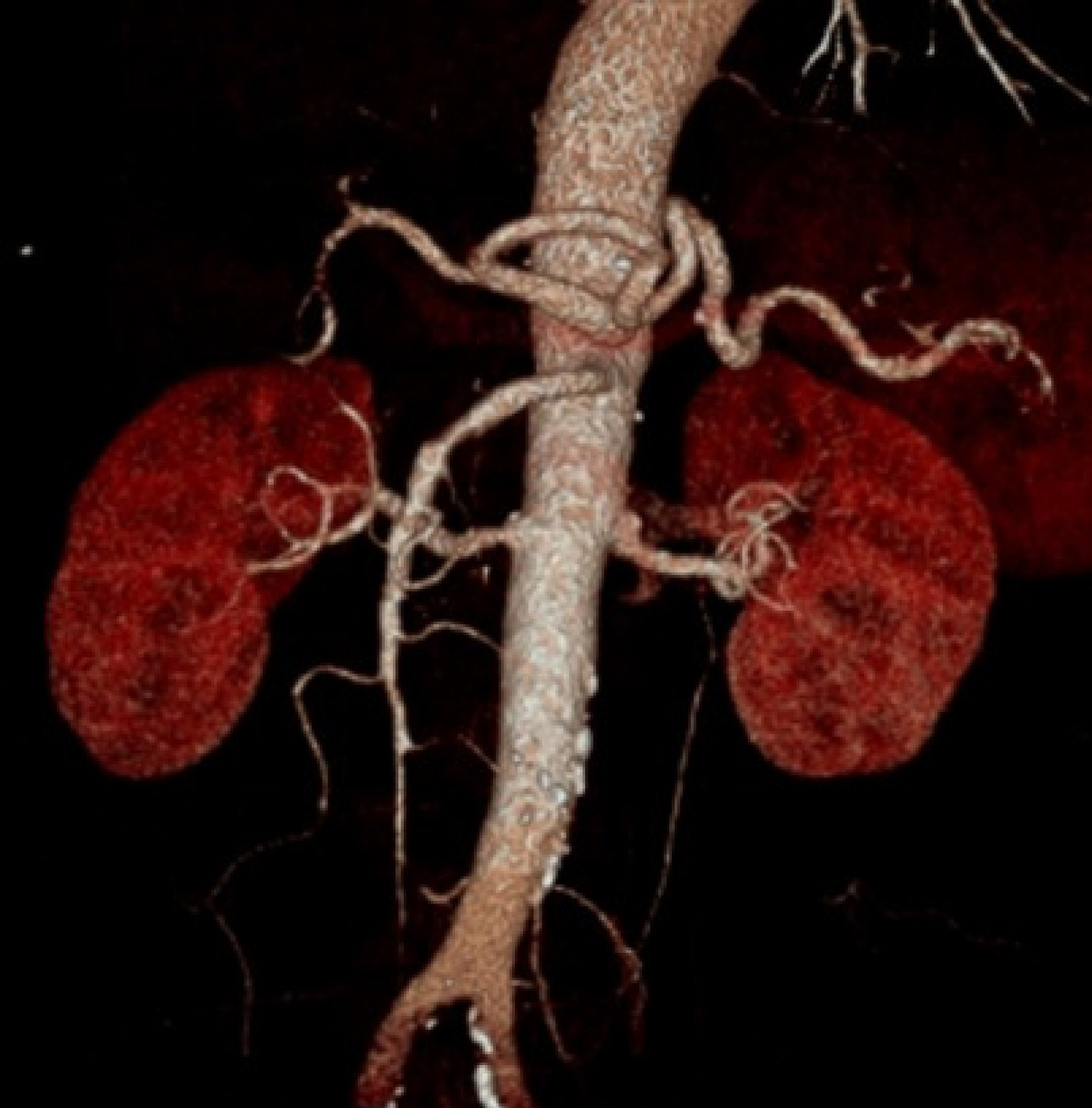
Renal Artery Pseudoaneurysm after Gunshot Wound

Milton Sérgio Bohatch Júnior et al. Amanda Fernandes Vidal da Silva Ademar Regueira Filho Roberto Teodoro Beck Marcelo Haddad Dantas

[…]

  • Aneurysm, False
  • Renal Artery Obstruction
  • Renal Artery/injuries
  • Wounds, Gunshot
Read Full Article
Creative Commons Attribution (CC BY) Creative Commons license
20/01/2022 DOI: 10.5935/2318-8219.20180008 Views 1
Figure 1
IJCS
Case Report

Takayasu Arteritis as a Secondary Cause of Arterial Hypertension

Pedro Manuel Oliveira et al. Paula Fereira Fábio Murteira Inês Rueff Rato Marta Barbedo

Abstract

Takayasu arteritis (TA) is a rare type of vasculitis that affects mainly the aorta and its major branches. It is highly similar to giant cell arteritis (GCA), and differentiation between them may not be achieved even by histological examination. Arterial hypertension is typical of TA and is caused by stenosis of the renal arteries. Here we report the case of a 59-year-old woman, with a history of dyslipidemia and anemia, seen in the Internal Medicine department for resistant hypertension. Evaluation of secondary causes led to stenosis of the renal arteries. Assessment of target organ involvement was performed by computed tomography angiograph which revealed ectasia of the aortic arch and ascending aorta, tortuous course of the brachiocephalic trunk and the proximal portion of the right common carotid artery; positron-emission tomography which showed diffuse increased uptake in the ascending aorta, compatible with large vessels vasculitis. The patient was submitted to aortic valve replacement with a biological prosthesis combined with myocardial revascularization (Bentall-De Bono procedure). Aortic biopsy specimens showed anatomical and pathological features of GCA and TA. Due to persistently uncontrolled hypertension, prednisone 60 mg was initiated,with significant improvement in patient’s condition.

  • Aorta, Thoracic
  • Computed Tomography Angiography/ methods
  • Hypertension
  • Renal Artery Obstruction
  • Takayasu Arteritis
Read Full Article
Creative Commons Attribution (CC BY) Creative Commons license
07/01/2022 DOI: 10.36660/ijcs.20210040
ABC
Artigo Original

Analysis of the sensitivity and specificity of noninvasive imaging tests for the diagnosis of renal artery stenosis

Flavio Antonio de Oliveira Borelli et al. Ibraim M. F. Pinto Celso Amodeo Paola E. P. Smanio … Antonio M. Kambara Ana Claudia G. Petisco Samuel M. Moreira Ricardo Calil Paiva Hugo Belotti Lopes Amanda G. M. R. Sousa

BACKGROUND: Aging and atherosclerosis are related to renovascular hypertension in elderly individuals. Regardless of comorbidities, renal artery stenosis is itself an important cause of cardiovascular morbidity and mortality. OBJECTIVE: To define the sensitivity, specificity, positive predictive value, and negative predictive value of noninvasive imaging tests used in the diagnosis of renal artery stenosis. METHODS: In a group of 61 patients recruited, 122 arteries were analized, thus permitting the definition of sensitivity, specificity, and the relative contribution of each imaging study performed (Doppler, scintigraphy and computed tomographic angiography in comparison to renal arteriography). RESULTS: The mean age was 65.43 years (standard deviation: 8.7). Of the variables related to the study population that were compared to arteriography, two correlated with renal artery stenosis, renal dysfunction and triglycerides. The median glomerular filtration rate was 52.8 mL/min/m². Doppler showed sensitivity of 82.90%, specificity of 70%, a positive predictive value of 85% and negative predictive value of 66.70%. For tomography, sensitivity was 66.70%, specificity 80%, positive predictive value 87.50% and negative predictive value 55.20%. With these findings, we could identify the imaging tests that best detected stenosis. CONCLUSION: Tomography and Doppler showed good quality and efficacy in the diagnosis of renal artery stenosis, with Doppler having the advantage of not requiring the use of contrast medium for the assessment of a disease that is common in diabetics and is associated with renal dysfunction and severe left ventricular dysfunction.

  • Doppler Echocardiography
  • hypertension, renovascular
  • Magnetic Resonance Imaging
  • Renal Artery Obstruction
Read Full Article
Creative Commons Attribution (CC BY) Creative Commons license
24/09/2013 DOI: 10.5935/abc.20130191
Renal resistance index predicting outcome of renal revascularization for renovascular hypertension
ABC
Artigo Original

Renal resistance index predicting outcome of renal revascularization for renovascular hypertension

Simone N. Santos et al. Luiz R. Leite Tak Sun Tse Rebecca Beck … Robert A. Lee Roger F. J. Shepherd

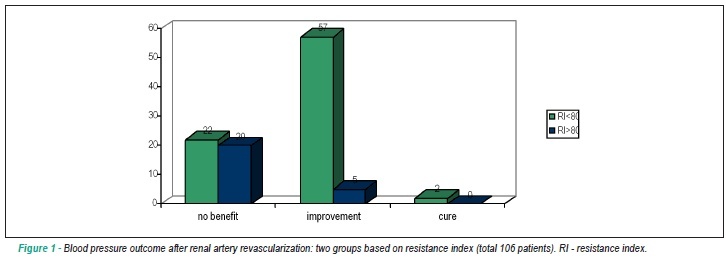
BACKGROUND: Renal artery stenosis (RAS) is a potentially correctable cause of hypertension and ischemic nephropathy. Despite successful renal revascularization, not all patients (pt) overcome it and some get worse. OBJECTIVE: This study was designed to assess the value of renal resistance index (RI) in predicting the outcome of renal revascularization. METHODS: Between Jan 1998 and Feb 2001, 2,933 pts were referred to renal duplex ultrasound. 106 out of these had significant RAS and underwent angiography and renal revascularization. Arterial blood pressure (BP) was measured before and after the intervention, at intervals of up to 2 years and medications recorded. Prior to revascularization, RI was measured at 3 sites of each kidney and averaged. RESULTS: Out of the 106 patients, 81 had RI80. RAS was corrected with angioplasty (PTA) alone in 25 pts, PTA + stent in 56 pts and corrected by surgery in 25 pts. Of patients who benefited from renal revascularization; 57 of the 81 patients with RI 80. Using a multiple logistic regression model, RI was significantly associated with BP outcome (p=0.001), adjusted for the effects of age, sex, SBP, DBP, duration of hypertension, type of revascularization, number of medication in use, creatinine level, presence of diabetes mellitus, hypercholesterolemia, stroke, peripheral and coronary artery disease and kidney size (OR 99.6 – 95%CI for OR 6.1 to 1,621.2). CONCLUSION: Intrarenal arterial resistance measured by duplex ultrasound plays an important role in predicting BP outcome after renal revascularization for RAS.

  • Hypertension
  • Kidney
  • Renal Artery Obstruction
  • Renal Insufficiency
  • renovascular
Read Full Article
Creative Commons Attribution (CC BY) Creative Commons license
26/03/2010 DOI: 10.1590/S0066-782X2010005000018 Views 2

How to cite this article

EndNote RIS

Electronic Document Format (Vancouver)

Bohatch Júnior MS, Silva AFV, Regueira Filho A, Beck RT, Dantas MH. Renal Artery Pseudoaneurysm after Gunshot Wound. Arquivos Brasileiros de Cardiologia Imagem cardiovascular 2022;31(1):22-3.

Electronic Document Format (ABNT)

Bohatch Júnior, Milton Sérgio; Silva, Amanda Fernandes Vidal da; Regueira Filho, Ademar; Beck, Roberto Teodoro; Dantas, Marcelo Haddad. Renal Artery Pseudoaneurysm after Gunshot Wound. Arquivos Brasileiros de Cardiologia Imagem cardiovascular, v. 31, n. 1, p. 22-23, Jan. 2022.

Electronic Document Format (APA)

Bohatch Júnior, M. S., Silva, A. F. V. , Regueira Filho, A., Beck, R. T., & Dantas, M. H. (2022). Renal Artery Pseudoaneurysm after Gunshot Wound. Arquivos Brasileiros de Cardiologia Imagem cardiovascular, 31(1), 22-23.

Electronic Document Format (ISO)

Bohatch Júnior, Milton Sérgio and Silva, Amanda Fernandes Vidal da and Regueira Filho, Ademar and Beck, Roberto Teodoro and Dantas, Marcelo Haddad. Renal Artery Pseudoaneurysm after Gunshot Wound. Arquivos Brasileiros de Cardiologia Imagem cardiovascular [online]. 2022, vol. 31, n. 1, [cited 2026-10-14], pp. 22-23. Available from: <https://journals.cardiol.br/en/article/renal-artery-pseudoaneurysm-after-gunshot-wound/>. ISSN 2318-8219

EndNote RIS

Electronic Document Format (Vancouver)

Oliveira PM, Fereira P, Murteira F, Rato IR, Barbedo M. Takayasu Arteritis as a Secondary Cause of Arterial Hypertension. International Journal of Cardiovascular Sciences 2022;36:e20210040.

Electronic Document Format (ABNT)

Oliveira, Pedro Manuel; Fereira, Paula; Murteira, Fábio; Rato, Inês Rueff; Barbedo, Marta. Takayasu Arteritis as a Secondary Cause of Arterial Hypertension. International Journal of Cardiovascular Sciences, v. 36, e20210040, Jan. 2022.

Electronic Document Format (APA)

Oliveira, P. M., Fereira, P., Murteira, F., Rato, I. R., & Barbedo, M. (2022). Takayasu Arteritis as a Secondary Cause of Arterial Hypertension. International Journal of Cardiovascular Sciences, 36, e20210040.

Electronic Document Format (ISO)

Oliveira, Pedro Manuel and Fereira, Paula and Murteira, Fábio and Rato, Inês Rueff and Barbedo, Marta. Takayasu Arteritis as a Secondary Cause of Arterial Hypertension. International Journal of Cardiovascular Sciences [online]. 2022, vol. 36, [cited 2026-10-14], e20210040. Available from: <https://journals.cardiol.br/en/article/takayasu-arteritis-as-a-secondary-cause-of-arterial-hypertension/>. ISSN 2359-4802

EndNote RIS

Electronic Document Format (Vancouver)

Borelli FAO, Pinto IMF, Amodeo C, Smanio PEP, Kambara AM, Petisco ACG, Moreira SM, et al. Analysis of the sensitivity and specificity of noninvasive imaging tests for the diagnosis of renal artery stenosis. Arquivos Brasileiros de Cardiologia 2013;101(5):423-3.

Electronic Document Format (ABNT)

Borelli, Flavio Antonio de Oliveira; Pinto, Ibraim M. F.; Amodeo, Celso; Smanio, Paola E. P.; Kambara, Antonio M.; Petisco, Ana Claudia G.; Moreira, Samuel M.; Paiva, Ricardo Calil; Lopes, Hugo Belotti; Sousa, Amanda G. M. R.. Analysis of the sensitivity and specificity of noninvasive imaging tests for the diagnosis of renal artery stenosis. Arquivos Brasileiros de Cardiologia, v. 101, n. 5, p. 423-433, Sep. 2013.

Electronic Document Format (APA)

Borelli, F. A. O., Pinto, I. M. F., Amodeo, C., Smanio, P. E. P., Kambara, A. M., Petisco, A. C. G., Moreira, S. M., Paiva, R. C., Lopes, H. B., & Sousa, A. G. M. R. (2013). Analysis of the sensitivity and specificity of noninvasive imaging tests for the diagnosis of renal artery stenosis. Arquivos Brasileiros de Cardiologia, 101(5), 423-433.

Electronic Document Format (ISO)

Borelli, Flavio Antonio de Oliveira and Pinto, Ibraim M. F. and Amodeo, Celso and Smanio, Paola E. P. and Kambara, Antonio M. and Petisco, Ana Claudia G. and Moreira, Samuel M. and Paiva, Ricardo Calil and Lopes, Hugo Belotti and Sousa, Amanda G. M. R.. Analysis of the sensitivity and specificity of noninvasive imaging tests for the diagnosis of renal artery stenosis. Arquivos Brasileiros de Cardiologia [online]. 2013, vol. 101, n. 5, [cited 2026-10-14], pp. 423-433. Available from: <https://journals.cardiol.br/en/article/analysis-of-the-sensitivity-and-specificity-of-noninvasive-imaging-tests-for-the-diagnosis-of-renal-artery-stenosis/>. ISSN 0066-782X

EndNote RIS

Electronic Document Format (Vancouver)

Santos SN, Leite LR, Tse TS, Beck R, Lee RA, Shepherd RFJ. Renal resistance index predicting outcome of renal revascularization for renovascular hypertension. Arquivos Brasileiros de Cardiologia 2010;94(4):452-6.

Electronic Document Format (ABNT)

Santos, Simone N.; Leite, Luiz R.; Tse, Tak Sun; Beck, Rebecca; Lee, Robert A.; Shepherd, Roger F. J.. Renal resistance index predicting outcome of renal revascularization for renovascular hypertension. Arquivos Brasileiros de Cardiologia, v. 94, n. 4, p. 452-456, Mar. 2010.

Electronic Document Format (APA)

Santos, S. N., Leite, L. R., Tse, T. S., Beck, R., Lee, R. A., & Shepherd, R. F. J. (2010). Renal resistance index predicting outcome of renal revascularization for renovascular hypertension. Arquivos Brasileiros de Cardiologia, 94(4), 452-456.

Electronic Document Format (ISO)

Santos, Simone N. and Leite, Luiz R. and Tse, Tak Sun and Beck, Rebecca and Lee, Robert A. and Shepherd, Roger F. J.. Renal resistance index predicting outcome of renal revascularization for renovascular hypertension. Arquivos Brasileiros de Cardiologia [online]. 2010, vol. 94, n. 4, [cited 2026-10-14], pp. 452-456. Available from: <https://journals.cardiol.br/en/article/renal-resistance-index-predicting-outcome-of-renal-revascularization-for-renovascular-hypertension/>. ISSN 0066-782X

  • About ABC Family
  • Internal Regulation
  • Editorial Board
  • Brazilian Society of Cardiology (SBC)

Issues

SBC Guidelines

  • Videos
  • Podcasts
  • News