ABC Family Arquivos Brasileiros de Cardiologia International Journal of Cardiovascular Sciences ABC Heart Failure & Cardiomyopathy ABC Imagem Cardiovascular
Português English
ABC Family
Português English
  • About
    • About ABC Family
    • Internal Regulation
    • Editorial Board
    • Brazilian Society of Cardiology (SBC)
  • Issues
  • SBC Guidelines
  • Content
    • Videos
    • Podcasts
    • News
  • About
    • About ABC Family
    • Internal Regulation
    • Editorial Board
    • Brazilian Society of Cardiology (SBC)
  • Issues
  • SBC Guidelines
  • Content
    • Videos
    • Podcasts
    • News

ABC Family

  • ABC Family
  • Arquivos Brasileiros de Cardiologia
  • International Journal of Cardiovascular Sciences
  • ABC Heart Failure & Cardiomyopathy
  • ABC Imagem Cardiovascular
Search in

No content found.

Journals
Ordering
Article types
Others

  1. Home
  2. Keyword: Aspirin/adverse effects
Figure 1
ABC
Original Article

High Residual Platelet Reactivity during Aspirin Therapy in Patients with Non-St Segment Elevation Acute Coronary Syndrome: Comparison Between Initial and Late Phases

Marianna Deway Andrade Dracoulakis et al. Paul Gurbel Marco Cattaneo Herlon Saraiva Martins … José Carlos Nicolau Roberto Kalil Filho

Abstract

Background:

High platelet reactivity (HPR) during therapy with acetylsalicylic acid (ASA) is a poor prognostic factor in acute coronary syndromes (ACS). The prevalence of HPR during ACS is greater than that reported in stable diseases. However, it is unclear whether this prevalence of HPR is a transient phenomenon or a characteristic of this high-risk population.

Objective:

The main objective is to compare the effects of ASA on platelet function in the initial and late phases of ACS in a single population. Secondary objectives are: correlation between the tests between themselves and the relationship between the tests and the variation of the inflammatory markers (C-reactive protein and interleukin-6).

Methods:

Seventy patients with non-ST segment elevation (NSTE) ACS in use of 100-200 mg of ASA per day for at least 7 days were prospectively studied. Platelet function was assessed in the first 48 hours and subsequently after 3 months using four methods: VerifyNowâ„¢ (VFN), whole blood platelet aggregation (WBPA) with arachidonic acid (AA) and collagen as agonists, and platelet function analyzer (PFA). The level of statistical significance considered was < 0.05.

Results:

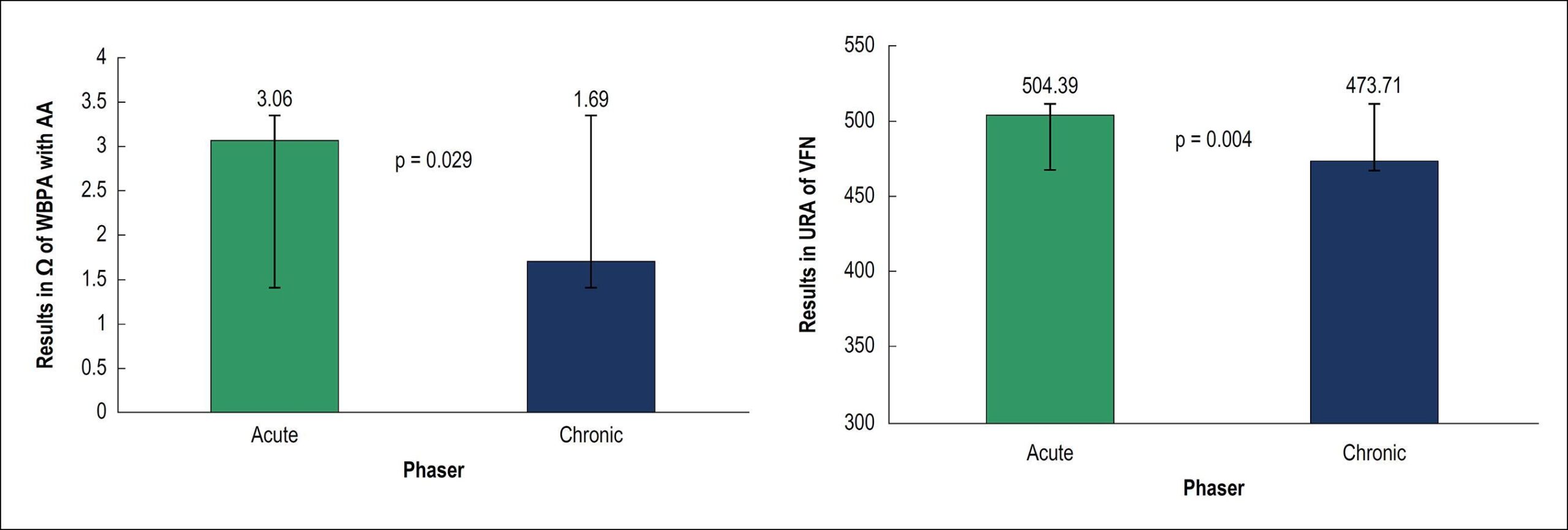
According to the more specific methods (WBPA with AA and VFN), the incidence of HPR was significantly higher in the early phase than in the late phase: WBPA with AA: 31% versus 13%, p = 0.015; VFN: 32% versus 16%, p = 0.049. The other methods tested, which were less specific for ASA, did not show significant differences between phases. The correlation between the methods was weak or moderate (r ranging from 0.3 to 0.5, p < 0.05), and there were no significant associations between HPR and inflammatory markers.

Conclusion:

The prevalence of HPR during AAS therapy, assessed by specific methods for cyclooxygenase 1 (COX-1), is higher during the acute phase than in the late phase of NSTE ACS.
  • Acute coronary syndrome
  • Aged
  • Aspirin/adverse effects
  • aspirin/therapeutic use
  • Myocardial Ischemia
  • Platelet Aggregation/drug effects
Read Full Article
Creative Commons Attribution (CC BY) Creative Commons license
15/08/2019 DOI: 10.5935/abc.20190146 Views 1
Figure 1
ABC
Original Article

Long Term Cardiovascular Outcome Based on Aspirin and Clopidogrel Responsiveness Status in Young ST-Elevated Myocardial Infarction Patients

Mustafa Umut Somuncu et al. Ali Riza Demir Seda Tukenmez Karakurt Huseyin Karakurt Turgut Karabag

Abstract

Background:

A subset of patients who take antiplatelet therapy continues to have recurrent cardiovascular events which may be due to antiplatelet resistance. The effect of low response to aspirin or clopidogrel on prognosis was examined in different patient populations.

Objective:

We aimed to investigate the prevalence of poor response to dual antiplatelet therapy and its relationship with major adverse cardiovascular events (MACE) in young patients with ST-elevation myocardial infarction (STEMI).

Methods:

In our study, we included 123 patients under the age of 45 with STEMI who underwent primary percutaneous intervention. A screening procedure to determine both aspirin and clopidogrel responsiveness was performed on the fifth day of admission. We followed a 2×2 factorial design and patients were allocated to one of four groups, according to the presence of aspirin and/or clopidogrel resistance. Patients were followed for a three-year period. A p-value less than 0.05 was considered statistically significant.

Results:

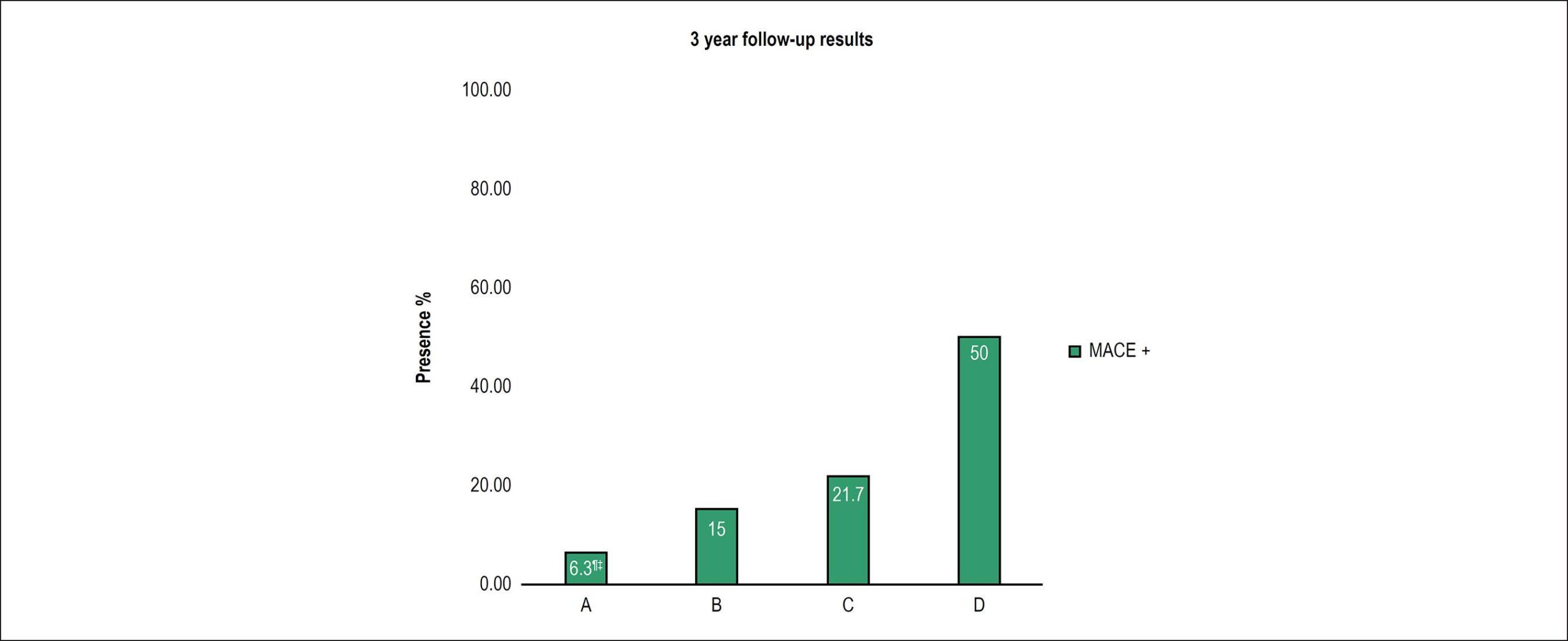
We identified 48% of resistance against one or more antiplatelet in young patients with STEMI. More MACE was observed in patients with poor response to dual platelet therapy or to clopidogrel compared those with adequate response to the dual therapy (OR: 1.875, 1.144-3.073, p < 0.001; OR: 1.198, 0.957-1.499, p = 0.036, respectively). After adjustment for potential confounders, we found that poor responders to dual therapy had 3.3 times increased odds for three-year MACE than those with adequate response to the dual therapy.

Conclusion:

Attention should be paid to dual antiplatelet therapy in terms of increased risk for cardiovascular adverse events especially in young patients with STEMI.

  • Acute coronary syndrome
  • Aspirin/adverse effects
  • Mortality
  • Platelet Aggregation
  • ST Elevation Myocardial Infarction
  • Young Adult
Read Full Article
Creative Commons Attribution (CC BY) Creative Commons license
17/12/2018 DOI: 10.5935/abc.20180251 Views 2

How to cite this article

EndNote RIS

Electronic Document Format (Vancouver)

Dracoulakis MDA, Gurbel P, Cattaneo M, Martins HS, Nicolau JC, Kalil Filho R. High Residual Platelet Reactivity during Aspirin Therapy in Patients with Non-St Segment Elevation Acute Coronary Syndrome: Comparison Between Initial and Late Phases. Arquivos Brasileiros de Cardiologia 2019;113(3):357-63.

Electronic Document Format (ABNT)

Dracoulakis, Marianna Deway Andrade; Gurbel, Paul; Cattaneo, Marco; Martins, Herlon Saraiva; Nicolau, José Carlos; Kalil Filho, Roberto. High Residual Platelet Reactivity during Aspirin Therapy in Patients with Non-St Segment Elevation Acute Coronary Syndrome: Comparison Between Initial and Late Phases. Arquivos Brasileiros de Cardiologia, v. 113, n. 3, p. 357-363, Aug. 2019.

Electronic Document Format (APA)

Dracoulakis, M. D. A., Gurbel, P., Cattaneo, M., Martins, H. S., Nicolau, J. C., & Kalil Filho, R. (2019). High Residual Platelet Reactivity during Aspirin Therapy in Patients with Non-St Segment Elevation Acute Coronary Syndrome: Comparison Between Initial and Late Phases. Arquivos Brasileiros de Cardiologia, 113(3), 357-363.

Electronic Document Format (ISO)

Dracoulakis, Marianna Deway Andrade and Gurbel, Paul and Cattaneo, Marco and Martins, Herlon Saraiva and Nicolau, José Carlos and Kalil Filho, Roberto. High Residual Platelet Reactivity during Aspirin Therapy in Patients with Non-St Segment Elevation Acute Coronary Syndrome: Comparison Between Initial and Late Phases. Arquivos Brasileiros de Cardiologia [online]. 2019, vol. 113, n. 3, [cited 2026-10-14], pp. 357-363. Available from: <https://journals.cardiol.br/en/article/high-residual-platelet-reactivity-during-aspirin-therapy-in-patients-with-non-st-segment-elevation-acute-coronary-syndrome-comparison-between-initial-and-late-phases/>. ISSN 0066-782X

EndNote RIS

Electronic Document Format (Vancouver)

Somuncu MU, Demir AR, Karakurt ST, Karakurt H, Karabag T. Long Term Cardiovascular Outcome Based on Aspirin and Clopidogrel Responsiveness Status in Young ST-Elevated Myocardial Infarction Patients. Arquivos Brasileiros de Cardiologia 2018;112(2):138-46.

Electronic Document Format (ABNT)

Somuncu, Mustafa Umut; Demir, Ali Riza; Karakurt, Seda Tukenmez; Karakurt, Huseyin; Karabag, Turgut. Long Term Cardiovascular Outcome Based on Aspirin and Clopidogrel Responsiveness Status in Young ST-Elevated Myocardial Infarction Patients. Arquivos Brasileiros de Cardiologia, v. 112, n. 2, p. 138-146, Dec. 2018.

Electronic Document Format (APA)

Somuncu, M. U., Demir, A. R., Karakurt, S. T., Karakurt, H., & Karabag, T. (2018). Long Term Cardiovascular Outcome Based on Aspirin and Clopidogrel Responsiveness Status in Young ST-Elevated Myocardial Infarction Patients. Arquivos Brasileiros de Cardiologia, 112(2), 138-146.

Electronic Document Format (ISO)

Somuncu, Mustafa Umut and Demir, Ali Riza and Karakurt, Seda Tukenmez and Karakurt, Huseyin and Karabag, Turgut. Long Term Cardiovascular Outcome Based on Aspirin and Clopidogrel Responsiveness Status in Young ST-Elevated Myocardial Infarction Patients. Arquivos Brasileiros de Cardiologia [online]. 2018, vol. 112, n. 2, [cited 2026-10-14], pp. 138-146. Available from: <https://journals.cardiol.br/en/article/long-term-cardiovascular-outcome-based-on-aspirin-and-clopidogrel-responsiveness-status-in-young-st-elevated-myocardial-infarction-patients/>. ISSN 0066-782X

  • About ABC Family
  • Internal Regulation
  • Editorial Board
  • Brazilian Society of Cardiology (SBC)

Issues

SBC Guidelines

  • Videos
  • Podcasts
  • News