| ABC
ABC Family Arquivos Brasileiros de Cardiologia International Journal of Cardiovascular Sciences ABC Heart Failure & Cardiomyopathy ABC Imagem Cardiovascular
Português English
ABC Family | ABC
Português English
  • About
    • About the Journal
    • Internal Regulation
    • Editors Section
    • Editorial Board
    • History
    • SBC Award
  • Instructions to Authors
    • Guidelines for Publication
    • Editorial Policy
    • Ethics Policy
    • Policy on the Use of Artificial Intelligence
    • Mandatory Publication Form
    • Publication Fee
  • Issues
  • SBC Guidelines
  • Abstracts
    • How to Publish an Abstract Supplement?
    • Supplements from the Brazilian Congress of Cardiology
  • About
    • About the Journal
    • Internal Regulation
    • Editors Section
    • Editorial Board
    • History
    • SBC Award
  • Instructions to Authors
    • Guidelines for Publication
    • Editorial Policy
    • Ethics Policy
    • Policy on the Use of Artificial Intelligence
    • Mandatory Publication Form
    • Publication Fee
  • Issues
  • SBC Guidelines
  • Abstracts
    • How to Publish an Abstract Supplement?
    • Supplements from the Brazilian Congress of Cardiology

ABC Family

  • ABC Family
  • Arquivos Brasileiros de Cardiologia
  • International Journal of Cardiovascular Sciences
  • ABC Heart Failure & Cardiomyopathy
  • ABC Imagem Cardiovascular
Search in

No content found.

Journals
Ordering
Article types
Others

  1. Home
  2. ABC
  3. Issues
  4. 2000, Volume 75, Number 3
Heart transplant in a patient with complete absence of the pericardium
Case Report

Heart transplant in a patient with complete absence of the pericardium

Francisco Gregori Jr et al. Celso Otaviano Cordeiro Ulisses Alexandre Croti Thelma Eliza Ferreira Gregori Osney Moure

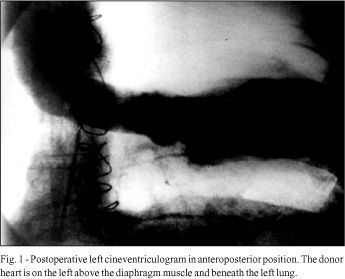
We report the case of a heart transplant in which the recipient patient had a total congenital absence of the pericardium. Associated with this, we found a major disproportion between the size of the recipient’s mediastinal cavity and the size of the donor’s heart. To prevent twisting of the great arteries, we placed the graft on the left diaphragm muscle and beneath the left lung, which resulted in an uneventful early and late postoperative course.

Read Full Article
Creative Commons Attribution (CC BY) Creative Commons license
08/01/2002 DOI: 10.1590/S0066-782X2000000900007
Prognostic factors of rheumatic mitral stenosis during pregnancy and puerperium
Original Article

Prognostic factors of rheumatic mitral stenosis during pregnancy and puerperium

Paulo José Bastos Barbosa et al. Antônio Alberto Lopes Gilson Soares Feitosa Rosângela Vasconcelos de Almeida … Rosenbert Mamédio da Silva José Carlos Brito Maria Lúcia Duarte Augusto José Gonçalves Almeida

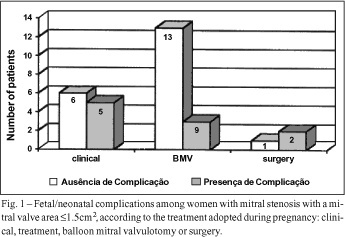
OBJECTIVE: To identifity characteristics associated with complications during pregnancy and puerperium in patients with rheumatic mitral stenosis. METHODS: Forty-one pregnant women (forty-five pregnancies) with mitral stenosis, followed-up from 1991 to 1999 were retrospectively evaluated. Predictor variables: the mitral valve area (MVA), measured by echocardiogram, and functional class (FC) before pregnancy (NYHA criteria).Maternal events: progression of heart failure, need for cardiac surgery or balloon mitral valvulotomy, death, and thromboembolism. Fetal/neonatal events: abortion, fetal or neonatal death, prematurity or low birth weight ( or = II and III versus I) was also associated with a risk for maternal events (RR=2.7; 95% CI=1.4-5.3).MVA and FC were not importantly associated with these events, although a smaller frequency of fetal/neonatal events was observed in patients who had undergone balloon valvulotomy. CONCLUSION: In pregnant women with mitral stenosis, the MVA and the FC are strongly associated with maternal complications but are not associated with fetal/neonatal events. Balloon mitral valvulotomy could have contributed to reducing the risks of fetal/neonatal events in the more symptomatic patients who had to undergo this procedure during pregnancy.

  • Mitral stenosis
  • Pregnancy
  • prognostic factors
Read Full Article
Creative Commons Attribution (CC BY) Creative Commons license
08/01/2002 DOI: 10.1590/S0066-782X2000000900003
Original Article

Ambulatory blood pressure monitoring and microalbuminuria in normotensive subjects with insulin-dependent diabetes mellitus

Cesar Nissan Cohen et al. Francisco Manes Albanesi Fº Maria de Fátima Gonçalves Marília de Brito Gomes

OBJECTIVE: To assess the association between microalbuminuria with ambulatory blood pressure monitoring in normotensive individuals with insulin-dependent diabetes mellitus. METHODS: Thirty-seven patients underwent determination of the rate of urinary excretion of albumin through radioimmunoassay and ambulatory blood pressure monitoring. Their mean age was 26.5±6.7 years, and the mean duration of their disease was 8 (1-34) years. Microalbuminuria was defined as urinary excretion of albumin > or = 20 and <200µg/min in at least 2 out of 3 urine samples. RESULTS: Nine (24.3%) patients were microalbuminuric. Ambulatory blood pressure monitoring in the microalbuminuric patients had higher mean pressure values, mainly the systolic pressure, during sleep as compared with that in the normoalbuminuric patients (120.1±8.3 vs 110.8±7.1 mmHg; p=0.007). The pressure load was higher in the microalbuminuric individuals, mainly the systolic pressure load during wakefulness [6.3 (2.9-45.9) vs 1.6 (0-16%); p=0.001]. This was the variable that better correlated with the urinary excretion of albumin (rS=0.61; p50% and diastolic pressure load > 30% during sleep was associated with microalbuminuria (p=0.008). The pressure drop during sleep did not differ between the groups. CONCLUSION: Microalbuminuric normotensive insulin-dependent diabetic patients show greater mean pressure value and pressure load during ambulatory blood pressure monitoring, and these variables correlate with urinary excretion of albumin.

  • Ambulatory Blood Pressure Monitoring
  • diabetic nephropathy
  • insulin-dependent diabetes mellitus
Read Full Article
Creative Commons Attribution (CC BY) Creative Commons license
08/01/2002 DOI: 10.1590/S0066-782X2000000900001 Views 1
Updated

Why are calcium antagonists still being used in heart failure in the era of calcium sensitizers?

Wolney de Andrade Martins et al. Humberto Villacorta Charles Mady

Update

Why are Calcium Antagonists Still Being Used in Heart Failure in the Era of Calcium Sensitizers?

[…]

Read Full Article
Creative Commons Attribution (CC BY) Creative Commons license
08/01/2002 DOI: 10.1590/S0066-782X2000000900008
Original Article

Reduction of QTc interval dispersion. Potential mechanism of cardiac protection of pyridostigmine bromide

Renata Rodrigues Teixeira de Castro et al. Salvador Manoel Serra Antonio Claudio Lucas da Nóbrega

OBJECTIVE: Parasympathetic dysfunction is an independent risk factor in individuals with coronary artery disease, and cholinergic stimulation is a potential therapeutical option. We determined the effects of pyridostigmine bromide, a reversible anticholinesterase agent, on electrocardiographic variables of healthy individuals. METHODS: We carried out a cross-sectional, double blind, randomized, placebo-controlled study. We obtained electrocardiographic tracings in 12 simultaneous leads of 10 healthy young individuals at rest before and after oral administration of 45 mg of pyridostigmine or placebo. RESULTS: Pyridostigmine increased RR intervals (before: 886±27 ms vs after: 1054±37 ms) and decreased QTc dispersion (before: 72±9ms vs after: 45±3ms), without changing other electrocardiographic variables (PR segment, QT interval, QTc, and QT dispersion). CONCLUSION: Bradycardia and the reduction in QTc dispersion induced by pyridostigmine may effectively represent a protective mechanism if these results can be reproduced in individuals with cardiovascular diseases.

  • Autonomic Nervous System
  • pyridostigmine
  • QTc dispersion
Read Full Article
Creative Commons Attribution (CC BY) Creative Commons license
08/01/2002 DOI: 10.1590/S0066-782X2000000900002 Views 1
Cardiac involvement in total generalized lipodystrophy (Berardinelli- Seip syndrome)
Case Report

Cardiac involvement in total generalized lipodystrophy (Berardinelli- Seip syndrome)

Ruy Felipe Melo Viégas et al. Rosiane Viana Zuza Diniz Taciana Mara Rezende Fortes Viégas Edgar Bezerra Lira Fº Dirceu Rodrigues de Almeida

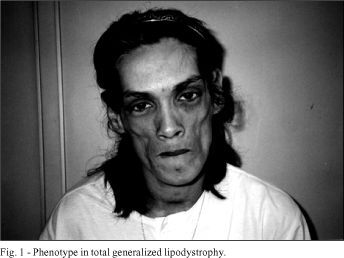
Total generalized lipodystrophy (Berardinelli–Seip Syndrome) is a rare hereditary disease characterized by insulin-resistant diabetes mellitus and a small quantity of adipose tissue and is of unknown origin. Common cardiovascular alterations related to this syndrome are cardiac hypertrophy and arterial hypertension. This article reports a case of Berardinelli–Seip syndrome and reviews the literature with special emphasis on the cardiovascular manifestations of this syndrome.

Read Full Article
Creative Commons Attribution (CC BY) Creative Commons license
08/01/2002 DOI: 10.1590/S0066-782X2000000900006
The bussola study. Final results, conclusions and proposals
Original Article

The bussola study. Final results, conclusions and proposals

Antonio Luiz da Silva Brasileiro

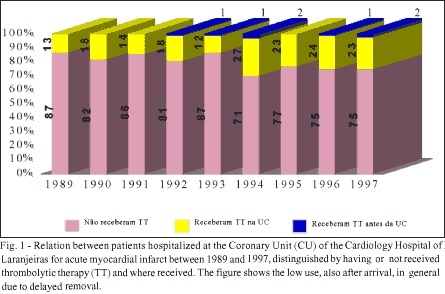
OBJECTIVE: To evaluate the use of thrombolytic and acetylsalicylic acid therapies in acute myocardial infarct patients as well as the availability of technical and human resources for the care of these patients in the emergency units of the city of Rio de Janeiro. Additional objectives were the evaluation of the use of primary angioplasty and the level of acceptance of SBC /RJ as an entity responsible for programs of continued medical education. METHODS: Interviews with physicians at 46 emergency units in the city of Rio de Janeiro. RESULTS: Of the 46 emergency units inspected, a policy of encouragement to use thrombolytic therapy was only prescribed in 6.5%. In 1/3 of the public wards no thrombolytic agents were available, and in none of them was access to primary angioplasty regularly available; 45.9% did not offer the minimal conditions required for the handling of cases of acute myocardial infarction; 60% of the physicians on-call (at both public and private emergency units), appeared not to know the importance of the use of acetylsalicylic acid in acute myocardial infarct patients; all physicians interviewed would participate in programs of continued medical education organized by the SBC/RJ. CONCLUSION: The study suggests there was: 1) the low probability of the use of thrombolytic therapy in the majority of the emergency units in of the city of Rio de Janeiro due to the inadequate policy of waiting for the transfer of the patient to coronary or intensive care unit; 2) a low awareness to the importance of early use of acetylsalic acid in acute myocardial infarct; 3) half of the emergency units of the public net do not have the minimal conditions required for the handling of cases of acute myocardial infarction; 4) a high level of credibility exists that would enable the SBC/RJ to set up programs for continued medical education to change the mentality regarding the use of thrombolytic therapy and of acetylsalicylic acid.

  • Emergencies
  • myocardial infarct
  • thrombolysis
Read Full Article
Creative Commons Attribution (CC BY) Creative Commons license
08/01/2002 DOI: 10.1590/S0066-782X2000000900004 Views 1
Hormonal and cardiovascular reflex assessment in a female patient with pure autonomic failure
Case Report

Hormonal and cardiovascular reflex assessment in a female patient with pure autonomic failure

Heno Ferreira Lopes et al. Fernanda Marciano Consolim-Colombo Denise Hachul Maria Elisa do Amaral Carvalho … Fúlvio Pileggi Hélio Bernardes Silva

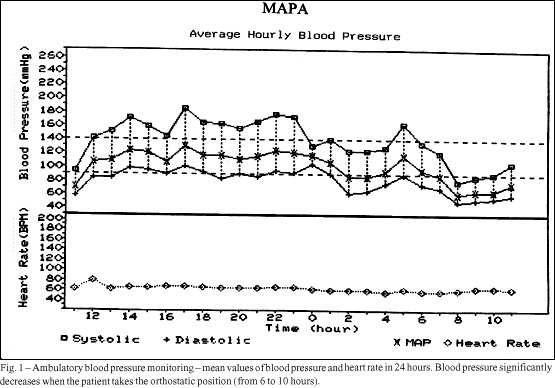
We report the case of a 72-year-old female with pure autonomic failure, a rare entity, whose diagnosis of autonomic dysfunction was determined with a series of complementary tests. For approximately 2 years, the patient has been experiencing dizziness and a tendency to fall, a significant weight loss, generalized weakness, dysphagia, intestinal constipation, blurred vision, dry mouth, and changes in her voice. She underwent clinical assessment and laboratory tests (biochemical tests, chest X-ray, digestive endoscopy, colonoscopy, chest computed tomography, abdomen and pelvis computed tomography, abdominal ultrasound, and ambulatory blood pressure monitoring). Measurements of catecholamine and plasmatic renin activity were performed at rest and after physical exercise. Finally the patient underwent physiological and pharmacological autonomic tests that better diagnosed dysautonomia.

Read Full Article
Creative Commons Attribution (CC BY) Creative Commons license
08/01/2002 DOI: 10.1590/S0066-782X2000000900005 Views 1

How to cite this article

EndNote RIS

Electronic Document Format (Vancouver)

Gregori Jr F, Cordeiro CO, Croti UA, Gregori TEF, Moure O. Heart transplant in a patient with complete absence of the pericardium. Arquivos Brasileiros de Cardiologia 2002;75(3):251-2.

Electronic Document Format (ABNT)

Gregori Jr, Francisco; Cordeiro, Celso Otaviano; Croti, Ulisses Alexandre; Gregori, Thelma Eliza Ferreira; Moure, Osney. Heart transplant in a patient with complete absence of the pericardium. Arquivos Brasileiros de Cardiologia, v. 75, n. 3, p. 251-252, Jan. 2002.

Electronic Document Format (APA)

Gregori Jr, F., Cordeiro, C. O., Croti, U. A., Gregori, T. E. F., & Moure, O. (2002). Heart transplant in a patient with complete absence of the pericardium. Arquivos Brasileiros de Cardiologia, 75(3), 251-252.

Electronic Document Format (ISO)

Gregori Jr, Francisco and Cordeiro, Celso Otaviano and Croti, Ulisses Alexandre and Gregori, Thelma Eliza Ferreira and Moure, Osney. Heart transplant in a patient with complete absence of the pericardium. Arquivos Brasileiros de Cardiologia [online]. 2002, vol. 75, n. 3, [cited 2026-10-14], pp. 251-252. Available from: <https://journals.cardiol.br/en/article/heart-transplant-in-a-patient-with-complete-absence-of-the-pericardium/>. ISSN 0066-782X

EndNote RIS

Electronic Document Format (Vancouver)

Barbosa PJB, Lopes AA, Feitosa GS, Almeida RV, Silva RM, Brito JC, Duarte ML, et al. Prognostic factors of rheumatic mitral stenosis during pregnancy and puerperium. Arquivos Brasileiros de Cardiologia 2002;75(3):220-4.

Electronic Document Format (ABNT)

Barbosa, Paulo José Bastos; Lopes, Antônio Alberto; Feitosa, Gilson Soares; Almeida, Rosângela Vasconcelos de; Silva, Rosenbert Mamédio da; Brito, José Carlos; Duarte, Maria Lúcia; Almeida, Augusto José Gonçalves. Prognostic factors of rheumatic mitral stenosis during pregnancy and puerperium. Arquivos Brasileiros de Cardiologia, v. 75, n. 3, p. 220-224, Jan. 2002.

Electronic Document Format (APA)

Barbosa, P. J. B., Lopes, A. A., Feitosa, G. S., Almeida, R. V. , Silva, R. M. , Brito, J. C., Duarte, M. L., & Almeida, A. J. G. (2002). Prognostic factors of rheumatic mitral stenosis during pregnancy and puerperium. Arquivos Brasileiros de Cardiologia, 75(3), 220-224.

Electronic Document Format (ISO)

Barbosa, Paulo José Bastos and Lopes, Antônio Alberto and Feitosa, Gilson Soares and Almeida, Rosângela Vasconcelos de and Silva, Rosenbert Mamédio da and Brito, José Carlos and Duarte, Maria Lúcia and Almeida, Augusto José Gonçalves. Prognostic factors of rheumatic mitral stenosis during pregnancy and puerperium. Arquivos Brasileiros de Cardiologia [online]. 2002, vol. 75, n. 3, [cited 2026-10-14], pp. 220-224. Available from: <https://journals.cardiol.br/en/article/prognostic-factors-of-rheumatic-mitral-stenosis-during-pregnancy-and-puerperium/>. ISSN 0066-782X

EndNote RIS

Electronic Document Format (Vancouver)

Cohen CN, Fº FMA, Gonçalves MF, Gomes MB. Ambulatory blood pressure monitoring and microalbuminuria in normotensive subjects with insulin-dependent diabetes mellitus. Arquivos Brasileiros de Cardiologia 2002;75(3):200-4.

Electronic Document Format (ABNT)

Cohen, Cesar Nissan; Fº, Francisco Manes Albanesi; Gonçalves, Maria de Fátima; Gomes, Marília de Brito. Ambulatory blood pressure monitoring and microalbuminuria in normotensive subjects with insulin-dependent diabetes mellitus. Arquivos Brasileiros de Cardiologia, v. 75, n. 3, p. 200-204, Jan. 2002.

Electronic Document Format (APA)

Cohen, C. N., Fº, F. M. A., Gonçalves, M. F., & Gomes, M. B. (2002). Ambulatory blood pressure monitoring and microalbuminuria in normotensive subjects with insulin-dependent diabetes mellitus. Arquivos Brasileiros de Cardiologia, 75(3), 200-204.

Electronic Document Format (ISO)

Cohen, Cesar Nissan and Fº, Francisco Manes Albanesi and Gonçalves, Maria de Fátima and Gomes, Marília de Brito. Ambulatory blood pressure monitoring and microalbuminuria in normotensive subjects with insulin-dependent diabetes mellitus. Arquivos Brasileiros de Cardiologia [online]. 2002, vol. 75, n. 3, [cited 2026-10-14], pp. 200-204. Available from: <https://journals.cardiol.br/en/article/ambulatory-blood-pressure-monitoring-and-microalbuminuria-in-normotensive-subjects-with-insulin-dependent-diabetes-mellitus/>. ISSN 0066-782X

EndNote RIS

Electronic Document Format (Vancouver)

Martins WA, Villacorta H, Mady C. Why are calcium antagonists still being used in heart failure in the era of calcium sensitizers?. Arquivos Brasileiros de Cardiologia 2002;75(3):258-61.

Electronic Document Format (ABNT)

Martins, Wolney de Andrade; Villacorta, Humberto; Mady, Charles. Why are calcium antagonists still being used in heart failure in the era of calcium sensitizers?. Arquivos Brasileiros de Cardiologia, v. 75, n. 3, p. 258-261, Jan. 2002.

Electronic Document Format (APA)

Martins, W. A., Villacorta, H., & Mady, C. (2002). Why are calcium antagonists still being used in heart failure in the era of calcium sensitizers?. Arquivos Brasileiros de Cardiologia, 75(3), 258-261.

Electronic Document Format (ISO)

Martins, Wolney de Andrade and Villacorta, Humberto and Mady, Charles. Why are calcium antagonists still being used in heart failure in the era of calcium sensitizers?. Arquivos Brasileiros de Cardiologia [online]. 2002, vol. 75, n. 3, [cited 2026-10-14], pp. 258-261. Available from: <https://journals.cardiol.br/en/article/why-are-calcium-antagonists-still-being-used-in-heart-failure-in-the-era-of-calcium-sensitizers/>. ISSN 0066-782X

EndNote RIS

Electronic Document Format (Vancouver)

Castro RRT, Serra SM, Nóbrega ACL. Reduction of QTc interval dispersion. Potential mechanism of cardiac protection of pyridostigmine bromide. Arquivos Brasileiros de Cardiologia 2002;75(3):210-3.

Electronic Document Format (ABNT)

Castro, Renata Rodrigues Teixeira de; Serra, Salvador Manoel; Nóbrega, Antonio Claudio Lucas da. Reduction of QTc interval dispersion. Potential mechanism of cardiac protection of pyridostigmine bromide. Arquivos Brasileiros de Cardiologia, v. 75, n. 3, p. 210-213, Jan. 2002.

Electronic Document Format (APA)

Castro, R. R. T. , Serra, S. M., & Nóbrega, A. C. L. (2002). Reduction of QTc interval dispersion. Potential mechanism of cardiac protection of pyridostigmine bromide. Arquivos Brasileiros de Cardiologia, 75(3), 210-213.

Electronic Document Format (ISO)

Castro, Renata Rodrigues Teixeira de and Serra, Salvador Manoel and Nóbrega, Antonio Claudio Lucas da. Reduction of QTc interval dispersion. Potential mechanism of cardiac protection of pyridostigmine bromide. Arquivos Brasileiros de Cardiologia [online]. 2002, vol. 75, n. 3, [cited 2026-10-14], pp. 210-213. Available from: <https://journals.cardiol.br/en/article/reduction-of-qtc-interval-dispersion-potential-mechanism-of-cardiac-protection-of-pyridostigmine-bromide/>. ISSN 0066-782X

EndNote RIS

Electronic Document Format (Vancouver)

Viégas RFM, Diniz RVZ, Viégas TMRF, Fº EBL, Almeida DR. Cardiac involvement in total generalized lipodystrophy (Berardinelli- Seip syndrome). Arquivos Brasileiros de Cardiologia 2002;75(3):246-8.

Electronic Document Format (ABNT)

Viégas, Ruy Felipe Melo; Diniz, Rosiane Viana Zuza; Viégas, Taciana Mara Rezende Fortes; Fº, Edgar Bezerra Lira; Almeida, Dirceu Rodrigues de. Cardiac involvement in total generalized lipodystrophy (Berardinelli- Seip syndrome). Arquivos Brasileiros de Cardiologia, v. 75, n. 3, p. 246-248, Jan. 2002.

Electronic Document Format (APA)

Viégas, R. F. M., Diniz, R. V. Z., Viégas, T. M. R. F., Fº, E. B. L., & Almeida, D. R. (2002). Cardiac involvement in total generalized lipodystrophy (Berardinelli- Seip syndrome). Arquivos Brasileiros de Cardiologia, 75(3), 246-248.

Electronic Document Format (ISO)

Viégas, Ruy Felipe Melo and Diniz, Rosiane Viana Zuza and Viégas, Taciana Mara Rezende Fortes and Fº, Edgar Bezerra Lira and Almeida, Dirceu Rodrigues de. Cardiac involvement in total generalized lipodystrophy (Berardinelli- Seip syndrome). Arquivos Brasileiros de Cardiologia [online]. 2002, vol. 75, n. 3, [cited 2026-10-14], pp. 246-248. Available from: <https://journals.cardiol.br/en/article/cardiac-involvement-in-total-generalized-lipodystrophy-berardinelli-seip-syndrome/>. ISSN 0066-782X

EndNote RIS

Electronic Document Format (Vancouver)

Brasileiro ALS. The bussola study. Final results, conclusions and proposals. Arquivos Brasileiros de Cardiologia 2002;75(3):230-4.

Electronic Document Format (ABNT)

Brasileiro, Antonio Luiz da Silva. The bussola study. Final results, conclusions and proposals. Arquivos Brasileiros de Cardiologia, v. 75, n. 3, p. 230-234, Jan. 2002.

Electronic Document Format (APA)

Brasileiro, A. L. S. (2002). The bussola study. Final results, conclusions and proposals. Arquivos Brasileiros de Cardiologia, 75(3), 230-234.

Electronic Document Format (ISO)

Brasileiro, Antonio Luiz da Silva. The bussola study. Final results, conclusions and proposals. Arquivos Brasileiros de Cardiologia [online]. 2002, vol. 75, n. 3, [cited 2026-10-14], pp. 230-234. Available from: <https://journals.cardiol.br/en/article/the-bussola-study-final-results-conclusions-and-proposals/>. ISSN 0066-782X

EndNote RIS

Electronic Document Format (Vancouver)

Lopes HF, Consolim-Colombo FM, Hachul D, Carvalho MEA, Pileggi F, Silva HB. Hormonal and cardiovascular reflex assessment in a female patient with pure autonomic failure. Arquivos Brasileiros de Cardiologia 2002;75(3):239-42.

Electronic Document Format (ABNT)

Lopes, Heno Ferreira; Consolim-Colombo, Fernanda Marciano; Hachul, Denise; Carvalho, Maria Elisa do Amaral; Pileggi, Fúlvio; Silva, Hélio Bernardes. Hormonal and cardiovascular reflex assessment in a female patient with pure autonomic failure. Arquivos Brasileiros de Cardiologia, v. 75, n. 3, p. 239-242, Jan. 2002.

Electronic Document Format (APA)

Lopes, H. F., Consolim-Colombo, F. M., Hachul, D., Carvalho, M. E. A., Pileggi, F., & Silva, H. B. (2002). Hormonal and cardiovascular reflex assessment in a female patient with pure autonomic failure. Arquivos Brasileiros de Cardiologia, 75(3), 239-242.

Electronic Document Format (ISO)

Lopes, Heno Ferreira and Consolim-Colombo, Fernanda Marciano and Hachul, Denise and Carvalho, Maria Elisa do Amaral and Pileggi, Fúlvio and Silva, Hélio Bernardes. Hormonal and cardiovascular reflex assessment in a female patient with pure autonomic failure. Arquivos Brasileiros de Cardiologia [online]. 2002, vol. 75, n. 3, [cited 2026-10-14], pp. 239-242. Available from: <https://journals.cardiol.br/en/article/hormonal-and-cardiovascular-reflex-assessment-in-a-female-patient-with-pure-autonomic-failure/>. ISSN 0066-782X

Sede – Rio de Janeiro
Av. Marechal Câmara, 160
3º andar – Sala: 330 – Centro
Rio de Janeiro – CEP: 20020-907
Tel.: (55 +21) 3478-2700
ou (21) 99386-3961
E-mail: revista@cardiol.br

Sede – São Paulo
Alameda Santos, 705 – 11º andar
Cerqueira César | São Paulo
CEP: 01419-001
Tel.: (55 +11) 3411-5500
E-mail: revista@cardiol.br

  • About the Journal
  • Internal Regulation
  • Editors Section
  • Editorial Board
  • History
  • SBC Award

  • Guidelines for Publication
  • Editorial Policy
  • Ethics Policy
  • Policy on the Use of Artificial Intelligence
  • Mandatory Publication Form
  • Publication Fee

Issues

SBC Guidelines

  • How to Publish an Abstract Supplement?
  • Supplements from the Brazilian Congress of Cardiology